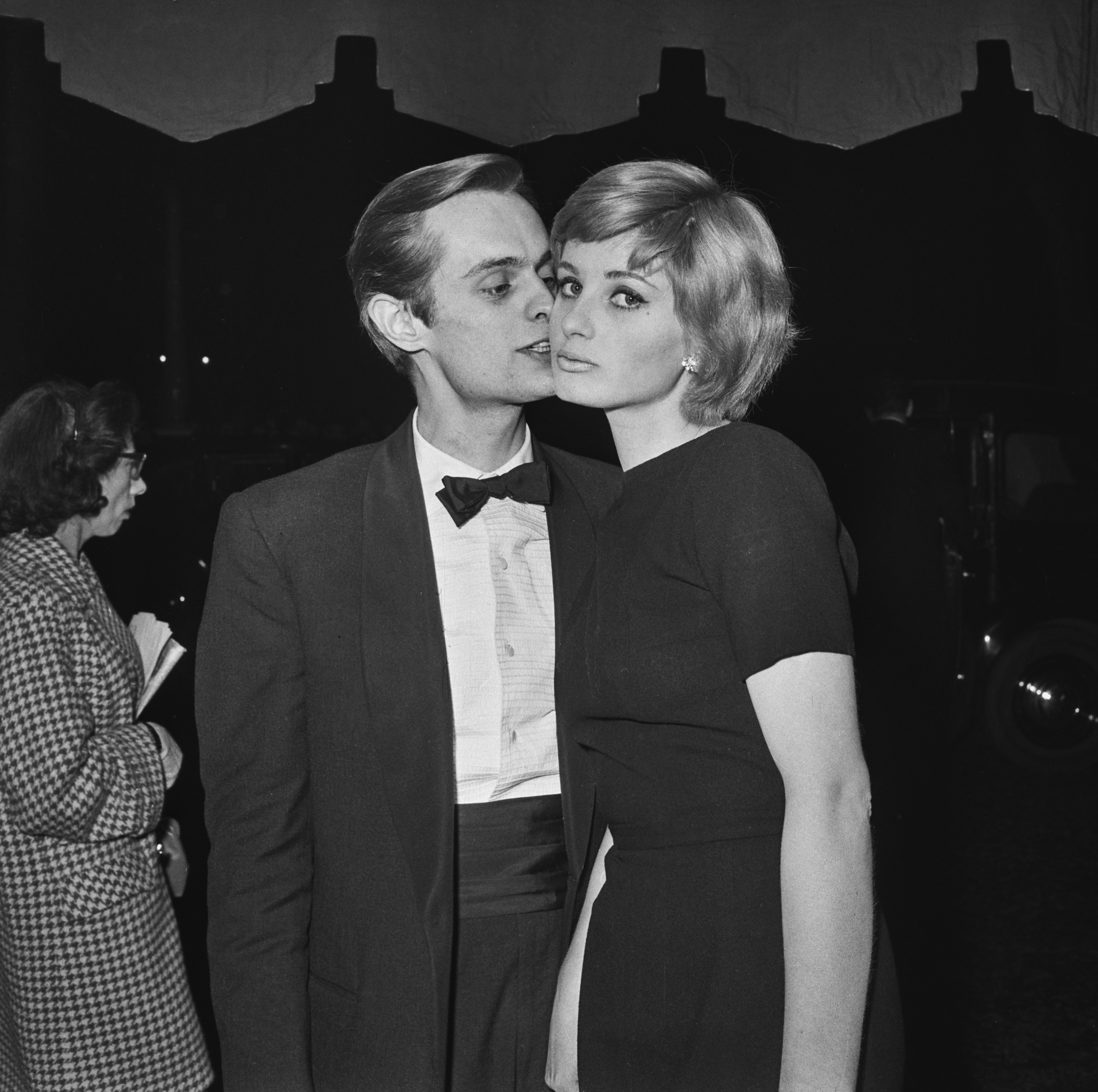
David McCallum (1933–2023) was a Scottish-American actor and musician best known for his iconic roles as secret agent Illya Kuryakin in The Man from U.N.C.L.E. and Chief Medical Examiner Dr. Donald "Ducky" Mallard on NCIS. His career spanned seven decades, making him one of the most enduring figures in television history.
Born into a family of elite classical musicians in Glasgow, McCallum initially pursued music before finding his true calling on the stage and screen. While many actors are defined by a single role, McCallum achieved the rare feat of reinventing himself for multiple generations. In the 1960s, he was a global pop-culture phenomenon and a teen idol; in the 2000s and 2010s, he became the wise, storytelling heart of one of the world's most-watched procedural dramas. As of 2026, his influence remains a cornerstone of the television landscape, particularly through the continued success of the NCIS franchise and the enduring cult status of his earlier spy-fiction work.
Early Life and the Foundation of a Polymath
David Keith McCallum Jr. was born on August 31, 1933, in Maryhill, Glasgow. His father, David McCallum Sr., was the first violinist for the London Philharmonic Orchestra, and his mother, Dorothy Mary Shevis, was a cellist. This environment of disciplined artistry shaped McCallum’s approach to acting, which he often described as a technical craft requiring the same precision as a musical performance.
The family moved to London when McCallum was a child, but he was eventually evacuated back to Scotland during World War II. After the war, he attended the University College School in Hampstead and eventually earned a place at the Royal Academy of Dramatic Art (RADA). Before his acting career took off, McCallum served his National Service in the British Army, commissioned into the Middlesex Regiment. His military background provided a sense of discipline and a familiarity with hierarchy that he would later utilize when portraying military-affiliated characters like Dr. Mallard.
McCallum’s early career in the 1950s was characterized by steady work in British "kitchen sink" dramas and various television guest spots. However, his move to Hollywood in the early 1960s, punctuated by his role as Eric Ashley-Pitt (better known as "Dispersal") in the 1963 classic The Great Escape, set the stage for international stardom.
The Illya Kuryakin Phenomenon and 1960s Stardom
In 1964, McCallum was cast in a supporting role in The Man from U.N.C.L.E. as Illya Kuryakin, the enigmatic Soviet partner to Robert Vaughn’s Napoleon Solo. Originally intended to be a minor character with few lines, Kuryakin’s stoic demeanor, blonde Beatles-style haircut, and intellectual mystery resonated unexpectedly with audiences.
The "Kuryakin-mania" that followed was comparable to the fervor surrounding the British Invasion bands of the era. McCallum received more fan mail than almost any other actor in the MGM stable, and his portrayal of a heroic Russian agent during the height of the Cold War was a revolutionary cultural moment. The character’s signature black turtleneck became a fashion staple, and McCallum’s performance bridged the gap between traditional action heroism and the burgeoning youth culture of the 1960s.
During this period, McCallum also explored his musical heritage. He recorded four albums for Capitol Records with producer David Axelrod: Music... A Part of Me, Music... A Bit More of Me, Music... It's Happening Now!, and McCallum. While largely orchestral, these albums showcased his ability to arrange and conduct. His track "The Edge" would later find a second life in hip-hop history when it was sampled by Dr. Dre for the hit "The Next Episode," ensuring McCallum's relevance to a completely different demographic decades later.
Transition and the Cult Classic Era
Following the cancellation of The Man from U.N.C.L.E. in 1968, McCallum faced the challenge of typecasting. He spent the 1970s and 1980s diversifying his portfolio with a mix of stage work, television movies, and series that, while not always reaching the commercial heights of U.N.C.L.E., garnered significant critical acclaim.
One of his most notable projects during this period was the British sci-fi series Sapphire & Steel (1979–1982), in which he starred alongside Joanna Lumley. The show was an avant-garde take on the supernatural, focusing on "Interdimensional Operatives" who guarded the flow of time. McCallum’s portrayal of Steel was cold, efficient, and haunting—a stark contrast to the more approachable Illya Kuryakin.
He also made frequent appearances in iconic American series such as The Invisible Man, Murder, She Wrote, and Law & Order. His ability to disappear into guest roles while maintaining a recognizable screen presence allowed him to sustain a long, productive career during an era when many 1960s stars struggled to find work.
The NCIS Era: Dr. Donald "Ducky" Mallard
In 2003, McCallum was cast as Dr. Donald "Ducky" Mallard in the pilot episode of NCIS (introduced via JAG). As the Chief Medical Examiner for the Naval Criminal Investigative Service, Ducky became the show’s intellectual anchor. McCallum brought a unique blend of eccentricity, historical trivia, and profound empathy to the role.
To prepare for the part, McCallum took his craft to an extraordinary level of technical depth. He spent years studying forensic science, attending autopsies, and consulting with real-world medical examiners to ensure his terminology and physical movements were accurate. By his own admission, he became so proficient in the subject matter that he could reasonably discuss pathological findings with professionals in the field.
| Feature | Illya Kuryakin (The Man from U.N.C.L.E.) | Dr. Donald "Ducky" Mallard (NCIS) |
|---|---|---|
| Active Years | 1964–1968 | 2003–2023 |
| Character Archetype | Enigmatic Soviet Spy / Action Hero | Intellectual Medical Examiner / Historian |
| Signature Aesthetic | Blonde Hair, Black Turtleneck | Bow Ties, Lab Coat, Glasses |
| Key Skillset | Stealth, Combat, Multilingualism | Pathology, History, Psychological Profiling |
| Cultural Impact | Teen Idol / Cold War Icon | Beloved Mentor / "Grandfather" of the Series |
| Character Background | Secret Agent for U.N.C.L.E. | Former RAMC Doctor / NCIS Historian |
Ducky was more than just a technician; he was the team’s unofficial therapist and historian. His penchant for talking to the deceased "patients" on his table added a layer of whimsical humanity to a show often focused on grim crimes. McCallum played the role for 20 seasons, eventually transitioning into the role of "NCIS Historian" in his later years to accommodate his age while remaining an integral part of the narrative.
Literary Contributions and Later Years
Even in his 80s, McCallum refused to remain stagnant. In 2016, he published his first novel, Once a Crooked Man. The book, a crime thriller involving an actor who accidentally becomes involved in a murder plot, received positive reviews for its sharp dialogue and intricate plotting. The venture into literature was a natural progression for a man who had spent his life analyzing scripts and character motivations.
McCallum’s personal life was also a subject of public interest, particularly his early marriage to actress Jill Ireland (who later married Charles Bronson) and his subsequent 56-year marriage to Katherine Carpenter. He was a devoted father and grandfather, often citing his family as the primary reason for his grounded nature despite the pressures of Hollywood fame.
When David McCallum passed away peacefully on September 25, 2023, just days after his 90th birthday, the outpouring of grief from the industry and fans alike was immense. CBS aired a special tribute episode of NCIS titled "The Stories We Leave Behind," which served as a fictionalized funeral for Ducky and a real-world celebration of McCallum’s life.
Legacy and Influence in 2026
As of 2026, David McCallum’s legacy is preserved not just through reruns of his shows, but through the technical standards he set for television acting. His commitment to "Ducky" Mallard influenced a generation of actors in the procedural genre to take the technical aspects of their roles seriously, moving beyond mere memorization of lines to a deeper understanding of the professions they portray.
His musical contributions, specifically his work with David Axelrod, continue to be celebrated in the world of jazz and hip-hop production. Rare vinyl pressings of his 1960s albums are highly sought after by collectors, and his influence on the "cool" aesthetic of the mid-century modern era remains a point of reference for stylists and filmmakers.
Frequently Asked Questions
What was David McCallum’s most famous role?
While older audiences remember him best as Illya Kuryakin in The Man from U.N.C.L.E., a role that made him a global heartthrob in the 1960s, a younger generation knows him primarily as Dr. Donald "Ducky" Mallard from NCIS. Both roles are considered iconic, representing different peaks of his career.
Was David McCallum actually a doctor or scientist?
No, he was not a medical doctor. However, he was famous for his rigorous research. For his role as Ducky, he studied forensic pathology extensively, attended real autopsies, and read countless medical textbooks to ensure his performance was as authentic as possible.
What is David McCallum’s connection to Dr. Dre?
The song "The Edge," which McCallum recorded in the 1960s, features a distinctive orchestral riff. This riff was sampled by producer Dr. Dre for the 1999 hit "The Next Episode" (featuring Snoop Dogg). This connection introduced McCallum's musical work to a massive audience in the hip-hop community.
How did NCIS handle his passing?
Following his death in September 2023, the production team of NCIS created a dedicated tribute episode in Season 21. The episode honored both the character of Ducky and the actor himself, featuring archival footage and a storyline where the team deals with the loss of their longtime mentor.
Did David McCallum ever return to the role of Illya Kuryakin?
Yes, he reprised the role alongside Robert Vaughn in the 1983 television movie Return of the Man from U.N.C.L.E. He also voiced the character in various radio adaptations and provided his blessing for the 2015 feature film reboot, though he did not appear in it.
Exploring McCallum’s Work Today
For those looking to explore David McCallum’s expansive filmography, the best starting point is the original The Man from U.N.C.L.E. series, which remains a masterclass in 1960s style and chemistry. For a more contemporary experience, his early seasons of NCIS showcase his ability to bring warmth and gravitas to the procedural format.
Beyond acting, his albums are available on most streaming platforms, offering a unique glimpse into the orchestral pop of the 1960s. Whether as an actor, a musician, or an author, McCallum’s body of work reflects a man who never stopped learning and never stopped entertaining. For more information on his career and historical archives, fans can visit the official NCIS archives or the British Film Institute.