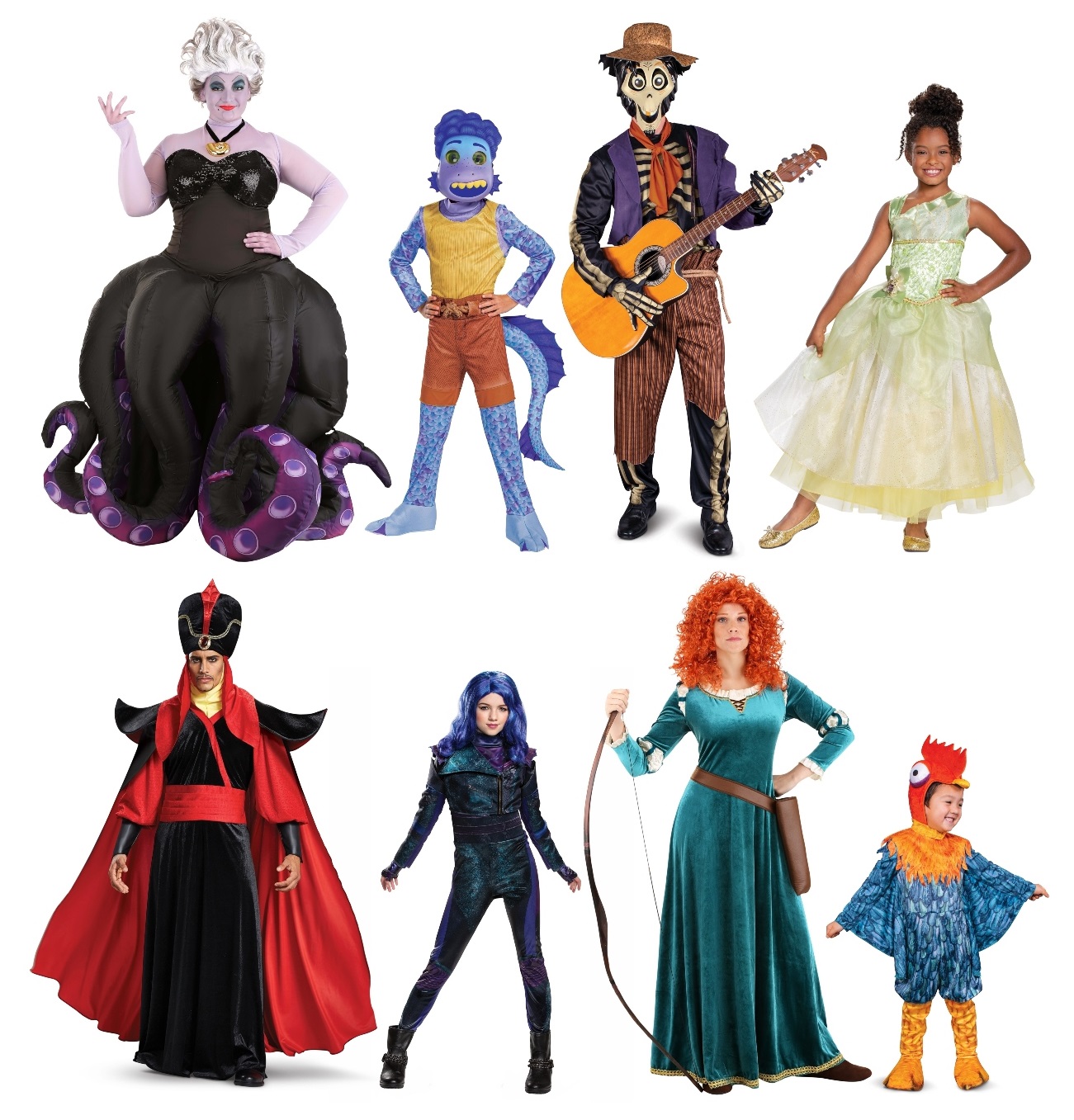
Movie costume design in the United States is a vital narrative art form that translates character psychology, period authenticity, and visual worldbuilding into screen reality. Evolving from early 20th-century studio wardrobe departments into a sophisticated discipline, American costume design shapes global fashion, defines cinematic eras, and enhances storytelling through color, texture, and silhouette.
The Foundations of Silent Cinema Wardrobe (1910s–1920s)
During the infancy of American cinema, costume design was largely decentralized. Actors in early short films often provided their own attire, selecting garments from their personal wardrobes based on rough character descriptions. As feature-length narratives expanded in the 1910s, motion picture studios recognized that visual consistency required centralized management, leading to the creation of dedicated studio wardrobe departments.
Early pioneers helped establish costume design as a distinct artistic discipline rather than a basic utility. Clare West, often credited as Hollywood’s first official costume designer, began collaborating with director Cecil B. DeMille in 1916. West insisted on custom-designed garments tailored specifically to the camera’s lens, establishing the precedent that wardrobe must directly serve narrative context and character motivation.
The technical limitations of early film stock heavily dictated costume construction. Orthochromatic film, used universally until the mid-1920s, was insensitive to red light, causing reds to render as black or dark grey on screen, while light blues appeared stark white. Designers had to work with precise tonal gray-scale charts rather than traditional color harmonies. The widespread adoption of panchromatic film stock in the late 1920s finally allowed film to register the full visible spectrum, enabling costume designers to utilize richer color relationships and subtle texture variations that translated accurately to black-and-white prints.
The Golden Age of Studio System Glamour (1930s–1950s)
The rise of the Hollywood studio system in the 1930s transformed costume design into a major tool for studio branding and star building. Major studios signed head designers to exclusive contracts, establishing signature aesthetic styles across entire film slates:
- Metro-Goldwyn-Mayer (MGM): Led by Gilbert Adrian (known simply as Adrian), MGM prioritized high glamour, structured shoulders, and theatrical elegance. Adrian’s designs for Joan Crawford in Letty Lynton (1932) featured wide puff sleeves that became a national retail sensation, selling hundreds of thousands of copies through department stores across the United States.
- Paramount Pictures: Directed by Travis Banton and later Edith Head, Paramount favored sleek, Paris-inspired bias cuts and opulent fabrics that caught studio lighting.
- Warner Bros.: Headed by Orry-Kelly, Warner Bros. focused on gritty realism for gangster movies balanced by refined gowns for dramatic stars like Bette Davis.
Studio System Wardrobe Pipeline (1930s-1950s):
- Script Analysis & Concept Sketches
- Executive Designer Approval
- In-House Workroom Fabrication & Draping
- Star Fitting & Camera Tests
The industrialization of studio costume departments reached its peak during this period. Workrooms housed hundreds of specialized craftspeople, including drapers, tailors, milliners, embroiderers, and cobblers. Designers maintained absolute authority over an actor's visual image both on screen and during promotional tours.
"I have seen fashion trends start from a movie, and I have seen them die because of one." — Edith Head, 8-time Academy Award-Winning Designer
The introduction of full-color processes, particularly Technicolor’s three-strip process in the mid-1930s, altered costume fabrication rules. Technicolor required intense illumination on set, which reflected harshly off shiny fabrics. Designers had to carefully regulate saturation levels so costumes would not bleed into background sets or overpower actors' faces. Walter Plunkett’s historic work on Gone with the Wind (1939) demonstrated how period-accurate textile choices, dye processes, and dramatic distressing could anchor an epic narrative in historical reality while maintaining visual balance under high-intensity color cinematography.
In recognition of the craft's growing importance, the Academy of Motion Picture Arts and Sciences introduced the Academy Award for Best Costume Design at the 21st Academy Awards in March 1949 (awarded for films released in 1948). The category was initially split into Black-and-White and Color subcategories to evaluate the technical challenges of each medium separately, a division that remained largely intact until the categories merged in 1967.
New Hollywood Realism, Freelance Design, and Sci-Fi Worldbuilding (1960s–1980s)
The collapse of the traditional studio system during the late 1950s and 1960s dismantled the contract model for costume designers. As studios liquidated their massive wardrobe holding blocks, costume designers transitioned into freelance artists hired on a project-by-project basis.
This structural shift coincided with the rise of New Hollywood, a cinematic movement that prioritized location shooting, gritty realism, and contemporary character studies. Costume designers like Ann Roth (The Midnight Cowboy, The Day of the Locust) pioneered an approach centered on character authenticity over studio glamour. Wardrobe choices were increasingly sourced from street fashion, vintage shops, and everyday retail, reflecting the psychological complexities of antiheroes and real-world settings.
Concurrently, the late 1970s and 1980s saw a resurgence in high-concept genre filmmaking that demanded imaginative, worldbuilding-focused costume design:
- John Mollo (Star Wars, 1977): Mollo drew from historical military uniforms, Japanese armor, and monastic robes to create a grounded, utilitarian universe. His work demonstrated that science-fiction costumes felt more persuasive when rooted in recognizable human history.
- Milena Canonero (Chariots of Fire, 1981; Out of Africa, 1985): Canonero demonstrated how meticulous historical period tailoring could inform modern high fashion, triggering widespread consumer trends toward classic prep and safari aesthetics.
- Aggie Guerard Rodgers (Blade Runner, 1982): Collaborating with visual futurist Syd Mead, Rodgers blended 1940s film noir silhouettes with futuristic materials, defining the visual identity of the cyberpunk genre.
To support independent designers navigating this new freelance landscape, the Costume Designers Guild (CDG) expanded its industry advocacy, eventually founding the CDG Awards in 1999 to recognize excellence in contemporary, period, and fantasy costume design across film and television.
Modern Cinema: High-Definition, CGI Integration, and Representation (1990s–2020s)
Advances in camera technology and visual effects during the late 20th and early 21st centuries reshaped the physical requirements of costume fabrication. High-definition digital sensors and 4K/8K projection systems expose microscopic construction details on screen, forcing costume departments to adopt high-precision techniques:
- Micro-Texture and Scale: Standard flat fabrics often lose depth on digital sensors. Designers employ custom digital textile printing, 3D laser cutting, and specialized surface distressing to create dimensional textures visible under modern digital cinema cameras.
- Digital and Physical Hybrids: In modern blockbuster cinema, physical costumes often interface directly with computer-generated imagery (CGI). Costume designers work alongside visual effects supervisors to craft physical hero suits that include tracking markers, specialty reflective fabrics, or modular components designed to be replaced by digital assets during post-production.
- Advanced Materials: Superhero and fantasy filmmaking rely on 3D scanning, computer-aided design (CAD), matrix molding, and flexible urethane casting to produce form-fitting garments that allow stunt performers full range of motion.
The modern era has also elevated systemic diversity within the craft, expanding who tells cinematic stories. In 2019, designer Ruth E. Carter became the first African American to win the Academy Award for Best Costume Design for her work on Black Panther (2018). Carter integrated traditional Afrofuturist concepts with authentic attire from indigenous African nations—such as the lip plates of the Mursi and the beadwork of the Maasai—demonstrating how costume design can honor cultural heritage while constructing speculative cinematic worlds.
Summary of Milestones in U.S. Film Costume History
| Era / Film Year | Iconic Film Example | Key Designer(s) | Technical & Narrative Innovation | Cultural / Industry Impact |
|---|---|---|---|---|
| 1932 | Letty Lynton | Adrian | Exaggerated shoulder silhouettes adapted for black-and-white panchromatic film. | Triggered nationwide retail garment adaptations; proved movies could drive fashion markets. |
| 1939 | Gone with the Wind | Walter Plunkett | Character-driven period authenticity using specialized dyes for 3-strip Technicolor. | Set the standard for historical research and fabric breakdown in epic period cinema. |
| 1954 | Sabrina | Edith Head / Hubert de Givenchy | Hybrid collaboration between studio executive designer and French haute couture house. | Redefined Hollywood-haute couture cross-promotions; won Academy Award for Best Costume Design. |
| 1977 | Star Wars: Episode IV | John Mollo | Utilitarian sci-fi worldbuilding blending real-world military, monastic, and historic uniforms. | Shifted sci-fi aesthetics away from sleek chrome toward a "used universe" reality; won Academy Award. |
| 1982 | Blade Runner | Aggie Guerard Rodgers | Retro-futurism combining 1940s film noir tailoring with futuristic vinyl and plastic elements. | Defined the cyberpunk visual style across global media and streetwear fashion. |
| 2018 | Black Panther | Ruth E. Carter | Afrofuturistic design incorporating 3D printing and authentic indigenous African textile traditions. | Ruth E. Carter became the first African American to win the Academy Award for Best Costume Design. |
The Narrative Function and Technical Craft of Costume Design
Costume design is primarily a storytelling tool rather than a decorative art. Every garment seen on screen is engineered to communicate unspoken information about a character's social class, emotional state, geographic origin, and developmental arc within the script.
- CHARACTER ANALYSIS
- PALETTE & SILHOUETTE
- FABRICATION & AGING
- ON-SET CONTINUITY
Script Analysis and Character Arc Mapping
Before drawing a single sketch, a costume designer performs a detailed script breakdown. This analysis tracks character shifts throughout the narrative timeline. For example, a character experiencing psychological breakdown may transition from structured, tailored silhouettes in cold, saturated tones to looser, unrefined garments in muddy, desaturated palettes.
Color Theory and Inter-Departmental Collaboration
Costume designers do not work in isolation. They collaborate directly with the Production Designer (who oversees sets and props) and the Director of Photography (DP). If a set features dark mahogany walls, a costume designer must avoid dark brown or black fabrics that would cause the actor to blend into the background. Conversely, wardrobe palettes are chosen to harmonise with or deliberately contrast against set colors to emphasize character isolation or integration.
Breakdown, Aging, and Textile Artisanship
In film production, new garments often look artificial on camera. Costume departments employ specialized craftspeople known as breakdown artists or textile agers. Using wire brushes, blowtorches, sandpaper, acrylic washes, and specialty dyes, these artists artificially age clothing to simulate years of sweat, sun fading, mud, or wear. A costume worn by a soldier or survivalist may go through dozen-stage distressing processes so that it reflects the physical reality of the story environment.
Frequently Asked Questions
When was the Academy Award for Best Costume Design introduced?
The Academy Award for Best Costume Design was introduced at the 21st Academy Awards, held on March 24, 1949, honoring films released in 1948. Initially, the category was separated into two distinct awards—one for Black-and-White films and one for Color films—to evaluate the distinct visual demands of each format. These categories were combined into a single unified award in 1967.
How did the transition to Technicolor affect movie costume design?
Technicolor required extraordinarily bright physical light on sets, which altered how fabrics appeared on screen. Standard glossy materials reflected excessive glare, and bright red garments frequently caused visual bleeding on the film negative. Designers were forced to select low-sheen fabrics, adjust color intensity, and test garments extensively under high-wattage lamps to ensure colors rendered accurately without overwhelming the scene.
What is the structural difference between a costume designer and a fashion designer?
A fashion designer creates garments intended for retail sale, commercial production, and human expression within real-world trends. A costume designer creates garments specifically to serve a dramatic narrative, communicate character psychology, and function under specialized studio lighting and camera angles. While fashion designers focus on aesthetics and marketability, costume designers prioritize story authenticity, character development, and performance durability.
How do modern costume designers collaborate with visual effects (VFX) teams?
Modern costume designers collaborate with VFX departments during pre-production to design both the physical and digital elements of a character's look. Designers create visual concept art, select real-world fabrics, and build tangible reference costumes. When a character requires CGI suit extensions, specialty lighting effects, or full digital replacement, the costume designer guides the digital artists to ensure the virtual garments conform to realistic textile physics and character design standards.
Who holds the record for the most Academy Awards in Costume Design?
Edith Head holds the record for the most Academy Awards won by a costume designer, with 8 Oscar wins out of 35 total nominations across her career at Paramount and Universal Studios. Her winning films include The Heiress (1949), All About Eve (1950), A Place in the Sun (1951), Roman Holiday (1953), Sabrina (1954), The Facts of Life (1960), The Stripper (1963), and The Sting (1973).
Analyzing Costume Craft in Modern Film Analysis
To evaluate movie costume design critically, film students and researchers should move beyond basic aesthetic judgment and examine how wardrobe serves narrative and technical functions.
When analyzing a film's costume design, focus on three specific criteria during your next viewing:
- Track Silhouette Shifts: Observe how a character's shoulder lines, waistlines, and overall garment volume change as their power dynamic shifts in the story.
- Evaluate Visual Contrast: Note how the costume color palette interacts directly with the production design of the physical environment in key emotional scenes.
- Examine Texture Realism: Look closely at fabric weight, natural drape, and evidence of textile aging (breakdown work) to evaluate how effectively the wardrobe anchors the character in their immediate world.
For direct primary-source research, explore physical costume collections and historical archives maintained by institutions such as the Academy Museum of Motion Pictures, the FIDM Museum at the Fashion Institute of Design & Merchandising, and the Harry Ransom Center at the University of Texas at Austin.