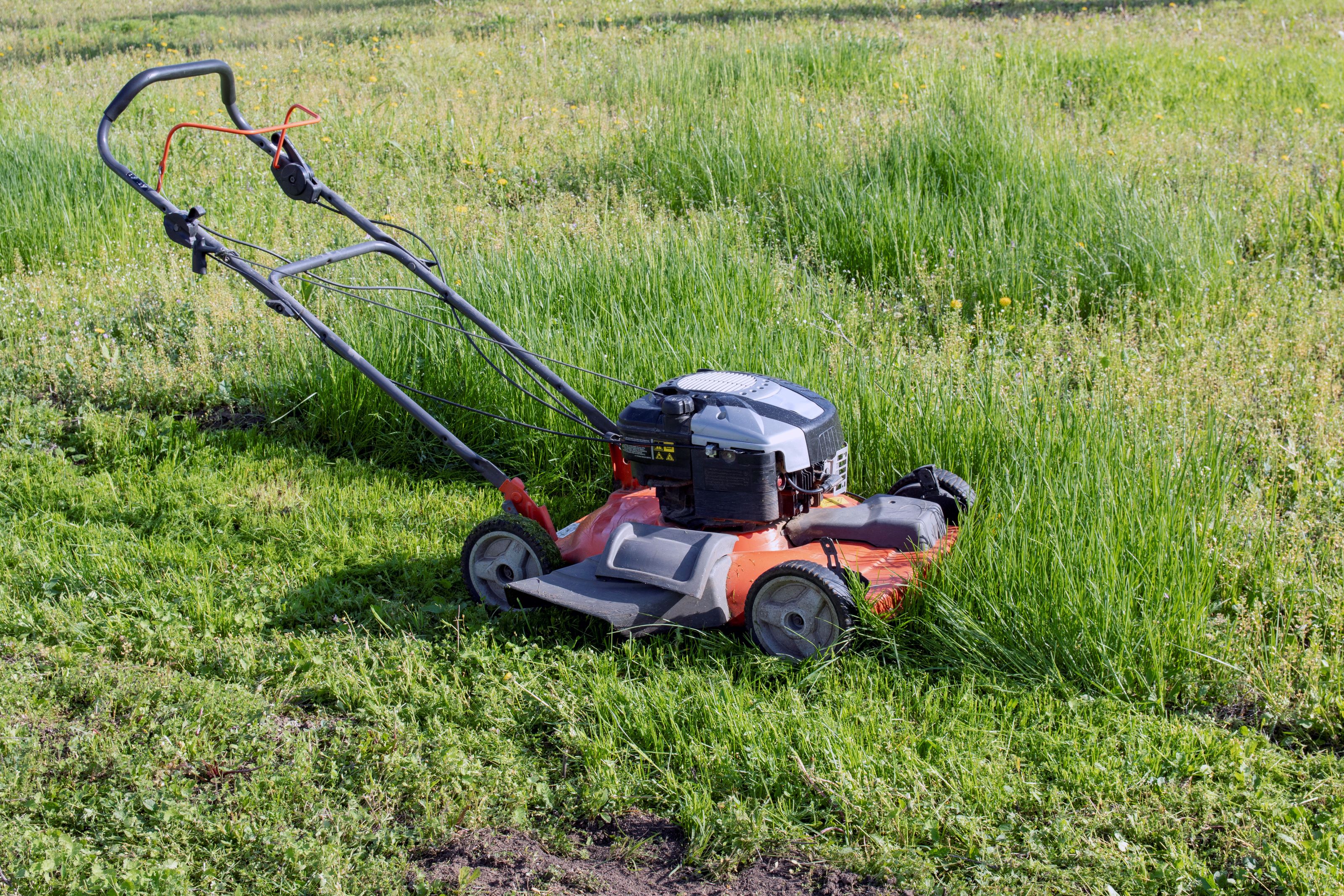
Long grass mowers are specialized cutting machines designed with high-torque engines, reinforced decks, and wide-discharge or flail mechanisms to cut overgrown vegetation without stalling or clogging. Unlike standard lawnmowers, which compress grass against a tight deck shell, these heavy-duty machines utilize open-front decks, swinging blades, or drum-mounted flails to slice through dense stalks, woody weeds, and brush up to several feet high.
The Mechanical Demands of Cutting Overgrown Vegetation
Standard residential mowers rely on high blade-tip speed and localized airflow to lift grass blades upright, shear them off, and force the clippings into a bagging system or side discharge chute. When applied to grass taller than eight inches, this system fails mechanics-wise. Long grass folds over under the front edge of a conventional mower deck, creating a dense mat that prevents the blades from lifting the stems. Furthermore, the massive volume of cut plant material quickly overpowers the deck's internal volume, causing clippings to pack into the deck housing. This imposes severe rotational friction on the cutting blade, forcing the engine to drop RPMs, stall, or overheat the belt drive and engine block.
Long grass mowers overcome these physical constraints through fundamentally different mechanical architectures:
- High Power-to-Torque Ratios: Cutting through dense cellulose stems requires engine torque over sheer horsepower. High-torque engines maintain blade rotation speeds under heavy load without lugging down.
- Expanded Deck Volume and Open-Front Designs: Instead of pushing grass down before cutting, specialized rough-cut decks feature raised or open front skirts. This allows tall stalks to enter the cutting chamber in an upright position.
- High-Volume Material Discharge: To prevent clipping buildup, long grass mowers utilize wide rear-discharge chutes, oversized side discharge ports, or bottomless deck designs that drop shredded material immediately behind or under the machine.
- Impact-Resistant Blade Assemblies: Tall, unmaintained fields frequently hide rocks, debris, and saplings. Long grass mowers often replace fixed bar blades with swinging-tip blades or heavy-duty flail hammers that pivot backward upon impact, protecting the crankshaft and transmission from terminal shock loads.
Primary Categories of Long Grass Mowers
Choosing the correct equipment depends on vegetation height, stem thickness, total surface area, and terrain topography.
- Vegetation & Terrain Evaluation
- Soft/Dense Grass (Up to 18 Inches Tall)
- Small Area: High-Wheel Push Mower
- Large Field: Commercial Zero-Turn (Rear)
- Woody Brush & Saplings (Over 18 Inches / Woody)
- Walk-Behind: Field & Brush Mower
- Tow-Behind: Trail / Flail Mower
- Soft/Dense Grass (Up to 18 Inches Tall)
High-Wheel Push Mowers
Designed for residential properties, orchards, and small paddocks with uneven ground, high-wheel push mowers feature large rear wheels (typically 14 to 16 inches in diameter). These larger wheels allow the operator to push the mower over rough hummocks, animal burrows, and thick tufts of grass without the front deck scalping the ground. While using a push or self-propelled configuration, their cutting decks feature wider discharge openings than standard mowers, making them suitable for maintaining grass between 8 and 18 inches high.
Walk-Behind Field and Brush Mowers
Walk-behind field and brush mowers are heavy-duty, self-propelled machines built specifically for tackling severe vegetation growth. Equipped with engines ranging from 10 to 20 horsepower, heavy-gauge steel decks (often 10-gauge to 7-gauge steel), and tractor-lug tires, these units chop through thick brush up to 6 feet high and woody saplings up to 2 inches in diameter. Their cutter decks are frequently hinged or floating, allowing the machine to climb over obstacles while maintaining a consistent cutting height.
Flail Mowers
Flail mowers utilize a horizontal rotating shaft studded with rows of loose, swinging metal blades (shaped like Ys or heavy T-shaped hammers). As the central shaft spins at high RPMs, centrifugal force extends the flails outward. When a flail blade strikes a solid object like a stump or boulder, it rebounds harmlessly around its mounting pin rather than transferring the impact stress into the drive shaft. Flail mowers excel at shredding tall grass, thick weeds, and cover crops into a fine, evenly distributed mulch, preventing the thick windrows of cut material that rot underneath traditional rotary discharge mowers. Flail units are available as walk-behind machines, tractor three-point hitch attachments, or hydraulic skid-steer attachments.
Tow-Behind Rough-Cut Trail Mowers
Tow-behind mowers (often referred to as trail mowers or bush hogs) are self-powered cutter decks designed to be pulled behind an All-Terrain Vehicle (ATV), Utility Task Vehicle (UTV), or compact utility tractor. Equipped with their own onboard engines (typically 14 to 24 horsepower), these units allow an operator to clear large acreages quickly. They can be offset to the left or right of the tow vehicle, allowing the operator to cut under fence lines or brush edges without driving the tow vehicle directly into overhanging vegetation.
Commercial Zero-Turn Mowers with Rear-Discharge Decks
For expansive turf areas where grass is allowed to grow tall (such as solar farms, highway medians, and municipal parks), commercial zero-turn mowers equipped with dedicated rear-discharge decks offer high speed and maneuverability. Rear-discharge decks eliminate the side-chute baffle, ejecting cut grass across the full width of the deck behind the rear wheels. This architecture handles dense, tall grass without clogging, though it is limited to herbaceous vegetation and cannot process thick woody brush.
Technical Specifications and Features Comparison
Evaluating a long grass mower requires examining structural integrity, engine performance metrics, and drive mechanics. The table below outlines how standard equipment categories compare across operational metrics.
| Mower Category | Vegetation Capability | Max Stem Diameter | Engine/Power Class | Typical Deck Material | Primary Drive System |
|---|---|---|---|---|---|
| High-Wheel Push | Tall grass, light weeds | Up to 3/8 inch | 160cc – 225cc gas | 14 to 12-gauge steel | Push or single-speed belt drive |
| Field & Brush (Walk-Behind) | Overgrown fields, heavy brush, saplings | 1.5 to 2.5 inches | 10.5 HP – 20 HP gas | 11 to 7-gauge reinforced steel | Heavy-duty mechanical or hydrostatic |
| Flail Mower (Walk-Behind / Tow) | Dense grass, thickets, light brush | 1.0 to 2.0 inches | 13 HP – 25 HP (or PTO driven) | 10 to 1/4-inch steel drum casing | Belt-driven horizontal rotor |
| Tow-Behind Rough-Cut | Large pastures, dense meadows, thick brush | 2.0 to 3.0 inches | 14 HP – 24 HP twin-cylinder gas | 10 to 7-gauge structural steel | Centrifugal clutch to belt spindle |
| Commercial Rear-Discharge ZTR | Tall grass, light weeds (high speed) | Up to 1/2 inch | 23 HP – 38 HP EFI gas or diesel | 10 to 7-gauge fabricated steel | Dual independent hydrostatic transaxles |
Essential Mechanical Components
Engine Design and Filtration
Operating in long grass exposes engines to extreme dust, chaff, and airborne weed seeds. Standard paper cartridge air filters quickly blind over under these conditions, causing the engine to run rich, lose power, and pull dirt past the seal. Dedicated rough-cut mowers feature dual-element air filtration systems (a foam pre-filter over a pleated main cartridge) or heavy-duty canister-style cyclonic air cleaners that separate heavy debris before air reaches the filter media.
Additionally, high-torque engine configurations with cast-iron cylinder sleeves and forced-lubrication oil pumps with spin-on filters are essential. The oil pump ensures critical engine components receive continuous lubrication even when operating the mower on steep side slopes or uneven terrain.
Deck Geometry and Baffle Configurations
The undersides of standard lawn decks contain tight spiral baffles designed to create high air pressure for mulching or bagging. In contrast, long grass decks feature open, high-clearance chambers:
Standard Deck (Prone to Clogging)
- Tight Baffles (Restricts Flow)
- Small Chute
Rough-Cut Deck (High Clearance)
- Wide Open Chamber (Max Air & Material Flow)
- Unrestricted Outlet
Deep-Deck Shells: Provide vertical space so cut vegetation can drop below the blade plane rather than being re-cut repeatedly, which saps engine power.
Open Front Skirts: Allow flexible rubber skirts or hanging chain guards to push tall stems forward just enough to cut them near ground level without pinning them flat against the soil.
Chain Guards: Replace solid steel front bumpers on heavy-duty cutters. The hanging steel chain links permit brush to enter the deck while preventing thrown objects (rocks, metal debris) from escaping forward toward the operator.
Drive Systems and Traction Mechanics
Navigating thick, hidden terrain demands robust drive hardware:
- Hydrostatic Transaxles: Allow infinite variable speed control forward and reverse without shifting gears. This is critical when entering an unexpectedly dense patch of grass, as the operator can instantly reduce ground speed while keeping blade RPMs at maximum.
- Differential Locks: Mechanically lock both drive wheels together. If one wheel enters a wet patch or mud hole hidden beneath tall grass, the locked differential prevents that wheel from spinning freely while transferring torque to the wheel with traction.
- Tracks vs. Pneumatic Tires: For steep slopes, marshy ground, or drainage ditches, track-driven walk-behind cutters provide a significantly larger contact patch than pneumatic tires, reducing ground pressure and preventing slipping.
Safe Operating Practices for Overgrown Terrain
Mowing long grass carries higher operational risks than maintaining manicured lawns due to hidden hazards, reduced visibility, and increased machine power.
- Step 1: Pre-Inspection
- Walk perimeter on foot; flag obstacles & drop-offs.
- Step 2: Set Cut Height
- Set deck to maximum height; protect drive components.
- Step 3: Initial Pass
- Mow at reduced ground speed; maintain max engine RPM.
- Step 4: Final Pass
- Lower deck to target height; mow perpendicular to first pass.
1. Pre-Mowing Ground Reconnaissance
Before driving machinery into grass over 18 inches high, walk the area on foot using a probe rod or heavy stick. Mark hidden hazards such as concrete footings, large rocks, abandoned wire fencing, irrigation heads, and deep holes with high-visibility survey flags. Striking hidden metal or stone at full blade speed can shatter mower components or eject dangerous shrapnel.
2. The Two-Pass Cutting Technique
When clearing vegetation that exceeds two feet in height, perform the task in two distinct passes:
- First Pass (High Cut): Set the deck height to its maximum elevation (typically 4 to 5 inches). Operate the machine at a slow ground speed to allow the engine to maintain peak operating RPM. This pass removes the top half of the plant canopy, exposes hidden ground obstacles, and reduces the volume of material processed in the deck at one time.
- Second Pass (Final Cut): Lower the deck to the desired final height (typically 2.5 to 3 inches). Mow at a 90-degree angle to the direction of the first pass whenever possible. This cross-cutting pattern chops remaining tall stems, breaks up left-over windrows, and ensures an even surface finish.
3. Slope Stability and Operating Angle Limits
Operating equipment on hillsides requires strict adherence to manufacturer stability limits to prevent tip-over accidents. The Outdoor Power Equipment Institute (OPEI) and standard safety protocols establish clear operating guidelines:
- Walk-Behind Cutters: Operate across the face of slopes, never up and down. If you slip, you will fall parallel to or away from the machine path rather than beneath the deck. Do not operate on slopes exceeding 20 degrees.
- Ride-On and Zero-Turn Mowers: Operate up and down slope faces, never across. Cutting across a steep slope on a ride-on unit can cause the center of gravity to shift past the downhill wheels, triggering a roll-over. Do not operate ride-on units on slopes exceeding 15 degrees unless the machine is specifically equipped with a certified Roll-Over Protective Structure (ROPS) and slope-rated engine lubrication systems.
Preventive Maintenance Protocols
Because long grass mowers operate in high-dust, high-impact environments, routine maintenance must occur at shorter intervals than standard lawn equipment schedules.
| Interval | Tasks |
|---|---|
| Every 5 Hours | • Clean external engine cooling fins and screen• Check engine oil level• Inspect air filter pre-cleaner |
| Every 25 Hours | • Greased blade spindle bearings and wheel hubs• Inspect drive belts for tension and cracking• Check blade edges for damage or dullness |
| Every 50 Hours | • Change engine oil and filter• Clean primary air filter element• Inspect blade pivot bolts on rough-cut models |
Air Filter and Cooling System Care
Chaff and seed heads pulled into the engine shroud can rapidly block the cooling fins on air-cooled engines. Overheating can score cylinder walls and warp head gaskets within hours. Clean the finger guard and cooling fins every 5 operating hours using compressed air. Inspect the foam air pre-filter daily; wash it in warm soapy water, dry it thoroughly, and re-oil it according to manufacturer specifications before reinstallation.
Blade Maintenance and Inspection
Rotary rough-cut blades and flail hammers experience rapid dulling and heavy edge impacts:
- Rotary Blades: Do not sharpen rough-cut or brush blades to a razor edge. A razor edge roll over or chips quickly when striking woody stems or stones. Instead, grind a 1/16-inch flat landing edge (a blunt edge) at a 30-degree angle. This profile resists chipping while retaining sufficient energy to shatter thick woody fibers.
- Flail Hammers: Inspect flail pins, shackles, and bushings for mechanical wear every 25 hours. Replace worn mounting hardware immediately. Operating a flail drum with a missing hammer creates a severe rotational imbalance that can destroy the main rotor bearings and structural frame.
Spindle and Deck Hygiene
Accumulated grass packed under the deck retains moisture, accelerating deck corrosion and trapping heat around spindle housings. Wash or scrape the underside of the cutter deck after every extended use. Grease all spindle bearings, caster pivot points, and drive line universal joints with water-resistant lithium complex grease every 25 operating hours to purge contaminants out of the bearing seals.
Frequently Asked Questions
Can I put a brush blade on a standard lawnmower to cut long grass?
No. Installing a heavy brush cutting blade on a standard lawnmower is extremely hazardous. Standard mower engine crankshafts, deck housings, and blade adapters are not designed to withstand the severe rotational torque and impact loads generated by brush blades. Striking a solid object with a brush blade mounted on a standard mower can bend or snap the crankshaft, fracture the aluminum engine sump, or throw the blade through the thin steel deck.
What is the difference between a rough-cut mower and a finish mower?
A finish mower utilizes fine, sharp blades operating inside a baffled deck to cut managed turf smoothly, creating clean clippings that decompose quickly. A rough-cut mower uses heavy, thick blades (or swinging flails) inside an open deck design built to chop dense weeds, tall grass, and woody brush into coarse fragments without stalling the engine or clogging the deck.
How high can grass be before a standard riding mower cannot cut it?
Standard riding mowers and lawn tractors struggle with grass over 6 to 8 inches high. Attempting to cut grass taller than this with a standard mower typically causes belt slippage, deck clogging, engine stalling, and severe scalping, as the thick vegetation flattens under the front axle rather than entering the cutting blades clean.
Are flail mowers better than rotary brush cutters for maintaining meadows?
Flail mowers are generally better for overall meadow health and safety if the field contains soft vegetation, dense weeds, and light brush. Flail mowers chop material into fine mulch that decomposes quickly, returning nutrients to the soil without smothering grass underneath thick windrows. They also reduce thrown-object hazards, making them safer near roads or buildings. However, for clearing heavy woody saplings over 1.5 inches in diameter, a heavy-duty rotary field and brush mower is more durable.
Why does my mower keep clogging even though I am using a side-discharge setup?
Side-discharge clogging in tall grass usually occurs because ground speed is too fast for the volume of material being cut, engine RPM is running below full throttle, or the grass is wet. To prevent clogging, operate the engine at maximum throttle, select a slower ground gear or hydrostatic speed, reduce the width of your cutting pass by half, and raise the cut height for an initial clearing pass.
Actionable Steps for Equipment Selection
To select and deploy the correct long grass mower for your site:
- Assess Vegetation Density and Type: Measure the average height of the vegetation and the maximum stem diameter of any woody growth. If stem diameters consistently exceed 0.5 inches, eliminate standard finish mowers and high-wheel push units from consideration in favor of dedicated field and brush cutters or flail mowers.
- Calculate Total Acreage: For areas under 0.5 acres, high-wheel push mowers or small walk-behind brush cutters are cost-effective. For areas between 0.5 acres and 3 acres, consider self-propelled walk-behind brush cutters (30- to 34-inch cut width). For properties over 3 acres, evaluate tow-behind rough-cut mowers or commercial rear-discharge zero-turn units.
- Evaluate Slope and Hazard Risks: Inspect slope angles. Select walk-behind track units for steep banks or soft ditch bottoms. Verify that any ride-on machine used on sloping ground features a certified ROPS and slope-rated pressurized engine lubrication system.
- Establish a Maintenance Baseline: Equip your workshop with heavy-duty air filter spares, replacement drive belts, structural blade pins, and grease guns pre-loaded with marine-grade lithium grease before beginning seasonal clearing operations.