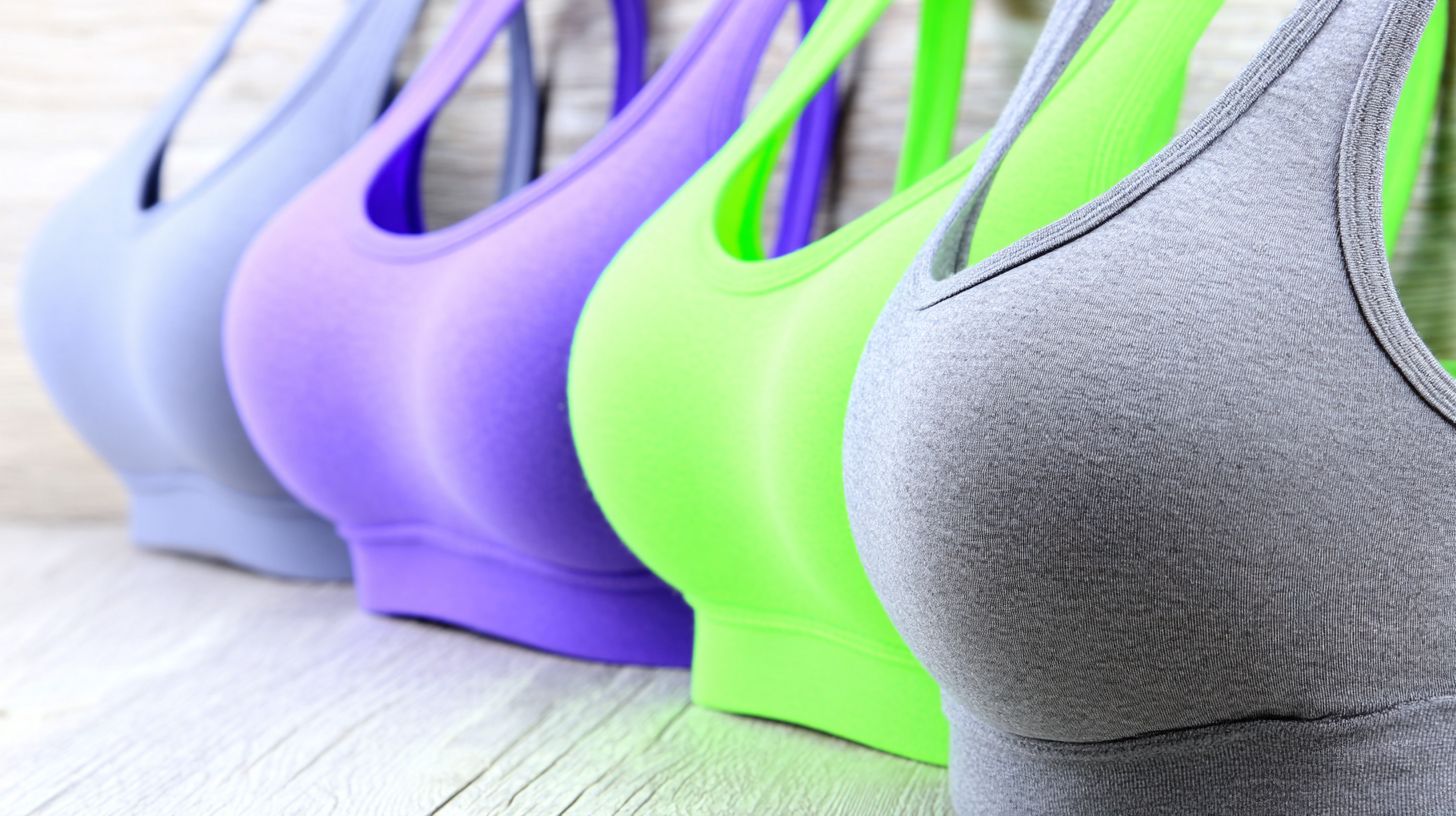
Finding optimal support and comfort in large-bust bras requires understanding that true lift comes from structure, not tight shoulder straps. In full-bust lingerie, roughly 80% of total support originates from a firm, anchored underband, while structural seams, tall wings, and firm center gores distribute weight evenly across the ribcage to eliminate shoulder strain and postural pain.
The Physics of Full-Bust Support: How Large Bras Work
Supporting a larger bust—typically categorized as a D-cup and above in traditional sizing systems—is primarily an engineering challenge. The human bust consists of glandular tissues and adipose mass supported naturally only by Cooper's ligaments and skin. As breast volume increases, gravitational tension on these tissues rises significantly. Standard bra construction designed for smaller cup volumes often relies on elastic shoulder tension, which fails for larger masses and causes deep shoulder indentations, upper back tension, and poor spinal alignment.
To manage heavier breast volume effectively, a well-engineered full-bust bra operates on a balanced weight distribution system across four primary components:
[ Underband (80% Load Bearing) ] <---> [ Center Gore (Bridge Anchor) ] ^ ^ | | [ Side Wings & Powernet Panels ] <---> [ Cut-and-Sew Seamed Cups ]
1. The Underband (80% Support Engine)
The underband acts as the foundational anchor of the entire garment. It must fit snugly around the torso directly beneath the inframammary fold (the natural crease under the breast). Made from high-recovery elastic and lined with firm fabrics such as powernet, the band wraps around the thoracic cavity to transfer breast mass directly to the skeletal frame. If the band is too loose, it slides up the back under tension, causing the front of the bra to tip downward and transferring the load entirely onto the shoulders.
2. The Center Gore and Cradle
The center gore is the fabric bridge connecting the two cups at the sternum. In a supportive wired bra, the gore must rest flat against the sternal bone (known as "tacking"). This anchor prevents the cups from shifting laterally and creates separation, preventing skin-on-skin friction. The cradle—the fabric frame beneath and surrounding the wires—keeps the underwires locked in position against the ribcage.
3. Underwires and Root Breadth
Underwires in large-bust bras are engineered using rigid or spring-steel alloys designed to flex slightly under tension without expanding outward into the armpits. The wire must completely encircle the breast root without riding up onto breast tissue or extending too far onto the latissimus dorsi muscle. A properly fitted wire cradles the base of the breast tissue, transferring vertical load into the band.
4. Seamed Fabric Cups vs. Molded Foam
While seamless molded foam bras are popular for their smooth appearance under thin clothing, they often lack the structural integrity required for large busts. Molded foam maintains a predetermined shape regardless of the wearer's natural breast contour, often compressing tissue downward rather than lifting it. Conversely, multi-part seamed cups (cut-and-sew cups) utilize geometric pattern drafting to lift, project, and shape heavy tissue. Horizontal seams provide projection, vertical seams offer vertical lift, and side-support panels sweep tissue forward from under the arms.
Anatomy of Large Bra Fit: Measuring and Sizing Accurately
Calculating an accurate starting bra size requires precise physical measurements and an understanding of regional sizing differences. Standard band sizes run in even increments (e.g., 30, 32, 34, 36), while cup letters represent the relative difference in inches between the ribcage circumference and the fullest part of the bust.
The Measuring Process
To establish a baseline size, take two core measurements using a flexible tailor's tape measure while wearing an unpadded, non-compressing bra or standing bare-chested:
- Underbust Measurement (Band Size): Measure tightly around the ribcage directly beneath the breast tissue, keeping the tape level parallel to the floor. Pull the tape snug, exhaling fully. If the measurement is an odd number, rounding up or down depends on personal torso padding and brand stretch characteristics, though most modern bra bands are designed to match the true snug measurement.
- Overbust Measurement (Cup Size): Measure around the fullest part of the bust, usually across the nipples. Take three variations of this measurement—standing upright, leaning forward at a 90-degree angle (which accounts for softer or pendulous tissue), and lying flat on your back. Averaging these three numbers provides a more accurate representation of total tissue volume.
Subtracting the snug underbust measurement from the averaged overbust measurement reveals the cup volume. Each inch of difference corresponds to one cup letter progression:
- 1 inch difference = A cup
- 2 inches difference = B cup
- 3 inches difference = C cup
- 4 inches difference = D cup
- 5 inches difference = DD (E in UK sizing)
- 6 inches difference = DDD (F in UK sizing)
Understanding Sizing Systems: US vs. UK Sizing
A major point of confusion when shopping for large bras is the discrepancy between United States (US) and United Kingdom (UK) sizing conventions. British manufacturers specialize extensively in full-bust engineering, making UK sizing the global standard for D+ cups.
| Cup Progression Step | US Sizing System | UK Sizing System | Differential (Inches) |
|---|---|---|---|
| 4th Cup | D | D | 4" |
| 5th Cup | DD | DD | 5" |
| 6th Cup | DDD / E | E | 6" |
| 7th Cup | G | F | 7" |
| 8th Cup | H | FF | 8" |
| 9th Cup | I | G | 9" |
| 10th Cup | J | GG | 10" |
| 11th Cup | K | H | 11" |
| 12th Cup | L | HH | 12" |
| 13th Cup | M | J | 13" |
Note: US brands use inconsistent lettering past an H cup, whereas UK brands follow a standardized double-letter scale (DD, E, FF, G, GG, H, HH, J, JJ, K).
The "Swoop and Scoop" Technique
Properly putting on a bra is essential for verifying fit. Merely slipping arms through straps and fastening the back hooks leaves breast tissue trapped under the wires or pushed toward the armpits.
To execute the Swoop and Scoop:
- Fasten the bra band on the loosest hook while leaning slightly forward.
- Reach inside the cup with the opposite hand (right hand to left cup), reaching back toward the armpit.
- Scoop all breast tissue from behind and beneath the wire, gently lifting it forward and upward into the center of the cup.
- Verify that the underwire rests entirely in the inframammary fold, flat against the ribs, without sitting on top of any tissue.
Full-Bust Bra Styles Explained
Different cup constructions yield vastly different support profiles, shapes, and clothing compatibility. Selecting the right style depends on both personal preference and breast root projection.
[ FULL COVERAGE ] [ BALCONETTE ] - Maximum containment & height - Uplift & horizontal top line - Centralized forward shape - Ideal for open necklines [ PLUNGE ] [ SIDE-SUPPORT ] - Low center gore - Forward projection - Fits deep V-neck garments - Controls lateral tissue migration
1. Full-Coverage Bras
Full-coverage bras feature high-cut cups that enclose almost the entire breast tissue, extending high up toward the collarbone. The center gore is tall, anchoring securely against the sternum.
- Best For: Heavy, soft, or pendulous tissue that tends to spill out of lower-cut cups; daily wear under high-necked clothing or sweaters.
- Support Mechanics: High center gores and tall side wings distribute pressure over a larger surface area, reducing localized strain.
2. Balconette (Balcony) Bras
Balconette bras feature a lower, horizontal cup cut that offers a squared-off neckline. The straps are set wider apart near the edges of the shoulders, and the cup lifts tissue upward rather than inward.
- Best For: Broad shoulders, top-full or even breast shapes, and lower-cut wide necklines (such as scoop or square necks).
- Support Mechanics: Vertical seaming inside the lower cup panel acts as a shelf, pushing mass vertically while maintaining firm bottom-cup structure.
3. Plunge Bras
Plunge bras utilize a low-cut center gore, allowing the cup wire to drop significantly lower between the breasts without sacrificing cup depth.
- Best For: Wearing deep V-necklines or low-cut tops; individuals with close-set breasts where tall gores cause painful pressure.
- Support Mechanics: Angled cup seams push tissue inward to create cleavage. To compensate for the shorter center gore, plunge cups often feature reinforced side panels to hold structural integrity.
4. Side-Support / Multi-Section Seamed Bras
Side-support bras incorporate a distinct vertical panel along the outer edge of the cup (usually 3-part or 4-part seam designs).
- Best For: Wide breast roots, soft tissue that migrates toward the armpits, and individuals seeking a streamlined front profile.
- Support Mechanics: The dedicated side panel pulls tissue forward from the underarm region toward the center of the chest, narrowing the front silhouette and preventing arm-rub friction.
5. Wireless and Sports Support for Large Busts
Wireless options for large busts rely on compression, heavy powernet encapsulation, and wide thoracic bands to compensate for the absence of metal wires. Encapsulation-style sports bras isolate each breast in an individual cup rather than squishing tissue flat against the chest wall, drastically reducing bounce during high-impact movement.
Comparing Full-Bust Bra Styles
| Style Category | Structural Design Highlights | Tissue Distribution Profile | Lift & Separation | Ideal Outfit Pairing |
|---|---|---|---|---|
| Full Coverage | Tall center gore, deep multi-section cups, high armpit wings. | Encloses 90–95% of tissue; high containment. | Superior separation; centered forward shape. | Sweaters, high-neck blouses, structured tailoring. |
| Balconette | Medium-height gore, wide-set straps, horizontal cup line. | Concentrates mass upward; leaves upper chest open. | Excellent vertical lift; moderate separation. | Square necklines, scoop tops, open collars. |
| Plunge | Ultra-low center gore, angled diagonal cup seams. | Pushes mass inward toward chest centerline. | High cleavage projection; low central separation. | Deep V-neck dresses, wrap tops, unbuttoned shirts. |
| Side-Support | Integrated 4-part seaming with reinforced side sling panels. | Sweeps lateral tissue forward away from armpits. | High separation; narrow, streamlined front silhouette. | Fitted T-shirts, button-down shirts, blazers. |
| Wireless / Lounge | Extra-wide ribbed band, inner slings, stretch-lace or powernet. | Spreads tissue evenly across chest and thoracic wall. | Soft, rounded lift; minimal separation (soft contour). | Casual loungewear, sleepwear, low-impact activity. |
| Encapsulation Sports | Rigid outer frame, individual padded wires, racerback conversion. | Locks mass securely to chest wall via dual compression/encapsulation. | Maximum stability; zero motion bounce. | Athletic wear, high-impact running, cross-training. |
How to Troubleshoot Common Bra Fit Issues
When evaluating a bra, observe how it acts under static standing conditions as well as during movement. The following troubleshooting matrix helps identify and correct common fit failures.
[ VISUAL FIT DIAGNOSIS ] Issue: Gore floating away from sternum Cause: Cup volume too small or band too loose Solution: Increase cup size; decrease band size Issue: Dual-breast bulge ("Quad-boobing") Cause: Cup volume inadequate or cup cut too shallow Solution: Increase 1–2 cup sizes or choose deeper seamed style Issue: Riding up back in an arch Cause: Band size too large Solution: Sister-size down in band, up in cup (e.g., 36FF to 34G)
Issue 1: The Center Gore Does Not Touch the Sternal Bone
- The Cause: If the center bridge sits on top of breast tissue or hovers in mid-air, the cups are either too small or too shallow for your projection, forcing the breasts to push the entire garment away from the body. Alternatively, a band that is too loose will lack the tension required to anchor the wires against the ribs.
- The Fix: Increase the cup size by one or two letters, or move to a narrower, deeper cup construction. If the band shifts easily when tugged, drop down one band size while increasing the cup size (e.g., move from a 34G to a 32GG).
Issue 2: Spilling over the Cup Edge ("Quad-Boobing")
- The Cause: Breast tissue bulging over the top rim or near the armpits indicates that the cup volume is insufficient to hold the total tissue mass. It can also occur when a person with top-full breasts wears a balconette or plunge style cut for bottom-full shapes.
- The Fix: Increase the cup size. If the top edge still cuts into tissue despite extra room in the bottom of the cup, switch to a style with an elasticized upper lace section that flexes with upper-bust volume.
Issue 3: Cup Gaping or Fabric Wrinkling
- The Cause: Wrinkling near the apex or top seam usually means the cup is too large, but it can also occur if the cup shape is too projected for a shallower breast shape. Paradoxically, a cup that is too small can also cause gaping if the breast tissue cannot fit inside the cup opening, leaving the fabric empty at the bottom.
- The Fix: Perform a Swoop and Scoop first. If empty space remains, step down a cup size or select a shallow, shorter cup profile such as a demi-cup.
Issue 4: Straps Digging into the Shoulders
- The Cause: Shoulder grooving occurs when the band is too loose to support the breast mass, forcing the shoulder straps to carry the load vertically like suspenders.
- The Fix: Reduce the band size. The shoulder straps should carry no more than 10-20% of the weight. You should be able to comfortably slip two fingers under each shoulder strap without lifting the bra cups off your chest.
Care and Maintenance for Heavy-Duty Lingerie
Full-bust bras rely heavily on elastane, powernet, and precise wire channel stitching to maintain their structural integrity. Heat, friction, and harsh detergents degrade elastic fibers rapidly, causing the band to stretch out and lose its supportive power prematurely.
Washing and Care Guidelines
- Rotate Daily: Never wear the same bra two days in a row. Elastane fibers require roughly 24 hours of rest after being stretched against body heat to contract back to their natural memory shape.
- Hand Washing preferred: Submerge bras in cool water with a gentle, non-rinse delicate laundry detergent. Gently agitate the water, soak for 10–15 minutes, and press water out using a dry towel. Avoid wringing or twisting wires.
- Machine Washing Precautions: If using a washing machine, place bras in a rigid, padded lingerie wash bag. Select a delicate cold cycle with a low spin speed. Never use fabric softeners, as they coat elastane fibers and ruin their elasticity.
- Air Drying Only: Heat from tumble dryers melts elastane strands and warps metal underwires. Hang bras by their center gore across a drying rack, or lay them flat. Never hang a wet bra by its shoulder straps, as the weight of the damp fabric will permanently stretch them.
Practical Steps to Finding Your Ideal Fit
- Calculate Your Baseline Size: Take fresh underbust and overbust measurements, then translate them using the UK sizing scale for maximum brand compatibility.
- Identify Your Shape: Determine whether your breast tissue is top-full, bottom-full, shallow, or highly projected. Match your shape to appropriate cup constructions (e.g., seamed side-support cups for projected shapes; elastic lace tops for asymmetrical or top-full shapes).
- Test the Band First: Put the bra on backward and upside down, with the cups hanging down your back like a cape. Fasten the hooks on the outer setting. If the band feels comfortably snug without falling down, the band size is correct. This test isolates band fit from cup size issues.
- Swoop, Scoop, and Evaluate: Put the bra on correctly, scoop all tissue into the cups, and check the three key anchors: flat center gore, flush underwires in the inframammary fold, and a level horizontal back band.
- Adjust for Brand Variations: Keep a record of sizing across different brands. A 32GG in Panache may fit firmer than a 32GG in Elomi or Freya due to variations in band stretch stiffness.
Frequently Asked Questions
Why do my bra straps dig into my shoulders if I have a large bust?
Deep shoulder grooves occur when the bra band is too large or loose to support the chest. When the band fails to carry roughly 80% of the breast weight, tension transfers to the straps. To resolve this, drop down a band size and increase the cup size proportionally to shift the weight back onto the ribcage anchor.
Should large-bust bras always have underwires?
Underwires provide optimal lift, separation, and weight distribution for large breasts, but they are not strictly mandatory. High-performance wireless bras engineered with multi-part cut-and-sew cups, inner support slings, and heavy powernet bands can offer substantial support for daily lounging or low-impact activity.
How often should full-bust bras be replaced?
With regular wear in a rotation of three to four bras, a full-bust bra typically lasts between 6 to 12 months. Over time, elastane degrades from body heat and wash cycles. When you must use the tightest hook setting to get a snug fit, or when the underwires begin to bow outward, the bra has lost its structural support and should be replaced.
What is the difference between US and UK bra cup sizing for large cups?
While US and UK sizing are identical up to a DD cup, they diverge afterward. UK sizing uses double letters (DD, E, FF, G, GG, H, HH, J, JJ, K), creating a standardized, incremental progression. US sizing often uses erratic lettering (DDD, G, H, I, J, K) depending on the brand. Because most dedicated full-bust lingerie manufacturers use UK sizing, it is best to determine your UK size when shopping for D+ bras.
How do seamed cups differ from molded cups for larger breasts?
Seamed cups are constructed by stitching together multiple fabric panels, allowing pattern makers to engineer specific projection, lift, and side support tailored to large volumes. Molded cups use heat-formed synthetic foam that retains a pre-shaped dome; this shape often compresses larger breast tissue against the chest wall or causes gaping because it cannot conform to natural variations in breast shape.