Decorative floral storage boxes blend practical utility with interior aesthetics, turning functional clutter control into visual accents. Available in materials ranging from heavy-duty laminated paperboard and embroidered linen to crafted wood and tinplate, these specialized containers conceal household items while adding color, texture, and botanical charm to open shelving, closets, vanities, and living spaces.
Understanding Decorative Floral Storage Box Materials and Construction
The structural integrity and visual longevity of a decorative floral storage box depend primarily on its base material and outer finish. Storage boxes are constructed using distinct manufacturing processes, each suited to specific environmental conditions, load requirements, and decorative styles. Evaluating these structural components helps ensure chosen containers maintain their shape and vibrant floral patterns over years of use.
Floral Storage Box Anatomy
- Lid: Top panel (Laminated paper / Fabric wrap / Wood)
- Shell: Structural core (Chipboard / MDF / Metal frame)
- Print: Exterior motif (Botanical offset printing / Embroidery)
- Interior: Lining layer (Acid-free paper / Velvet / Polyester)
Laminated Paperboard and Chipboard Core
Heavyweight paperboard, often constructed from dense chipboard ranging from 1.5 mm to 3.0 mm in thickness, serves as the industry standard for light-to-medium-duty storage containers. The exterior floral design is typically printed via high-resolution offset lithography onto coated paper, which is then glued to the underlying core.
To prevent peeling and protect against light surface moisture, quality manufacturers apply a matte or satin film laminate over the printed layer. This lamination shields the botanical imagery from ultraviolet fading and minor scuffs, making paperboard boxes an efficient choice for storing stationery, photographs, linens, and light accessories.
Fabric-Wrapped Core and Embroidery
Fabric-covered floral storage boxes incorporate a woven exterior—typically cotton, linen, polyester blends, or velvet—wrapped around an engineered wood (MDF) or hardboard substrate. The floral motifs on fabric boxes are either screen-printed, jacquard-woven, or directly embroidered into the textile layer.
Embroidered designs offer tactile depth and elevated craftsmanship, though they require greater care to avoid snagging. Fabric boxes frequently incorporate soft foam padding beneath the textile surface on the lid, creating a cushioned top that adds luxury to bedroom dressers, walk-in closets, and dressing tables.
Decorative Wooden and Metal Construction
For heavy-duty storage or heirloom preservation, solid wood, plywood, or tinplate metal boxes are preferred. Wooden floral boxes frequently feature hand-painted botanical illustrations, carved relief patterns, or decoupage finishes sealed with protective clear lacquers.
Metal floral boxes—often designed in round hatbox styles or rectangular trunks—utilize stamped tinplate or aluminum with enamel finishes. These rigid structures provide total crush resistance and complete protection against external pests, making them suitable for long-term storage of heavier items, sewing tools, or delicate keepsakes.
Choosing the Right Box for Your Storage Needs and Interior Style
Selecting a floral storage box requires balancing visual harmony with spatial efficiency. Because botanical prints range from subtle monochromatic line art to rich, dramatic oil-painting reproductions, alignment with the host room's design language prevents visual conflict.
Decor Matching Guide:
- Vintage & Cottagecore: Victorian Roses, Chintz, Soft Pastels, Distressed Wood
- Modern Minimalist: Single-Line Botanical Sketches, Monochromatic Leaves
- French Country: Soft Lavender Prints, Woven Fabric-Wrapped MDF
- Bold Contemporary: Oversized Tropical Foliage, Dark Moody Floral Backdrops
Matching Floral Patterns to Interior Decor
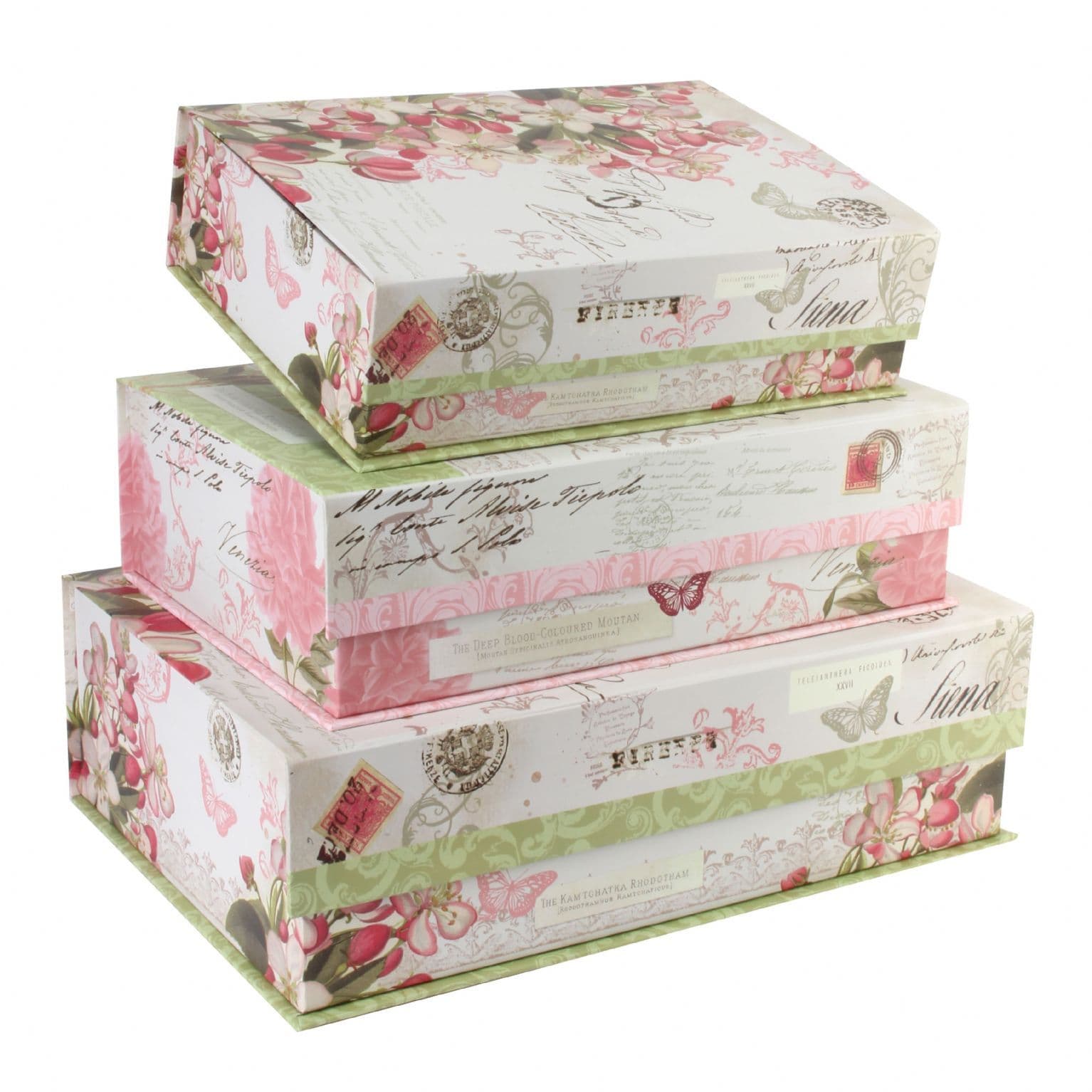
- Vintage and Cottagecore: Look for traditional chintz patterns, Victorian rose motifs, soft pastel color palettes, and distressed wood or paperboard edges. These work exceptionally well in traditional bedrooms, cozy reading nooks, and historic homes.
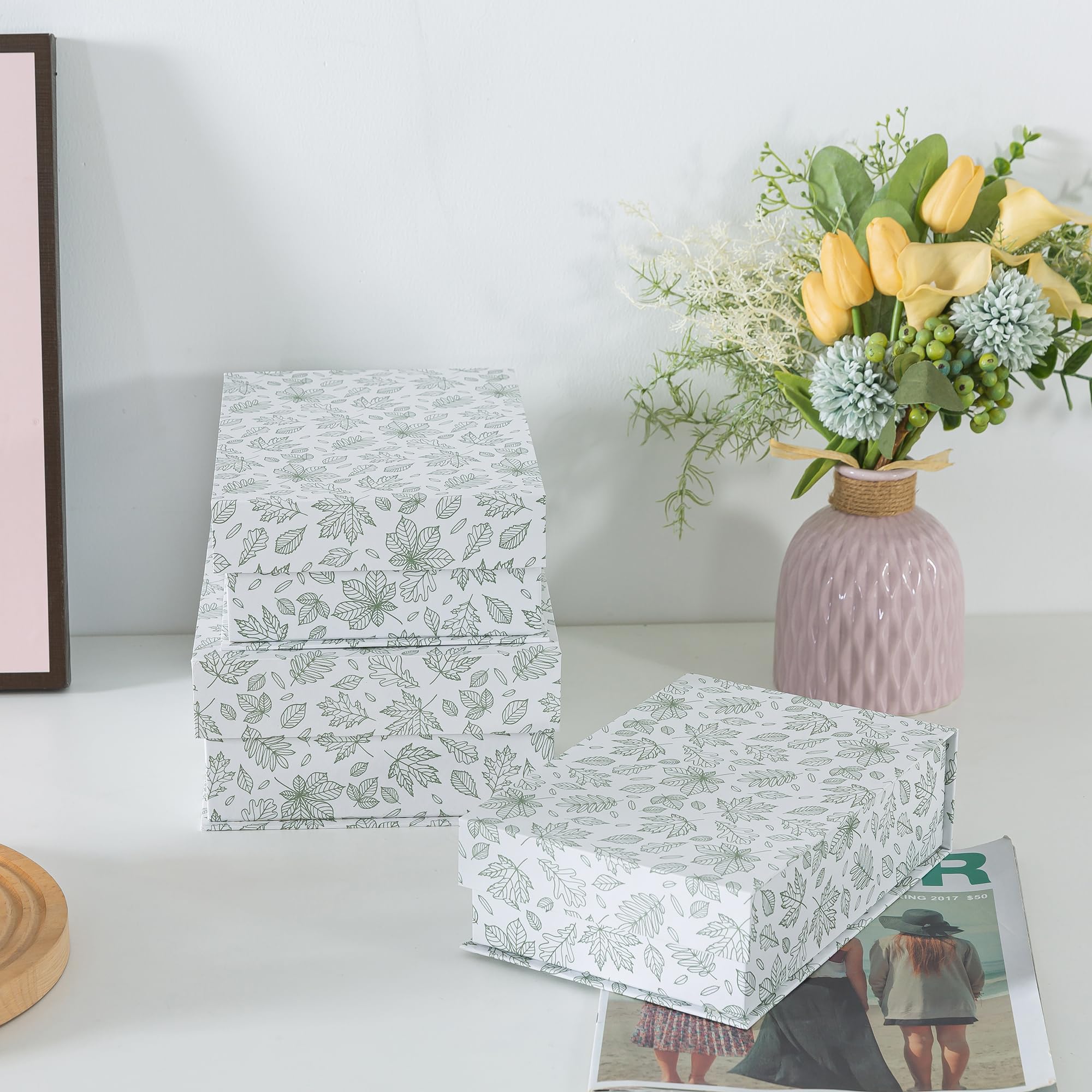
- Modern Minimalist: Choose understated botanical line art, single-stem illustrations, or neutral-toned leaf motifs printed on unbleached linen or matte white paperboard. These complement minimalist shelving without overwhelming clean architectural lines.
- French Country: Opt for muted lavender, olive leaf, or soft field-flower prints on fabric-wrapped boxes featuring antique brass latches or ribbon pulls.
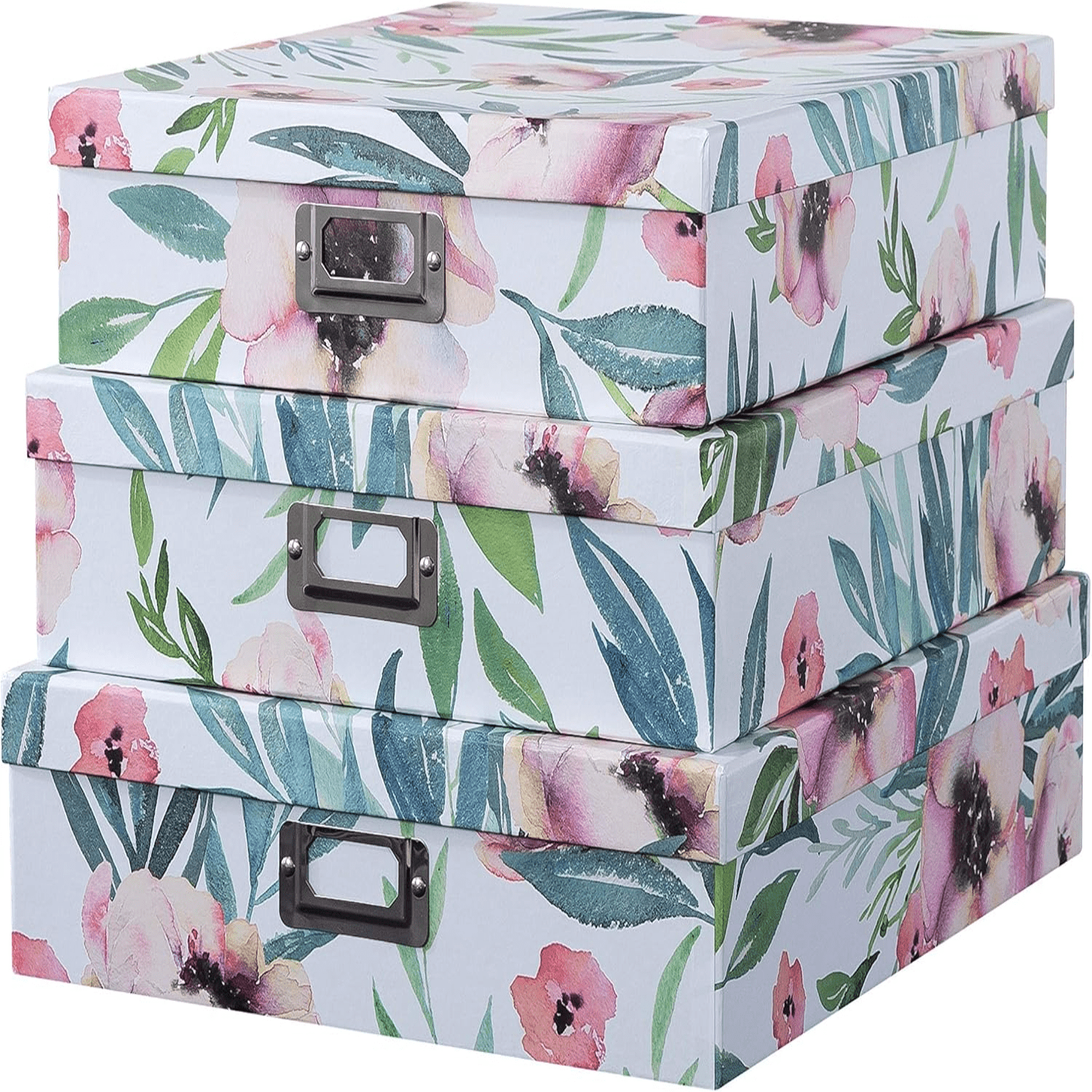
- Bold Contemporary: Select oversized tropical botanical prints, dramatic dark-background floral imagery (such as Dutch Golden Age botanical reproductions), or high-contrast graphic leaves to create an eye-catching focal point on open bookcase units.
Sizing, Capacity, and Nesting Sets
Decorative floral boxes are frequently sold in nested sets of three to five pieces, engineered so smaller units store flat inside larger ones when not in use. When selecting sizes for practical storage, standard dimensions correlate to specific storage applications:
- Small Boxes (Under 8 inches wide): Ideal for jewelry, cosmetics, office supplies, business cards, keys, and small crafting notions.
- Medium Boxes (8 to 14 inches wide): Sized to hold standard A4/letter paperwork, photo albums, folded scarves, craft patterns, and medium-sized keepsakes.
- Large Boxes (14 to 20+ inches wide): Suitable for seasonal garments, throw blankets, bridal accessories, hat storage, and extra bed linens.
Always measure shelf depth and clear height before purchasing. Ensure at least one inch of clearance above the box lid to allow easy removal without scuffing the decorative top edge against shelf frames.
Comparative Analysis of Floral Storage Box Materials
To evaluate which material best satisfies specific home organization demands, the following table breaks down key performance characteristics across common floral storage box constructions:
| Material Type | Structural Core | Primary Durability | Weight Capacity | Humidity Resistance | Ideal Storage Contents | Maintenance Level |
|---|---|---|---|---|---|---|
| Laminated Paperboard | High-density chipboard | Moderate (sensitive to crushing under heavy top loads) | Light to Medium (< 10 lbs) | Low (prone to swelling in damp spaces) | Photos, letters, light craft supplies, stationery | Low (wipe clean with dry cloth) |
| Fabric-Wrapped MDF | Medium-density fiberboard | High (rigid frame resists warping) | Medium to Heavy (< 25 lbs) | Moderate (fabric can absorb environmental moisture) | Apparel, scarves, yarn, bed linens, nursery items | Medium (vacuum dust, spot-clean fabric) |
| Enamelled Metal / Tin | Stamped tinplate / steel | Very High (crushproof and impact resistant) | Heavy (< 35 lbs) | High (impermeable to moisture; rust-resistant if painted) | Heavy tools, sewing supplies, hardware, tea/food keepsakes | Low (wipe with damp cloth) |
| Solid / Carved Wood | Natural timber or plywood | Excellent (long-term structural stability) | Very Heavy (< 50 lbs) | Moderate to High (requires sealed lacquer finish) | Heirloom textiles, heavy books, silver, family records | Medium (dust regularly, polish wood occasionally) |
Preserving Keepsakes and Archival Considerations
While decorative floral boxes serve as attractive home accents, using them to store historic documents, family photographs, or vintage textiles requires strict attention to archival safety. Standard commercial cardboard and decorative wrapping papers often contain acidic compounds and lignin, which outgas over time and cause paper to yellow, brittle, and deteriorate.
Archival Safety Checklist:
- Acid-free core (pH neutral rating around 7.0–8.5)
- Lignin-free raw pulp construction
- Passed the Photographic Activity Test (ISO 18916)
- Non-outgassing, solvent-free adhesives used in binding
- Breathable lining for organic textiles (avoid tight plastic traps)
Archival Safety Standards
When preserving irreplaceable paper or textile items, verify that the storage container explicitly specifies acid-free and lignin-free construction. The international benchmark for archival photo storage requires compliance with ISO 18916 (the Photographic Activity Test, or PAT), which guarantees that the box materials will not react chemically with photographic emulsions.
Controlling Moisture, Dust, and Light Exposure
- Ultraviolet Protection: Direct sunlight degrades both exterior floral graphics and interior contents. Place decorative boxes away from windows or opt for UV-resistant clear lacquers or laminated coatings.
- Humidity Management: Paper and fabric absorb ambient moisture. Maintain room relative humidity between 30% and 50% to suppress mold growth and prevent glue failure. For critical contents inside decorative boxes, consider placing small silica gel packets inside to absorb trace humidity.
- Breathability for Textiles: Natural fibers such as wool, silk, and heirloom cotton require minimal air circulation. Avoid storing organic textiles in air-tight plastic boxes inside decorative shells; instead, use acid-free tissue paper inside breathable fabric-wrapped or unsealed wood containers to cushion folds and prevent permanent creasing.
Creative Placement and Styling Ideas Across the Home
Integrating floral storage boxes into your living environment allows you to organize room clutter while elevating visual interest. Strategic grouping and placement transform utility boxes into purposeful decorative elements.
Room Styling Integration:
- Living Room: Stacked on Coffee Table or Shelves
- Bedroom / Closet: Vanity Cosmetics, Closet Shelf Rows
- Home Office: Color-Coded File Desktop Organizers
Living Rooms and Entryways
Stacked arrangements work exceptionally well on low coffee tables, side tables, or console tops. Group three nested floral boxes vertically from largest to smallest to build visual height. Use the bottom large box for game controllers or throw blankets, the middle box for magazines or mail, and the top small box for TV remotes and small items.
On open bookcase units, alternate between books and floral storage boxes to break up dense rows of spines, introducing visual softness through botanical artwork.
Bedrooms, Closets, and Vanities
In master closets or dressing areas, place matching sets of fabric-wrapped floral storage boxes along upper open shelving. Labeling the front handles with small luggage tags helps maintain quick access to off-season accessories, belts, or hosiery while keeping shelves organized. On vanity tops, small lid-top floral boxes conceal everyday cosmetics, hair accessories, and jewelry, keeping countertops clean and clutter-free.
Craft Rooms and Home Offices
Floral boxes are useful for organizing creative supplies. Assign different floral print colors or designs to specific supply categories—such as ribbon rolls, thread spools, scrapbooking papers, or watercolor tubes. The decorative exterior keeps craft spaces looking refined even when filled with dense inventory.
Maintenance and Longevity: Cleaning and Protecting Your Storage Boxes
Proper care preserves the color saturation of exterior floral prints and prevents structural damage to box frames. Maintenance procedures vary based on exterior finish:
Cleaning Paperboard and Laminated Surfaces
- Dusting: Dust regularly using a dry microfiber cloth or a soft-bristle brush.
- Spot Cleaning: For laminated paperboard, wipe lightly with a slightly damp (not wet) cloth using clear water. Immediately dry with a fresh towel. Never submerge paperboard or use aggressive chemical solvents, which dissolve surface laminates and cause chipboard layers to delaminate.
Fabric and Textile Care
- Dust Removal: Use a vacuum cleaner equipped with a soft brush attachment on low suction setting to remove dust trapped in woven fabrics or embroidered threads.
- Stain Removal: Treat fabric spots using a mild upholstery cleaner or a mixture of gentle soap and water. Test the cleaner on a discreet bottom corner first to ensure dye fastness. Dab the stain lightly using a micro-sponge; avoid aggressive scrubbing, which can fray embroidered threads or stretch fabric wraps away from the frame core.
Structural Repairs
If heavy stacking causes paperboard corners to split, repair them early to preserve structural strength:
- Apply a thin layer of neutral-pH archival polyvinyl acetate (PVA) craft glue between the split paperboard layers using a fine-tipped brush or toothpick.
- Press the seam together firmly and secure it with a strip of removable painter's tape while it cures.
- Allow the glue to cure completely for 24 hours before re-stacking or refilling the container.
Frequently Asked Questions
How do I know if a floral storage box is safe for archiving old photographs?
Check the product specifications to confirm the box is certified acid-free, lignin-free, and safe for long-term photo preservation. Standard decorative boxes printed with solvent-based inks or constructed from unbuffered raw cardboard can release acidic gases that discolor and warp vintage photographic prints over time.
What is the best way to clean fabric-wrapped floral storage boxes?
Regularly vacuum fabric boxes with a soft brush attachment on low suction to prevent dust accumulation. For spot stains, use a mild fabric cleaner applied lightly with a clean microfiber cloth. Never submerge fabric-wrapped boxes in water, as moisture will warp the internal wooden or chipboard core.
Can floral storage boxes be stacked without collapsing?
Yes, provided the structural load is distributed properly. Heavyweight paperboard boxes can generally support two to three light-to-medium-filled boxes stacked vertically. For higher stacks or heavier items, choose fabric-wrapped MDF or wooden floral boxes, which offer rigid structural framing that resists side-wall buckling under load.
How can I prevent decorative paper storage boxes from warping over time?
To avoid structural warping, store paper storage boxes in climate-controlled indoor environments with relative humidity between 30% and 50%. Avoid placing paperboard boxes directly on concrete basement floors or near exterior walls, radiational heat sources, or high-humidity areas like bathrooms.
Are floral storage boxes suitable for moisture-prone areas like basements or attics?
Standard paperboard and fabric-wrapped floral storage boxes absorb atmospheric moisture, making them prone to mold, warping, and odor retention in damp basements or hot, uninsulated attics. For high-humidity storage zones, use enamelled metal floral tins or sealed plastic storage solutions instead.
Strategic Steps for Selecting and Integrating Floral Storage Containers
To select the ideal floral storage boxes for your home organization project, follow this practical evaluation sequence:
- Audit Storage Inventory: Measure and list the items requiring storage, sorting them by weight, fragility, and susceptibility to environmental degradation.
- Confirm Environmental Conditions: Identify where the storage boxes will reside. Select acid-free paperboard or lined wood for dry living quarters, and avoid using unlaminated paperboard in damp areas.
- Measure Available Dimensions: Calculate shelf height, depth, and width clearances, accounting for an extra inch above box lids for easy removal.
- Coordinate Interior Patterns: Match the botanical print style—whether modern line art, bold tropical foliage, or classic chintz—to the surrounding room's color scheme and architectural aesthetic.
- Implement Load Balance Rules: Place the heaviest, largest containers at the base of stacked groups and light, frequently accessed boxes near the top to maintain stability and structural integrity.