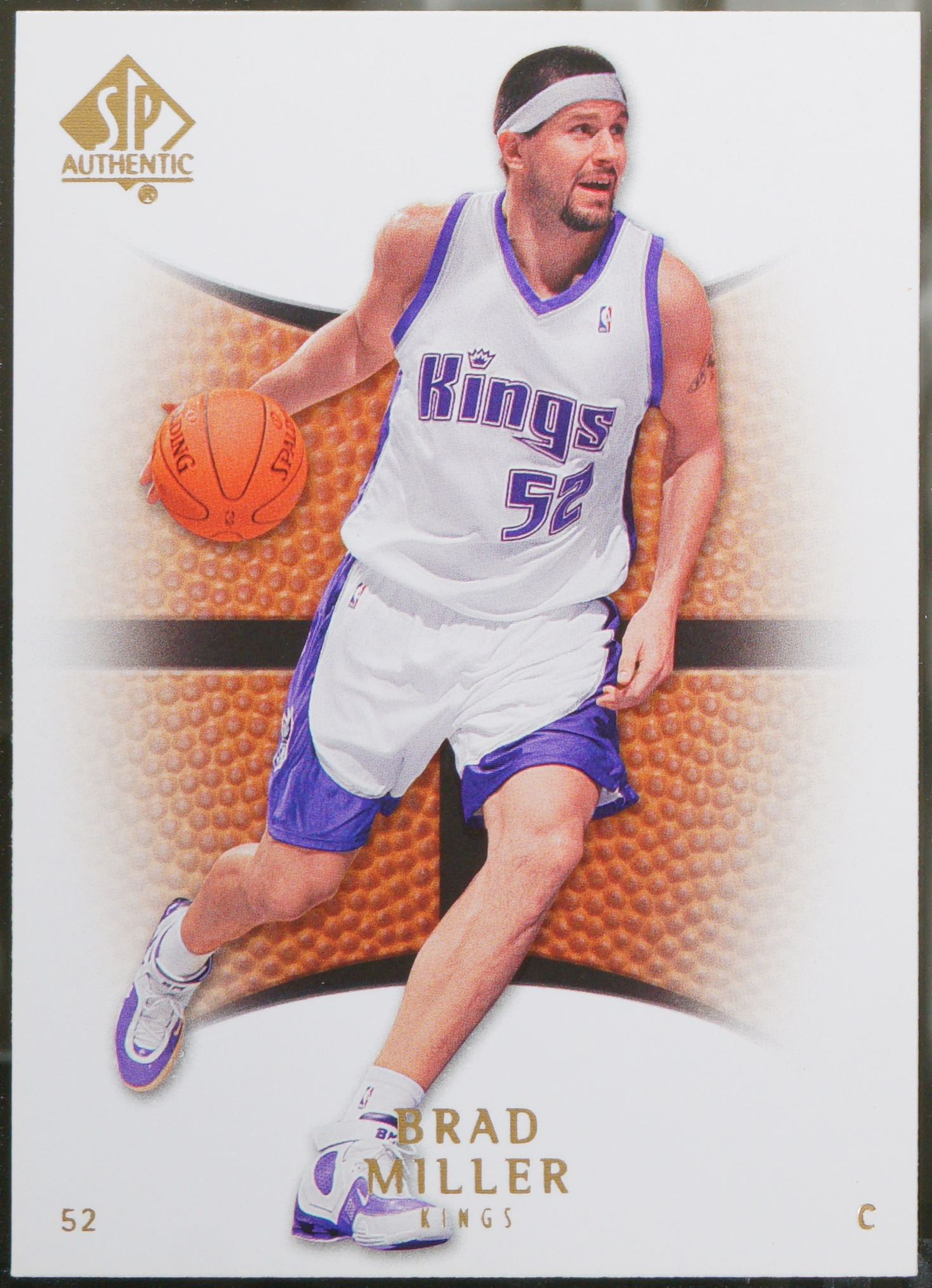
Brad Miller enjoyed a highly successful 14-season NBA career (1998–2012), earning two All-Star selections and becoming one of the first undrafted players to achieve that honor. As of 2026, his net worth is estimated at approximately $45 million, bolstered by over $91 million in career salary and his post-retirement ventures in the outdoor media industry.
The Path from Purdue to Undrafted Free Agency
Brad Miller’s journey to the NBA was far from guaranteed. After a productive four-year collegiate career at Purdue University, where he established himself as a physical presence and a capable passer, Miller went unselected in the 1998 NBA Draft. The 1998 NBA lockout further complicated his entry into the league, forcing him to briefly showcase his talents in Italy with Bini Viaggi Livorno. This period of adversity proved foundational for Miller’s professional resilience.
When the NBA finally resumed, Miller signed as a free agent with the Charlotte Hornets. During his tenure in Charlotte (1998–2000), he was primarily a backup, but he quickly caught the attention of scouts with his high basketball IQ and shooting range. His ability to hit mid-range jumpers and find open teammates from the high post was an anomaly for a 7-foot center in the late 1990s. This versatility earned him a move to the Chicago Bulls in 2000, where his production began to spike.
In Chicago, Miller transitioned from a rotational player to a reliable starter. By the 2001-2002 season, he was averaging 12.7 points and 8.4 rebounds per game. However, his time in Chicago is often remembered for a high-profile physical altercation with Shaquille O’Neal. While the fight itself was a flashpoint, it underscored Miller's refusal to be intimidated by the league’s most dominant physical forces, a trait that would define his defensive reputation for years to come.
The Sacramento Peak: Redefining the NBA Center Position
The most defining era of Brad Miller’s career occurred with the Sacramento Kings. Following a successful but brief stint with the Indiana Pacers—where he earned his first All-Star nod in 2003—Miller was traded to Sacramento in a multi-player deal involving Hedo Türkoğlu and Scot Pollard. This move placed Miller in Rick Adelman’s "Princeton Offense," a system that prioritized spacing, cutting, and, most importantly, passing big men.
In Sacramento, Miller found his basketball soulmate in Vlade Divac. Together, they formed arguably the most skilled passing frontcourt in NBA history. Miller flourished as a "Point Center," often bringing the ball up the floor or initiating sets from the top of the key. His statistical peak came during the 2003-2004 season, where he averaged 14.1 points, 10.3 rebounds, and 4.3 assists per game, earning his second consecutive All-Star appearance.
Miller’s impact on the Kings was not merely statistical; he provided the offensive gravity needed to complement stars like Chris Webber and Peja Stojaković. By pulling opposing centers away from the rim to respect his jump shot, he opened up driving lanes for his teammates. This "stretch-five" archetype, which Miller helped pioneer, has become the standard for modern NBA centers in 2026.
Analyzing Brad Miller's Career Earnings and 2026 Net Worth
Brad Miller’s financial success is a testament to his longevity and the value the NBA placed on his unique skill set during the mid-2000s. Over his 14-year career, Miller played for the Hornets, Bulls, Pacers, Kings, Rockets, and Timberwolves.
His most lucrative contract was a seven-year deal worth approximately $68 million, signed during his transition to the Kings. By the time he retired in 2012, his cumulative NBA salary earnings totaled roughly $91.2 million. In the years since his retirement, Miller has maintained his wealth through disciplined investing and a successful second career in the outdoor sports industry.
Estimated Financial Breakdown (2026 Status)
| Category | Details | Estimated Value/Total |
|---|---|---|
| Total NBA Salary | 14 Seasons (1998–2012) | $91,200,000 (Gross) |
| Peak Annual Salary | 2008-2009 Season (Kings) | $12,250,000 |
| Post-NBA Business | Country Boys Outdoors & Real Estate | Diversified Portfolio |
| 2026 Estimated Net Worth | Assets, Investments, and Media | $45,000,000 |
As of 2026, Miller’s net worth remains stable. Unlike many professional athletes who struggle financially after retirement, Miller pivoted into his passion for hunting and the outdoors. He founded "Country Boys Outdoors," a brand and television program that capitalized on his personality and specialized interest. This venture, combined with wise real estate investments in his native Indiana and other regions, has protected his NBA earnings from the typical pitfalls of inflation and lifestyle creep.
Defensive Grit and the Shaquille O’Neal Rivalry
While Miller was celebrated for his offensive finesse, he was also a rugged, old-school defender. He lacked the elite verticality of traditional rim protectors, but he compensated with exceptional positioning and "active hands." He was never afraid of physical confrontation, which led to one of the most famous on-court incidents in NBA history.
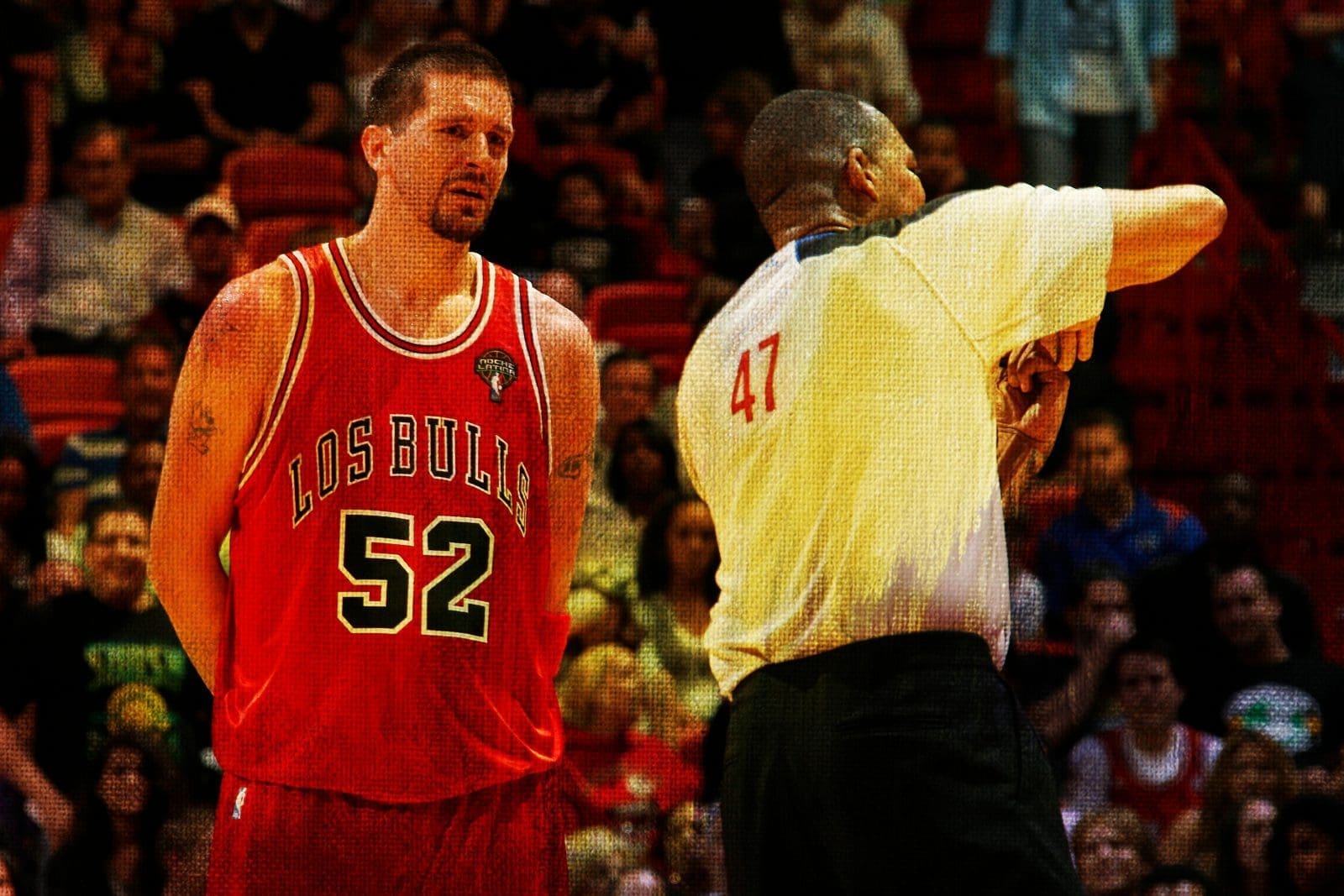
In January 2002, while playing for the Bulls, Miller and teammate Charles Oakley frequently fouled Shaquille O’Neal to prevent easy dunks. Frustrated by the physical play, O’Neal swung a massive haymaker at Miller. Fortunately for both players, the punch narrowly missed. The incident solidified Miller’s reputation as a "tough customer" who would not back down from the league's heavyweights. This grit was a major reason why teams like the Houston Rockets and Minnesota Timberwolves sought him out in his later years to serve as a veteran mentor for younger rosters.
Legacy: The Blueprint for the Modern "Point Center"
In 2026, the NBA is dominated by centers like Nikola Jokić and Domantas Sabonis, players who function as the primary playmakers for their teams. Brad Miller was the conceptual bridge to this era. Before the "three-and-D" or "stretch-five" terminology became mainstream, Miller was demonstrating that a 7-footer could be the most dangerous passer on the court.
Miller’s legacy is defined by three primary contributions to the game:
- The Undrafted Inspiration: Along with Ben Wallace, Miller proved that being bypassed in the draft was not a ceiling. His two All-Star selections as an undrafted player remain a rare and prestigious feat.
- High-Post Playmaking: He showed that a center could facilitate an offense without having to back down defenders in the low post. His 2003-2005 seasons in Sacramento are still studied by coaches looking to implement high-low passing schemes.
- Longevity through IQ: Miller played until he was 36 years old. As his athleticism declined, his shooting and passing remained elite, proving that a high basketball IQ is the ultimate tool for career longevity in the NBA.
Life After the Buzzer: The Great Outdoors and Media
Since his final game with the Minnesota Timberwolves in 2012, Miller has largely stepped away from the basketball limelight to pursue his lifelong passion for the outdoors. He became a prominent figure in the hunting community, hosting "Brad Miller’s Country Boys Outdoors." The show focused on big-game hunting and conservation, airing on networks like the Sportsman Channel.
This transition was seamless because Miller never cultivated the "big city" superstar persona. He remained true to his roots as a "country boy" from Kendallville, Indiana. His media career allowed him to maintain a public profile while engaging in an industry that felt more authentic to his personality than coaching or traditional broadcasting. In 2026, he is frequently seen at charity events and Purdue alumni functions, maintaining a strong connection to his Indiana heritage.
Brad Miller Career Statistical Highlights
- NBA All-Star: 2003, 2004
- Career Games Played: 868
- Career Points: 9,736 (11.2 PPG)
- Career Rebounds: 6,199 (7.1 RPG)
- Career Assists: 2,412 (2.8 APG)
- Free Throw Percentage: 80.4% (Elite for a center)
Frequently Asked Questions
Was Brad Miller the first undrafted player to become an All-Star?
Brad Miller and Ben Wallace both earned All-Star selections in 2003, making them the first undrafted players in the modern NBA era (post-ABA merger) to achieve this status. This was a significant milestone that changed how NBA front offices scouted non-drafted free agents and collegiate seniors.
How much did Brad Miller make in the NBA?
Over the course of his 14-year career, Brad Miller earned approximately $91.2 million in total salary. His highest-earning period was with the Sacramento Kings, where he was consistently among the top-paid centers in the Western Conference due to his unique playmaking abilities.
What is Brad Miller doing in 2026?
In 2026, Brad Miller is primarily focused on his outdoor media ventures and real estate investments. He remains an avid hunter and fisherman, occasionally appearing as a guest on sports podcasts to discuss the evolution of the "passing big man" in the modern NBA.
Which teams did Brad Miller play for?
Miller played for six NBA franchises: the Charlotte Hornets (1998–2000), Chicago Bulls (2000–2002, 2009–2010), Indiana Pacers (2002–2003), Sacramento Kings (2003–2009), Houston Rockets (2010–2011), and Minnesota Timberwolves (2011–2012).
How tall is Brad Miller?
Brad Miller is 7 feet tall (2.13 meters). During his playing days, he was listed at approximately 245 pounds, which gave him the necessary bulk to compete with traditional centers while maintaining the mobility required for his perimeter-oriented offensive game.
Understanding the "Passing Center" Paradigm
For fans and analysts looking to understand the evolution of the NBA, studying Brad Miller’s career is essential. He represents a pivot point in basketball history where size began to be paired with elite skill rather than just raw power. If you are a young player or a coach, watching tape of Miller’s years in Sacramento provides a masterclass in "back-door" passing and floor spacing.
To truly appreciate Miller’s legacy in 2026, one must look at the current NBA landscape. Every time a center catches the ball at the elbow and waits for a cutter, or steps out to hit a trailing three-pointer, they are utilizing the blueprint that Brad Miller helped draw. His career serves as a reminder that being "undrafted" is merely a starting point, and versatility is the most valuable currency in professional sports.