Note: This article focuses on clinical pollen monitoring and patient management protocols specifically for Atlanta Allergy & Asthma, the largest allergy practice in Georgia. It is intended for residents seeking localized data and professional medical guidance regarding regional aerobiology.
Understanding Atlanta’s Unique Aerobiological Landscape in 2026
Atlanta presents one of the most challenging environments in the United States for allergy sufferers due to its unique topography, heavy forest canopy, and humid subtropical climate. As of 2026, the Atlanta Allergy & Asthma pollen counting station remains the gold standard for regional data, utilizing the Rotorod sampling method. This mechanical device draws air through a silicone-greased rod over a 24-hour cycle, which is then analyzed under a microscope by certified aerobiology technicians.
The 2026 season has seen shifts in typical pollination windows due to varying spring temperatures. While tree pollen—specifically oak, pine, and hickory—remains the dominant concern from late February through May, patients are increasingly reporting sensitization to weed pollens appearing earlier in the summer months. Understanding that a high count does not always correlate with individual symptom severity is critical; an individual’s personal threshold of sensitization often dictates clinical outcomes more than the raw particulate count itself.
The Science Behind Pollen Measurement and Clinical Implications
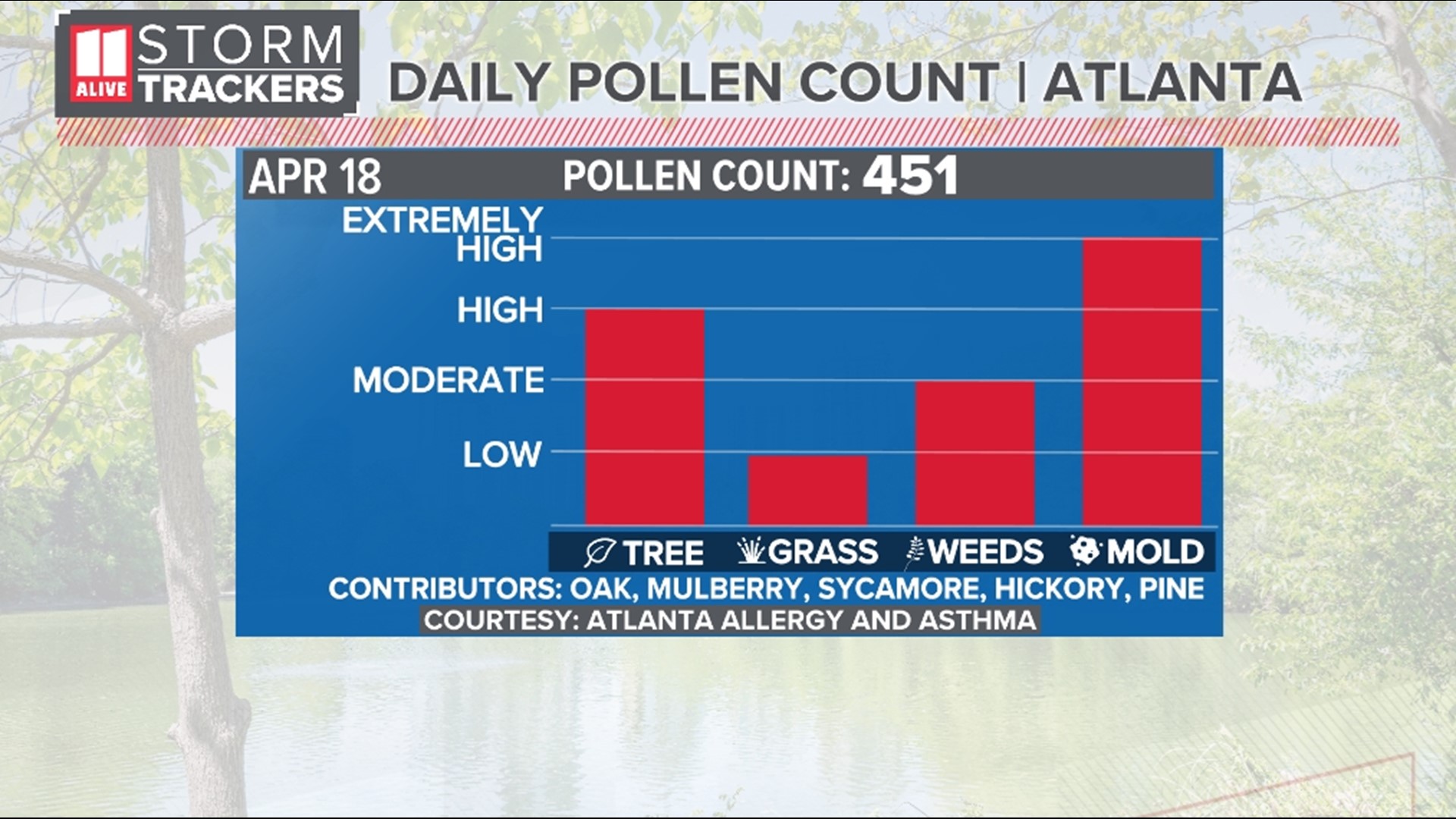
The technical categorization of pollen counts is measured in grains per cubic meter of air (gr/m³). In Atlanta, the thresholds used by the practice to categorize severity are standardized to provide actionable intelligence for patients with allergic rhinitis, asthma, and conjunctivitis.
Clinical Severity Thresholds
Low Intensity Counts ranging from 0 to 15 gr/m³ typically produce minimal symptoms in the general population. Most patients remain asymptomatic unless they have extreme hypersensitivity or comorbid conditions.
Moderate Intensity Counts between 16 and 90 gr/m³ are where many patients begin to experience noticeable ocular and nasal irritation. Preventive pharmacological intervention is strongly recommended at this stage.
High Intensity Counts exceeding 91 gr/m³ are considered significant. During these periods, patients with asthma should ensure their rescue inhalers are accessible and consider minimizing outdoor exertion to reduce total allergen load.
Comparing Treatment Modalities for Atlanta’s Peak Seasons
Navigating the pollen season requires a tiered approach to pharmacotherapy and immunotherapy. In 2026, the integration of digital health tracking and personalized treatment plans has become the standard of care for patients visiting the clinics across the Atlanta metropolitan area.
| Treatment Type | Clinical Objective | 2026 Recommendation |
|---|---|---|
| Intranasal Corticosteroids | Reduce inflammation in nasal passages | First-line defense for chronic rhinitis |
| Oral Antihistamines | Block H1 receptor signaling | PRN use for acute breakthrough symptoms |
| Subcutaneous Immunotherapy | Induce long-term immunological tolerance | Gold standard for moderate-to-severe cases |
| Sublingual Immunotherapy | Tablet-based antigen delivery | Alternative for needle-phobic patients |
| Leukotriene Modifiers | Address asthma-related bronchospasm | Adjunctive therapy for patients with dual diagnosis |
Operational Requirements for Patient Access and Insurance
Atlanta Allergy & Asthma maintains a broad network of affiliations across major regional hospital systems, including Northside Hospital, Emory Healthcare, and Piedmont Atlanta. However, patients must verify their specific plan's requirements to avoid unexpected out-of-pocket costs.
- Verify PPO vs. HMO Status: While most PPO plans provide out-of-network benefits, HMO plans generally require a formal referral from your Primary Care Physician (PCP).
- Medicare Contracting: As of 2026, this group is contracted with Original Medicare and several major Medicare Advantage plans; however, patients must verify specific enrollment in plans like Aetna Medicare, UnitedHealthcare, and Anthem Blue Cross Blue Shield before scheduling initial consultation.
- Electronic Health Records: The practice utilizes an integrated portal. All patients are expected to upload relevant history or previous allergy testing results prior to their 2026 visit to ensure continuity of care.
- Referral Compliance: For those using third-party HMO insurance, verify that the referral is active and covers the specific clinic location you intend to visit.
Managing Seasonal Allergies During High-Pollen Days
Effective management is not merely about medication; it is about environmental modification. When the official count hits the "High" category in Atlanta, the following protocols are essential for minimizing exposure:
- Evening Showering: Pollen particulates adhere to hair and skin throughout the day. Showering before bed prevents the transfer of allergens to bedding.
- HEPA Filtration: Utilize High-Efficiency Particulate Air (HEPA) filters in bedrooms and living areas. Ensure filters are replaced per the 2026 manufacturer maintenance schedule for your specific unit.
- Window Management: Keep home and vehicle windows closed during peak pollen hours (typically 5:00 AM to 10:00 AM) to maintain a controlled indoor environment.
- Surface Cleaning: Use damp cloths to wipe down surfaces rather than dry dusting, which can aerosolize settled pollen particles.
Frequently Asked Questions
Does Atlanta Allergy & Asthma accept Original Medicare? Yes, the practice is a contracted provider for Traditional Medicare in 2026. Please verify that your specific supplemental plan is also in-network prior to your appointment.
How often is the pollen count updated? The pollen count is updated daily, Monday through Friday, during the active pollination season. Data is typically available by 10:00 AM on the official practice portal.
Can I be tested for allergies if I am currently taking antihistamines? Generally, antihistamines must be discontinued 3 to 7 days prior to skin testing to ensure accurate results. Always consult with your provider before stopping any prescribed medication.
Is immunotherapy more effective than over-the-counter medications? While OTC medications treat symptoms, immunotherapy (allergy shots or tablets) targets the underlying cause by training the immune system to tolerate allergens. This offers the potential for long-term symptom resolution that medications alone cannot provide.
What should I do if my child has an asthma attack during high pollen? Follow your child's established Asthma Action Plan. If rescue medications do not provide immediate relief, seek emergency medical care at the nearest pediatric urgent care or hospital emergency department, such as Children’s Healthcare of Atlanta.
Expert Recommendations for Long-Term Relief
If you find that your symptoms are worsening despite strict adherence to your 2026 treatment plan, it may be time to reassess your sensitization profile. Many patients benefit from updated diagnostic testing to determine if environmental triggers have shifted. We recommend scheduling a consultation with a board-certified allergist to evaluate whether sublingual or subcutaneous immunotherapy is appropriate for your specific clinical history. Consistent management is the most effective tool in mitigating the impact of Atlanta’s intense pollen cycles on your quality of life.