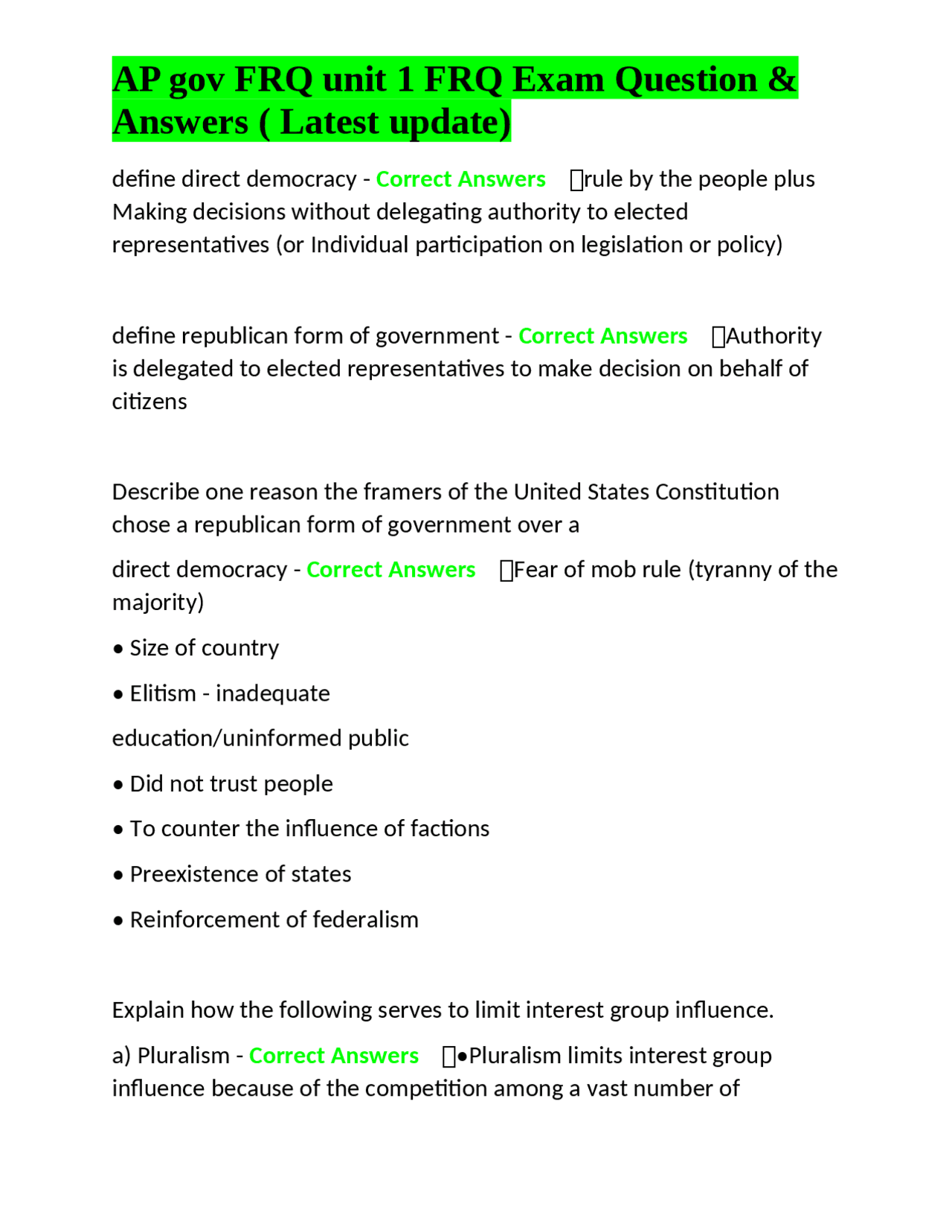
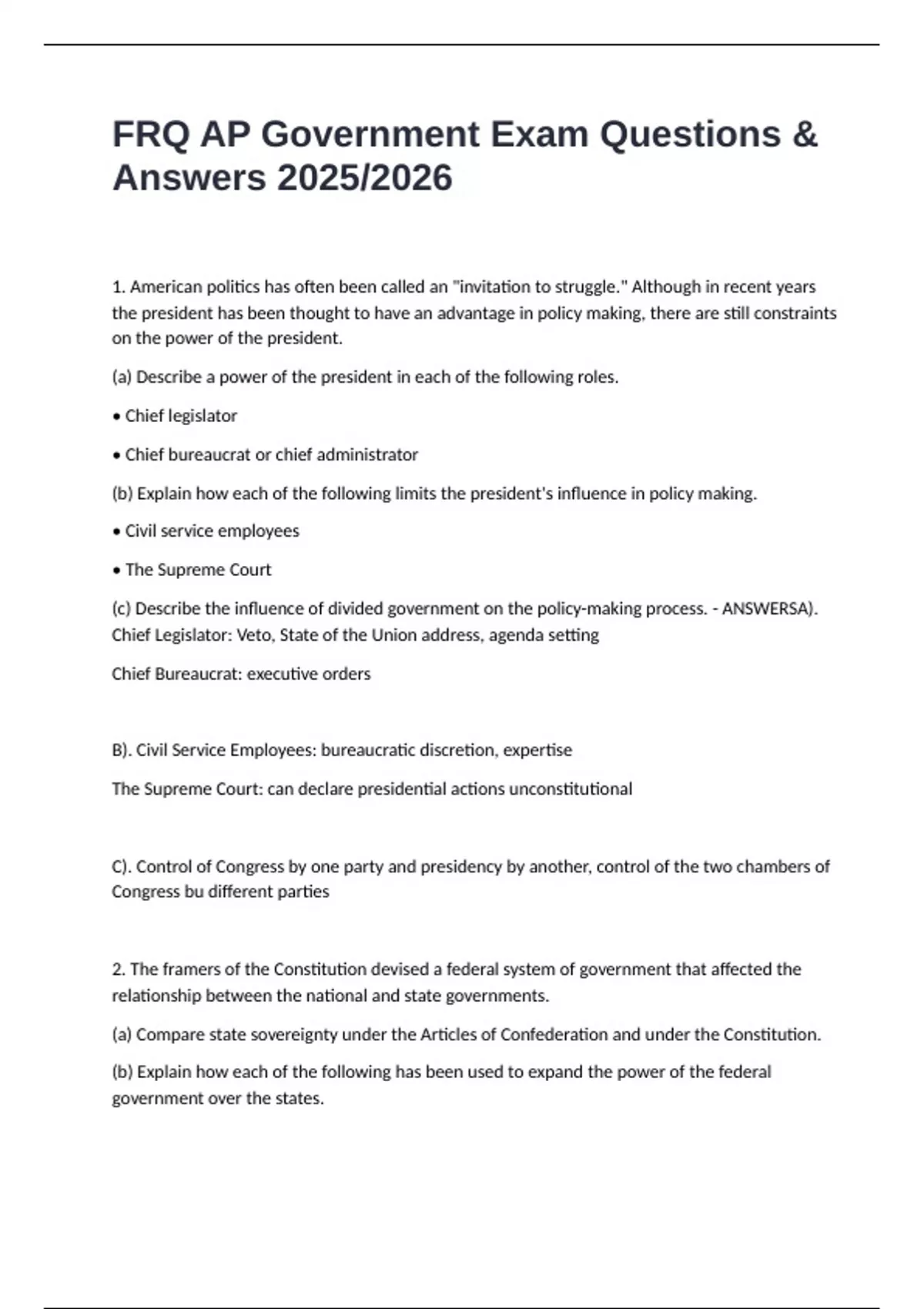
Mastering the Advanced Placement United States Government and Politics (AP Gov) Free-Response Questions (FRQs) is the definitive key to securing a score of 4 or 5 on the exam. As students prepare for the 2026 administration, understanding the exact rubrics, structural expectations, and patterns of historical prompts allows for precise, high-scoring writing. The AP Gov exam features four distinct FRQ types, each designed to test different cognitive skills ranging from foundational knowledge application to data analysis and Supreme Court argument synthesis.
Anatomy of the AP Gov Free-Response Section
The AP Gov free-response section accounts for 50% of the overall exam score and spans 100 minutes. Structurally, the College Board requires students to complete four distinct tasks within this timeframe. Knowing what exam graders look for helps candidates allocate time efficiently and avoid common pitfalls that lead to point deductions on the rubric.
- Question 1: Concept Application (12.5% of score): Requires students to apply political concepts and processes to a real-world or hypothetical scenario.
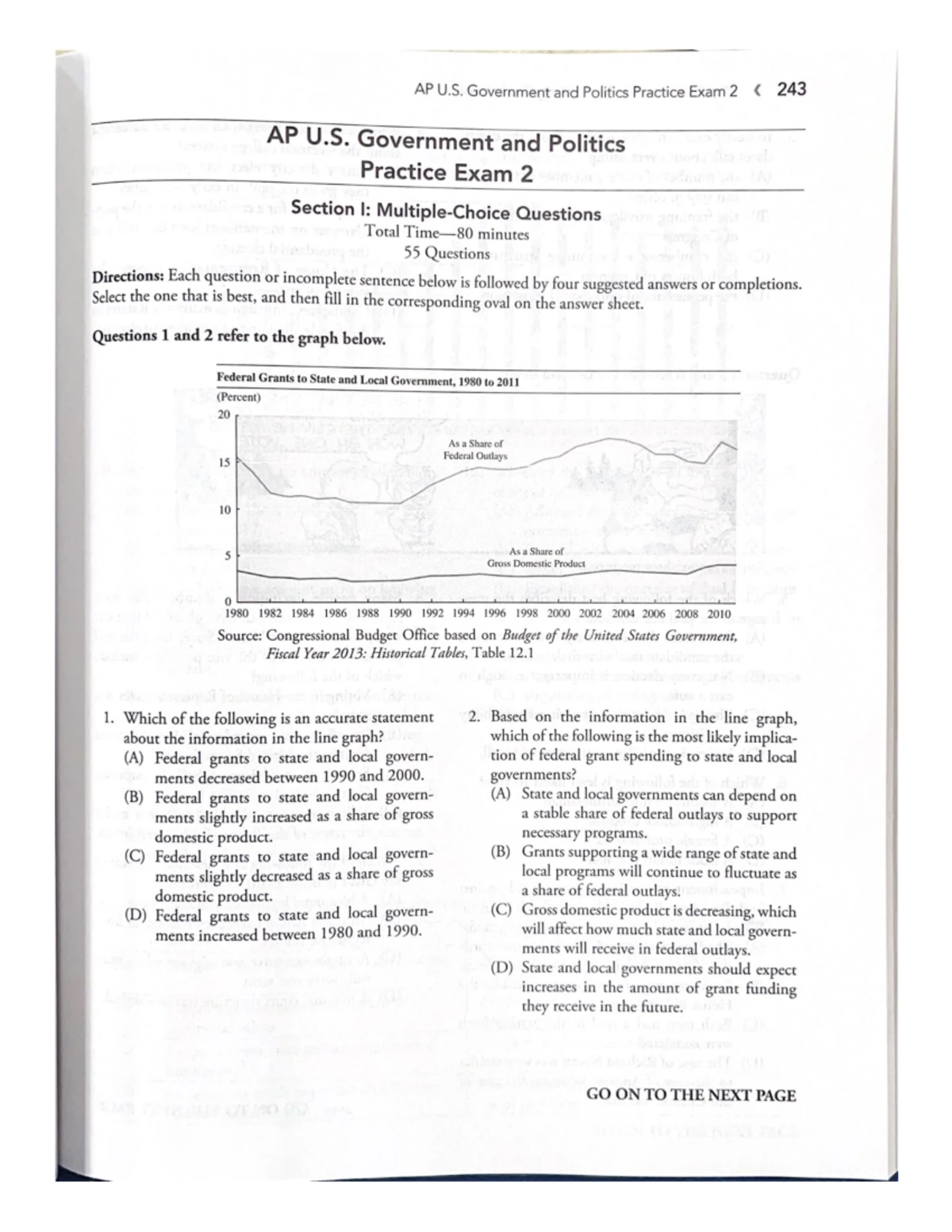
- Question 2: Quantitative Analysis (12.5% of score): Demands the analysis of quantitative data presented in a graph, table, or infographic, linking the data to political principles or institutions.
- Question 3: Supreme Court Comparison (12.5% of score): Asks students to compare a non-required Supreme Court case with one of the 15 required foundational Supreme Court cases.
- Question 4: Argument Essay (12.5% of score): Challenges students to write an argumentative essay supported by evidence from at least one required foundational document.
Mastering Question 1: The Concept Application FRQ
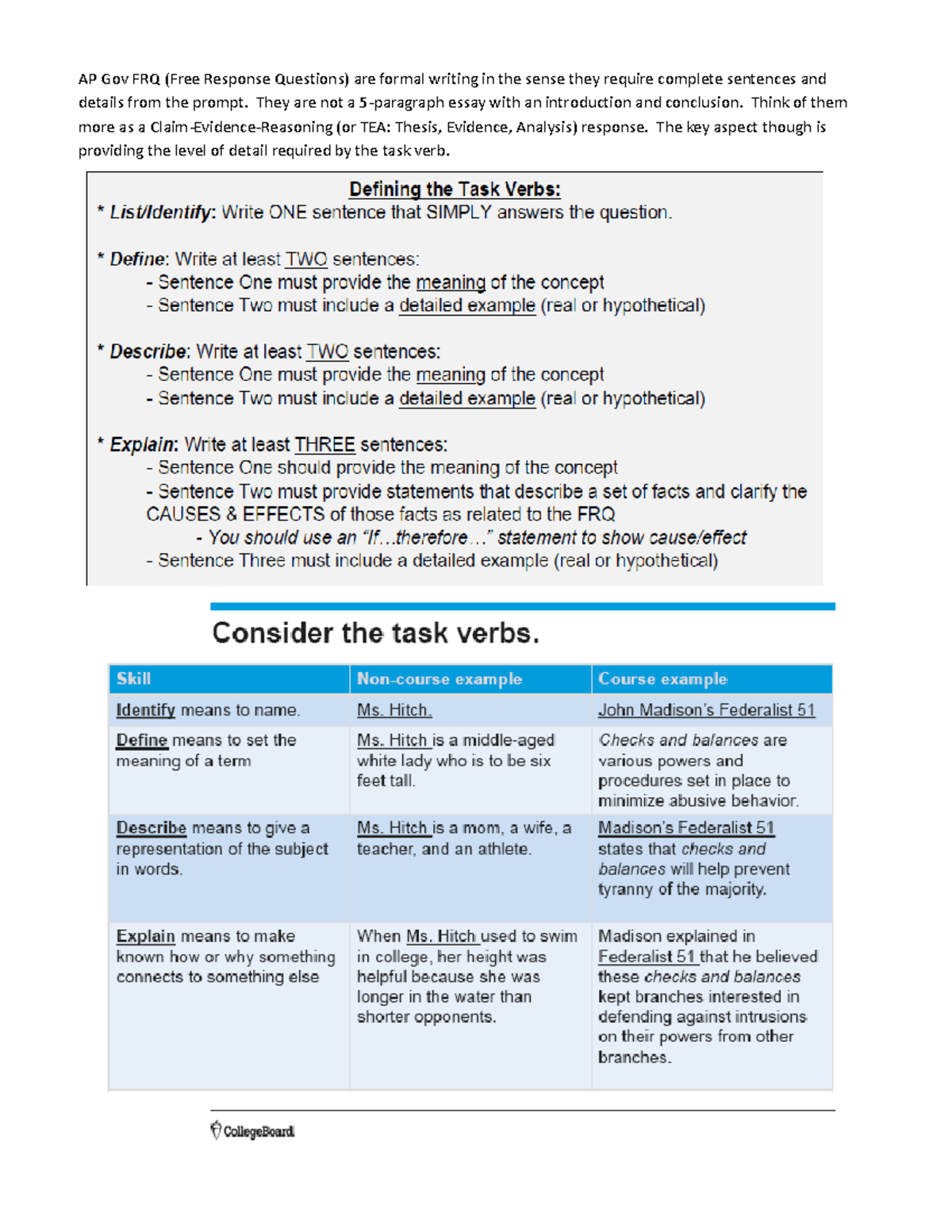
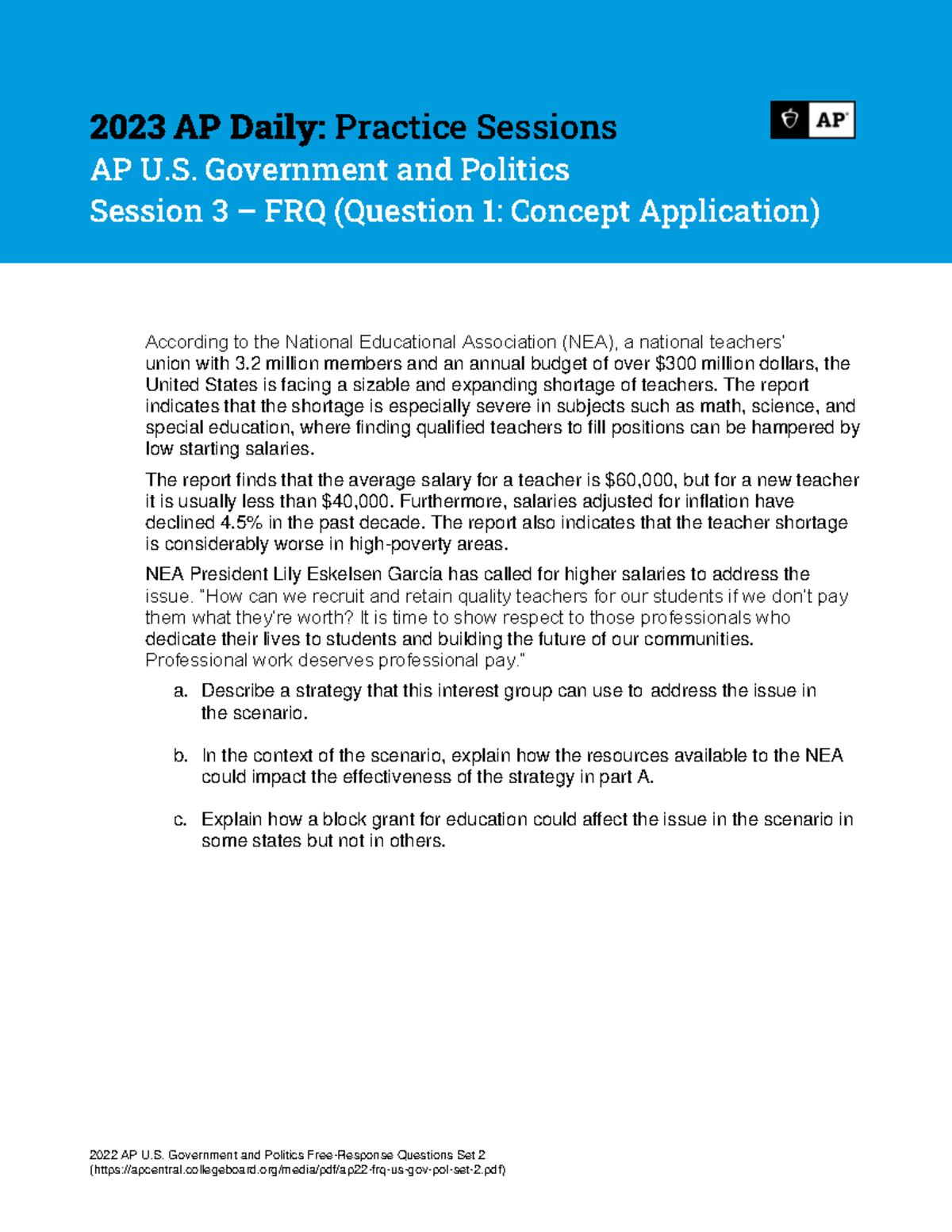
The Concept Application prompt presents a realistic political scenario and tasks the student with completing three distinct operational verbs: describe, explain, or compare. To earn full points, responses must be direct, avoiding unnecessary introductory filler or restating the prompt.
Strategic Breakdown for Concept Application
When tackling this question type, students should implement a structured approach to ensure all rubric points are addressed systematically:
- Identify the Core Political Concept: Read the scenario and immediately pinpoint the specific political principle, institution, or process being tested (e.g., federalism, the Commerce Clause, or congressional oversight).
- Address the Verb Directly: If the prompt asks to describe, provide the characteristics. If it asks to explain, show how or why something occurs using causal reasoning.
- Connect to the Scenario: Every theoretical explanation must tie back explicitly to the details provided in the stimulus paragraph.
Expert Examiner Tip: Never waste time writing a traditional thesis statement for Question 1. Graders look strictly for point-by-point task completion. Use the exact terminology from the prompt and structure your response using clear lettered or numbered sections that mirror the exam booklet questions.
Deconstructing Question 2: Quantitative Analysis
Quantitative analysis prompts test a student's ability to interpret data visualizations such as polling results, bar graphs, scatter plots, or federal budget tables. The 2026 exam continues to emphasize data literacy, requiring precise identification of trends alongside political context.
Quantitative Analysis Component Requirements
- Identify: State a trend, comparison, or specific data point directly from the provided visual stimulus.
- Describe: Elaborate on what the data shows without injecting personal opinions or unsupported generalizations.
- Explain: Connect the data trend to a broader political concept, structural institution, or citizen behavior covered in the curriculum.
- Develop: Explain how the data relates to a specific political process, policy outcome, or constitutional principle.
| FRQ Type | Primary Task | Required Source Material | Scoring Focus |
|---|---|---|---|
| Concept Application | Apply political theory to a realistic scenario | Hypothetical or real-world political scenario | Directness, accuracy, and scenario linkage |
| Quantitative Analysis | Interpret data and connect to political systems | Graphs, charts, maps, or infographic tables | Data literacy and causal explanation |
| SC Compare | Contrast non-required cases with foundational cases | One of the 15 required Supreme Court cases | Constitutional reasoning and legal precedent |
| Argument Essay | Build and defend a policy/constitutional thesis | Required foundational documents | Thesis defense, evidence, and counter-argument |
Conquering Question 3: Supreme Court Comparison
The Supreme Court Comparison FRQ provides a summary of a non-required Supreme Court case and pairs it with questions about one of the 15 required foundational cases mandated by the College Board. Students must demonstrate deep knowledge of constitutional clauses, amendments, and legal precedents.
Essential Foundational Cases to Memorize for 2026
Success on this FRQ relies on instant recall of the constitutional underpinnings of the required cases:
- Marbury v. Madison (1803): Established judicial review.
- McCulloch v. Maryland (1819): Affirmed the supremacy of the national government and expanded federal power via the Necessary and Proper Clause.
- Schenck v. United States (1919): Established the "clear and present danger" test for limitations on free speech.
- Brown v. Board of Education (1954): Ruled racial segregation in public schools unconstitutional via the Equal Protection Clause of the 14th Amendment.
- Gideon v. Wainwright (1963): Guaranteed the right to legal counsel for defendants in felony criminal cases.
- Tinker v. Des Moines Independent Community School District (1969): Protected symbolic student speech as long as it is not disruptive.
- New York Times Co. v. United States (1971): Bolstered freedom of the press, establishing a heavy presumption against prior restraint.
- Wisconsin v. Yoder (1972): Protected Amish religious practices under the Free Exercise Clause against mandatory high school attendance laws.
- Roe v. Wade (1973): Established a constitutional right to abortion under the Due Process Clause (noted alongside subsequent modern jurisprudence like Dobbs v. Jackson Women's Health Organization, though tested against foundational benchmarks).
- Shaw v. Reno (1993): Prohibited racial gerrymandering under the Equal Protection Clause.
- United States v. Lopez (1995): Restricted the scope of the Commerce Clause regarding gun-free school zones.
- Citizens United v. Federal Election Commission (2010): Struck down independent expenditure limits on corporations, equating political spending to protected free speech.
Writing a Winning Argument Essay (Question 4)
The Argument Essay is often considered the most intimidating part of the exam, yet it follows a strict, predictable rubric worth six total points. To earn maximum credit, students must craft a defensible thesis, support it with specific evidence, incorporate a required foundational document, and refute an alternative perspective.
Step-by-Step Blueprint for the Argument Essay
- The Thesis Statement (1 Point): Must be located in the introduction or conclusion. It cannot merely restate the prompt; it must take a clear, defensible stance that establishes a line of reasoning.
- Evidence Support (2 Points): Provide two pieces of specific and relevant evidence. At least one piece must come from one of the required foundational documents (e.g., Federalist No. 10, Brutus No. 1, the Declaration of Independence, the Constitution, Letter from Birmingham Jail). The second piece can be from course content, current events, or another foundational document.
- Integration of Foundational Document (1 Point): Explain how the chosen foundational document supports the thesis, rather than just dropping its name.
- Alternative Perspective (1 Point): Describe and refute an opposing viewpoint or counter-argument using logic and evidence.
- Complex Understanding (1 Point): Awarded for holistic nuance, qualifying or modifying the argument by considering diverse perspectives or establishing subtle connections across units.
Expert Examiner Tip: When selecting your foundational document for Question 4, Federalist No. 10 and Brutus No. 1 are the most versatile. They can be deployed across prompts dealing with factions, federalism, representation, and the scope of national power.
Frequently Asked Questions About AP Gov FRQs
How many FRQs are on the AP Gov exam and how much time do I have?
There are 4 FRQs on the AP Government exam, and students are given 100 minutes to complete all of them. Pacing is crucial, allowing roughly 20 minutes for Questions 1, 2, and 3, and approximately 40 minutes for the Argument Essay.
Do I need to memorize quotes from the foundational documents?
No, memorizing exact quotes is unnecessary. However, you must accurately understand the core arguments, authorial intent, and constitutional principles embedded in all 9 required foundational documents and 15 required Supreme Court cases.
Can I write bullet points for the Concept Application and Quantitative Analysis FRQs?
While the College Board permits bulleted responses as long as the prompt's tasks are fully answered, writing in clear, concise paragraphs is strongly recommended to ensure cohesive explanations and causal reasoning.
How are partial points awarded on the AP Gov rubric?
AP Gov FRQs are scored analytically point-by-point. If a prompt requires two explanations and you successfully complete one, you earn partial credit. There is no penalty for guessing or incorrect phrasing beyond failing to earn the specific point.
What is the most common mistake students make on the Argument Essay?
The most frequent error is failing to effectively refute the alternative perspective. Students often describe a counter-argument but neglect to explain why their primary thesis remains superior, thereby forfeiting the concession/refutation point.
Maximizing Your Score in 2026
Achieving a top score on the AP Government and Politics exam requires disciplined practice with authentic rubric criteria. Review past College Board exam prompts, practice timed essay writing under strict 100-minute simulations, and utilize official scoring guidelines to self-assess your work. By mastering the distinct mechanics of each FRQ type, you build the analytical confidence necessary to excel on exam day.