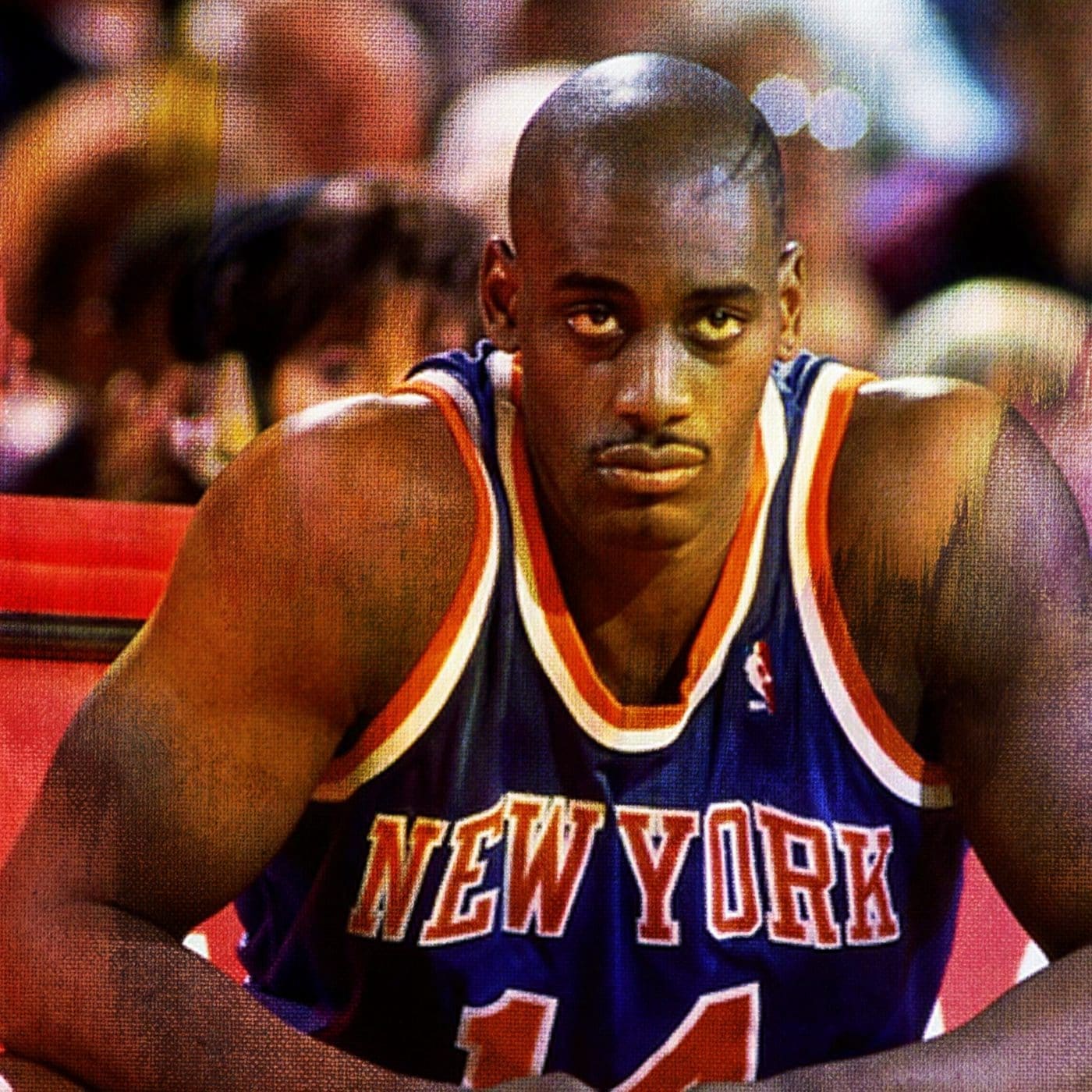
Anthony Mason, the late professional basketball forward, stood approximately 6 feet 7 inches (2.01 meters) tall and maintained a playing weight typically listed between 250 and 260 pounds (113–118 kilograms). Known for his immense functional strength, durability, and versatility, Mason’s physical profile defined him as one of the most formidable "enforcer" forwards in National Basketball Association (NBA) history, particularly during his tenure with the New York Knicks.
Physical Dimensions and Athletic Build
Anthony Mason’s reputation as an immovable force on the hardwood was rooted in his unique physical composition. Standing 6'7", he possessed a frame that combined the height of a traditional small forward with the mass, reach, and center-of-gravity stability typically associated with a power forward or even a center. Throughout his 13-season professional career, his playing weight remained remarkably consistent, rarely fluctuating outside the 250–260 pound range, which allowed him to maintain his trademark explosiveness while absorbing significant physical contact.
Beyond his raw height and weight, Mason’s physical profile was characterized by exceptional core strength and a high threshold for physical fatigue. His build was not merely for aesthetic presence; it was highly functional. He utilized his wide shoulders and low center of gravity to establish deep position in the post, often anchoring defenses against much larger opponents. His "latest" stats at the time of his retirement in 2003 remained reflective of his established stature, as he never relied on significant weight fluctuations to accommodate his playing style.
Functional Strength and Court Presence
To understand Mason’s physicality, one must look at how he utilized his body to facilitate his game. Unlike players who prioritized verticality, Mason prioritized horizontal dominance. He was renowned for his ability to withstand double-teams and maintain his balance while delivering or receiving contact in the paint. This physical durability allowed him to log heavy minutes; during his peak years with the Charlotte Hornets and New York Knicks, he frequently led his teams in minutes played, demonstrating that his body was built for high-volume, high-impact competition.
His conditioning was another pillar of his physical profile. Despite the heavy weight he carried, Mason possessed high-level cardiovascular endurance, enabling him to act as a primary ball-handler during fast breaks—an unconventional role for a player of his size and build in the 1990s. This "point forward" capability was only possible because his physical training regimen focused on explosive power and endurance rather than singular bodybuilding metrics.
Statistical Comparison of Physical Archetypes
The following table provides a comparison of Mason’s listed physical attributes against the standard profile of the 1990s NBA small-ball power forward.
| Attribute | Anthony Mason | Typical 90s PF | Significance |
|---|---|---|---|
| Height | 6'7" | 6'8"–6'10" | Slightly shorter but more compact |
| Weight | 250–260 lbs | 230–245 lbs | Greater density/impact absorption |
| Reach | Above Average | Average | Compensated for height deficit |
| Role | Playmaker/Enforcer | Post Scorer/Rebounder | Enabled high-post ball handling |
Historical Context of Physicality in the 1990s
The era in which Mason played favored a rugged, physical style of basketball characterized by intense interior defense and limited spacing. Mason’s body was perfectly suited for this environment. While modern NBA trends have moved toward leaner, more agile, and highly mobile forwards, the 1990s demanded players who could serve as defensive bulwarks. Mason’s weight allowed him to essentially act as a "brick wall" for perimeter defenders, effectively clearing space through screens and physicality.
His physical profile also served as a psychological deterrent. In an era where post-play was the focal point of team strategies, Mason’s sheer mass made him difficult to displace, frustrating offensive players who relied on finesse or quick post-moves. He did not need to be the tallest player on the court to be the most influential; his ability to occupy space and leverage his weight made him an anchor for every organization he represented.
The Role of Durability in Professional Longevity
One of the most under-discussed aspects of Mason’s physique was his injury resistance. Despite a playstyle that invited significant collisions on every possession, Mason appeared in 882 regular-season games over his career. His physical training, while private, likely involved significant emphasis on posterior chain stability and leg strength, which shielded his joints from the wear-and-tear expected of a player handling 260 pounds of force at high speed.
For aspiring athletes or those analyzing historical physical archetypes, Mason serves as the quintessential example of a player who maximized his anatomy to fulfill a specific team need. He understood that his value was not derived from being the most athletic jumper, but from being the player who could consistently hold his ground and provide utility in multiple facets of the game—rebounding, playmaking, and interior defense—without needing to sit on the bench.
Frequently Asked Questions (FAQ)
Did Anthony Mason’s weight change significantly during his career?
Anthony Mason maintained a remarkably stable playing weight throughout his 13-year career. While many athletes experience fluctuations based on training cycles or recovery, Mason consistently stayed within the 250–260 pound range, which was essential for maintaining the balance and leverage required for his specific style of play.
How did Mason’s height impact his playmaking ability?
Standing at 6'7", Mason was taller than most traditional perimeter defenders of his time. This allowed him to see over the defense when handling the ball as a point forward. His height, combined with his substantial weight, allowed him to drive into the lane and either finish through contact or pass to open teammates, forcing defenses to collapse and creating space on the court.
Was Anthony Mason considered an undersized power forward?
By the standards of the 1990s, yes, he was slightly shorter than the average power forward. However, his physical strength and low center of gravity rendered the height deficit negligible. He was able to guard both power forwards and centers effectively because he was rarely pushed out of his preferred defensive positions in the low post.
What was the primary strength of his physical profile?
His primary strength was his "functional mass." He possessed an ideal combination of weight, base stability, and anaerobic conditioning. This allowed him to sustain high-intensity physical contact for long durations, making him one of the most reliable and durable players in the NBA during his prime years.
How does Mason’s build compare to modern NBA players?
Mason’s physical profile—a "compact" forward with high weight—is actually more relevant in the modern "positionless" NBA than it was in the mid-1990s. Today, many teams prioritize players who can guard multiple positions and handle the ball at size, a role Mason pioneered before the term "point forward" became a standard part of the basketball lexicon.
Next Steps for Athletic Analysis
For those conducting further research into the physicality of 1990s NBA athletes, it is recommended to cross-reference game film from his 1996–1997 season with the Charlotte Hornets against the physical metrics of his contemporaries. Studying the "gravity" a player like Mason exerted on the court—how his physical presence forced adjustments from opposing coaches—provides a more nuanced understanding of his value than raw statistics alone. His career stands as a masterclass in using one's unique physical dimensions to master the specific tactical requirements of a professional sport.