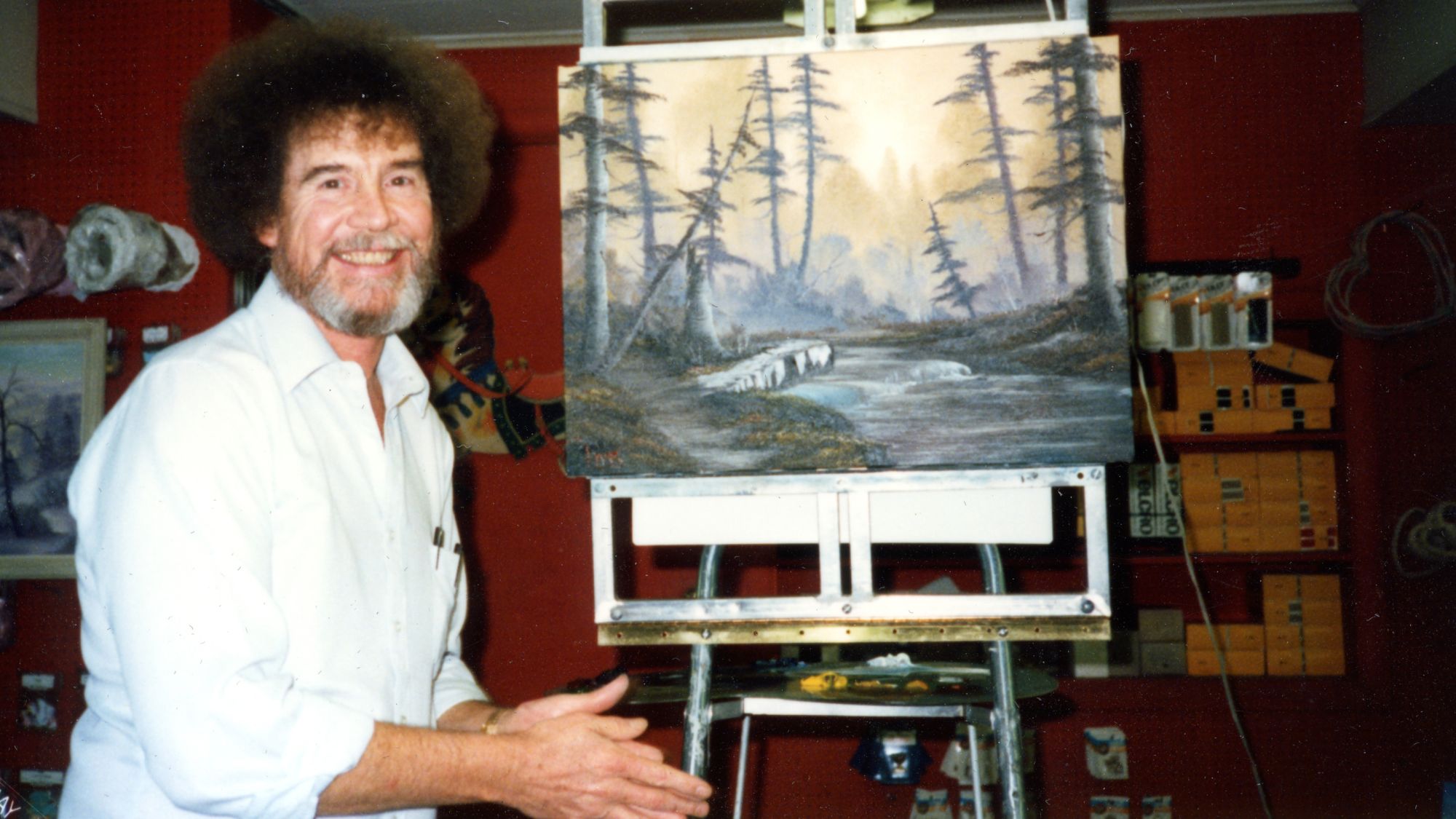
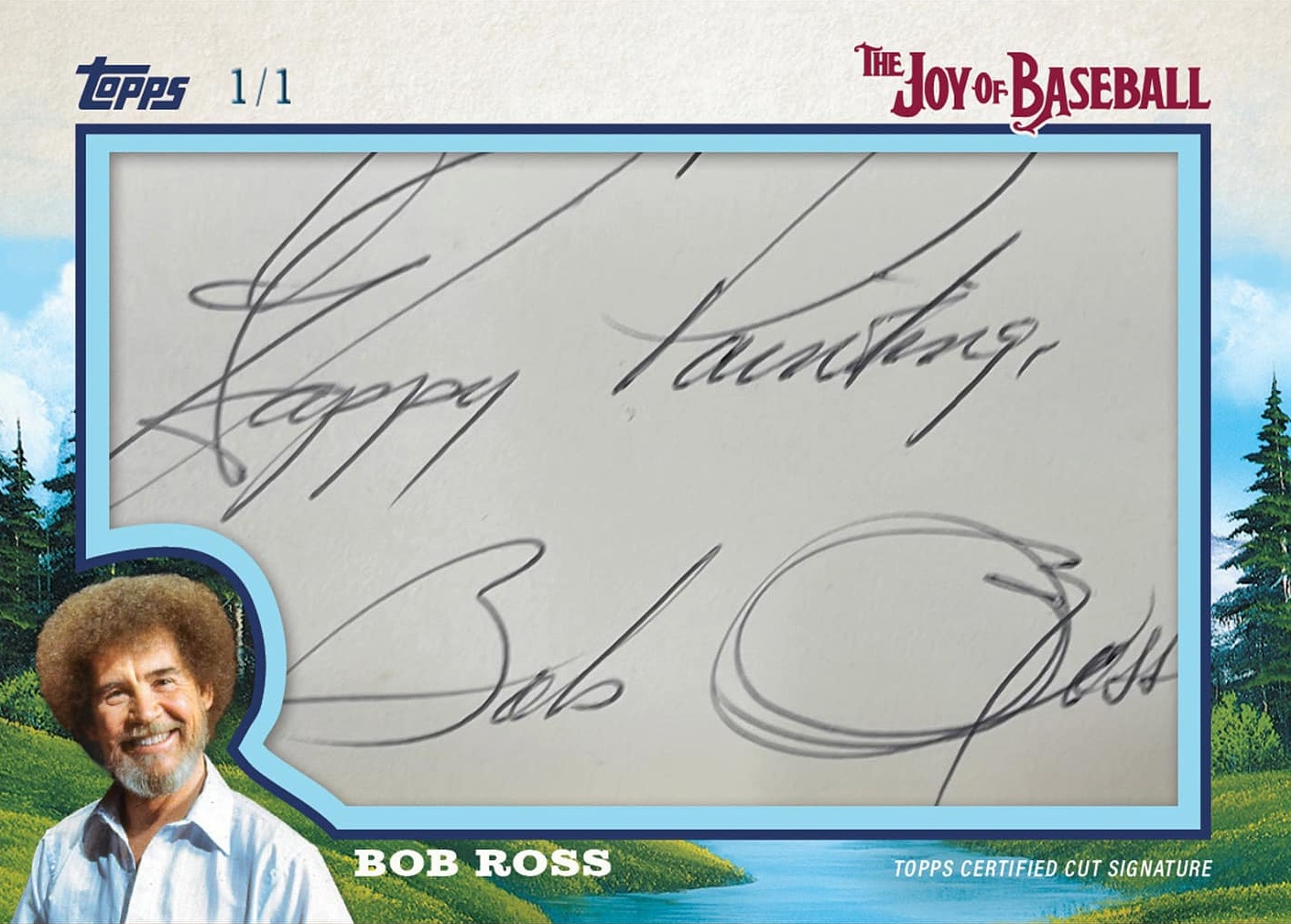
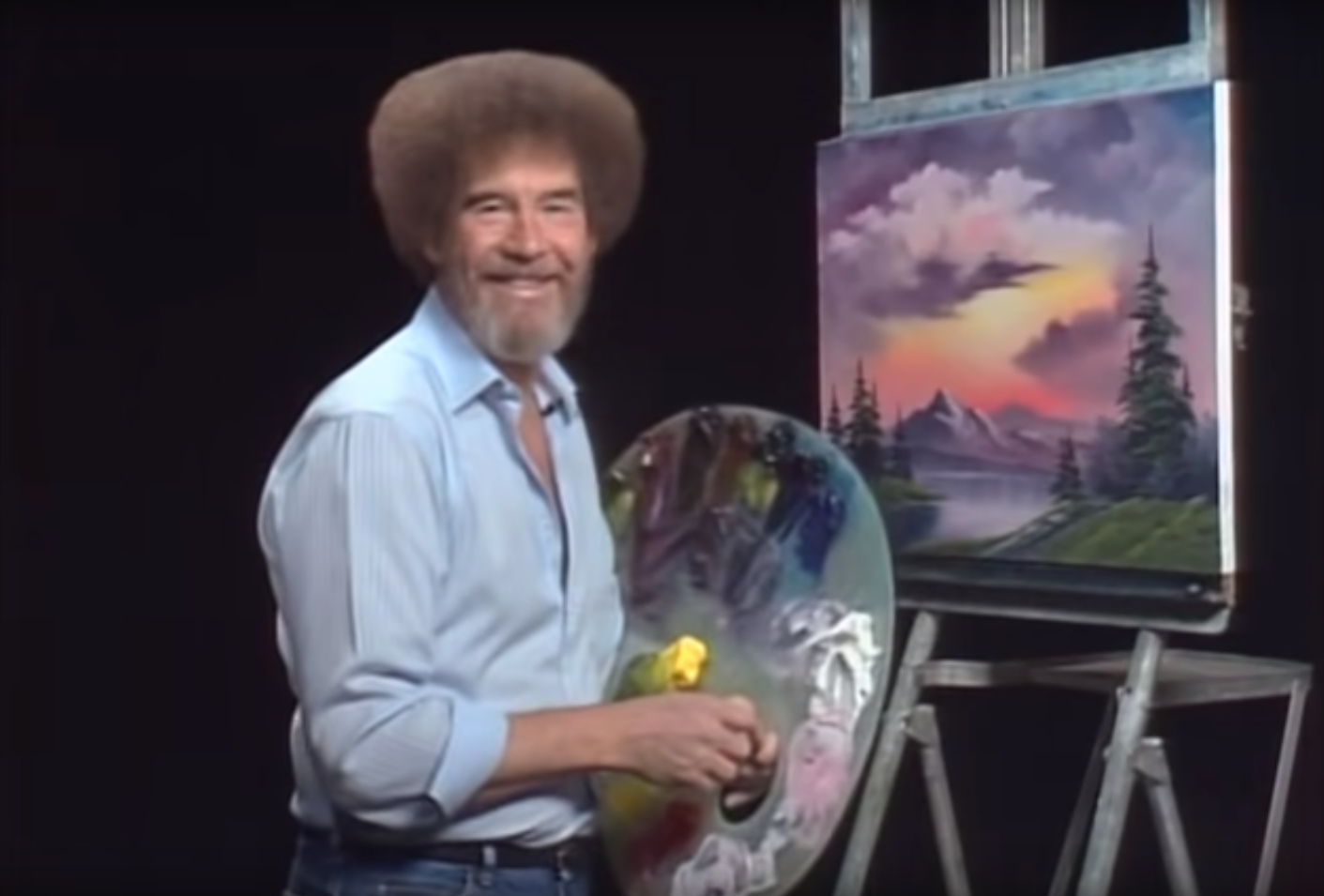
Robert Norman Ross was an American painter, art instructor, and television host who popularized the wet-on-wet oil painting technique through his public television show The Joy of Painting (1983–1994). Known for his soothing voice and gentle instructional style, Ross transformed landscape painting into accessible entertainment, leaving behind an enduring global legacy.
Early Life, Military Service, and the Origins of His Style
Born on October 29, 1942, in Daytona Beach, Florida, Bob Ross was raised in Orlando. As a youth, he cared for injured wildlife, including armadillos and squirrels—an early reflection of the gentle demeanor that later defined his television persona. Ross dropped out of high school in the ninth grade to work as a carpenter with his father, losing part of his left index finger in a woodworking accident. This injury, largely hidden behind his paint palette during television broadcasts, never hindered his artistic dexterity.
In 1961, at age 18, Ross enlisted in the United States Air Force. He served for 20 years, eventually rising to the rank of Master Sergeant at Eielson Air Force Base in Alaska. The Alaskan landscape—characterized by snow-capped mountains, dense pine forests, and dramatic skies—became the primary inspiration for his life’s artistic output.
During his military service, Ross discovered painting after attending an art class at the Anchorage U.S.O. club. He found traditional painting techniques too slow, as classic oil methods required days or weeks for individual paint layers to dry. His trajectory changed when he discovered The Magic of Oil Painting, a television show hosted by German artist William "Bill" Alexander. Alexander taught a fast-method oil technique known as wet-on-wet (alla prima). Ross mastered the approach, sold landscape paintings on velvet to tourists, and realized he could earn more from art than his military salary. Upon retiring from the Air Force in 1981, Ross vowed never to raise his voice again, having spent two decades as a strict military sergeant.
The Wet-on-Wet Technique (Alla Prima) Explained
The primary artistic methodology taught by Bob Ross is wet-on-wet oil painting, historically referred to by the Italian term alla prima ("at first attempt"). Traditional oil painting relies on the "fat over lean" principle, requiring painters to let individual layers dry before applying subsequent coats. In contrast, wet-on-wet involves applying wet oil paint directly onto an already wet base layer of paint, allowing complex blending directly on the canvas surface.
- Stretched Canvas
- Base Layer: Liquid White / Liquid Clear
- Background: Wet Skies & Water Blending
- Midground: Mountains & Distant Treelines
- Foreground: Happy Trees, Rocks & Cabin Highlights
Key Principles of the Ross Method
- Liquid Base Application: Every painting session begins by coating a stretched canvas with a thin layer of specialized wet ground, most commonly "Liquid White" (a slow-drying, oil-based titanium white medium). This slippery base allows subsequent oil pigments to be spread, blended, and feathered seamlessly across the surface.
- Layering Firmness: To build layers without muddying the colors, the artist applies firmer, thick paint first (for backgrounds and dark under-paintings), followed by thinner, oil-rich paint for highlights. Thinner paint sticks to thicker paint without picking up the lower layer.
- Speed and Efficiency: Because the surface remains wet throughout the process, a complete landscape—including skies, mountains, water, clouds, and trees—can be finished in under 30 minutes.
This approach democratized fine art for beginners. By breaking complex elements like cloud structures or distant mountain ranges into simple mechanical strokes using specialized tools, Ross made oil painting achievable without formal academic training.
The Joy of Painting: Television Iconography and Business Model
In 1983, The Joy of Painting premiered on public broadcasting stations across the United States. Produced primarily by WIPB in Muncie, Indiana, the show ran for 31 seasons and 403 episodes until 1994.
The Cultural Persona
Ross's iconic look—a perm haircut, denim shirts, and an unbuttoned collar—was initially adopted to save money on haircuts when starting his independent art career. Though he grew to dislike the style, it became integral to the brand logo and was maintained for the rest of his life.
His broadcasting style pioneered what media analysts now recognize as an early form of ASMR (Autonomous Sensory Meridian Response). His soft, rhythmic speaking tone, paired with the auditory feedback of brushes scraping against stretched canvas or palette knives tapping against glass, created a hypnotic, relaxing experience for millions of viewers.
Ross popularized several catchphrases that became embedded in pop culture:
- "We don't make mistakes, just happy little accidents."
- "Let's put a happy little tree right over here."
- "Beat the devil out of it" (referring to drying a 2-inch brush after cleaning it in odorless thinner).
The Business Strategy
Bob Ross did not receive direct compensation for hosting The Joy of Painting on PBS. Instead, the television show served as an unpaid broadcast channel to promote Bob Ross Inc., a company co-founded by Ross, his wife Jane Ross, and their business partners Annette and Walt Kowalski.
Bob Ross Inc. manufactured and distributed specialized art supply lines, step-by-step instructional books, and video tapes. The company also developed a certification framework for instructors—Certified Ross Instructors (CRIs)—who taught the wet-on-wet technique in craft stores, community colleges, and private workshops worldwide.
Essential Tools and Materials of the Bob Ross Method
The wet-on-wet technique relies heavily on specialized equipment engineered specifically to handle firm oil paints and broad stroke applications. Standard soft watercolor or detail acrylic brushes cannot achieve the structural effects popularized on The Joy of Painting.
| Tool / Material | Specific Function | Unique Characteristics |
|---|---|---|
| 2-Inch Background Brush | Base priming, skies, water, large tree silhouettes | Thick, natural bristle brush designed to hold heavy paint and cover wide areas quickly. |
| 1-Inch Landscape Brush | Bushes, foliage highlights, clouds | Stiff bristle construction used for stippling and building textured natural layers. |
| #10 Custom Palette Knife | Mountains, rock structures, tree trunks | Large, straight-edged metal blade with an offset handle for scraping and applying crisp paint rolls. |
| Fan Fratt Brush (#6 or #3) | Evergreen needles, ocean waves, cloud highlights | Flat, fan-shaped bristle layout essential for precise natural textures and foliage. |
| Liquid White / Liquid Clear | Base coat canvas preparation | Slow-drying oil ground that keeps the canvas slick and allows seamless wet blending. |
| Firm Oil Paints | Form-building and landscape structures | High-viscosity, low-oil paint formulations designed not to run or sag on wet bases. |
Color Palette Consistency
Ross relied on a simplified palette of approximately 13 to 15 consistent oil colors, ensuring that viewers following along at home could replicate any episode's design without purchasing rare pigments. Core colors included Titanium White, Phthalo Blue, Midnight Black, Van Dyke Brown, Sap Green, Cadmium Yellow, Bright Red, and Alizarin Crimson.
Posthumous Popularity, Digital Resurgence, and Legacy
Bob Ross died on July 4, 1995, at age 52, from complications related to lymphoma. While his physical broadcast career ended in 1994, his global cultural footprint expanded dramatically decades after his passing.
- 1983–1994: "The Joy of Painting" airs on PBS
- 1995: Bob Ross passes away at age 52
- 2015: 9-Day Twitch.tv Marathon launches digital renaissance
- 2020s: Global YouTube distribution & Smithsonian archives acquisition
The Digital Renaissance
In October 2015, the streaming platform Twitch.tv organized a nine-day continuous marathon of all 403 episodes of The Joy of Painting to launch its Twitch Creative channel. The event drew over 5.6 million unique viewers, introducing Ross to a new generation of digital natives. The interactive chat community adopted his terminology, typing "RIP" during broadcast breaks and cheering whenever Ross cleaned his brushes or painted "happy little trees."
Following the Twitch marathon, the official Bob Ross YouTube channel amassed millions of subscribers, turning The Joy of Painting into an online media pillar. The show transitioned from a instructional art program into a mainstream mindfulness tool, sought out by audiences for relaxation, focus, and mental well-being.
Corporate Legacy and Institutional Recognition
The corporate structure of Bob Ross Inc. has experienced legal and public scrutiny, particularly regarding the commercial control of Ross’s name, likeness, and intellectual property. Following the death of Bob Ross and his son Steve Ross’s exit from the immediate corporate hierarchy, full ownership of the brand remained with the Kowalski family. This corporate transition became the central subject of the 2021 documentary Bob Ross: Happy Accidents, Betrayal & Greed.
Despite corporate disputes, Ross’s contribution to American visual culture achieved formal historical recognition. In 2019, the Smithsonian's National Museum of American History acquired several of Ross's original paintings, along with his historic studio easel and handwritten production notes, cementing his place in American media and art history.
Step-by-Step: How to Paint a Landscape Using the Ross Technique
For beginners seeking to attempt a basic Bob Ross landscape, the following sequential process demonstrates the mechanical core of the wet-on-wet methodology.
1. Preparing the Surface
- Apply a thin, even coat of Liquid White across an unprimed or pre-gessoed stretched canvas using a 2-inch brush.
- Test coverage by touching the canvas with a fingertip; the texture should show a light fingerprint without leaving a thick smear of paint.
2. Rendering Sky and Water
- Load the top corner of a 2-inch brush with a small amount of Phthalo Blue.
- Start at the top corners of the canvas and paint inward using criss-cross ("X") strokes, allowing the pigment to blend with the Liquid White. The paint will naturally grow lighter toward the horizon.
- Repeat the movement across the bottom third of the canvas for water reflections, working horizontally from the edges inward.
3. Constructing Mountains
- Mix equal parts Van Dyke Brown and Midnight Black on the palette using a palette knife.
- Roll the edge of the knife through the paint to cut off a small "roll" of pigment on the blade edge.
- Hold the knife at a 45-degree angle to the canvas and gently pull downward to form mountain peak silhouettes. Allow the paint to break across the textured canvas, creating natural rock highlights and shadows.
4. Adding Foreground Trees and Highlights
- Load a fan brush with Sap Green and Cadmium Yellow.
- Touch the corner of the brush to the canvas to create the top tip of an evergreen tree.
- Work downward, applying pressure to bend the bristles, creating side-to-side branch layers.
- Thin down highlight colors using a drop of liquid paint or thinner so they stick effortlessly over dark background foliage.
Frequently Asked Questions
Did Bob Ross make money directly from The Joy of Painting television show?
No. Bob Ross performed all 31 seasons of The Joy of Painting without direct financial compensation from PBS. The show served as an educational marketing engine for Bob Ross Inc., which generated revenue through the sale of branded art supplies, instructional books, video tapes, and certified instructor training programs.
How many paintings did Bob Ross create during his lifetime?
Bob Ross produced an estimated 30,000 paintings throughout his career. For every episode of The Joy of Painting, he painted three identical versions: one prior to taping as a visual reference, one live on camera during the 30-minute recording session, and a third painted afterward for detailed photography included in his step-by-step instruction books.
What happened to the original paintings Bob Ross created on television?
The vast majority of the original paintings created during the filming of The Joy of Painting are stored in climate-controlled archives at the headquarters of Bob Ross Inc. in Herndon, Virginia. A select group of his works and studio artifacts were formally donated to the Smithsonian National Museum of American History.
Can beginners learn oil painting using the wet-on-wet method without prior experience?
Yes. The wet-on-wet technique was engineered specifically to make oil painting accessible to absolute beginners. By replacing complex academic color theory and multi-week drying schedules with direct brush mechanics, liquid base grounds, and standardized oil paint densities, novices can construct complete landscape compositions on their first attempt.
Was Bob Ross's iconic hair naturally curly?
No. Bob Ross had naturally straight hair. Early in his career, after leaving the Air Force to teach art full-time, he obtained a permanent wave (perm) to save money on regular haircuts. Although he later grew to dislike the hairstyle, it became an integral part of the official Bob Ross Inc. logo and corporate brand, prompting him to maintain the look for the rest of his public life.
Next Steps for Aspiring Artists and Enthusiasts
To engage directly with the Bob Ross painting technique or study his historical works, consider the following practical actions:
- Equip the Proper Tools: Ensure you acquire firm-bodied oil paints and stiff natural-bristle brushes. Standard acrylics or soft synthetic brushes cannot execute the scraping and stippling motions required for the alla prima method.
- Access Authorized Instructional Archives: Study full-length, unedited episodes of The Joy of Painting, which remain available through official streaming channels maintained by Bob Ross Inc. and public broadcasting archives.
- Locate a Certified Ross Instructor (CRI): Seek out in-person wet-on-wet painting workshops led by certified CRIs through local community arts centers or craft retailers for hands-on feedback on paint load and knife pressure.