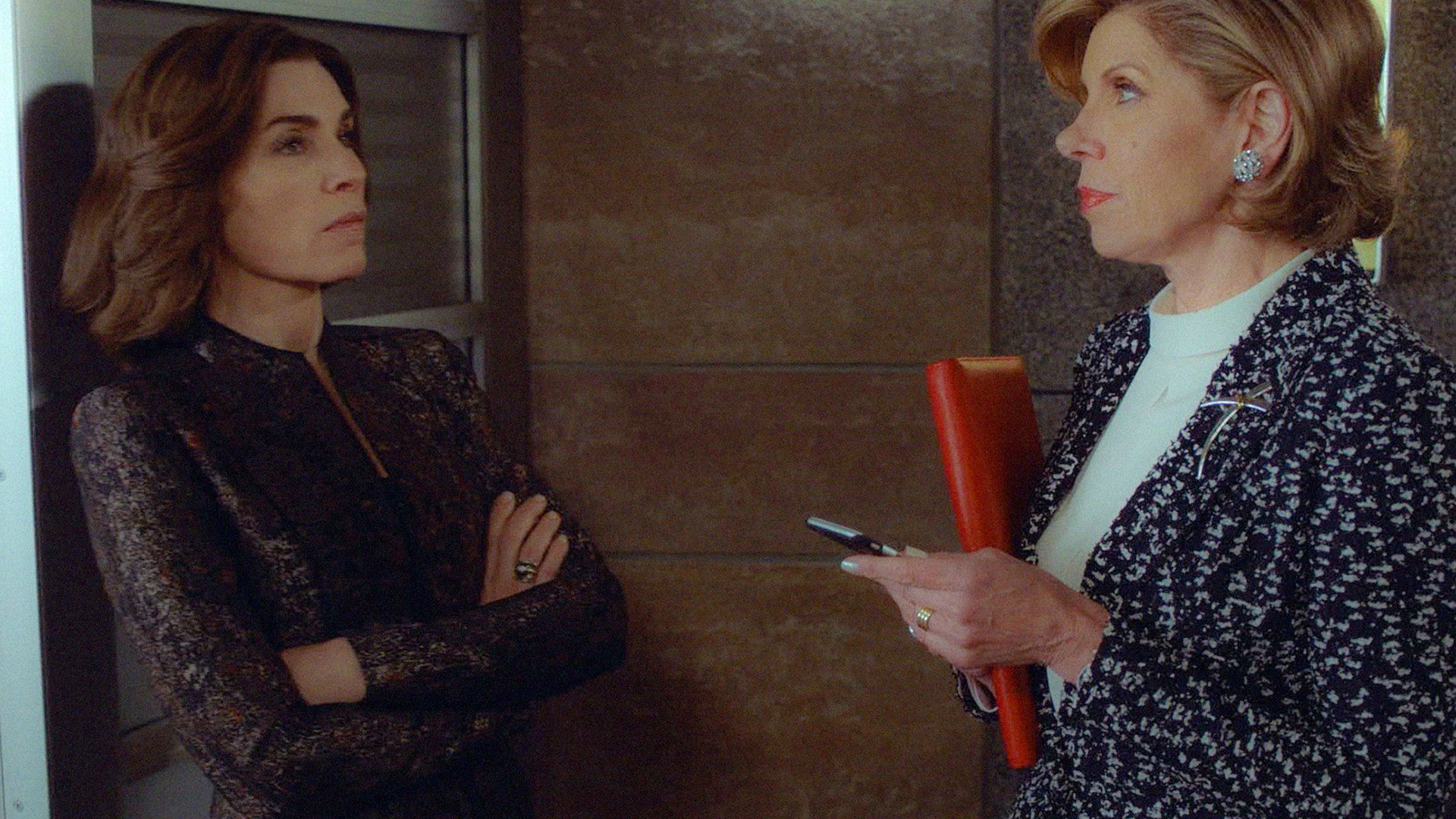
Alicia and Peter Florrick’s marriage in The Good Wife serves as the narrative backbone of the series, blending political ambition, public scandal, strategic partnership, and profound personal betrayal. Their dynamic moves from a traditional political marriage shaken by infidelity to a sophisticated, transactional alliance where love, loyalty, and independence are constantly renegotiated.
The Foundation of the Florrick Marriage and the Inciting Incident
The narrative universe of The Good Wife begins with a public humiliation that forces Alicia Florrick out of her private life and back into the legal workforce. Peter Florrick, serving as the State’s Attorney of Cook County, stands before the press alongside his steadfast wife to address allegations of political corruption and sexual infidelity. This press conference establishes the central tension of their relationship: Alicia as the humiliated yet resilient spouse performing public duty, and Peter as the fallen powerhouse attempting to salvage his career through sheer force of will.
Before Peter’s imprisonment, their marriage operated within the traditional architecture of an ambitious political household. Alicia managed the domestic sphere while supporting Peter's ascent through the ranks of Illinois state politics. However, the cascading scandals shatter this arrangement. Alicia’s decision to return to litigation as a junior associate at Stern, Lockhart & Gardner is not merely a professional re-entry; it is an assertion of financial and psychological independence. The juxtaposition of Peter’s confinement in federal prison and Alicia’s grueling hours in the courtroom creates an immediate power shift. Peter relies on Alicia for his public rehabilitation, while Alicia realizes she can no longer depend on Peter for her stability or identity.
Power Dynamics and Transactional Partnership
As the series progresses, the nature of Alicia and Peter’s relationship evolves from estranged spouses into political and professional partners operating under a calculated arrangement. Peter’s release from prison and subsequent campaign for Governor of Illinois redefine their interactions. Their marriage becomes an asset to be managed—a brand that yields electoral dividends. Peter understands that a united domestic front is essential for voter appeal, while Alicia leverages her growing stature within the legal community and her husband's rising political capital to protect her children and advance her own career goals.
This partnership is rarely built on traditional romantic affection; instead, it thrives on mutual utility, shared history, and a deep understanding of each other's flaws. Peter remains prone to impulsivity and ethical compromises, driven by an insatiable hunger for institutional power. Alicia, having hardened through her trials at Lockhart/Gardner and later at her own firm, views Peter with a mixture of pragmatic affection and deep skepticism. They communicate in coded political language, balancing private grievances with public performances. When Peter wins the governorship, Alicia finds herself occupying the role of First Lady of Illinois—a position she never sought but navigates with calculated precision, demonstrating how far she has traveled from the timid housewife seen in the pilot episode.
Betrayal, Fidelity, and Competing Romances
The emotional core of Alicia and Peter’s relationship is perpetually tested by infidelity, both past and present, as well as Alicia’s own romantic entanglements. Peter’s initial betrayals involve prostitutes and political compromises, actions that cost Alicia her peace of mind and forced her to reevaluate the sanctity of their vows. Yet, the series complicates the concept of fidelity by showing that Alicia is not immune to emotional and physical connections outside her marriage.
Her intense, simmering romance with Will Gardner—her former law school classmate and eventual boss—represents the passionate, intellectual connection she sacrificed for domestic stability. Will offers Alicia a vision of love based on mutual respect, shared ambition, and genuine desire, contrasting sharply with the transactional nature of her marriage to Peter. Later, her relationship with investigator Jason Crouse provides a different dynamic entirely: one of unburdened, present-moment independence.
Despite these profound connections, Alicia and Peter maintain an unbreakable bond forged by children, shared trauma, and institutional survival. Peter tolerates, or at least chooses to ignore, Alicia’s emotional distance and outside attractions because he recognizes her indispensability. Conversely, Alicia stays tethered to Peter because their history is too dense to discard completely, and because Peter understands the dark arts of Chicago politics in a way no one else in Alicia's life does.
Comparative Analysis of the Florrick Relationship Phases
| Phase of Relationship | Primary Motivators | Power Dynamic | Public vs. Private Reality |
|---|---|---|---|
| Pre-Scandal Era | Domestic stability, political ambition, family cohesion | Traditional patriarchal structure with Peter leading | Public unity masking private complacency |
| Prison & Re-entry | Survival, financial independence, professional rehabilitation | Shift toward Alicia; Peter dependent on Alicia for public image | Stark separation; public performance vs. private resentment |
| Gubernatorial Campaign | Political viability, brand management, strategic alliance | Mutually beneficial transactional partnership | Highly choreographed public unity masking emotional distance |
| The Final Collapse | Institutional legacy, legal defense, ultimate independence | Fragmented; dissolution of the political facade | Complete breakdown of marital pretense leading to final separation |
The Legal and Political Intersections of Their Lives
In The Good Wife, personal relationships cannot be neatly separated from professional and legal machinations. Peter’s office as State’s Attorney, and later as Governor, frequently intersects with Alicia’s courtroom battles and firm politics. This creates severe conflicts of interest, ethical dilemmas, and moments where personal affection is subordinated to legal strategy. Peter’s political allies and enemies routinely view Alicia as an extension of Peter’s political apparatus, complicating her efforts to build an independent reputation at Lockhart/Gardner, Florrick/Agos, and Florrick/Agos/Lockhart.
Alicia must constantly navigate the fallout from Peter’s legal troubles. When Peter faces new indictments or corruption charges toward the end of the series, Alicia is once again thrust into the role of the supportive political spouse, even as her patience wears thin. The courtroom defense mounted for Peter becomes a masterclass in legal maneuvering, showcasing how the skills Alicia acquired as a litigator are deployed to preserve her family’s survival. However, these same legal battles expose the fundamental fragility of their enterprise, proving that political power in Chicago is always rented, never owned.
Frequently Asked Questions
Did Alicia and Peter actually love each other in The Good Wife?
Their relationship evolved beyond conventional romantic love into a complex mixture of loyalty, shared history, strategic partnership, and deep familiarity. While passionate romance defined Alicia’s feelings for Will Gardner, her bond with Peter was rooted in familial survival and an unspoken understanding of each other’s ambitions and flaws.
Why did Alicia stay with Peter for so long?
Alicia stayed due to a combination of factors: protecting her children, maintaining financial and social stability during the initial crisis, the demands of Peter’s political career which required a united front, and a pragmatic recognition of their shared institutional strength within Chicago politics.
How did Peter’s scandals impact Alicia’s legal career?
Peter’s scandals initially stigmatized Alicia, making her entry into the legal workforce difficult as a disgraced former official's wife. Over time, however, she leveraged her resilience and the notoriety surrounding her household to command respect, build a formidable client base, and eventually establish her own law firm.
What role did Will Gardner play in Alicia and Peter’s marriage?
Will Gardner served as the primary emotional and romantic counterweight to Peter Florrick. His presence highlighted the emotional deprivation of Alicia’s marriage to Peter and provided the narrative tension that forced Alicia to confront her desires, her independence, and her unwillingness to remain merely a political prop.
Next Actions and Analytical Viewing Guidance
For viewers examining the complexities of The Good Wife, analyzing the Alicia-Peter dynamic requires looking past the surface dialogue to observe non-verbal cues, press conference choreography, and professional negotiations. To fully appreciate how creators Robert and Michelle King structured this relationship, viewers should trace Alicia’s courtroom wardrobe evolution, which directly mirrors her growing independence from Peter’s shadow. Tracking the shifting power balances across seasons one through seven reveals a masterclass in writing long-form television romance and political pragmatism.