Alice's Adventures in Wonderland, written by Charles Lutwidge Dodgson under the pseudonym Lewis Carroll in 1865, is a foundational masterpiece of Victorian literary nonsense. The novel follows young Alice as she falls down a rabbit hole into a surreal underground world, exploring profound themes of identity, growing up, logic, and arbitrary authority through subversive satire.
Historical Origins and the Mind of Lewis Carroll
The narrative of Alice's Adventures in Wonderland originated on July 4, 1862, during a rowing boat trip on the River Thames from Oxford to Godstow. Charles Lutwidge Dodgson, an Oxford mathematician and deacon at Christ Church, composed a whimsical tale to entertain the three young daughters of Dean Henry Liddell: Lorina, Edith, and ten-year-old Alice Liddell. Touched by the story, Alice Liddell requested that Dodgson write it down. Dodgson hand-wrote and illustrated a manuscript titled Alice's Adventures Under Ground, presenting it to her as a Christmas gift in 1864.
Encouraged by friends and mentor George MacDonald, Dodgson revised and expanded the story for public publication, doubling its length by adding iconic scenes such as the Mad Tea-Party and the Cheshire Cat. Published by Macmillan in November 1865 (dated 1866) under the pen name Lewis Carroll, the book featured 42 original wood-block illustrations by prominent political cartoonist Sir John Tenniel. Tenniel’s distinct artistic vision shaped the visual iconography of the characters, establishing a definitive aesthetic that persists across media today.
Dodgson's professional background as a logician and mathematician heavily influenced the novel's construction. Rather than relying on simple fairy-tale tropes, Carroll structured Wonderland around mathematical paradoxes, linguistic puzzles, and subverted formal logic. The era in which he wrote was marked by rapid industrialization, rigid social etiquette, and heavily moralizing children's literature. By refusing to deliver an explicit moral lesson, Carroll broke away from Victorian instructional literature, offering instead an imaginative sanctuary where childhood innocence confronts adult absurdity.
Core Narrative Summary and Structural Progression
The plot begins on a quiet riverbank where Alice sits bored alongside her older sister. Noticing a talking White Rabbit dressed in a waistcoat and checking a pocket watch, Alice impulsively follows him down a subterranean burrow. Her fall transitions her from the predictable laws of the upper world into the illogical reality of Wonderland.
Upon landing in a hall of locked doors, Alice discovers a tiny golden key that opens a portal to a beautiful garden. However, she faces immediate spatial obstacles. Consuming items labeled "DRINK ME" and "EAT ME," she experiences erratic physical transformations, growing too large to fit through the door or shrinking too small to reach the key. Her tears of frustration form a subterranean pool, in which she swims alongside various anthropomorphic creatures, leading to a disorganized "Caucus-Race" where every participant wins and prizes are meaningless.
- Alice's Descent (Riverbank fall)
- Spatial Paradoxes (Size shifting)
- Linguistic Encounters (Mad Tea-Party/Cat)
- The Royal Court (Trial of Hearts)
- Wakeful Realization (Return to reality)
As Alice ventures deeper into Wonderland, she encounters a series of enigmatic inhabitants who challenge her reasoning and identity:
- The Advice from a Caterpillar: Sitting upon a mushroom, a blue Caterpillar repeatedly demands, "Who are you?" further destabilizing Alice's sense of self while instructing her on how to control her height by eating opposite sides of the mushroom.
- Pig and Pepper: Alice visits the house of the Duchess, encountering a baby that transforms into a pig, a pepper-obsessed Cook, and the grinning, vanishing Cheshire Cat.
- A Mad Tea-Party: Joining the Mad Hatter, the March Hare, and the Dormouse at a table stuck in perpetual tea-time, Alice experiences frustrating conversations governed by nonsensical wordplay and stagnant time.
- The Queen's Croquet Ground: Entering the Royal Garden, Alice meets the tyrannical Queen of Hearts, who orders immediate executions ("Off with their heads!") at the slightest provocation and plays croquet using flamingos as mallets and hedgehogs as balls.
The narrative reaches its climax during the trial of the Knave of Hearts, who is accused of stealing the Queen's tarts. As the proceedings descend into total judicial farce—demanding "sentence first—verdict afterwards"—Alice begins growing back to her normal size. Rejecting the court's illogical authority, she declares the royal court to be "nothing but a pack of cards." The cards swarm around her, and she wakes up back on the riverbank, realizing her journey was an extraordinary dream.
Key Characters and Archetypal Symbolism
Carroll’s characters are not merely fantastical creatures; they represent key archetypes of Victorian society, psychological states, and intellectual concepts.
- Alice (The Observer)
- The White Rabbit (Anxiety/Punctual)
- Cheshire Cat (Abstract Logic)
- Queen of Hearts (Arbitrary Power)
Alice
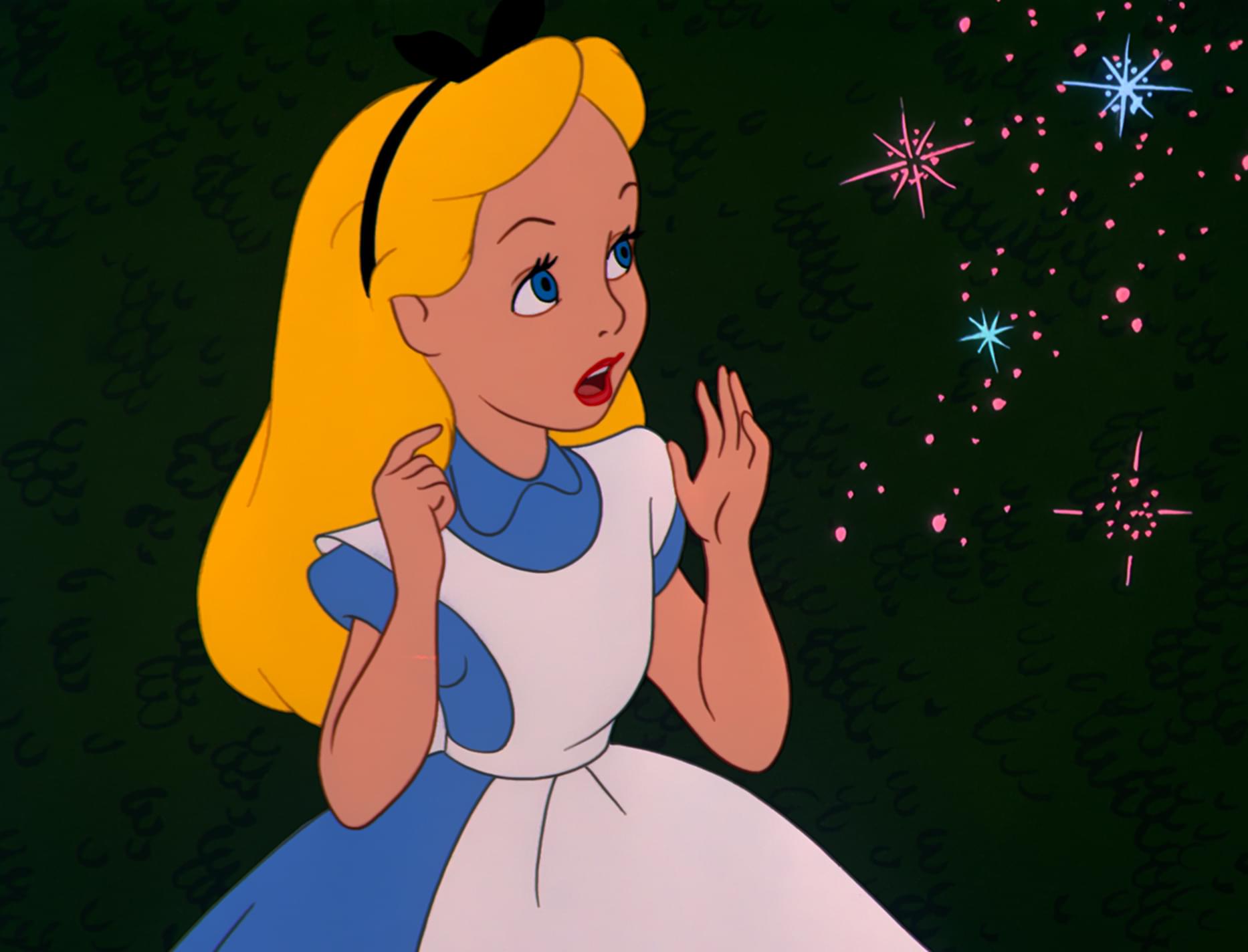
Alice serves as the pragmatic, curious observer. She represents Victorian childhood: polite, educated, and desperate to apply her schoolroom lessons to a world that refuses to abide by them. Her physical shifts between enormous and microscopic scales mirror the confusing physical and emotional transitions of adolescent growth.
The White Rabbit
The White Rabbit acts as the catalyst for Alice's journey. Constantly obsessed with schedule and decorum ("Oh dear! Oh dear! I shall be too late!"), he embodies the anxious, time-obsessed nature of adult Victorian bureaucracy and high society.
The Mad Hatter and March Hare
Trapped in an eternal afternoon due to a feud with Time, the Mad Hatter and March Hare symbolize the rigid schedules of English tea rituals taken to an absurd extreme. The Hatter's puzzling questions—such as "Why is a raven like a writing-desk?"—highlight the limits of language and formal logic when detached from practical context.
The Cheshire Cat
Distinct among Wonderland’s inhabitants, the Cheshire Cat possesses complete awareness of the realm's insanity, famously declaring, "We're all mad here." With its ability to disappear leaving only its grin behind, the Cat symbolizes philosophical skepticism, detachment, and pure intellect.
The Queen of Hearts
The main antagonist of the narrative, the Queen of Hearts represents absolute authoritarian power driven by unchecked emotion and arbitrary impulse. Her constant demands for decapitation satirize the cruelty and irrationality of institutional power structures.
Central Themes and Literary Significance
The Subversion of Didactic Victorian Literature
During the 19th century, children's books were primarily designed to teach moral lessons, proper manners, and religious piety. Carroll systematically parodied famous moral poems of the era within the text. For example, Isaac Watts' pious poem "Against Idleness and Mischief" ("How doth the little busy bee...") is transformed by Alice into "How doth the little crocodile...", celebrating predatory survival rather than industrious virtue.
The Nonsense Genre and Linguistic Mechanics
Carroll was a pioneer of "literary nonsense," a genre that does not mean a complete absence of sense, but rather a playful exploration of linguistic rules and semantic structure. The dialogue in Alice in Wonderland relies heavily on puns, literal interpretations of idioms, and logical paradoxes:
| Victorian Convention | Carrollian Subversion |
|---|---|
| Moral instruction | Amoral curiosity |
| Strict societal decorum | Surreal social absurdity |
| Fixed physical/logical rules | Elastic geometry & shifting identity |
| Didactic verse | Parodic nonsense poetry |
Identity and the Psychological Journey of Growing Up
Alice’s frequent questions regarding her identity ("Who in the world am I? Ah, that's the great puzzle!") address the existential confusion of childhood. Her physical instability—shrinking and growing rapidly—serves as a metaphor for puberty and bodily change. To survive Wonderland, Alice must learn to navigate unpredictable authority figures, master her own emotional responses, and establish her personal agency.
Comparative Analysis: Literary Original vs. Screen Adaptations
Over the past century, Carroll’s text has been adapted into numerous films, plays, and visual mediums. The table below compares the foundational text with the two most influential cinematic adaptations.
| Feature / Metric | Original Novel (1865) | Disney Animated Film (1951) | Tim Burton Film (2010) |
|---|---|---|---|
| Primary Genre | Literary Nonsense / Satire | Musical Animated Comedy | Dark Fantasy / Adventure |
| Target Audience | Children & Educated Adults | Family / General Audience | Teen / Young Adult |
| Narrative Focus | Intellectual episodic journey; linguistic satire | Slapstick humor; compilation of 1865 & 1871 books | Linear chosen-one narrative; action hero journey |
| Alice’s Age & Demeanor | 7 years old; polite, pragmatic, observant | 10 years old; curious, easily frustrated | 19 years old; rebellious, independent warrior |
| Key Villain Tone | Tyrannical, absurd, impulsive (Queen of Hearts) | Comedic, short-tempered (Queen of Hearts) | Cruel, despotic tyrant (Red Queen / Iracebeth) |
| Visual Tone | Sir John Tenniel's classical line engravings | Bright, vibrant, mid-century Mary Blair palette | Gothic, desaturated CGI-heavy aesthetic |
| Tone of "Nonsense" | Strictly logical and linguistic paradoxes | Visual gags and musical absurdism | Subverted into standard fantasy lore |
Evolution Across Popular Culture and Modern Media
The influence of Alice in Wonderland extends far beyond its literary origins, shaping modern psychology, cinema, visual arts, and digital media.
The 1951 Animated Classic
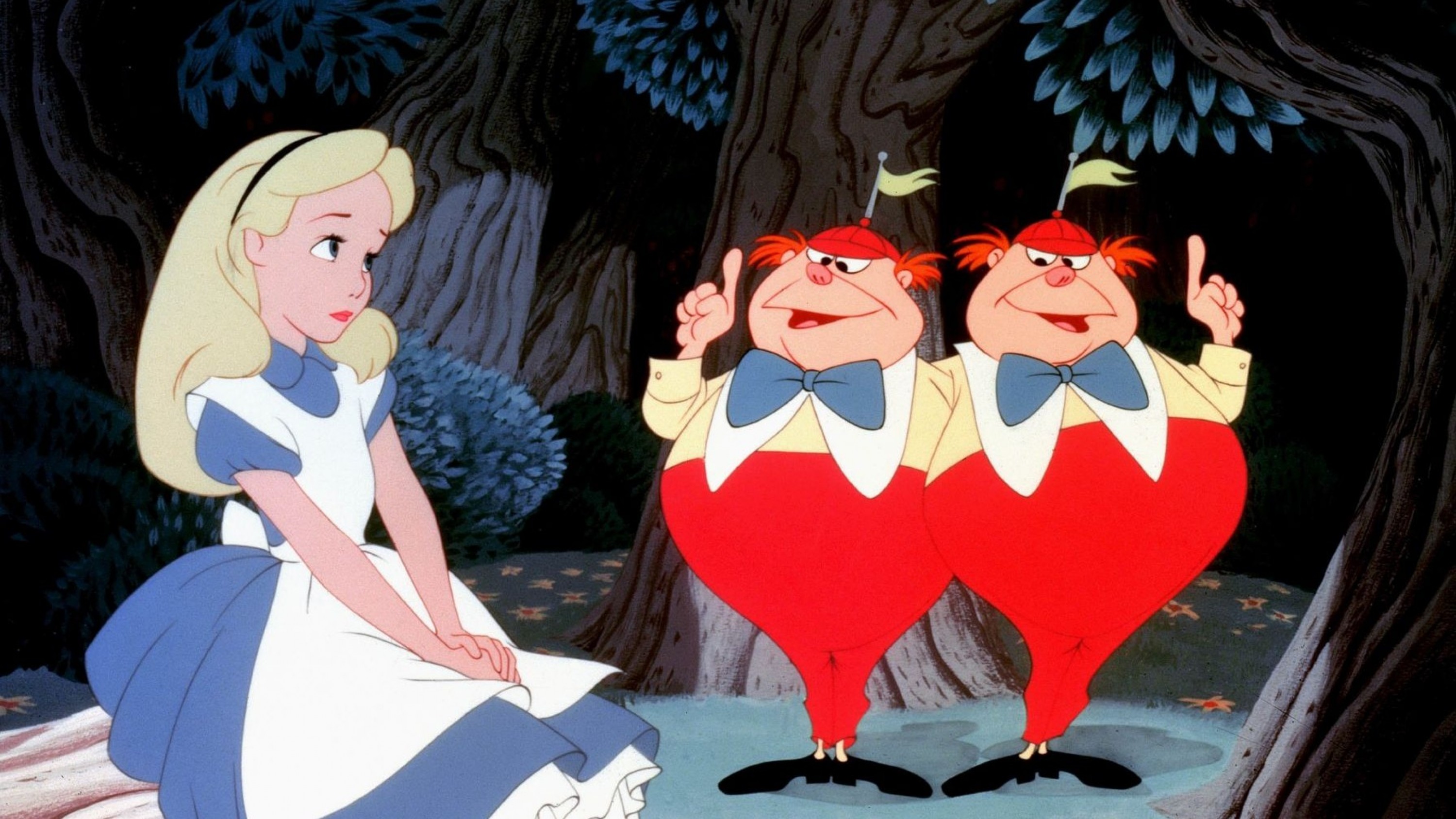
Walt Disney’s 1951 animated feature streamlined Carroll's complex linguistic prose into a vibrant visual extravaganza. Directors Clyde Geronimi, Hamilton Luske, and Wilfred Jackson merged storylines from both Alice's Adventures in Wonderland and its 1871 sequel, Through the Looking-Glass. By incorporating characters like Tweedledum and Tweedledee into the primary narrative, Disney created the popular composite version of the tale held in public memory.
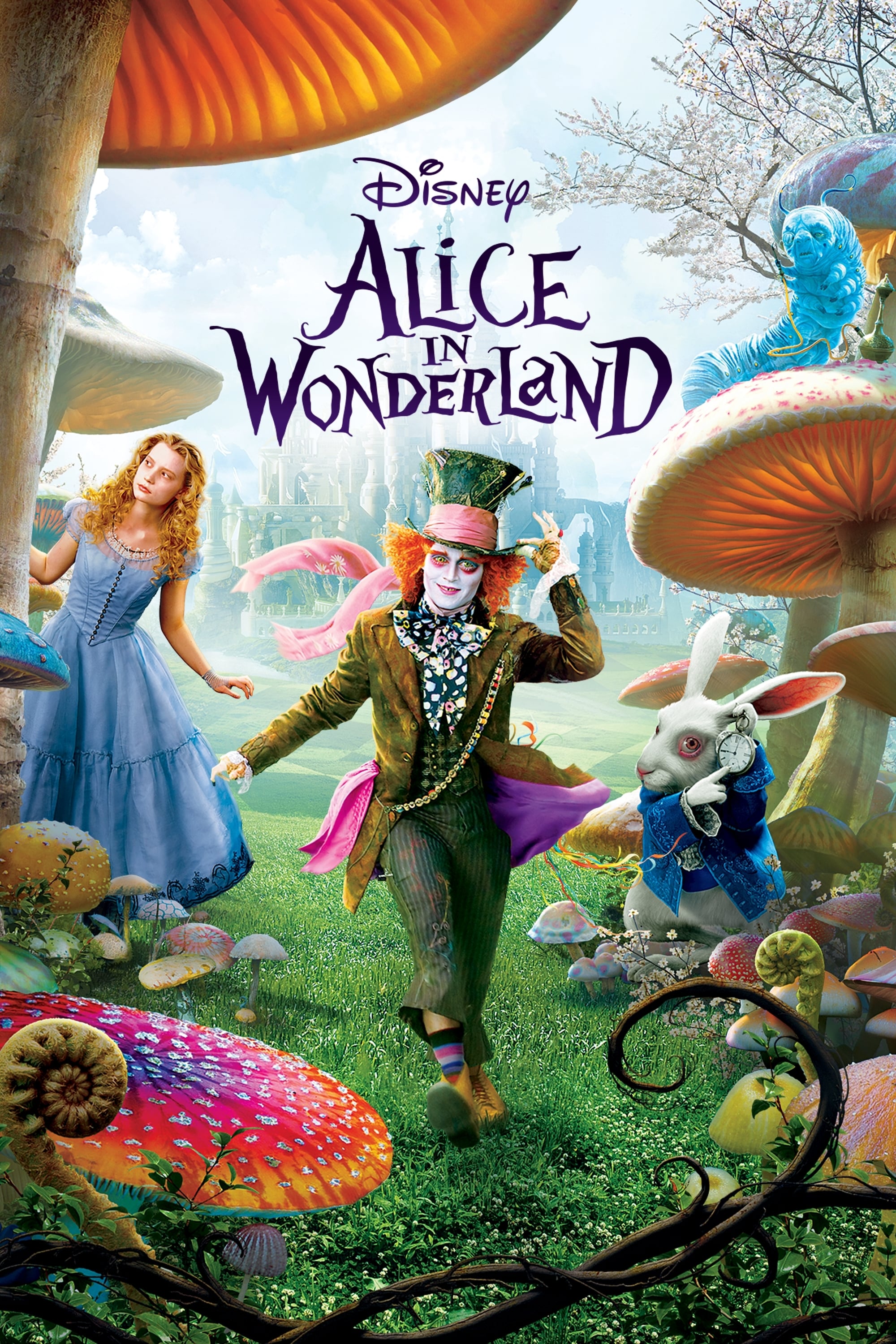
Tim Burton's 2010 Reimagining
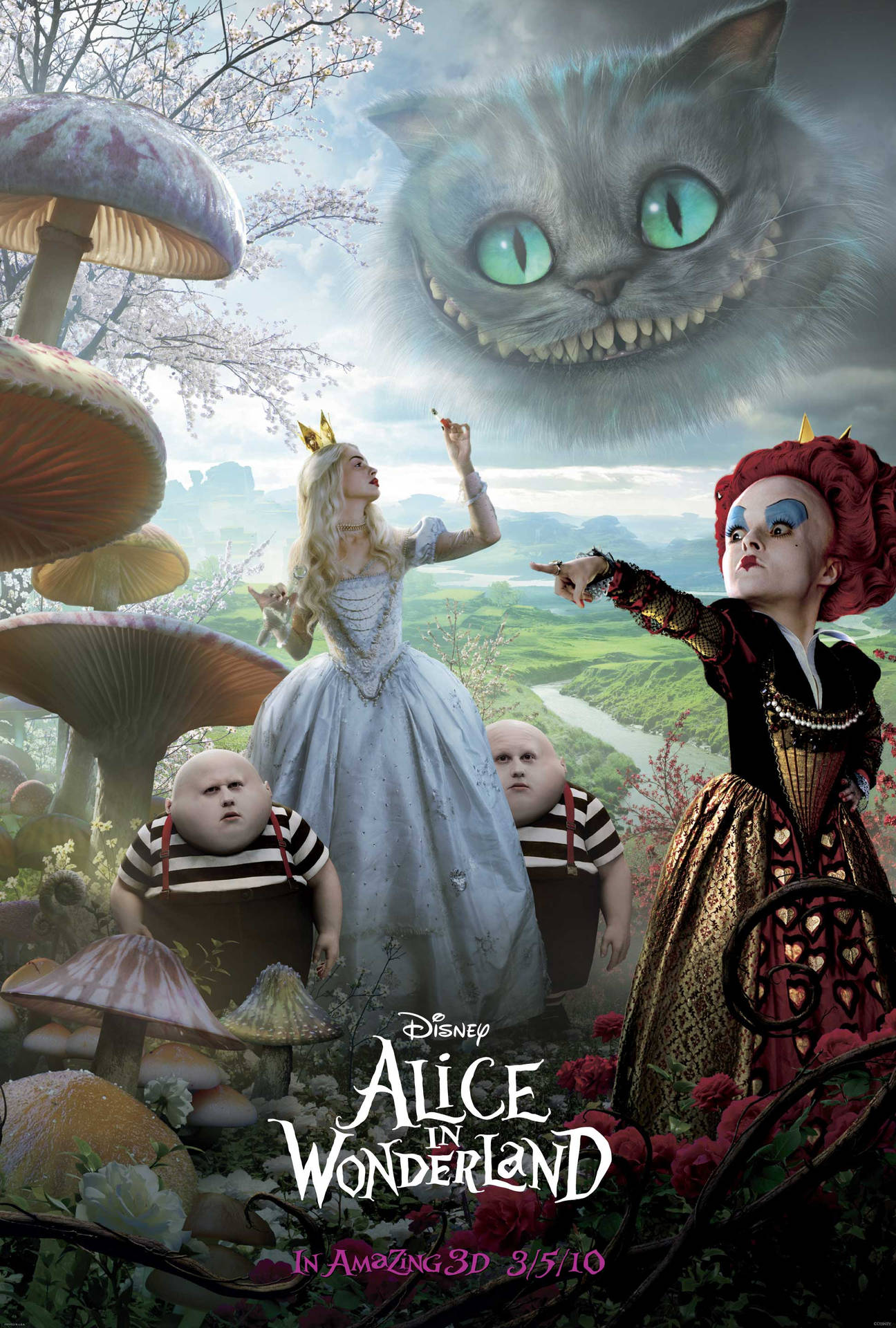
In 2010, director Tim Burton released a live-action/CGI feature that functioned as a thematic sequel rather than a direct adaptation. Featuring a 19-year-old Alice returning to "Underland" to fulfill a prophecy by slaying the Jabberwocky, the film adapted Carroll's characters into a conventional heroic fantasy structure. Despite altering the core nonsense tone of the original, it demonstrated the persistent commercial power of Carroll's imagery.
- 1865: Publication of original novel by Lewis Carroll
- 1871: Release of sequel, "Through the Looking-Glass"
- 1951: Disney releases classic animated movie
- 1970s: Alice becomes a cultural touchstone in psychology & art
- 2010: Tim Burton directs live-action fantasy film adaptation
Psychological and Cultural Footprint
The imagery of Wonderland has saturated modern vernacular and clinical science:
- Alice in Wonderland Syndrome (AIWS): A neurological condition named by psychiatrist John Todd in 1955, characterized by distorted perceptions of body size, shape, and spatial distance (metamorphopsia).
- Down the Rabbit Hole: A ubiquitous idiom used to describe entering a complex, strange, or overwhelming process or search for information.
- The Red Queen Effect: A evolutionary biology concept derived from the sequel Through the Looking-Glass, stating that organisms must constantly adapt and evolve simply to survive in an ever-changing environment.
Frequently Asked Questions
What is the main moral of Alice in Wonderland?
Alice's Adventures in Wonderland intentionally lacks a traditional Victorian moral lesson. Lewis Carroll wrote the book as a reaction against the overly didactic children's literature of the 19th century, focusing instead on imaginative play, intellectual logic, and subverting rigid authority. If any implicit lesson exists, it is the importance of curiosity, critical thinking, and emotional resilience when encountering an illogical world.
How does Alice's Adventures in Wonderland differ from Through the Looking-Glass?
Published in 1871, Through the Looking-Glass, and What Alice Found There is the direct sequel to the original novel. While the first book uses a cards motif and spatial subterranean shifts, the sequel is structured around a mirror-world and a giant game of chess, featuring mirror imagery, reversed logic, and famous poems like "Jabberwocky" and "The Walrus and the Carpenter."
Why is the Mad Hatter mad?
The phrase "mad as a hatter" was a common 19th-century English idiom that predated Carroll's book. It originated from the hat-making industry, where felt hatters frequently suffered from mercury poisoning due to the mercurous nitrate used in treating furs. Chronic exposure led to neurological damage, causing symptoms such as tremors, speech impediments, emotional instability, and hallucinations.
Was Alice in Wonderland based on a real person?
Yes, the character of Alice was inspired by Alice Liddell, the daughter of Henry Liddell, Dean of Christ Church, Oxford. However, Lewis Carroll explicitly stated that his fictional heroine was an entirely invented personality rather than a direct portrait of the real-life child, despite dedicating the original tale to her.
What is "literary nonsense" in the context of Lewis Carroll's work?
Literary nonsense is a specific genre of literature that balances logic and absurdity. Rather than creating random gibberish, writers like Lewis Carroll use precise grammatical structures, strict poetic meters, and rigorous formal logic to create situations, puns, and paradoxes that deliberately undermine rational sense while remaining internally coherent.
Navigating the Legacy of Alice in Wonderland: Reading and Viewing Path
To fully appreciate the scope of Lewis Carroll’s work and its historical footprint, readers and researchers should approach the material through a structured progression:
- Read the Original 1865 Text with Original Illustrations: Start with an annotated edition of Alice's Adventures in Wonderland (such as Martin Gardner's The Annotated Alice). Viewing Sir John Tenniel's original engravings alongside the text reveals the original political and social satire embedded in the narrative.
- Explore the 1871 Sequel: Read Through the Looking-Glass to experience Carroll's chess-based logic, mirror dynamics, and advanced linguistic experiments like "Jabberwocky."
- Compare Screen Adaptations Chronologically: Watch the 1951 Disney animated classic to understand how modern pop culture simplified the text, followed by dark fantasy or avant-garde versions (such as Jan Švankmajer's surrealist 1988 film Alice) to see how directors interpret the story's psychological subtext.
- Examine Literary and Historical Context: Study 19th-century British history, particularly Victorian social codes, Oxford academic culture, and early modern mathematics, to unlock the deeper layers of satire preserved within Carroll's timeless nonsense.