Alice Oseman is an acclaimed British author, illustrator, and screenwriter known for creating deeply relatable Young Adult (YA) fiction featuring diverse LGBTQ+ representation. Best known for the global phenomenon Heartstopper, Oseman built a interconnected literary ecosystem—often called the "Osemanverse"—exploring mental health, aromanticism, asexuality, fandom, and teenage friendship across prose and graphic novels.
Early Breakthrough and the Genesis of the "Osemanverse"
Alice Oseman entered the publishing world at an extraordinarily young age. Born in 1994 in Kent, England, Oseman secured her first publishing contract at age 17 and saw her debut novel, Solitaire, published by HarperCollins in 2014 when she was 19.
Solitaire introduced readers to Victoria "Tori" Spring, a cynical, pessimistic teenager navigating high school, mental illness, and a mysterious blog prank group calling itself "Solitaire." While Solitaire stands as a dark, introspective coming-of-age story focused on Tori's inner life, it also introduced two minor supporting characters: Tori’s younger brother, Charlie Spring, and his kind-hearted classmate, Nick Nelson.
- Solitaire (2014)
- Introduces: Tori Spring, Charlie Spring, Nick Nelson
- Spawns Webcomic: Heartstopper (2016–Present)
- Expands Universe: Radio Silence, Loveless, Novellas
Rather than treating Solitaire as an isolated work, Oseman built upon the foundation of her debut. The shared universe—informally dubbed the "Osemanverse"—features overlapping timelines, shared high schools (Truham Grammar School for Boys and Higgs School for Girls), and characters appearing across different titles. This cohesive worldbuilding allows readers to encounter figures from one book in minor cameos or major supporting roles in another, establishing a rich, interconnected landscape of contemporary British teen life.
The Evolution of Heartstopper: From Webcomic to Screen Adaptation
While Heartstopper originated as a secondary subplot within Solitaire, Oseman realized that Charlie and Nick's story deserved dedicated space. In October 2016, she launched Heartstopper as an online webcomic on platforms like Tumblr and Tapas.
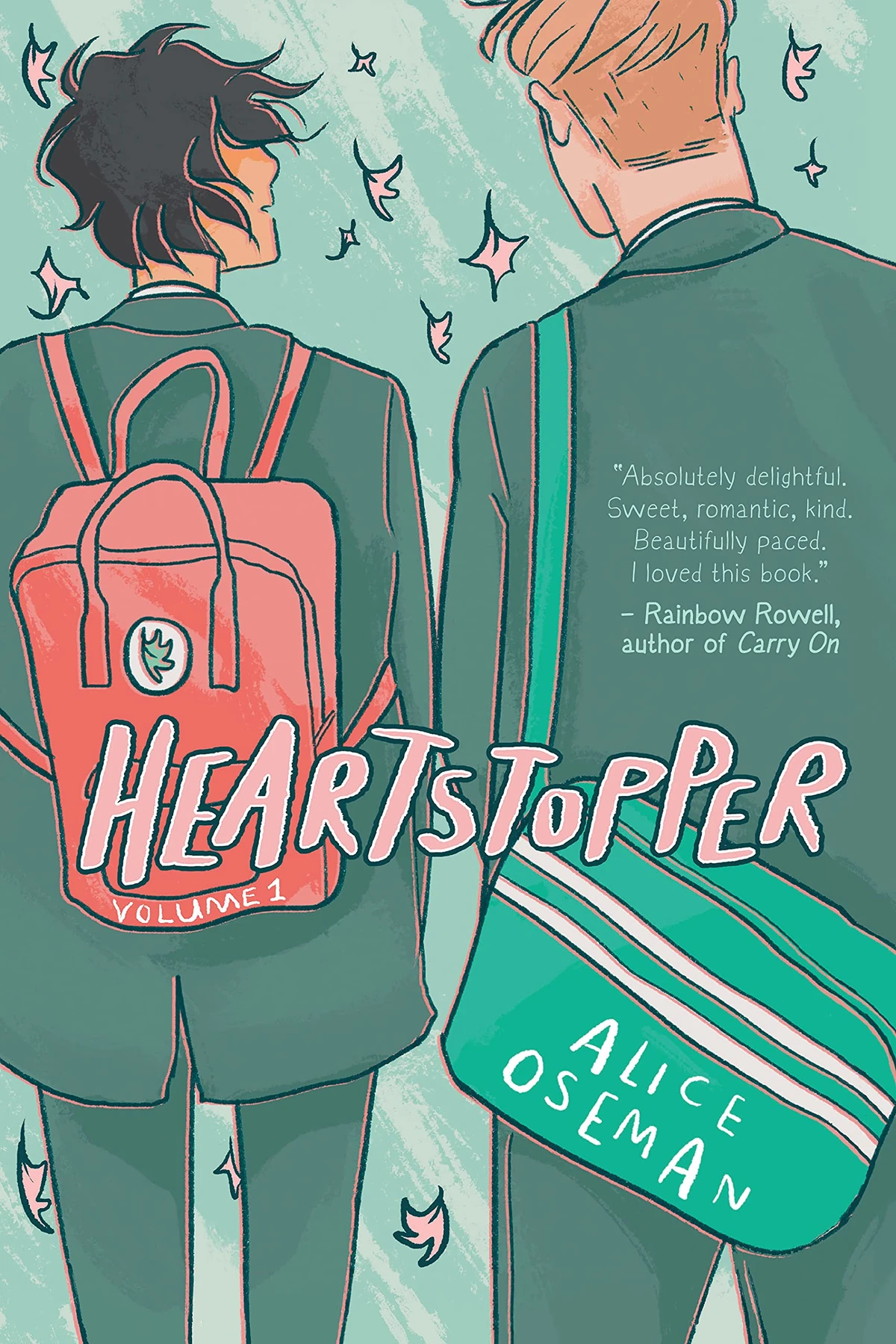
The webcomic immediately found an audience due to its gentle pace, wholesome depiction of queer romance, and expressive visual art style. Oseman self-published a limited crowd-funded edition of the comic's first chapter before Hodder Children's Books picked up the rights, publishing Heartstopper: Volume 1 in print in 2018.
- Tumblr / Tapas Webcomic (2016)
- Crowdfunded Physical Print Edition (2018)
- Hodder / Scholastic Graphic Novels (Volumes 1–5, 2018–2023)
- Netflix Live-Action Adaptation (Seasons 1–3, 2022–2024)
The Graphic Novel Structure
The narrative of Heartstopper follows Charlie Spring, an openly gay teen who was outed at school, and Nick Nelson, a soft-hearted rugby player who begins questioning his sexuality when the two are seated together in tutor group. Across its published volumes, the graphic novel expands beyond romantic fluff to tackle heavier, grounded issues:
- Volume 1 & 2: Focus on initial friendship, Nick’s bisexual awakening, and the development of their romance.
- Volume 3: Explores coming out to a broader social circle during a school trip to Paris and introduces early signs of Charlie's struggles with mental health.
- Volume 4: Depicts Charlie’s experience with severe anorexia and obsessive-compulsive disorder (OCD), highlighting inpatient treatment and how loved ones can offer healthy support without attempting to "fix" a partner.
- Volume 5: Examines looking toward the future, university choices, sexual intimacy, and personal independence.
The Netflix Adaptation
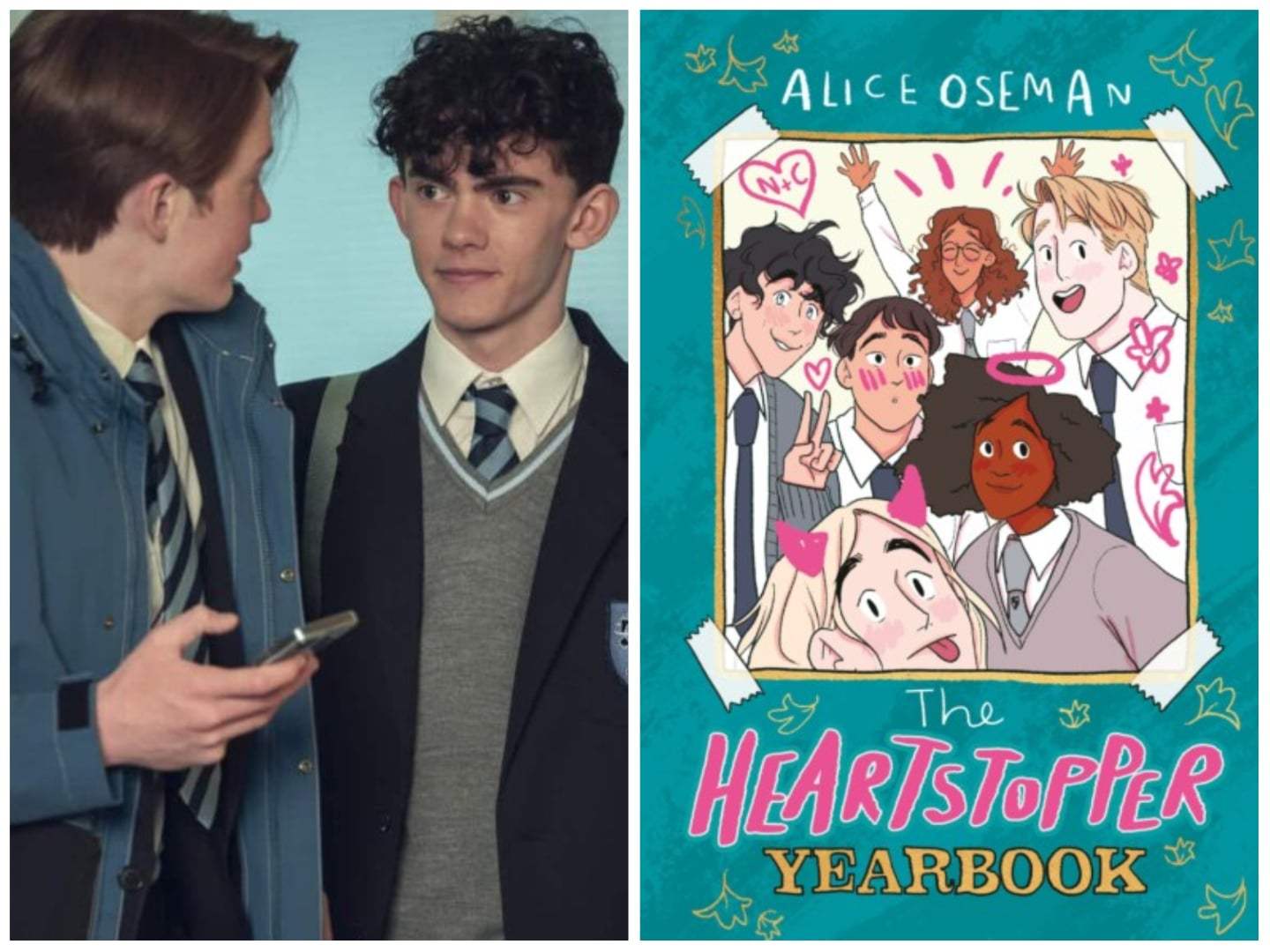
In 2021, Netflix greenlit a television adaptation of Heartstopper, with Oseman serving as creator, lead screenwriter, and executive producer—a rare level of creative control for an author adapted by a major streaming service. Premiering in April 2022, the show received critical acclaim for its cast (featuring Kit Connor as Nick and Joe Locke as Charlie), visual adherence to Oseman's comic panels, and faithful representation of LGBTQ+ youth. Subsequent seasons expanded the narrative scope, maintaining Oseman's direct involvement in scriptwriting and creative oversight.
Young Adult Prose Novels and Central Themes
While Heartstopper brought Oseman global media attention, her standalone prose novels represent some of the most critically praised contemporary YA literature in the United Kingdom. Each novel examines a distinct aspect of modern youth culture, identity formation, and mental health.
Radio Silence (2016)
Oseman’s second novel, Radio Silence, follows Frances Janvier, an overachieving high school student obsessed with academic success, who secretly loves a surreal sci-fi podcast called City of Radio. When she discovers that her quiet peer, Aled Last, is the anonymous creator of the podcast, they form a deep, non-romantic partnership.
Radio Silence critiques the intense pressure of tertiary education entrance exams, explores digital anonymity and artistic freedom, and places platonic love above romantic fulfillment. Aled Last is revealed to be demisexual, and Frances identifies as bisexual, illustrating Oseman's commitment to varied queer experiences.
I Was Born for This (2018)
I Was Born for This delves into fandom culture, parasocial relationships, and the pressures of sudden fame. Told through alternating perspectives, the story follows Angel Rahimi, a dedicated fan of the hit boy band The Ark, and Jimmy Kaga-Ricci, the band's trans frontman who suffers from severe anxiety and panic attacks.
The novel offers a balanced, empathetic look at both fans and creators. It examines how online communities provide solace for marginalized youth while cautioning against idealizing celebrities who face their own mental health battles behind the scenes.
Loveless (2020)
Loveless is widely considered one of Oseman’s most groundbreaking works. Drawing from her own lived experience, Oseman tells the story of Georgia Warr, a university freshman who has never had a crush or kissed anyone, despite being obsessed with romance fanfiction.
As Georgia tries to force herself into traditional university dating experiences, she gradually realizes that she identifies as aromantic and asexual (aro-ace). The novel normalizes asexual and aromantic spectrum identities, challenging societal narratives that treat romantic partnerships as the ultimate goal of adulthood, while celebrating friendship as a deep, valid form of lifelong love.
Chronological and Reading Order of Alice Oseman’s Books
Because characters crossover throughout the Osemanverse, readers often debate whether to approach her bibliography by publication date or canonical narrative sequence.
Recommended Narrative Timeline
For readers seeking absolute chronological order within the fictional universe, the books follow this progression:
- Heartstopper (Volumes 1–3) – Depicts the start of Nick and Charlie's relationship during Year 10/11.
- This Winter (Novella) – Set during a difficult Christmas Day in the Spring household amidst Charlie's eating disorder recovery.
- Heartstopper (Volume 4 & 5) – Covers Charlie’s recovery journey, Nick’s final school year prep, and evolving intimacy.
- Solitaire – Events occur simultaneously with late Heartstopper content, focusing on Tori Spring’s point of view during a mental health crisis at school.
- Nick and Charlie (Novella) – Takes place as Nick prepares to leave for university while Charlie faces anxiety about staying behind.
- Radio Silence – Focuses on Aled Last (Charlie's friend) during his upper sixth-form year, occurring roughly parallel to Nick and Charlie.
- Loveless – Set during Georgia’s first year at university, completely separate from the Truham/Higgs cast but occurring latest in the overall timeline.
- I Was Born for This – Standalone narrative occurring within the modern timeline without direct main-cast crossovers.
Publication and Canon Overview
| Title | Publication Year | Format | Central Protagonist(s) | Primary Themes & Identity Focus |
|---|---|---|---|---|
| Solitaire | 2014 | Novel | Tori Spring | Clinical depression, sibling support, mystery |
| Nick and Charlie | 2015 (revised 2020) | Novella | Nick Nelson, Charlie Spring | Long-distance relationship fear, growing up |
| This Winter | 2015 (revised 2020) | Novella | Tori, Charlie, and Oliver Spring | Family dynamics, eating disorder recovery |
| Radio Silence | 2016 | Novel | Frances Janvier, Aled Last | Academic burn-out, platonic intimacy, identity |
| Heartstopper (Vol 1–5) | 2018–2023 | Graphic Novels | Charlie Spring, Nick Nelson | Bisexual awakening, queer joy, mental wellness |
| I Was Born for This | 2018 | Novel | Angel Rahimi, Jimmy Kaga-Ricci | Fandom culture, anxiety, trans identity |
| Loveless | 2020 | Novel | Georgia Warr | Aromaticism, asexuality, university life |
Artistic Style, Visual Storytelling, and Screenwriting
Alice Oseman’s aesthetic evolution spans both visual illustration and formal screenwriting. Her graphic novel style relies on clean line work, minimalistic background elements, and expressive character reactions that prioritize emotional clarity over realistic rendering.
- Illustrative Techniques (Graphic Novels)
- Visual Metaphors (Leaves, Spark Motifs, Speech Bubbles)
- Character-Centric Panel Layouts
- High Emotional Expressionism
- Screenwriting Techniques (TV Adaptation)
- Direct Translation of Panel Angles to Camera Frames
- Animated Hand-Drawn VFX Overlaying Live Action
- Expanded Ensemble Character Arcs
Visual Metaphors in Heartstopper
Oseman routinely uses distinct graphical motifs to convey subtext within Heartstopper:
- Leaves and Wind Motifs: Swirling leaves appear around Nick and Charlie during moments of emotional connection or realization, symbolizing electric attraction and dynamic change.
- Spark Effects: Hand-drawn sparks accompany moments of physical contact, such as holding hands or touching fingers.
- Custom Speech Bubbles: Text box variations indicate internal anxiety, whispered dialogue, or overlapping chatter.
When translating Heartstopper to television, director Euros Lyn and creator Oseman retained these artistic motifs by inserting animated hand-drawn sparks, leaves, and visual effects directly onto the live-action footage. This choice bridged the visual identity of the graphic novel with traditional film techniques, preserving the author's original vision.
Key Themes and Impact on LGBTQ+ Young Adult Literature
Alice Oseman's contribution to modern Young Adult literature lies in her nuanced handling of queer themes and contemporary teenage issues.
- Alice Oseman's Core Literary Pillars
- Queer Joy & Acceptance
- Realistic Mental Health
- Platonic Primacy
1. Representation Beyond Traditional Coming-Out Tropes
Unlike older generations of YA queer fiction that focused predominantly on tragic endings or social rejection, Oseman balances realistic social obstacles with profound queer joy. While characters face homophobia, transphobia, or internal confusion, their narratives ultimately lead toward supportive social circles, self-acceptance, and healthy relationships. Furthermore, Oseman explicitly highlights underrepresented identities, including bisexuality, trans identities, demisexuality, aromanticism, and asexuality.
2. Nuanced Treatment of Youth Mental Health
Oseman treats adolescent mental health concerns—such as eating disorders, obsessive-compulsive disorder (OCD), depression, and severe anxiety—with gravity and medical accuracy. In Heartstopper Volume 4 and Solitaire, mental illness is not treated as a romantic plot device. Love alone does not "cure" Charlie's disorder or Tori's depression; instead, professional medical help, therapy, institutional treatment, and patient self-care are presented as essential components of long-term recovery.
3. Prioritizing Platonic Love over Romance
Throughout works like Radio Silence and Loveless, Oseman challenges the literary narrative that romantic relationships are superior to friendships. The bond between Frances and Aled in Radio Silence remains strictly platonic, functioning as the central emotional anchor of the book. Loveless explicitly positions non-romantic bonds (queerplatonic partnerships and lifelong friendships) as equal in depth, vulnerability, and importance to romantic love.
Navigating the Osemanverse: A Recommended Starting Point for Readers
For readers exploring Alice Oseman’s bibliography for the first time, selecting the best entry point depends on personal reading preferences:
- For Fans of Visual Media and Heartwarming Romance: Start with Heartstopper (Volume 1). It provides an accessible, quick-paced introduction to Oseman's universe, ideal for visual storytellers and readers of all ages.
- For Readers Seeking Underrepresented Identities: Start with Loveless. This standalone prose novel offers a compelling, humorous, and empathetic exploration of aromantic and asexual self-discovery within a university context.
- For Fans of Introspective Character Studies and Mystery: Start with Radio Silence or Solitaire. These prose novels offer darker, emotionally complex perspectives on high school pressures, mental health challenges, and dynamic friendships.
FAQ
What is the recommended reading order for Alice Oseman's books?
If reading for narrative continuity, begin with Heartstopper Volumes 1–3, read the novella This Winter, proceed to Heartstopper Volumes 4–5, followed by Solitaire, the novella Nick and Charlie, and Radio Silence. Loveless and I Was Born for This can be read independently at any point as standalone novels.
Is Heartstopper a spin-off of Solitaire?
Yes. Charlie Spring and Nick Nelson first appeared as supporting characters in Oseman's 2014 debut novel Solitaire. Because readers expressed strong interest in their backstory, Oseman launched Heartstopper in 2016 to chronicle how Nick and Charlie met and fell in love prior to the events of Solitaire.
How does the Heartstopper Netflix show differ from the graphic novels?
The Netflix adaptation is faithful to the books because Oseman wrote the screenplays herself. However, the show introduces new original characters (such as Imogen Heaney and Sahar Khatri) and expands the storylines of supporting characters like Tao, Elle, Tara, and Darcy to suit an ensemble television format.
Which Alice Oseman novel focuses on aromantic and asexual identities?
Loveless (2020) is Oseman’s primary novel focusing on aromantic and asexual identities. It follows freshman student Georgia Warr as she comes to terms with her aro-ace identity during her first year of university.
How many Heartstopper graphic novel volumes are planned?
Alice Oseman confirmed that Heartstopper will conclude with Volume 6. Volume 5 was published in December 2023, and Volume 6 is designed as the final chapter in Charlie and Nick's graphic novel journey.