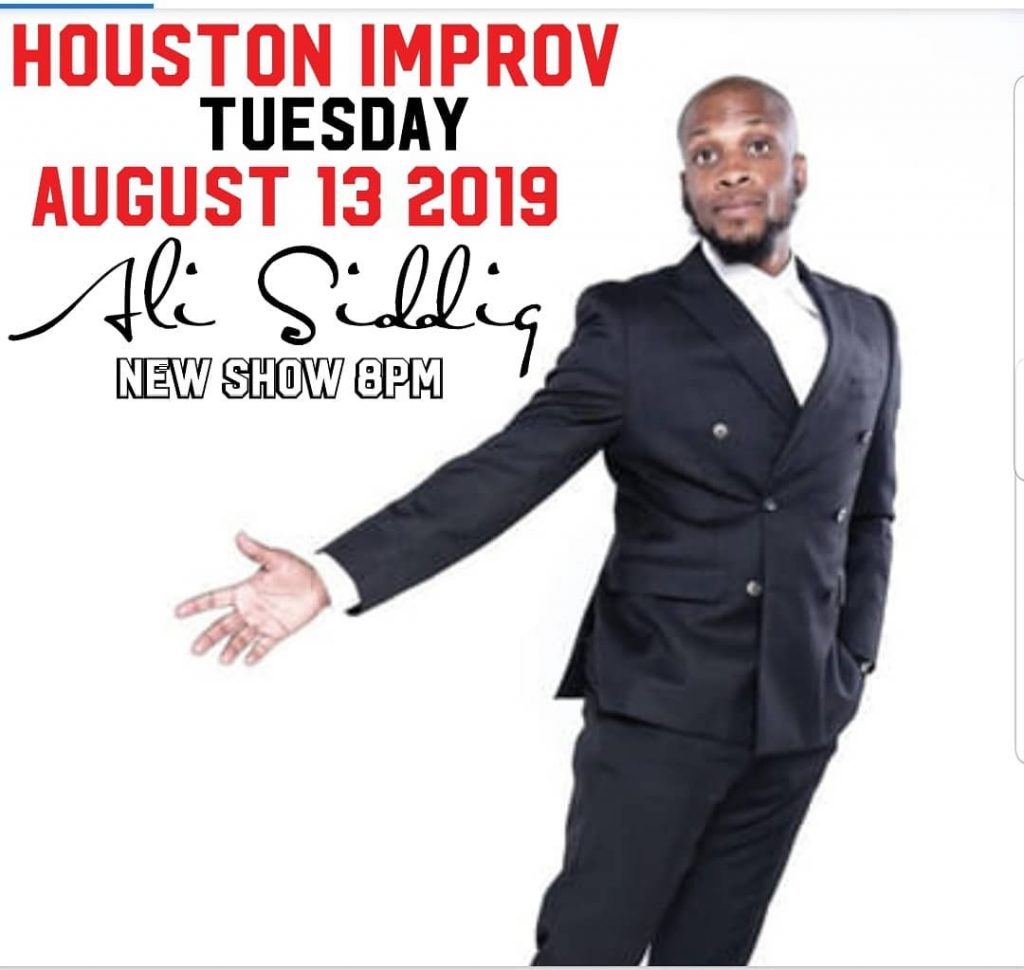
Ali Siddiq is an American stand-up comedian, writer, and producer best known for his distinct storytelling style executed while seated on a stool. After serving six years in a Texas state prison during his youth, Siddiq launched a professional comedy career that evolved into millions of digital views, independent comedy specials, and headlining tours nationwide.
Key Profile & Biography Details
Understanding Ali Siddiq’s career requires a look at his transformation from youth incarceration to one of stand-up comedy's most popular independent storytellers. His observational humor and narrative style draw heavily on direct personal experience, socio-economic context, and personal growth.
| Category | Details |
|---|---|
| Full Name | Ali Siddiq |
| Date of Birth | November 12, 1970 |
| Place of Birth | Houston, Texas, U.S. |
| Age | 55 years old |
| Profession | Stand-Up Comedian, Writer, Producer, Podcaster |
| Known For | Seated storytelling, The Domino Effect comedy special series, Comedy Central appearances |
| Estimated Net Worth | $1.5 Million – $3.0 Million (Estimated) |
| Primary Media Platforms | YouTube, Independent Touring, Streaming Platforms |
Born and raised in Houston, Texas, Siddiq developed his observational humor amidst difficult circumstances. Rather than following standard joke-punchline formats, he structures his routines around extended narratives that examine human behavior, prison culture, family dynamics, and personal accountability.
Early Life and Prison Incarceration: The Turning Point
Ali Siddiq’s early adulthood was marked by structural hardship and personal missteps in Houston. At 19 years old, he was convicted on drug trafficking charges and sentenced to 15 years in the Texas Department of Criminal Justice. He served six years at the Ruben M. Torres Unit in Otey, Texas, before his release.
During his incarceration, Siddiq discovered his talent for public speaking and comedic delivery. In an environment where tension was high, humor served as both a coping mechanism and a practical form of social mediation. He frequently served as the master of ceremonies for inmate shows and organized events, learning how to hold an audience's attention without relying on conventional theatricality or stage antics.
Siddiq’s time behind bars became foundational to his creative identity. Rather than glorifying or romanticizing criminal activity, his storytelling critically examines the choices that led to his sentence, the reality of the American penal system, and the complexities of prison survival. This authentic perspective later set him apart in the competitive world of professional stand-up comedy.
Stand-Up Career Trajectory and Breakthrough Specials
Following his release from prison, Siddiq began pursuing comedy seriously, performing at open-mic nights across Texas. He steadily worked his way through the club circuit, gaining respect among regional comics for his unhurried pacing and natural authority on stage.
Early Houston Open Mics ➔ Regional Club Headlining ➔ Comedy Central Features ➔ Independent Digital Distribution
His major national breakthrough arrived via Comedy Central. Siddiq appeared on the storytelling series This Is Not Happening, hosted by Ari Shaffir. His segment detailing a prison riot—popularly referred to as the "MEX-854" story—went viral, accumulating millions of views on YouTube. The performance demonstrated his skill at taking a chaotic, high-stakes situation and dissecting it with composure, precision, and humor.
Siddiq subsequently released official specials with major platforms and networks:
- Comedy Central Stand-Up Presents (2018): A half-hour special filmed live, showcasing his refined material on post-prison integration and social observations.
- It’s Bigger Than These Bars (2018): Filmed directly inside the Bell County Jail in Belton, Texas, this hour-long Comedy Central special brought Siddiq full circle. Performing in front of incarcerated men, he delivered comedy rooted in shared understanding and rehabilitation.
- The Domino Effect Series (2022–Present): Opting for artistic and financial control, Siddiq released The Domino Effect self-funded on YouTube. The multi-part saga—including The Domino Effect 2: Loss, The Domino Effect 3: Integration, and The Domino Effect 4: Recipe for Disaster—chronicles his life chronologically from childhood to his adult imprisonment and ultimate rehabilitation.
By leveraging independent distribution on YouTube, Siddiq circumvented traditional network gatekeepers, accumulating tens of millions of views while retaining ownership of his intellectual property.
Ali Siddiq Net Worth & Financial Overview
As of 2026, Ali Siddiq's net worth is estimated between $1.5 million and $3.0 million. Because private financial records for independent artists are not public documents, this evaluation is derived from standard industry revenue streams, venue capacities, digital video monetization metrics, and media production assets.
Key Income Streams
- Independent Touring & Live Shows: Live performances generate the largest share of Siddiq’s income. Headlining theaters and major comedy clubs across North America allows him to collect direct box-office revenue without sharing substantial splits with major TV networks.
- Digital Distribution and YouTube Revenue: The multi-part Domino Effect specials on YouTube have generated tens of millions of views. YouTube ad revenue, combined with channel memberships and digital sponsorships, provides steady recurring revenue.
- Merchandising & Content Ownership: By producing his specials independently under his own banner, Siddiq retains full ownership of his master recordings and publishing rights. He also sells branded merchandise online and at live tour stops.
- Podcasting & Media Guesting: Direct advertising income from his own media projects and guest appearances on prominent comedy and culture podcasts further diversifies his business model.
By controlling his production costs and self-releasing content, Siddiq maximizes his profit margins compared to comics bound by traditional studio or network contracts.
Signature Comedy Style and Storytelling Methodology
Ali Siddiq is distinct among modern stand-up comedians for performing his entire set seated on a high stool. This physical posture shapes his artistic style:
- Conversational Delivery: Sitting down removes the theatrical urgency present in many stand-up acts. It creates an intimate setting akin to listening to a master storyteller in a living room.
- Chronological Narrative Arc: Rather than stringing together unrelated one-liners or observational bits, Siddiq constructs long-form narrative arcs. His specials often play out like chapters of an audio autobiography.
- Social Realism and Vulnerability: Siddiq avoids superficial gags, choosing instead to address systemic issues, systemic poverty, institutional failures, personal grief, and moral failure with honesty and humor.
- De-escalation and Perspective: Having survived severe high-stress environments, Siddiq brings a calm, measured perspective to stage performance. He uses humor to deconstruct tension rather than heighten it unnecessarily.
This commitment to authenticity has built a loyal, multi-generational audience that values substance and personal truth alongside comedy.
Personal Life and Community Contributions
Ali Siddiq keeps his immediate family life relatively private compared to his public career. He frequently references his children, extended family, and upbringing in Houston within his material, using those experiences to illustrate broader lessons on parenting, discipline, and personal responsibility.
Outside of standard entertainment venues, Siddiq remains engaged in community outreach and youth mentorship. Drawing from his personal journey through the criminal justice system, he periodically visits correctional facilities, youth detention centers, and community organizations to speak about conflict resolution, decision-making, and rehabilitation. He advocates for meaningful reform within the justice system and stresses self-reliance and education to at-risk youth.
Frequently Asked Questions About Ali Siddiq
How old is Ali Siddiq?
Ali Siddiq was born on November 12, 1970, making him 55 years old.
Why did Ali Siddiq go to prison?
Siddiq was convicted on drug trafficking charges at age 19. He was sentenced to 15 years in prison and served six years at the Ruben M. Torres Unit in Texas before being paroled.
Why does Ali Siddiq perform sitting down on a stool?
Performing while seated reflects Siddiq's background in casual storytelling, established during his time in prison where space and environment dictated a conversational style. It also signals to the audience that his show is a narrative journey rather than a high-energy physical act.
What is The Domino Effect?
The Domino Effect is an independent, multi-part stand-up comedy special series self-released by Ali Siddiq on YouTube. The series presents a chronological account of his early life, the series of events leading up to his incarceration, his prison experience, and his life after release.
Where can you watch Ali Siddiq's comedy specials?
Many of his major comedy specials, including all parts of The Domino Effect series, are available for streaming directly on Ali Siddiq's official YouTube channel. Earlier network specials produced with Comedy Central are accessible through standard cable streaming platforms and digital VOD services.
Strategic Takeaways for Independent Content Creators
Ali Siddiq’s career path provides valuable insights for artists and digital content creators navigating modern entertainment models:
- Prioritize Ownership over Upfront Paychecks: Retaining intellectual property rights for specials can yield greater long-term financial returns than selling exclusive rights outright to streaming platforms.
- Lean into Authentic Voice: Audiences respond to unique, lived experiences. Attempting to fit standard commercial molds can dilute what makes an artist memorable.
- Build Direct-to-Consumer Channels: Platforms like YouTube and direct ticketing allow creators to cultivate direct relationships with fans, ensuring financial stability regardless of changing media trends.