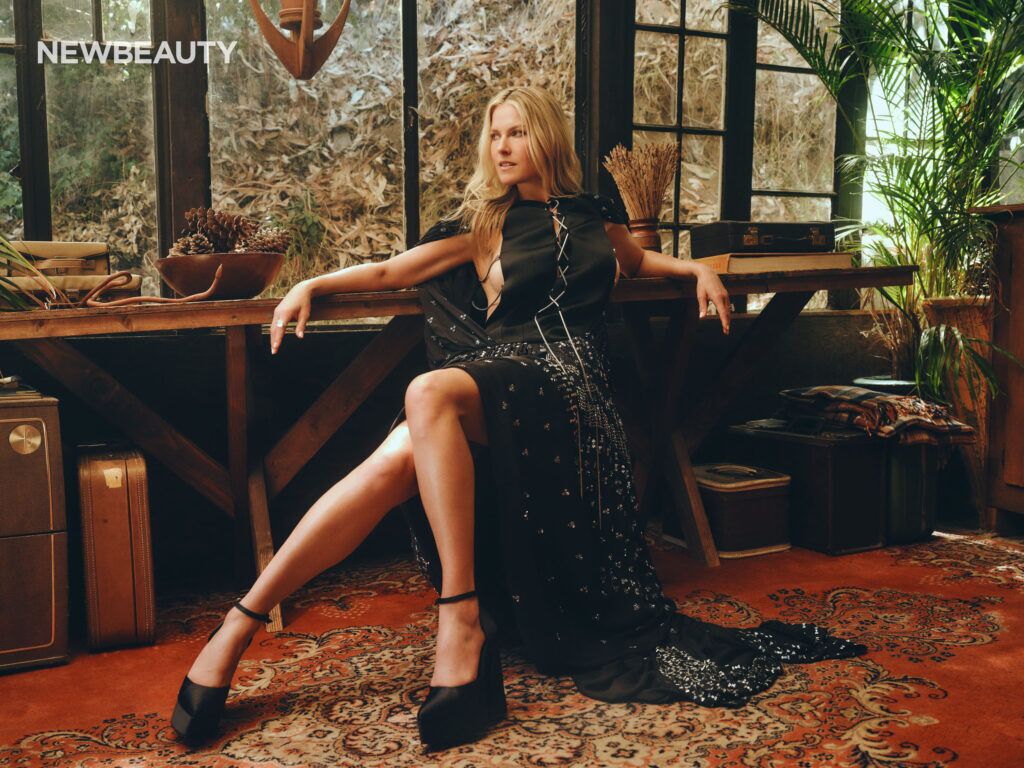
Ali Larter’s hair transformations reflect a masterclass in versatility, transitioning seamlessly from beachy 1990s blonde layers to dark auburn action-hero shags and sophisticated modern lobs. Choosing an Ali Larter-inspired haircut requires balancing precision layering, dimensional color, and face-framing techniques tailored to your natural texture and face shape.
The Evolution of Ali Larter’s Signature Haircuts Across Decades
Throughout her career in television and film, Ali Larter has consistently set hair trends by balancing classic Hollywood glamour with effortless, wearable texture. Her haircut choices mirror her career evolution, displaying how minor structural adjustments in length, layering, and fringe can completely alter an overall aesthetic.
The Late 1990s: Beachy Blonde Layers and Dark Dramatic Tones
Larter broke into mainstream pop culture in 1999 with Varsity Blues, sporting the quintessential late-90s sun-kissed blonde hair. This look relied on long, feathery layers cut with slide-cutting techniques to create fluid movement around the collarbones. However, Larter demonstrated her willingness to experiment shortly after by transitioning to a rich, deep auburn-brunette shade for her role as Clear Rivers in Final Destination (2000). The dark shoulder-length cut featured minimal interior layering and blunt ends, creating a moody, dramatic silhouette that contrasted sharply with her bright blonde debut.
The Mid-2000s: The Golden "Heroes" Layered Cut
By the mid-2000s, Larter returned to blonde, establishing one of her most requested salon looks during her run on Heroes (2006–2010). Playing Niki Sanders and Tracy Strauss, her hair became a defining characteristic of mid-2000s beauty standards. The cut featured long, cascading layers starting just below the chin, combined with soft, sweeping curtain bangs. This structural design added maximum volume at the crown while retaining density through the ends, making it a benchmark style for medium-to-thick hair types seeking weightless movement.
The Action-Era Auburn Shag and Modern Lobs
For her portrayal of Claire Redfield in the Resident Evil franchise (Extinction in 2007 and Afterlife in 2010), Larter adopted a fiery red and auburn palette paired with a heavy, textured shag cut. This style incorporated choppy crown layers, razored edges, and face-framing piecey fringe designed to withstand high-action sequences while maintaining structural shape. In more recent years, Larter has embraced refined, shoulder-grazing long bobs (lobs) and sleek, blunt-cut bobs. These modern cuts favor clean perimeters, soft internal texturizing, and multidimensional honey-blonde balayage, reflecting a contemporary, low-maintenance elegance.
Deconstructing Ali Larter’s Most Famous Haircuts
Replicating an iconic Ali Larter style requires understanding the precise hair architecture and cutting methodologies behind each variation.
- Top Volume / Crown
- Curtain Fringe
- Internal Layers
- Blunt Collarbone Base
1. The Long Layered Golden Blonde Cut (Heroes Era)
- Base Structure: Long, perimeter-heavy cut extending 3 to 4 inches past the collarbone.
- Layering Technique: Internal vertical layering starting at the jawline to preserve density at the ends while creating interior volume.
- Fringe Architecture: Long, center-parted curtain bangs angled downward to blend seamlessly into the cheekbone layers.
- Texture Work: Point-cutting along the perimeter to avoid blunt weight lines and ensure soft fall.
2. The Textured Auburn Combat Shag (Resident Evil Era)
- Base Structure: Shoulder-length medium shag with a square exterior perimeter.
- Layering Technique: High-elevation crown layers paired with slide-cut interior channels to enhance natural wave and movement.
- Fringe Architecture: Full, razored curtain fringe cut slightly past the eyebrows, textured heavily for a piecey, lived-in feel.
- Texture Work: Razor-cutting throughout the mid-lengths and ends to remove bulk and create architectural grit.
3. The Modern Blunt Lob with Lived-In Texture
- Base Structure: Collarbone-grazing long bob cut with a sharp, horizontal perimeter line.
- Layering Technique: Minimal exterior layering; subtle internal texturizing executed dry to allow the hair to swing naturally.
- Fringe Architecture: Optional long, face-framing tendrils or no fringe, styled with a deep side part or crisp center part.
- Texture Work: Deep point-cutting strictly at the last inch of the ends to soften the line without thinning the overall shape.
Face Shape and Hair Texture: Why Ali Larter’s Cuts Work So Well
Ali Larter possesses a balanced oval-to-heart face shape characterized by high cheekbones and a defined jawline. Her haircut choices work exceptionally well because they strategically highlight or soften these structural angles.
| Face Shape | Ideal Ali Larter Cut Adaptation | Technical Rationale |
|---|---|---|
| Oval / Heart | Long layers with curtain bangs (Heroes style) | Emphasizes cheekbones and widens narrower chin lines naturally. |
| Square / Angular | Textured Auburn Shag (Resident Evil style) | Softens sharp jawlines via choppy perimeter layers and movement. |
| Round | Modern Blunt Collarbone Lob with minimal layers | Creates vertical elongation and slims lower facial curves. |
Texture and Density Considerations
- Fine Hair: Fine-haired individuals should opt for Larter's modern blunt lob. Avoid heavy shag razoring, as over-layering fine strands depletes the weight line. Request blunt perimeters with internal micro-layers for density.
- Medium Density Hair: Medium hair handles the long Heroes layers effortlessly. This texture takes well to point-cut curtain bangs and thermal styling, holding volume without collapsing.
- Thick or Coarse Hair: High-density hair excels in the textured shag or heavily layered medium cut. Texturizing techniques like dry slide-cutting remove interior weight, allowing thick hair to drape fluidly around the neck and shoulders.
Comparing Ali Larter’s Defining Hair Eras
The following table provides a breakdown of Ali Larter’s key haircut eras, detailing technical characteristics, color bases, and structural recommendations.
| Era / Project | Cut Style & Length | Primary Color Profile | Key Cutting & Styling Technique | Ideal Face Shape & Density |
|---|---|---|---|---|
| Late 1990s (Varsity Blues) | Long beachy layers; past collarbone | Light wheat blonde with fine weave highlights | Slide-cut layers; round-brush blowout with flipped ends | Oval/Heart; Fine to Medium density |
| 2000 (Final Destination) | Shoulder-length blunt cut; minimal layers | Dark chestnut brown / rich auburn | Flat perimeter cut; straight iron finish with subtle bevel | Oval/Square; Medium to High density |
| 2006–2010 (Heroes) | Cascading long layers with curtain fringe | Golden honey blonde with light face-framing | Vertical interior layering; large-barrel curling iron waves | Heart/Oval; Medium density |
| 2007–2010 (Resident Evil) | Textured shoulder shag with piecey fringe | Copper red and deep auburn | Razor-cut crown layers; sea-salt texturizing and hand-diffusing | Square/Diamond; Medium to Coarse density |
| Modern Era (Present / Lobs) | Blunt collarbone lob; crisp perimeter | Dimensional warm blonde balayage with shadow root | Point-cut blunt perimeter; soft flat-iron bend or air-dried wave | All face shapes; Fine to Medium density |
How to Ask Your Stylist for an Ali Larter-Inspired Cut
To achieve an accurate adaptation of Ali Larter's hair, clear communication with your stylist is essential. Bringing reference imagery from the specific era you wish to replicate is helpful, but communicating structural details ensures the cut fits your unique features.
Specific Technical Terminology to Use
- For the Classic Layered Look: Ask for "long interior layers starting below the chin" and "curtain bangs angled down to the cheekbones." Emphasize that you want to maintain perimeter density while freeing up movement through the top.
- For the Modern Blunt Lob: Request a "collarbone-length long bob with a sharp perimeter." Clarify that internal weight should be removed using dry point-cutting rather than aggressive thinning shears.
- For the Textured Shag: Specify a "razor-cut shoulder-length shag with choppy crown layers." Ask for piecey, cheekbone-skimming fringe that can be worn centered or swept to the side.
Color Integration Strategy
Ali Larter’s haircuts rely heavily on color placement to show off texture and movement.
- Blonde Variations: Request a dimensional base with bright face-framing babylights ("money piece") paired with a subtle root shadow. This creates the illusion of natural depth and extends time between salon touch-ups.
- Auburn/Red Variations: Opt for a medium auburn base accented by copper or warm cinnamon ribbon highlights. This dimensional contrast makes interior layers pop under light.
Step-by-Step Styling Guide to Replicate Her Signature Waves and Volume
Achieving Ali Larter’s signature effortless volume and lived-in wave requires a structured pre-blowout routine and precise thermal styling techniques.
- Step 1: Prep & Protect
- Step 2: Directional Blowout
- Step 3: Thermal Curling
- Step 4: Texture Finishing
Step 1: Prep and Product Application
Apply a lightweight volumizing mousse to damp roots. Distribute a thermal heat protectant spray from mid-lengths to ends. For fine hair, avoid heavy creams that weigh down crown layers.
Step 2: Tension Blowout for Volume
- Section hair horizontally into three tiers: bottom nape, middle crown, and top canopy.
- Using a medium-to-large ceramic round brush, dry the nape section straight down for smoothness.
- For the middle and crown sections, pull hair straight upward from the scalp while directing hot air from nozzle to ends. This builds durable root elevation.
- Dry curtain bangs forward over the face, wrapping them around the brush away from the face to achieve that classic backward swoop.
Step 3: Thermal Curling Technique
- Use a 1.25-inch barrel curling iron set to an appropriate heat level (300°F–350°F for fine/processed hair; 375°F for coarse hair).
- Take 1-inch vertical sections of hair. Clamp near the mid-shaft and rotate the iron away from your face.
- Crucial Detail: Leave the bottom 1 to 1.5 inches of ends out of the curling iron clamp. This ensures a modern, lived-in aesthetic rather than an overly polished pageant curl.
- Alternate curling directions (one section away from face, next section toward face) on the back sections to prevent curls from clumping together into a single roll.
Step 4: Finishing and Texturizing
Allow curls to cool completely for 3 to 5 minutes to set the hydrogen bonds in the hair shaft. Break up the curls by raking through them with a wide-tooth comb or your fingers coated in a drop of light hair oil. Finish by misting a dry texturizing spray through the mid-lengths while flipping your head upside down for instant, buoyant volume.
Frequently Asked Questions
What is Ali Larter's natural hair color?
Ali Larter is naturally a medium ash blonde/light brown. Over the course of her career, she has frequently enhanced her natural tone with high-lift golden blonde highlights, full double-process light blonde shades, and rich copper/auburn glosses for specific film roles.
How do I maintain the golden blonde shade seen in Ali Larter's mid-2000s looks?
Maintaining dimensional golden blonde hair requires a balanced care regimen. Use a purple or gold-depositing shampoo once every two weeks to prevent brassiness while maintaining warmth. Schedule gloss or toner appointments every 4 to 6 weeks, and apply weekly bond-building treatments to repair structural damage from lighteners.
Can Ali Larter’s Resident Evil auburn shag work on fine hair?
Yes, but the cut must be modified. Stylists should use point-cutting shear techniques rather than a razor, as razors can fray fine hair ends and make the hair appear sparse. Keeping crown layers slightly longer will help preserve overall density while maintaining the shag silhouette.
How often does a blunt lob like Ali Larter’s require a trim?
A blunt collarbone lob requires maintenance every 6 to 8 weeks. Because the perimeter line is straight and crisp, hair growth becomes noticeable faster than in heavily layered or asymmetrical styles.
What face shapes look best with Ali Larter’s signature layered bob?
Ali Larter’s layered bob flatters oval, heart, and diamond face shapes particularly well. The face-framing layers soften prominent cheekbones and chin lines, while the crown volume helps elongate shorter facial profiles.
Choosing the Right Ali Larter Haircut for Your Hair Profile
When selecting an Ali Larter-inspired hairstyle, match your decision to your daily maintenance capacity, natural hair texture, and styling preferences:
- Choose the Classic Long Layers with Curtain Bangs if you have medium-to-thick hair, enjoy thermal styling with curling irons or round brushes, and prefer a soft, romantic look.
- Choose the Modern Blunt Collarbone Lob if you prefer a sleek, low-maintenance cut that looks polished whether flat-ironed straight, air-dried with natural wave, or styled in a quick updo.
- Choose the Textured Auburn Shag if you have natural wave or curl, enjoy air-drying with sea-salt or texturizing sprays, and want an edgy, dynamic frame around your face.
Consult with a professional stylist to analyze your hair's elasticity, natural growth patterns, and density before committing to significant length changes or color transformations.
EDITORIAL CATEGORY METADATA