Algis Budrys was a cornerstone of 20th-century speculative fiction, recognized equally for his sharp, structurally precise novels and his authoritative voice as a critic. He served as a bridge between the Golden Age of science fiction and the New Wave, consistently demanding higher literary standards from the genre while championing the technical fundamentals of storytelling.
The Foundations of a Literary Career
Algis Budrys (1931–2008) was a Lithuanian-American author, editor, and critic whose impact on science fiction extends far beyond his own bibliography. Born in East Prussia to the Lithuanian Consul General to the United States, Budrys arrived in America during his youth, where he eventually immersed himself in the thriving science fiction community of the 1950s. His early career was defined by an acute understanding of the mechanics of fiction, which he treated with a combination of professional rigor and profound empathy for the creative process.
His writing career was characterized by a distinct "less is more" philosophy. Unlike many of his contemporaries who favored expansive world-building, Budrys focused on the psychological landscape of his characters. He believed that the power of a speculative premise rested entirely on the human reaction to it. This approach allowed him to create stories that felt grounded and inevitable, setting him apart in a market frequently dominated by pulp-style sensationalism.
Major Works and Stylistic Evolution
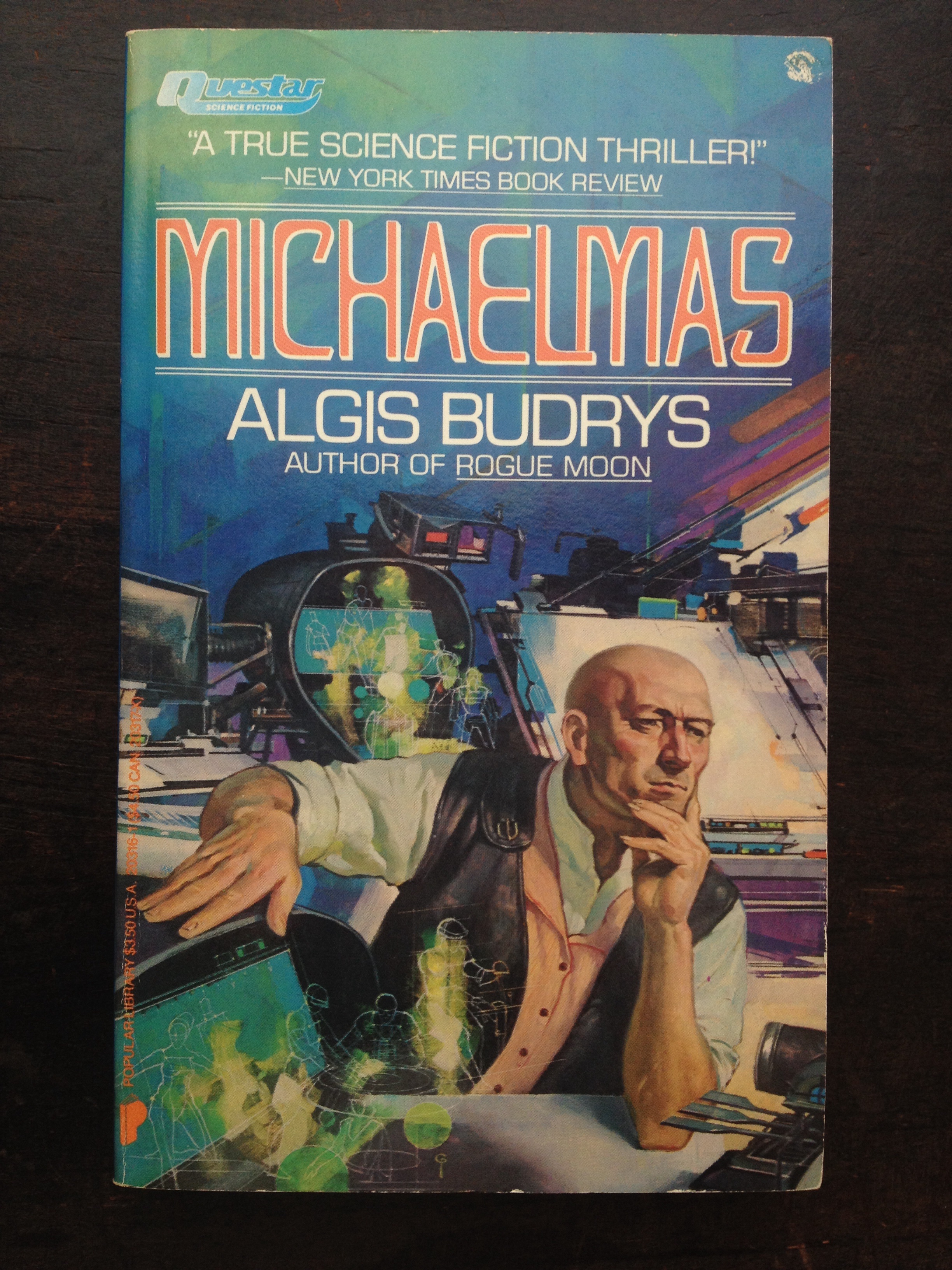
Budrys produced a relatively small but highly influential body of work. His novels are frequently studied for their economy of prose and structural integrity. Among his most celebrated contributions are Who? (1958), The Man Who Floated in Time (1962), and Michaelmas (1977).
Who? remains perhaps his most significant novel. It explores themes of identity, Cold War paranoia, and the dehumanizing nature of technology. By centering the story on a man whose face has been replaced by a metal mask following an accident, Budrys forces the reader to confront the question of what truly constitutes a human personality. Michaelmas, conversely, serves as a prescient look at the power of information and global networks, reflecting his keen ability to project current societal anxieties into plausible near-future scenarios.
Selected Bibliographic Overview
The following table highlights key works that illustrate the breadth and thematic focus of Budrys's bibliography.
| Title | Publication Year | Primary Focus |
|---|---|---|
| Who? | 1958 | Identity, cold war, and artificiality |
| The Man Who Floated in Time | 1962 | Perception and temporal distortion |
| Falling Torch | 1960 | Geopolitics and post-war occupation |
| Michaelmas | 1977 | Technology, media, and global control |
| Hard Landing | 1993 | Alien identity and societal integration |
The Critic’s Mandate: Shaping the Genre
If Algis Budrys’s novels established his reputation as a writer, his criticism secured his status as a titan of the field. For decades, he served as a primary literary arbiter for the genre, most notably through his regular book review columns in Galaxy Science Fiction and later The Magazine of Fantasy & Science Fiction.
Budrys was not a passive reader; he was an active interrogator of the text. His criticism was grounded in the "Budrys method," which prioritized the mechanics of narrative—pacing, character motivation, and the resolution of the story’s central premise. He famously took writers to task not for failing to meet an abstract literary standard, but for failing to deliver on the promises they made to their readers in the opening chapters. For aspiring writers, his reviews and essays served as an essential masterclass in how to construct a coherent, compelling narrative.
Teaching and the Workshop Tradition
Beyond his output as a writer and critic, Budrys was a dedicated mentor. He was a long-time instructor at the Clarion Writers Workshop, an intensive program for emerging science fiction and fantasy writers. His pedagogical style was consistent with his critical writing: he focused on technical mastery. He taught students how to audit their own work, identifying the precise point where a story might lose momentum or where a character’s decision became unmoored from their established psychology.
He was also instrumental in the formation of the Writers of the Future contest, founded in 1983. As its coordinating judge for many years, Budrys utilized the platform to professionalize the entry-level market, ensuring that new talent received both fair treatment and rigorous feedback. His influence here persists in 2026, as the contest continues to be a standard-bearer for finding and nurturing voices in speculative fiction.
Analyzing the "Budrysian" Narrative Style
To understand Budrys’s writing, one must observe how he managed the "speculative premise." In a typical Budrys story, the technological or alien element is not the protagonist; it is the catalyst that exposes the inner life of the characters. He mastered the art of the "internalized narrative," where the stakes are rarely galaxy-spanning empires but rather the integrity and agency of the individual.
His prose is marked by:
- Structural Precision: Every scene serves a clear purpose, moving the character toward a logical, albeit often unexpected, conclusion.
- Psychological Realism: His characters rarely act out of plot convenience; their actions are the natural byproduct of their history and current environment.
- Restraint: He avoids the excessive exposition often found in mid-century science fiction, preferring to allow the setting to emerge through character interaction.
Frequently Asked Questions
What was Algis Budrys's most significant contribution to the genre?
His most significant contribution was the elevation of science fiction criticism and writing standards. By emphasizing technical craftsmanship and psychological depth over pulp tropes, he influenced both the authors he critiqued and the students he mentored, effectively raising the professional bar for the entire field.
Why is Who? considered a definitive text for his style?
Who? is emblematic of his style because it uses a high-concept science fiction premise—a man with a cybernetic face—to conduct a deeply grounded inquiry into identity and political surveillance. It demonstrates his ability to maintain narrative tension through character psychology rather than relying on action-heavy set pieces.
What was the impact of his work on the Writers of the Future contest?
As the lead judge for many years, Budrys established a template for identifying professional-grade writing. He insisted that winners be chosen based on the quality of their craft and their potential for growth, a philosophy that turned the contest into a major professional launchpad that remains highly respected in 2026.
How does his criticism differ from other mid-century critics?
Unlike many critics of his era who focused on themes or sociological implications, Budrys focused on how the story actually worked—or failed to work—as a narrative. He operated as a "writer’s critic," providing detailed analyses of why a plot point succeeded or how a character’s arc felt artificial.
Where can current readers find his critical essays?
While many of his columns appeared in long-defunct magazines, collections such as Benchmarks: Galaxy Bookshelf have preserved a significant portion of his critical output. These volumes remain essential reading for anyone interested in the development of modern speculative fiction criticism.
Recommendations for Further Exploration
To fully appreciate the legacy of Algis Budrys, one should approach his work in two distinct phases: reading his novels to understand his application of craft, and reading his essays to understand his philosophy of the genre. Start with Who? to see his narrative economy in action. Follow this with his collected essays in Benchmarks. For those interested in the history of the industry, looking into his role as a mentor at Clarion provides context on how he shaped multiple generations of authors who are currently leading the field in 2026.