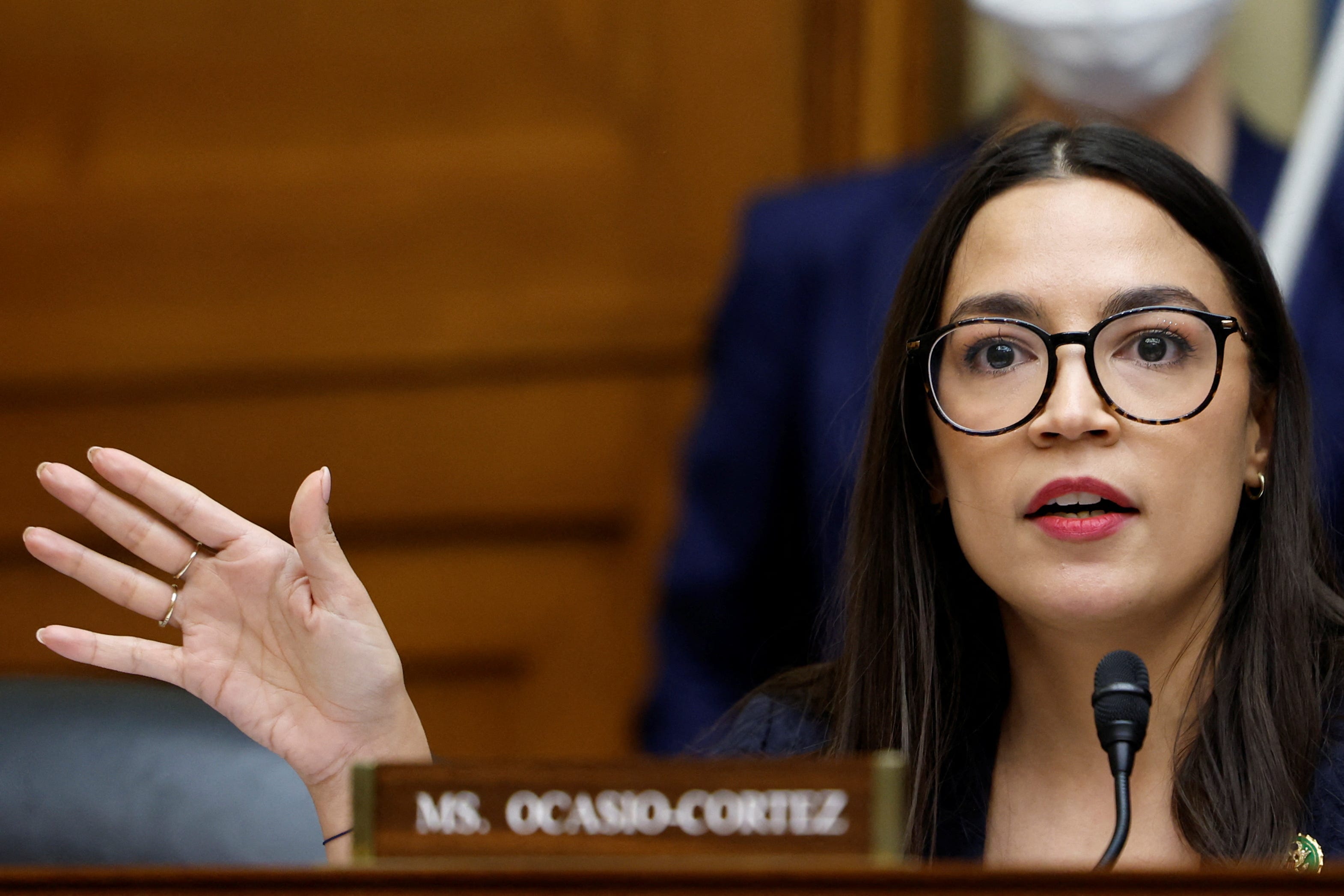
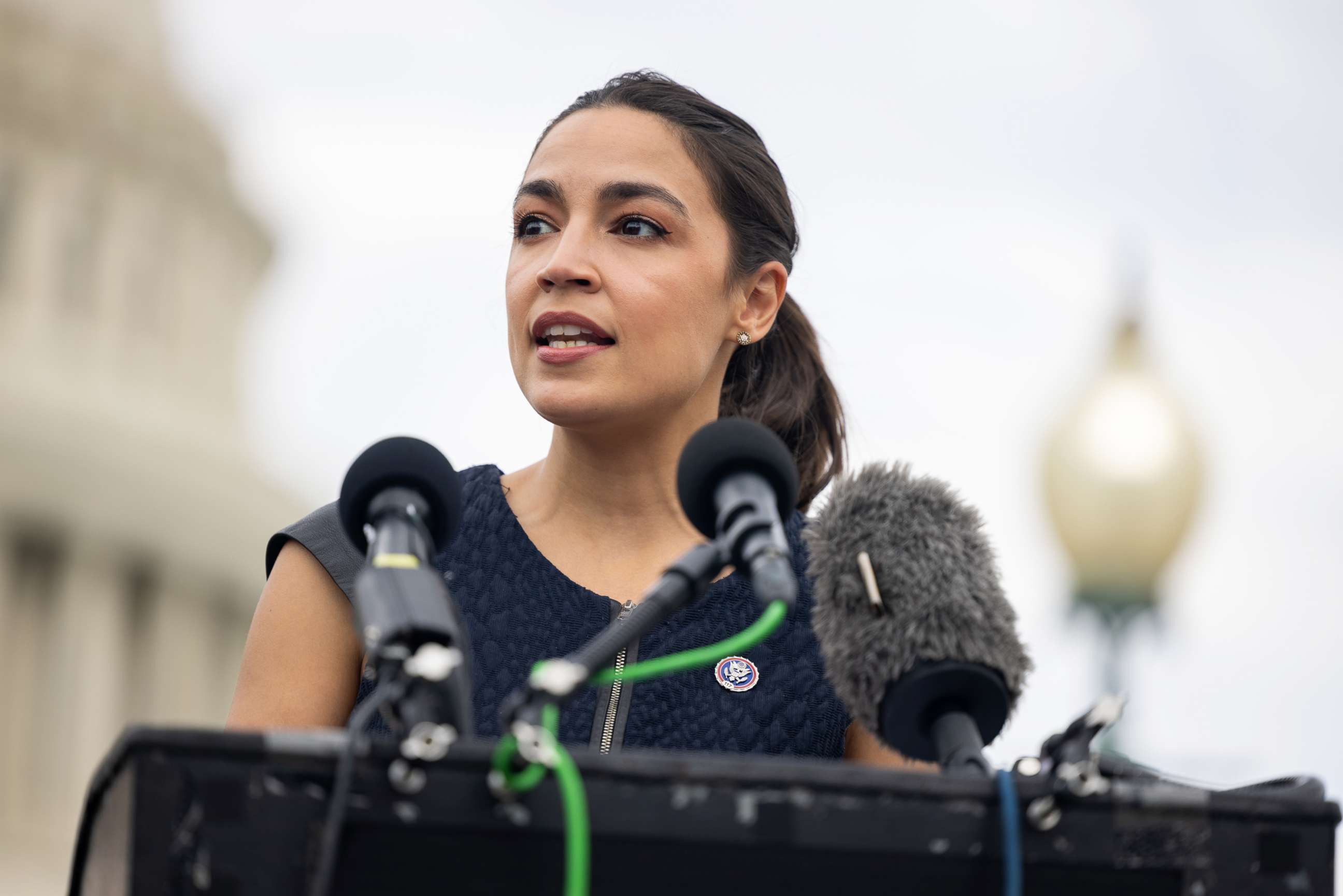
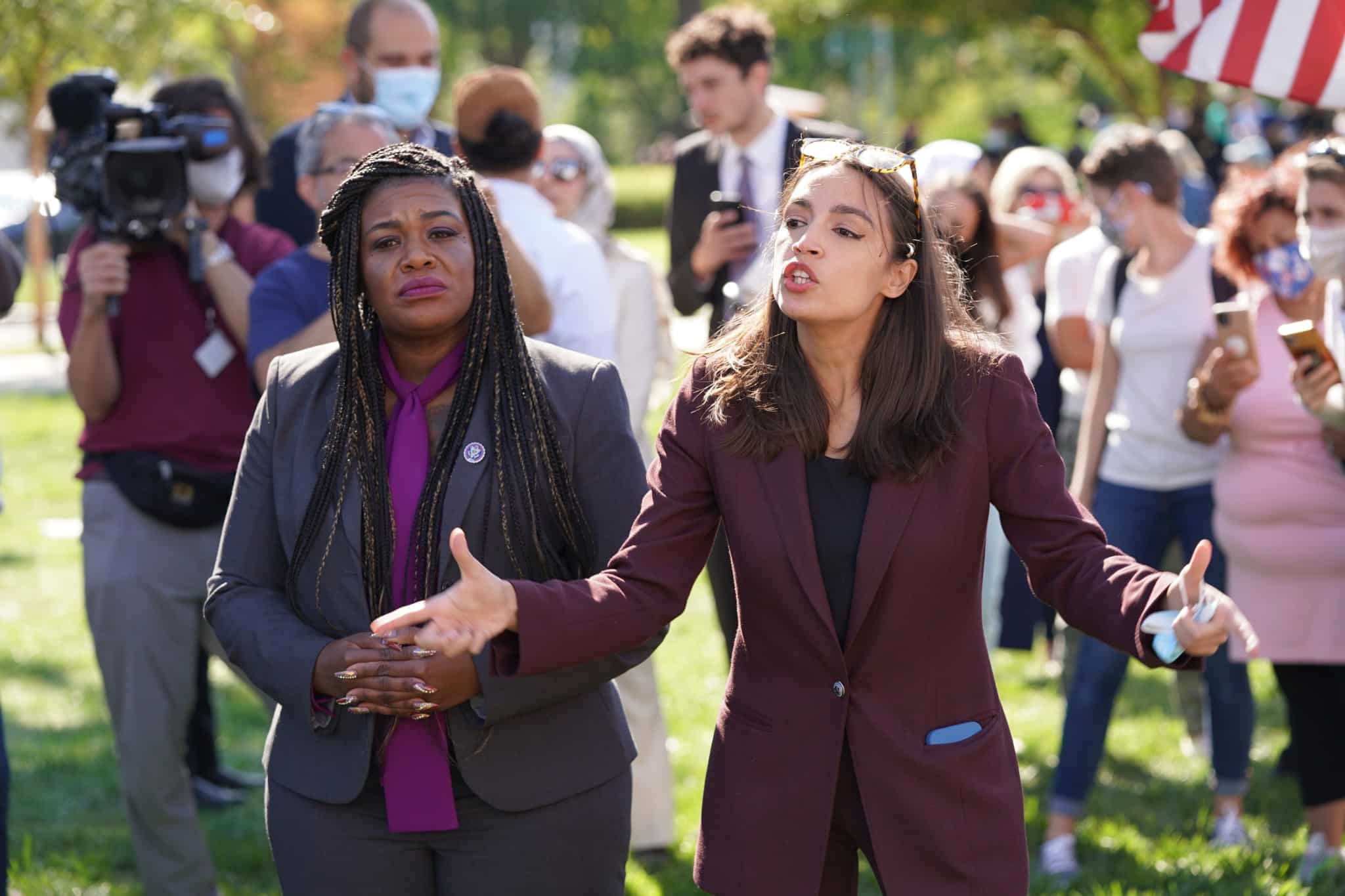
Alexandria Ocasio-Cortez, widely known by her initials AOC, is an American politician, activist, and member of the U.S. House of Representatives representing New York's 14th Congressional District. Rising to national prominence after defeating a high-ranking incumbent in 2018, she has become one of the most influential figures in modern progressive politics.
1. Biography and Background: From the Bronx to Boston University
Alexandria Ocasio-Cortez was born on October 13, 1989, in the Bronx, New York City, to Sergio Ocasio-Roman and Blanca Ocasio-Cortez. Raised in a working-class Puerto Rican family, her early childhood in the Parkchester neighborhood of the Bronx established a deep connection to urban working-class communities. To seek improved educational opportunities, her family moved to Yorktown Heights in suburban Westchester County, where she attended high school. This geographic contrast exposed Ocasio-Cortez early on to the sharp socioeconomic disparities existing between adjacent ZIP codes—a theme that later became foundational to her political rhetoric.
Ocasio-Cortez attended Boston University, where she studied economics and international relations. During her undergraduate years, she worked as an intern in the foreign affairs office of U.S. Senator Edward M. Kennedy, gaining early exposure to federal legislative processes and immigration casework. Her father died of lung cancer in 2008 during her sophomore year, presenting severe financial strain for her family.
After graduating cum laude in 2011 with a Bachelor of Arts, Ocasio-Cortez returned to the Bronx. To help prevent the foreclosure of her mother’s home, she worked multiple service-industry jobs, serving as a bartender and waitress at Flats Fix in Manhattan while working as an educational strategist with the non-profit National Hispanic Institute. This experience in the service economy directly shaped her subsequent advocacy for minimum wage increases, paid family leave, and labor rights.
Her political activism intensified during the 2016 Democratic presidential primary, when she served as an organizer for Bernie Sanders' campaign. Following the 2016 election, Ocasio-Cortez traveled across the United States, visiting sites of grassroots resistance, including the Standing Rock Indian Reservation in North Dakota during the Dakota Access Pipeline protests. That trip served as a pivotal turning point, solidifying her commitment to environmental justice and political candidacy.
2. The Historic 2018 Primary Victory and Congressional Entry
In late 2016, Brand New Congress—a progressive political action committee formed by former Sanders campaign alumni—recruited Ocasio-Cortez to run for public office. She mounted a primary challenge against ten-term incumbent Joe Crowley in New York's 14th Congressional District, which encompasses parts of the eastern Bronx and north-central Queens. Crowley was the Chair of the House Democratic Caucus, the fourth-ranking Democrat in the House, and widely considered a potential candidate for Speaker of the House.
Ocasio-Cortez ran an unapologetically grassroots campaign. Refusing to accept contributions from corporate political action committees (PACs), her strategy relied on small-dollar individual donations, community organizing, digital outreach, and intensive door-to-door canvassing. Her platform championed economic justice, universal healthcare, federal employment guarantees, and the abolition of U.S. Immigration and Customs Enforcement (ICE).
On June 26, 2018, Ocasio-Cortez achieved a historic political upset, defeating Crowley in the Democratic primary by taking 57.1% of the vote. The victory sent shockwaves through the political establishment, signaling a major ideological shift within the Democratic Party.
2018 NY-14 Democratic Primary Results: - Alexandria Ocasio-Cortez: 15,897 votes (57.1%) - Joe Crowley (Incumbent): 11,947 votes (42.9%)
She went on to win the general election on November 6, 2018, defeating Republican nominee Anthony Pappas. Sworn into the 116th United States Congress on January 3, 2019, at the age of 29, Ocasio-Cortez became the youngest woman ever elected to the United States Congress.
3. Core Policy Platform and Legislative Pillars
Ocasio-Cortez's legislative framework centers on democratic socialism, environmental decarbonization, social safety net expansion, and structural campaign finance reform.
The Green New Deal
In February 2019, together with Senator Ed Markey of Massachusetts, Ocasio-Cortez introduced the Green New Deal resolution (H.Res. 109). The proposal outlines a 10-year economic mobilization plan designed to achieve net-zero greenhouse gas emissions, create millions of high-wage jobs, and invest heavily in sustainable infrastructure. Rather than focusing solely on environmental regulations, the Green New Deal integrates climate policy with social programs, advocating for guaranteed clean water, renewable energy access, and economic security for vulnerable communities affected by climate change.
Healthcare and Social Safety Net
Ocasio-Cortez is an outspoken supporter of single-payer healthcare, co-sponsoring Medicare for All legislation in the House. She argues that decoupling healthcare coverage from employment status is both a moral imperative and an economic necessity. Her platform also supports expanding federal funding for public housing, canceling federal student loan debt, implementing universal pre-K, and guaranteeing public university tuition for low- and middle-income families.
Campaign Finance and Government Ethics
A central tenant of Ocasio-Cortez's political identity is the reduction of corporate money in American elections. She consistently refuses funds from corporate PACs and fossil fuel executives, funding her campaigns almost entirely through small-dollar donations. In committee hearings, she has repeatedly advocated for strict ethics reforms, including banning members of Congress from trading individual stocks and overturning the Supreme Court's Citizens United ruling.
4. Policy Overview and Legislative Priorities
The table below outlines the core policy initiatives championed by Alexandria Ocasio-Cortez, detailing their primary objectives, introduced legislative mechanisms, and policy focus areas.
| Policy Proposal | Primary Objective | Key Legislative Vehicles | Primary Policy Focus |
|---|---|---|---|
| Green New Deal | Transition U.S. economy to 100% clean energy while creating union jobs | H.Res. 109 / H.Res. 279 | Climate Change, Energy, Infrastructure |
| Medicare for All | Establish a universal single-payer healthcare system | H.R. 1979 (Co-sponsor) | Public Health, Economic Security |
| Housing as a Human Right | Expand public housing investments and tenant protections | Executive Action & Appropriations Advocacy | Affordable Housing, Urban Development |
| Just Transition & Climate Equity | Protect frontline communities during energy transitions | Civil Corps for Public Lands Initiatives | Environmental Justice, Labor |
| Financial Transparency & Ethics | Ban congressional stock trading and reform campaign finance | Political Accountability Bills | Government Ethics, Election Reform |
5. Committee Work, Congressional Oversight, and Strategy
Ocasio-Cortez has utilized her appointments on major House committees to conduct high-profile oversight and challenge corporate executive practices.
During her tenure on the House Committee on Oversight and Accountability and the House Committee on Financial Services, Ocasio-Cortez gained national attention for her methodological, detail-oriented questioning style. Rather than relying on political speeches during her allotted five-minute questioning periods, she frequently uses precise legal and financial lines of inquiry. Notable instances include her questioning of:
- Michael Cohen (2019): Elicited testimony regarding financial disclosures, asset valuation practices, and tax documents.
- Pharmaceutical Executives (2019): Examined the pricing mechanisms and patent extensions of high-cost prescription drugs, such as HIV-prevention medication Truvada.
- Financial Institution Executives (2019–2021): Focused on predatory lending practices, private prison investments, and climate risk disclosures.
Within Congress, Ocasio-Cortez balances her movement-oriented politics with pragmatic legislative tactics. She has successfully secured tens of millions of dollars in community project funding (earmarks) for New York's 14th District, funding local health centers, flood relief infrastructure, workforce development programs, and public parks in Queens and the Bronx.
6. Digital Communication, Media Strategy, and "The Squad"
Ocasio-Cortez revolutionized how elected officials communicate directly with the public. Utilizing platforms such as Instagram, X (formerly Twitter), and Twitch, she provides real-time explanations of congressional procedures, legislative votes, and policy debates. By breaking down complex parliamentary maneuvers during live streams, she built an exceptionally engaged digital base, making her one of the most followed U.S. political figures online.
Her entry into Congress coincided with the election of three other progressive women of color:
- Ilhan Omar (MN-05)
- Rashida Tlaib (MI-12)
- Ayanna Pressley (MA-07)
Together, the group was dubbed "The Squad." Over subsequent election cycles, the informal coalition expanded to include other progressive House members, such as Jamaal Bowman (NY-16, 2021–2025), Cori Bush (MO-01, 2021–2025), Summer Lee (PA-12), and Greg Casar (TX-35). "The Squad" functions as an influential progressive voting bloc within the Democratic Congressional Caucus, advocating for left-leaning legislative priorities and pushing party leadership on key social and economic issues.
7. Criticisms, Challenges, and Political Legacy
Ocasio-Cortez remains a polarizing figure in contemporary political discourse, drawing intense scrutiny from conservative media, Republican politicians, and occasionally moderate Democrats.
Conservative Opposition
Critics from the political right argue that her economic proposals—particularly the Green New Deal and Medicare for All—are financially unsustainable and would require significant tax increases and government overreach. Opponents frequently highlight her affiliation with the Democratic Socialists of America (DSA) to frame her platform as overly radical for the mainstream electorate.
Intra-Party Debates and Pragmatism
From within the Democratic Party, moderate members have at times expressed concern that her progressive commentary and calls to primary centrist Democrats risk alienating voters in swing districts. Conversely, some left-wing activists have critiqued her for voting in line with Democratic leadership on key procedural measures or military funding packages, viewing these votes as compromises of her socialist principles.
Despite these political tensions, Ocasio-Cortez has demonstrated significant longevity and growing influence within the legislative process. By combining grassroots activism with parliamentary engagement, she has reshaped the discourse around climate action, economic inequality, and political fundraising in the United States.
Frequently Asked Questions About Alexandria Ocasio-Cortez
Which congressional district does Alexandria Ocasio-Cortez represent?
Alexandria Ocasio-Cortez represents New York's 14th Congressional District (NY-14). The district is located in New York City and includes diverse neighborhoods across eastern Bronx (such as Parkchester, Pelham Bay, and City Island) and north-central Queens (such as Astoria, Jackson Heights, Corona, and Woodside).
What is Alexandria Ocasio-Cortez's educational background?
She attended Boston University, graduating cum laude in 2011 with a Bachelor of Arts in Economics and International Relations. During her time at BU, she worked as an intern in the office of Senator Edward M. Kennedy and participated in youth leadership programs with the National Hispanic Institute.
What is the Green New Deal?
The Green New Deal is a non-binding legislative resolution introduced by Rep. Alexandria Ocasio-Cortez and Sen. Ed Markey in 2019. It outlines a framework for the federal government to eliminate U.S. greenhouse gas emissions, transition to 100% renewable energy, create unionized green jobs, and invest in infrastructure and economic equity for historically marginalized communities.
Is Alexandria Ocasio-Cortez a member of the Democratic Party?
Yes, Alexandria Ocasio-Cortez is a registered member of the Democratic Party and serves in the U.S. House of Representatives as a Democrat. She is also a member of the Democratic Socialists of America (DSA), an independent political organization that endorses candidates running within Democratic primaries.
How does AOC fund her political campaigns?
Ocasio-Cortez refuses all contributions from corporate PACs, fossil fuel companies, and federal lobbyists. Her campaign committee, AOC for Congress, is funded almost entirely by small-dollar contributions from individual donors, relying heavily on grassroots digital fundraising campaigns.
What House committees does Rep. Ocasio-Cortez serve on?
Throughout her career in Congress, Rep. Ocasio-Cortez has served on key House committees, including the House Committee on Oversight and Accountability, the House Committee on Financial Services, and the House Committee on Natural Resources. On the Oversight Committee, she has served as Vice Ranking Member.
How to Track AOC's Legislative Record and Updates
For voters, researchers, and constituents interested in following Rep. Alexandria Ocasio-Cortez's ongoing legislative work, several official public resources provide verified records:
- Official Congressional Website: Visit ocasio-cortez.house.gov for official press releases, district constituent service requests, local project updates, and congressional statements.
- Congress.gov Legislative Database: Search for bills sponsored or co-sponsored by Rep. Alexandria Ocasio-Cortez directly on Congress.gov to review official bill text, voting history, and committee reports.
- Federal Election Commission (FEC): Access detailed quarterly financial disclosures and small-dollar campaign donation metrics on the FEC candidate portal.