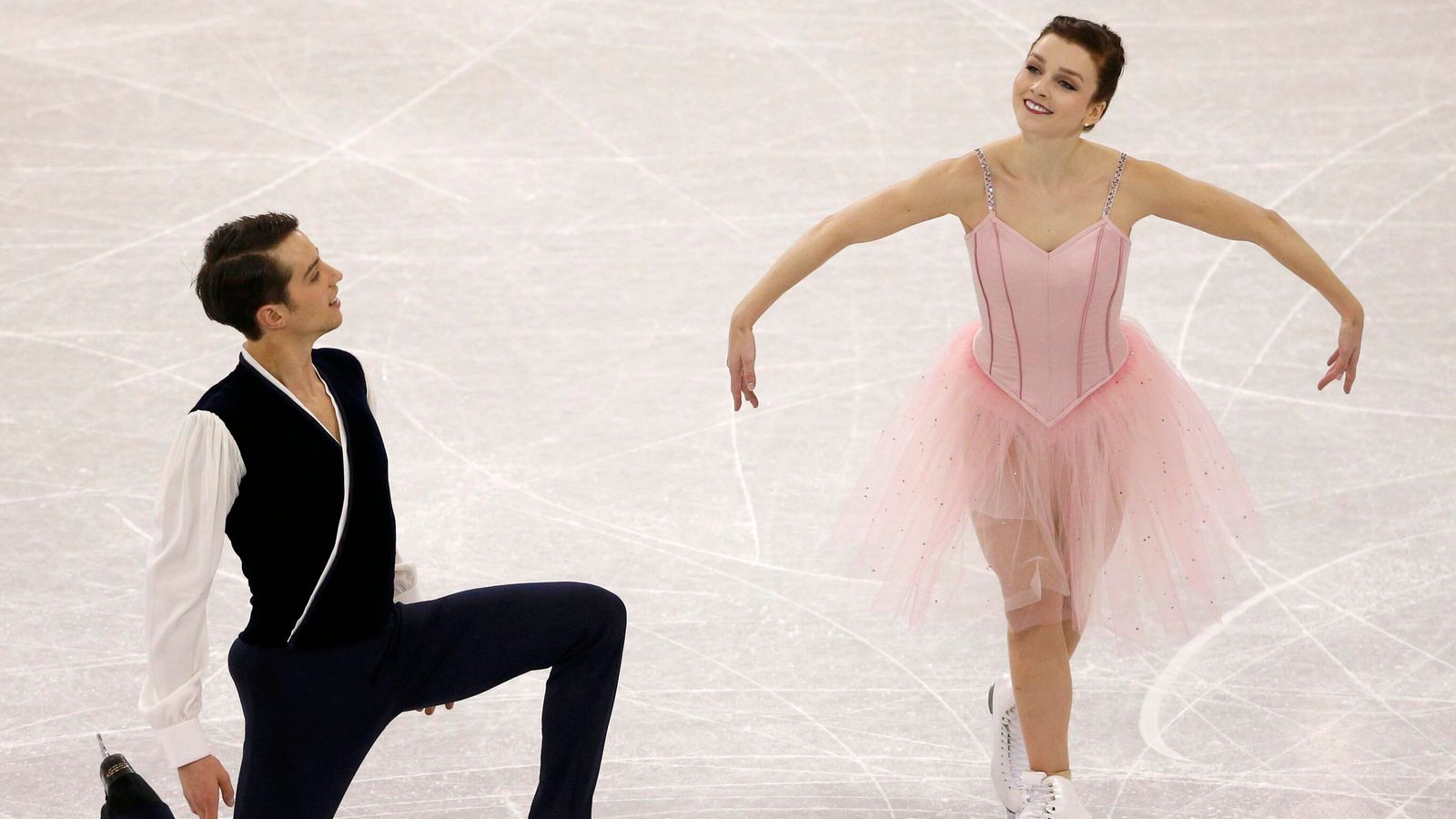
Alexandra Paul was a Canadian Olympic ice dancer who represented Canada at the 2014 Sochi Winter Games alongside her longtime partner and eventual husband, Mitchell Islam. Renowned for her technical precision, exceptional edge control, and expressive musicality, Paul earned a World Junior silver medal, three Canadian senior national bronze medals, and international podium finishes before transitioning to a successful career in law.
The Formative Years: Rising Through the Ice Dance Ranks
Born on September 16, 1991, in Midhurst, Ontario, Alexandra Paul began figure skating at an early age, displaying an innate feel for the ice and an exceptional sense of rhythm. While many young skaters gravitate toward singles discipline and high-flying jumps, Paul’s natural gliding quality, posture, and deep edge work drew her toward ice dance.
In the summer of 2009, Paul teamed up with Mitchell Islam, a partnership that would define her competitive career and personal life. Coaching staff at the Mariposa School of Skating in Barrie, Ontario—and later elite training centers in Canton, Michigan, and Detroit—recognized immediate chemistry between the two. Paul and Islam possessed a unified aesthetic, characterized by smooth line extensions, soft knee bends, and matched posture that allowed them to flow effortlessly across the ice surface.
Their transition into international competition was unusually rapid. During their very first season together (2009–2010), Paul and Islam established themselves as one of the most promising junior ice dance teams in the world. Their disciplined approach to daily training, combined with rigorous technical development under world-class coaches such as Marina Zueva, Igor Shpilband, Pasquale Camerlengo, and Carol Lane, set the foundation for a career marked by technical execution and artistic elegance.
Key Competitive Wins and Career Milestones
Alexandra Paul’s competitive resume reflects consistent excellence across both junior and senior international ranks. Her career stood out during a golden era for Canadian ice dance, competing alongside legendary teams such as Tessa Virtue and Scott Moir, as well as Kaitlyn Weaver and Andrew Poje.
Junior Breakout and International Success
The 2009–2010 season served as Paul and Islam's breakthrough year. After securing the 2010 Canadian Junior Ice Dance title, they earned a spot on the World Junior team. At the 2010 ISU World Junior Figure Skating Championships in The Hague, Netherlands, Paul and Islam delivered standout performances in both the original and free dance segments to capture the silver medal. This podium finish signaled Canada's continued depth in the discipline and propelled the duo directly into senior competition.
Senior National and International Podiums
Upon moving to the senior ranks, Paul and Islam quickly became regular contenders on the national podium. They won their first Canadian Senior National Bronze Medal in 2011, repeating the achievement in 2014 and 2015. On the international circuit, their consistency brought them notable successes:
- 2013 U.S. International Figure Skating Classic: Captured the silver medal with a refined short dance and expressive free dance.
- 2013 Nebelhorn Trophy: Won the bronze medal in Oberstdorf, Germany, securing vital ISU Olympic qualifying points for Canada.
- ISU Grand Prix Series: Competed at prestigious events including Skate Canada International, Trophee Eric Bompard, and the NHK Trophy, regularly finishing inside the top five against the world's top-ranked teams.
The 2014 Winter Olympics in Sochi
The crowning achievement of Paul’s skating career came in February 2014, when she and Islam earned a spot on the Canadian Olympic Team for the XXII Winter Games in Sochi, Russia. Competing on the world's largest athletic stage, Paul demonstrated signature composure under intense pressure. The team placed 18th overall in a highly competitive ice dance field, fulfilling a lifelong dream and cementing their status among elite international performers.
Signature Ice Dance Elements and Technical Artistry
While casual viewers often associate figure skating "tricks" with triple and quadruple jumps in singles or throw elements in pairs, ice dance demands an entirely different set of complex technical requirements. In ice dance, elements are evaluated on deep edge control, difficulty of holds, synchronization, speed, and body alignment. Alexandra Paul excelled in several specific technical maneuvers that earned high levels of execution from ISU judging panels.
- Deep Edge Work & Flow
- Synchronized Twizzles (Level 4 Technical Base)
- Complex Rotational Lifts (Flexibility & Core Balance)
- Expressive Step Sequences (Musical Interpretation)
Synchronized Twizzles
Twizzles—traveling turns executed on one foot while maintaining rotation and continuous movement across the ice—are among the most technical elements in ice dance. Paul was renowned for her precise twizzle technique. Key aspects of her execution included:
- Level 4 Difficulty Entrances: Utilizing difficult entry edges without any hesitation or loss of momentum.
- Rotational Speed and Distance: Maintaining tight body axis control while achieving high rotational speed, keeping identical distance and matching arm positions with her partner throughout multiple set revolutions.
- Clean Edge Changes: Executing smooth transitions between forward and backward edges without touching down the free foot or bobbling.
Complex Lifts and Position Changes
Ice dance lifts require extraordinary core strength, balance, and trust. Paul’s lightweight frame and exceptional flexibility enabled her team to create visually stunning lift variations:
- Rotational Lifts: Executing continuous rotations where Paul maintained intricate upside-down or split positions while Islam navigated precise edge turns across the ice.
- Straight-Line and Stationary Lifts: Utilizing sudden position changes at full speed, showcasing remarkable spatial awareness and seamless dismounts directly into choreographic step sequences.
Deep Edge Step Sequences
The hallmark of Paul's skating style was her effortless edge depth. In step sequences—such as diagonal, circular, or midline footwork—she consistently demonstrated clean blade control. Her ability to lean deeply into turns (lobes) while maintaining full extension created a wide, sweeping ice coverage that enhanced the emotional resonance of their programs.
Competitive Career Performance Summary
The following table summarizes the key competitive highlights, titles, and major podium finishes achieved by Alexandra Paul and Mitchell Islam throughout their international career:
| Season | Event / Competition | Level | Result / Placement | Key Highlight / Feature |
|---|---|---|---|---|
| 2009–2010 | Canadian Championships | Junior | Gold (1st) | National Junior Title |
| 2009–2010 | ISU World Junior Championships | Junior | Silver (2nd) | First major international medal |
| 2010–2011 | Canadian Championships | Senior | Bronze (3rd) | Senior national podium debut |
| 2013–2014 | U.S. International Classic | Senior | Silver (2nd) | Key early-season podium |
| 2013–2014 | Nebelhorn Trophy | Senior | Bronze (3rd) | Olympic spot confirmation |
| 2013–2014 | Canadian Championships | Senior | Bronze (3rd) | Qualified for Sochi 2014 |
| 2013–2014 | XXII Winter Olympic Games | Senior | 18th Place | Represented Team Canada |
| 2014–2015 | Canadian Championships | Senior | Bronze (3rd) | Third national senior bronze |
| 2015–2016 | Nebelhorn Trophy | Senior | 2nd Place (Silver) | International Senior Silver |
The Inside Story: Life Beyond the Ice and Enduring Legacy
Beyond the competitive arena, the story of Alexandra Paul is defined by intellectual ambition, personal resilience, and a deep commitment to family.
Transition to Law
In December 2016, after competing at the international level for over seven years, Paul and Islam officially retired from competitive figure skating. While many elite athletes remain exclusively within sports administration or coaching, Paul embarked on an ambitious academic path. She enrolled at the University of Windsor Faculty of Law, earning her Juris Doctor degree.
Paul approached her legal studies with the same discipline that characterized her athletic career. Upon being called to the Ontario Bar in 2021, she joined Barriston Law, a prominent firm in Barrie, Ontario, as an associate lawyer specializing in real estate, corporate law, and estate planning. Colleagues consistently praised her sharp analytical mind, humility, and dedication to serving her local community.
Family Life and Personal Partnership
The partnership between Paul and Islam, which began on the ice in 2009, grew into a profound personal bond. The couple married in September 2021 in a ceremony celebrated by the Canadian skating community. In late 2021, they welcomed their son, Charlie, bringing immense joy to their lives away from the spotlight.
Tragic Passing and Community Tributes
In August 2023, the global figure skating community was heartbroken by the tragic news of Alexandra Paul’s passing at the age of 31 following a multi-vehicle highway collision in Melancthon Township, Ontario. Miraculously, her infant son, who was in the vehicle with her, survived the crash with non-life-threatening injuries.
The outpouring of grief and remembrance was worldwide. Skate Canada, the International Skating Union (ISU), Olympic teammates, and rivals released tributes celebrating Paul not only as an accomplished Olympian, but as a person of remarkable warmth, integrity, and grace. She was remembered as a role model who balanced elite sports achievements with professional legal success and devoted motherhood.
Understanding Ice Dance Technical Scoring and Elements
To fully appreciate the craftsmanship in Alexandra Paul’s competitive performances, it helps to understand how modern ice dance programs are judged under the ISU Judging System (IJS).
Total Segment Score = Technical Element Score (TES) + Program Component Score (PCS)
- Technical Element Score (TES): Evaluates the specific elements performed (lifts, spins, twizzles, step sequences). Each element receives a base value determined by its level of difficulty (Level 1 to Level 4), modified by the judges' Grade of Execution (GOE ranging from -5 to +5).
- Program Component Score (PCS): Evaluates overall artistic presentation across three key areas:
- Skating Skills: Overall edge control, speed, flow, and multidirectional skating quality.
- Presentation: Performance expressiveness, carriage, and connection between partners.
- Composition: Quality of choreography, space utilization, and musical interpretation.
Paul and Islam were known for earning high Grade of Execution scores on their Level 4 lifts and twizzles due to their effortless speed into elements, clean entries, and precise synchronization.
Frequently Asked Questions About Alexandra Paul
Who was Alexandra Paul’s ice dance partner?
Alexandra Paul skated her entire senior career with Mitchell Islam. They paired up in 2009, competed together at the 2014 Winter Olympics, retired together in 2016, and married in 2021.
Did Alexandra Paul win an Olympic medal?
While Alexandra Paul did not win an Olympic medal, she earned the privilege of representing Team Canada at the 2014 Winter Olympics in Sochi, Russia, placing 18th overall. Her major international medals include a Silver medal at the 2010 World Junior Championships and multiple ISU Challenger Series medals.
What were Alexandra Paul’s signature technical strengths on the ice?
Paul was best known for her deep edge control, synchronized Level 4 twizzles, speed across the ice, and flexible rotational lifts. Her technical style emphasized smooth, effortless transitions rather than rigid, forced positioning.
When did Alexandra Paul retire from competitive figure skating?
Alexandra Paul and Mitchell Islam officially announced their retirement from competitive figure skating in December 2016 to pursue higher education and career transitions outside of sport.
What career did Alexandra Paul pursue after figure skating?
After retiring from skating, Paul earned a law degree (Juris Doctor) from the University of Windsor Faculty of Law. She became a practicing lawyer in Ontario, working at Barriston Law in Barrie, specializing in real estate and corporate law.
Honoring the Legacy of Alexandra Paul
For fans, young skaters, and sports enthusiasts seeking to study top-tier ice dance technique or honor Paul's memory, her competitive routines offer a masterclass in classic ice dance aesthetics:
- Study Program Choreography: Review Paul and Islam’s 2010 World Junior silver-medal routine or their 2014 Olympic performances to analyze how deep edge quality and body alignment create seamless transitions between elements.
- Support Grassroots Athletics: Support local figure skating clubs and athlete development funds, such as Skate Canada initiatives that assist young skaters in balancing academics with elite training.
- Emulate Dual-Career Excellence: Draw inspiration from Paul's smooth transition from world-class athletic competition to a demanding legal career, demonstrating that athletic discipline translates into professional achievement outside of sport.