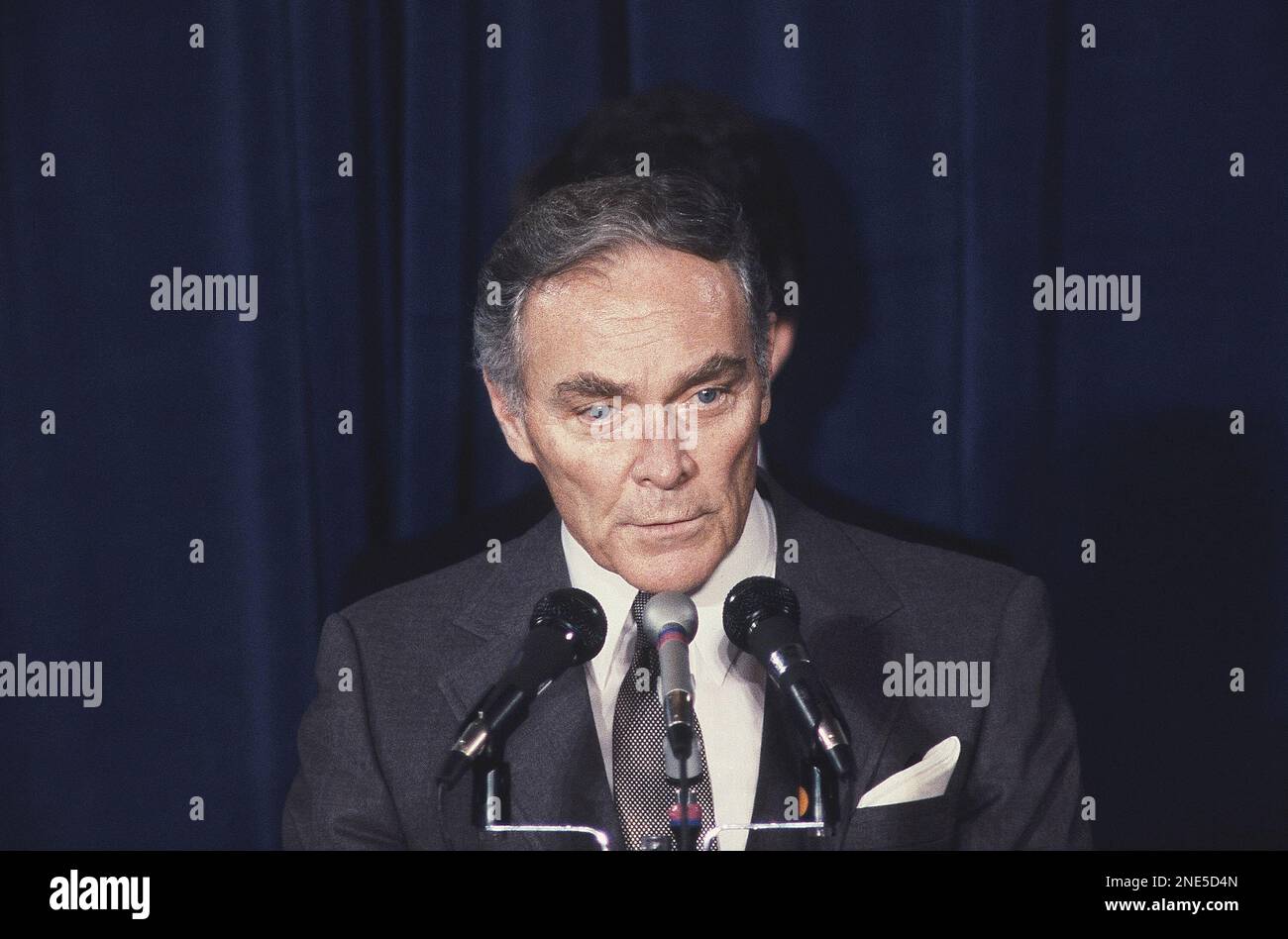
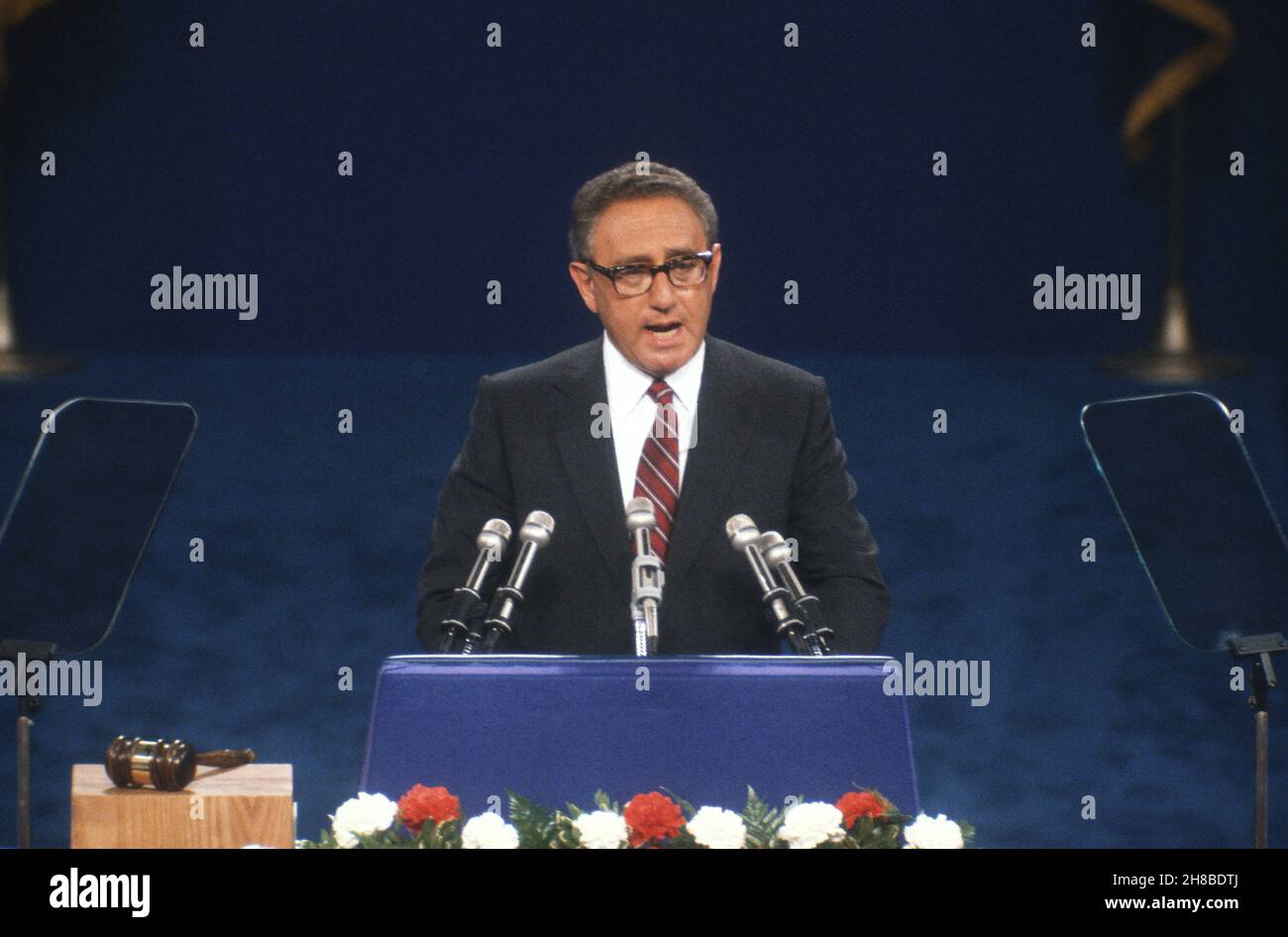
Alexander Meigs Haig Jr. served as the 59th U.S. Secretary of State from January 1981 to July 1982 under President Ronald Reagan. A retired four-star Army general and former Supreme Allied Commander Europe, Haig steered early 1980s American foreign policy toward an assertive anti-Soviet stance, led intense shuttle diplomacy during the 1982 Falklands War, and decisively shaped the Reagan administration's initial geopolitical strategy.
Military and Political Background: From NATO to the State Department
Alexander Haig’s appointment as Secretary of State in January 1981 represented a rare transition from high-ranking military command to the top post of American diplomacy. Graduating from the United States Military Academy at West Point in 1947, Haig served in Korea and Vietnam before emerging as a key military advisor in Washington. His political instincts were honed in the Nixon administration, where he served as Military Assistant to Henry Kissinger on the National Security Council staff and later rose to Vice Chief of Staff of the U.S. Army.
During the height of the Watergate crisis in 1973 and 1974, Haig served as White House Chief of Staff under President Richard Nixon. Historians broadly recognize his critical role in maintaining institutional continuity and facilitating an orderly presidential transition to Gerald Ford. Following his White House tenure, Haig returned to active military service as the Supreme Allied Commander Europe (SACEUR) for NATO from 1974 to 1979, strengthening Atlantic Alliance defenses during a period of expanding Soviet conventional forces in Eastern Europe.
When Ronald Reagan won the 1980 presidential election, he sought a Secretary of State with immediate international stature and deep security credentials. Haig’s background as NATO commander made him an ideal candidate to signal a firm, renewed U.S. commitment to Western Europe. However, his strong command style and expectation of singular authority over foreign policy quickly set the stage for institutional friction within the Reagan cabinet.
Cold War Strategy and Early Reagan Foreign Policy
As Secretary of State, Haig prioritized a confrontational posture against the expansion of Soviet global influence. He rejected the policy of détente that had characterized much of the 1970s, aligning closely with President Reagan's view that the Soviet Union took advantage of international agreements while expanding its footprint in the Third World.
- U.S. National Security Structure (Early 1980s)
- President Reagan
- Department of State (Alex. Haig)
- Department of Defense (C. Weinberger)
- Cabinet Friction: Haig vs. Weinberger/Clark
- President Reagan
Haig’s foreign policy framework rested on several core objectives:
- Countering Soviet Regional Proxies: Haig focused heavily on Central America, viewing leftist insurgencies in El Salvador and the Sandinista government in Nicaragua not merely as local struggles, but as strategic moves backed by Moscow and Havana. He advocated for direct pressure on Cuba to interrupt the flow of arms to Central American guerrillas.
- Reinvigorating the Atlantic Alliance: Utilizing his credibility from NATO, Haig worked to convince European allies to accept the deployment of Intermediate-Range Nuclear Forces (INF)—specifically Pershing II and Gryphon cruise missiles—to offset Soviet SS-20 deployments in Europe.
- Managing the Opening to China: Haig maintained the strategic triangular diplomacy initiated under Nixon, seeking to align American and Chinese geopolitical interests against Soviet expansionism while navigating complex bilateral commitments to Taiwan under the Taiwan Relations Act of 1979.
Haig’s approach emphasized geopolitics over regional nuances. He maintained that regional instability across Central America, Africa, and the Middle East was interconnected through the lens of Soviet superpower competition.
Shuttle Diplomacy and the 1982 Falklands War
The premier diplomatic crisis of Haig’s tenure unfolded in April 1982, when Argentine military forces invaded the British-administered Falkland Islands (Islas Malvinas). The conflict presented the United States with a severe diplomatic dilemma: the United Kingdom was America's closest NATO ally, while Argentina was governed by a anti-communist military junta that the Reagan administration had cultivated to assist in Central American counter-insurgency operations.
Haig immediately launched an exhaustive, multi-week exercise in shuttle diplomacy, traveling tens of thousands of miles between Washington, London, and Buenos Aires. His goal was to broker a peaceful settlement that would prevent open warfare, preserve the principles of international law regarding aggression, and avoid forcing Washington to choose between its North Atlantic and Inter-American commitments.
Mechanics of the Haig Peace Plan
- Immediate Ceasefire and Withdrawal: Demanding the complete evacuation of Argentine military forces from the islands alongside a halt to the approaching British naval task force.
- Interim Administration: Establishing a temporary tripartite administration (United States, United Kingdom, and Argentina) to oversee local governance.
- Final Status Negotiations: Creating an agreed framework to resolve sovereignty claims long-term without rigid preconditions.
Despite weeks of intense negotiations with British Prime Minister Margaret Thatcher and Argentine General Leopoldo Galtieri, Haig’s diplomatic efforts stalled. The Argentine junta rejected compromise solutions regarding sovereignty, while Thatcher insisted that British sovereignty and self-determination for the islanders were non-negotiable following unprovoked aggression.
When diplomacy reached an impasse, Haig declared that negotiations were exhausted and formally announced U.S. support for Great Britain. The U.S. subsequently provided vital intelligence, satellite communications, and military matériel (including Sidewinder missiles) to British forces. Haig’s mediation efforts, though unsuccessful in averting war, succeeded in demonstrating the limits of compromise with the Argentine junta and solidified U.S. alignment with the United Kingdom during the conflict.
Crisis Management and Cabinet Dynamics
Haig’s tenure was marked by intense bureaucratic battles for control over national security policy. His explicit desire to serve as the single "vicar" of U.S. foreign policy brought him into frequent conflict with other senior administration officials, including Secretary of Defense Caspar Weinberger, National Security Advisor William P. Clark, and White House Chief of Staff James A. Baker III.
The defining crisis of his personal leadership occurred on March 30, 1981, following the assassination attempt on President Reagan by John Hinckley Jr. With President Reagan undergo emergency surgery and Vice President George H.W. Bush in transit aboard Air Force Two back to Washington, international media raised questions regarding executive authority in the capital.
Entering the White House press room, Haig addressed journalists to reassure the public and international allies:
"Constitutionally, gentlemen, you have the President, the Vice President, and the Secretary of State, in that order, and should the President decide he wants to transfer the helm to the Vice President, he will do so. As of now, I am in control here, in the White House, pending the return of the Vice President..."
While Haig intended to project stability, the statement was widely criticized for legal inaccuracies regarding the constitutional line of succession. Under the Presidential Succession Act of 1947, the Speaker of the House and the President pro tempore of the Senate precede the Secretary of State. Though Haig was accurately reflecting executive branch emergency protocols regarding operational leadership within the White House complex, the phrasing exacerbated perceptions among political rivals that he was overly assertive and politically clumsy.
| Diplomatic & Strategic Milestones | Geographic Focus | Primary Policy Action / Strategy | Long-Term Historical Impact |
|---|---|---|---|
| Central American Anti-Insurgency | El Salvador & Nicaragua | Frame regional insurgencies as East-West Cold War conflict; increase military aid | Set baseline for Reagan Doctrine intervention in Latin America throughout the 1980s |
| NATO Missile Deployment | Western Europe | Push for dual-track decision: deploy Pershing II / Cruise missiles while pursuing arms control | Positioned NATO for decisive 1987 Intermediate-Range Nuclear Forces (INF) Treaty negotiations |
| Falklands War Mediation | South Atlantic / UK / Argentina | Extensive shuttle diplomacy between London and Buenos Aires | Failed to stop war, but successfully preserved Anglo-American alliance and isolated military junta |
| Sino-American Security Dialogue | East Asia / China | Balance strategic alignment against USSR with Taiwan security assurances | Maintained diplomatic stability in East Asia despite delicate arms sales controversies |
| Executive Crisis Command | Washington, D.C. | Assert administrative authority during the March 1981 presidential assassination attempt | Highlighted structural friction between Cabinet Secretaries and White House staff |
Resignation and Policy Legacy
By mid-1982, persistent policy disagreements between Haig and the White House staff reached a breaking point. Conflicts over European natural gas pipeline sanctions against the Soviet Union, strategic approaches to the 1982 Israeli invasion of Lebanon, and personal friction with White House advisors weakened Haig's standing within the executive branch.
Haig submitted his resignation on June 25, 1982, and was replaced by George P. Shultz, who adopted a more diplomatic, collaborative leadership style. Haig’s departure marked the transition from the aggressive, confrontational rhetoric of the early Reagan administration to a structured diplomatic period that eventually facilitated historic bilateral summits with the Soviet Union later in the decade.
Despite serving just eighteen months, Alexander Haig shaped early 1980s history in notable ways:
- Cold War Framing: He established the initial firm foreign policy parameters of the Reagan presidency, signaling a definitive end to 1970s détente policies.
- Crisis Precedents: His handling of the Falklands War demonstrated the limits of regional mediation when vital alliance commitments are at stake.
- Cabinet Governance: His tenure underscored the persistent tension in American governance between a cabinet-level Secretary of State and presidential national security advisors operating inside the White House.
Historical evaluations, including detailed archival studies preserved by the U.S. Department of State Office of the Historian, reflect that Haig’s strategic vision was consistently anchored in geopolitical realism and transatlantic security, even as internal political battles truncated his tenure.
Frequently Asked Questions
Who was the 1980s Secretary of State named Alexander?
Alexander Meigs Haig Jr. served as the U.S. Secretary of State under President Ronald Reagan from January 1981 to July 1982. Prior to this role, he was a four-star Army general, NATO Supreme Allied Commander Europe, and White House Chief of Staff.
What did Alexander Haig mean by "I am in control here"?
During the March 30, 1981 assassination attempt on President Ronald Reagan, Haig made the statement to reassure foreign governments and the public that the executive branch was operating continuously while Vice President George H.W. Bush returned to Washington. Though widely criticized over constitutional succession ordering, Haig was referencing practical administrative operational command in the White House situation room.
What was Alexander Haig's role in the Falklands War?
Haig served as the mediator between the United Kingdom and Argentina during the 1982 Falklands War. He spent weeks engaging in intensive shuttle diplomacy between Washington, London, and Buenos Aires. When Argentina rejected compromise terms, Haig terminated mediation and directed American logistical and intelligence support to the British.
Why did Alexander Haig resign in 1982?
Haig resigned due to fundamental disagreements over foreign policy decisions—such as sanctions related to the Soviet gas pipeline and responses to the 1982 Lebanon War—and ongoing friction with White House key staff, including National Security Advisor William P. Clark and Defense Secretary Caspar Weinberger.
How did Haig's background shape his diplomatic style?
Haig’s decades of high-level military leadership and experience as NATO Supreme Allied Commander instilled a direct, hierarchical command style. He viewed regional foreign policy issues through global strategic systems, prioritizing NATO unity and strong opposition to Soviet expansion.
Key Takeaways for Historical and Diplomatic Research
For researchers analyzing early 1980s American diplomacy and national security governance, Alexander Haig's tenure offers essential case studies in Cold War management:
- Primary Source Records: Consult the official foreign policy archives digitized by the Ronald Reagan Presidential Library and Museum for internal memos regarding Haig's shuttle diplomacy and Central American policy briefs.
- Constitutional Dynamics: Examine the Presidential Succession Act of 1947 alongside the 25th Amendment to evaluate institutional responses during presidential medical emergencies.
- Interagency Friction: Analyze the structural division between the Department of State and the National Security Council (NSC), using Haig's tenure as a classic study in cabinet authority versus White House advisory power.