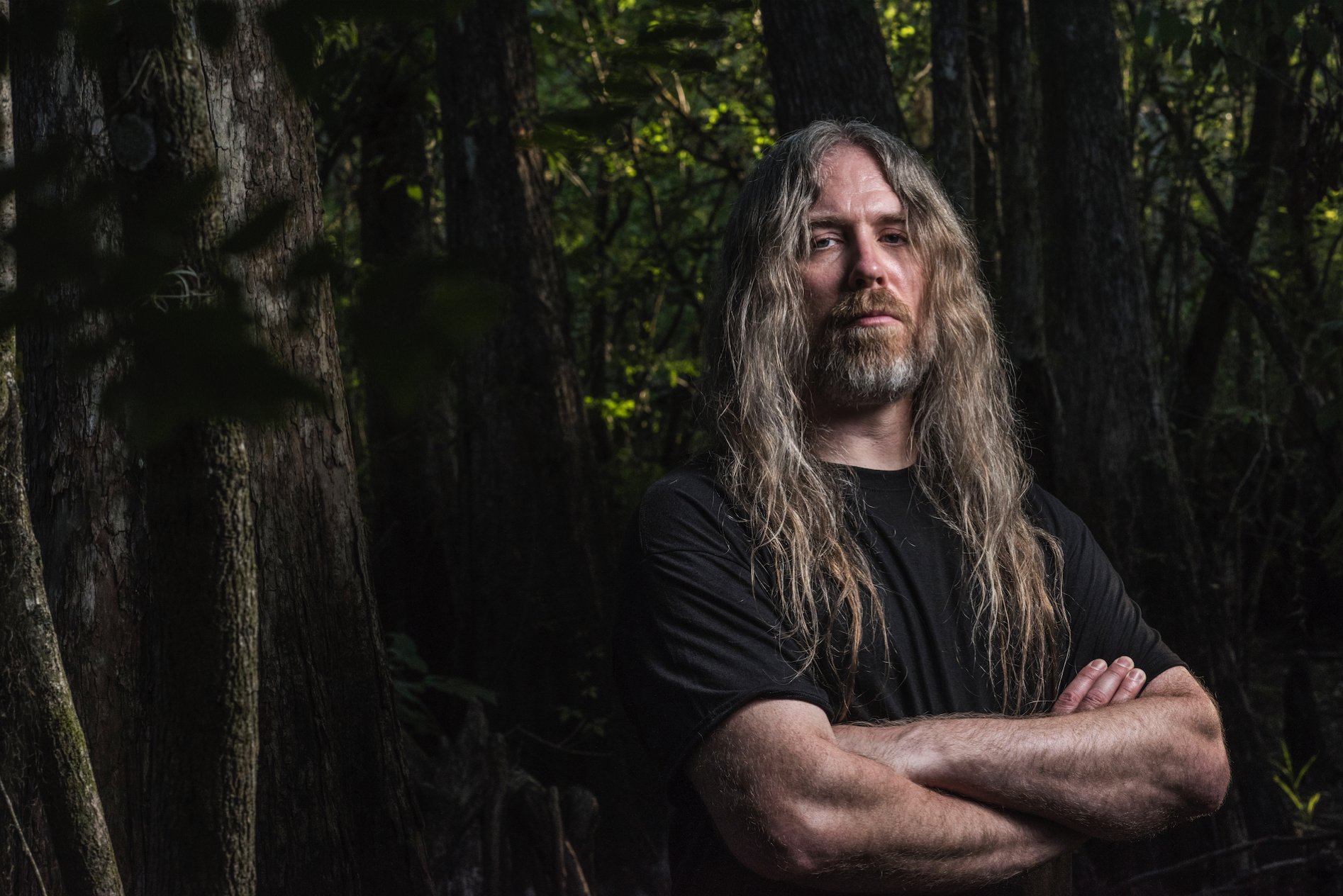
Alex Webster is best known as the co-founding bassist, primary lyricist, and rhythmic backbone of the influential American death metal band Cannibal Corpse. Renowned for his blistering three-finger picking technique, complex compositional structures, and high-speed endurance on a five-string bass, Webster stands as one of the most technically accomplished and celebrated bassists in heavy metal history.
Biography and Early Musical Beginnings
Born on February 24, 1969, in Webster, New York, Alexander Webster displayed an early affinity for heavy music during his formative teenage years. Heavily influenced by the burgeoning thrash and heavy metal movements of the 1980s, he gravitated toward bands that emphasized heavy low-end rhythm and complex time signatures. Before achieving international recognition, Webster played in an early iteration of a death metal band called Beyond Death, alongside future Cannibal Corpse bandmate guitarist Jack Owen.
In 1988, Webster relocated to Buffalo, New York, where he joined forces with guitarist Bob Rusay, vocalist Chris Barnes, guitarist Jack Owen, and drummer Paul Mazurkiewicz to form Cannibal Corpse. This collective quickly built a reputation for pushing the boundaries of extreme music, blending intricate musicianship with horror-inspired lyrical themes. Webster was instrumental in establishing the band's identity, both through his intricate basslines and his prolific lyric-writing contributions, which frequently explored dark, visceral, and cinematic narratives.
Technical Mastery and Bass Playing Style
Webster is widely regarded as a pioneer of death metal bass playing, primarily due to his refusal to double the rhythm guitar tracks verbatim, opting instead for a distinct, counter-melodic, and hyper-articulate approach. His technique relies heavily on a rapid three-finger plucking system—an adaptation of the traditional two-finger flamenco-style picking—which allows him to maintain blistering sixteenth-note runs at tempos exceeding 200 beats per minute without losing clarity or definition.
Furthermore, Webster’s signature tone utilizes a heavy mid-range bite and compression, ensuring that his bass cuts cleanly through dual-guitar distortion and relentless blast beats. Unlike many bassists in extreme metal who are buried beneath the mix, Webster's instrument serves as a primary melodic and rhythmic driver. His mastery of the five-string bass enables him to utilize extended low-end frequencies, anchoring the band while executing lightning-fast chromatic runs, arpeggios, and percussive slap-and-pop accents on select tracks.
Discography and Creative Impact in Cannibal Corpse
Throughout a career spanning decades, Webster has performed on every studio album released by Cannibal Corpse, beginning with their landmark 1990 debut, Eaten Back to Life, through to their modern releases like Violence Unimagined (2021) and Chaos Horrific (2023). His songwriting credits include some of the band's most enduring tracks, such as "Hammer Smashed Face," "I Cum Blood," and "Scourge of Iron."
The following table highlights key milestones across Webster's primary recorded works with Cannibal Corpse, illustrating the evolution of his style from early raw brutality to refined technical proficiency:
| Album Title | Release Year | Notable Tracks Co-Written/Written by Webster | Technical Characteristics |
|---|---|---|---|
| Eaten Back to Life | 1990 | "Shredded Humans," "Mangled" | Raw tone, traditional four-string heavy riffing, foundational death metal grooves. |
| Tomb of the Mutilated | 1992 | "Hammer Smashed Face," "I Cum Blood" | Introduction of hyper-fast three-finger plucking, iconic opening basslines. |
| The Bleeding | 1994 | "Staring Through the Eyes of the Dead" | Heightened melodic interplay with guitars, tighter rhythmic synchronization. |
| Kill | 2006 | "The Time to Kill Is Now," "Make Them Suffer" | Shift toward five-string extended range utilization, blistering tempo execution. |
| Violence Unimagined | 2021 | "Murderous Rampage," "Condemnation Contagion" | Masterclass in modern extreme mixing, complex time signatures, and dense low-end delivery. |
Beyond his work on studio albums, Webster’s performance on live releases has cemented his reputation as an elite live musician. His physical stamina on stage, characterized by continuous headbanging while executing complex basslines, remains a defining hallmark of Cannibal Corpse’s live shows.
Side Projects, Collaborations, and Literary Work
In addition to his foundational role in Cannibal Corpse, Webster has participated in several high-profile side projects and musical collaborations that demonstrate his versatility across different subgenres of extreme metal. Most notably, he is a founding member of Blotted Science, an instrumental technical death metal project formed alongside guitarist/producer Ron Jarzombek and drummer Hannes Grossmann. In Blotted Science, Webster explores avant-garde composition, utilizing twelve-tone serialism and synchronized musical scoring for horror film clips.
Webster also stepped into the blackened death metal sphere as a touring and session bassist for Behemoth during the band's North American dates, filling in when required. Furthermore, he has contributed guest bass tracks to various projects, sharing his expertise with younger generations of musicians through instructional media.
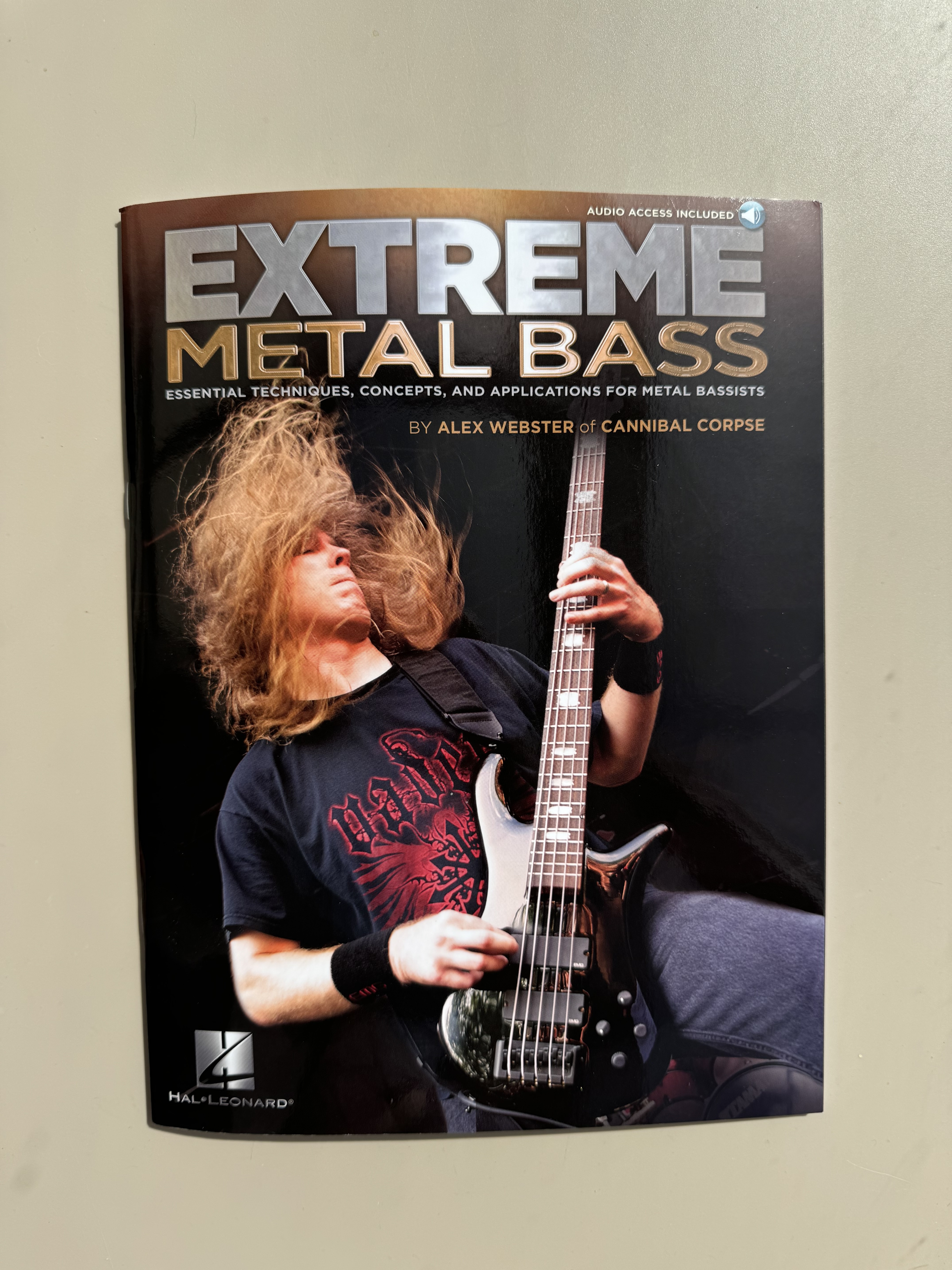
In 2017, Webster expanded his creative footprint by authoring an instructional book titled Extreme Metal Bass, published by Alfred Music. Designed for intermediate to advanced bassists, the book breaks down the exact techniques, finger exercises, stamina-building routines, and music theory concepts required to execute extreme metal bass lines efficiently without sustaining injury.
Equipment, Gear, and Signature Instruments
Achieving Alex Webster's distinct tone requires specialized equipment designed to handle extended low frequencies and high-speed articulation without muddying the mix. Throughout his career, he has maintained prominent endorsement relationships with major instrument and amplifier manufacturers.
- Basses: Webster is most commonly associated with Spectar Basses, specifically his custom signature models based on the Spector Euro and USA series. These instruments typically feature active electronics, neck-through-body construction, and configuration for five strings (tuned to standard B-E-A-D-G, or occasionally drop-A configurations depending on the album cycle).
- Amplification: To achieve his cutting, aggressive tone, Webster relies on high-wattage power amplifiers and preamplifiers, frequently utilizing SWR and Trace Elliot gear in earlier years, followed by modern rackmount digital modelers and solid-state power amps that offer pristine transient response.
- Accessories: He utilizes heavy-gauge stainless steel bass strings to maintain string tension at high speeds and relies on precise compression pedals to even out the dynamic range of his rapid three-finger plucking attack.
Frequently Asked Questions
What bass tuning does Alex Webster use?
Alex Webster primarily uses a standard five-string tuning: B0-E1-A1-D2-G2. On select tracks or specific albums throughout Cannibal Corpse’s discography, the lowest string may be dropped down to A, allowing for even heavier, sub-harmonic breakdowns while maintaining his signature fingering patterns.
How did Alex Webster develop his three-finger picking technique?
Webster developed his three-finger technique (index, middle, and ring fingers) by studying classical flamenco guitarists and traditional metal pickers. By adding the ring finger to his plucking hand, he effectively increased his speed by fifty percent compared to a traditional two-finger approach, allowing him to keep pace with rapid double-bass drum patterns.
Is Alex Webster still touring with Cannibal Corpse?
Yes, Alex Webster remains an active, touring member of Cannibal Corpse. Despite the rigorous touring schedule maintained by the band across global metal festivals and headlining tours, Webster continues to perform live and contribute writing to current studio releases.
What is Blotted Science?
Blotted Science is an instrumental technical death metal side project formed by Alex Webster, guitarist Ron Jarzombek, and various drummers. The band is recognized for its highly mathematical approach to songwriting, incorporating cinematic sync-up techniques where musical notes match visual movements in horror films.
What inspired Alex Webster to write Extreme Metal Bass?
Webster wrote the book to fill a distinct gap in educational material for bassists. While numerous instructional guides existed for slap bass, jazz, and rock, very little literature addressed the extreme physical endurance, speed mechanics, and complex theory required to play death metal at a professional level.
Professional Legacy and Continued Influence
Alex Webster's impact on heavy metal extends far beyond his technical proficiency. By elevating the bass guitar from a background rhythm instrument to a dynamic lead and counter-melodic force in death metal, he redefined what listeners expect from the low end. His dedication to continuous improvement, ergonomic playing mechanics, and unwavering commitment to extreme music ensures his status as an enduring pillar of the genre. Whether through his foundational decades with Cannibal Corpse, his avant-garde work in Blotted Science, or his educational contributions, Webster remains a benchmark of modern metal bass performance.