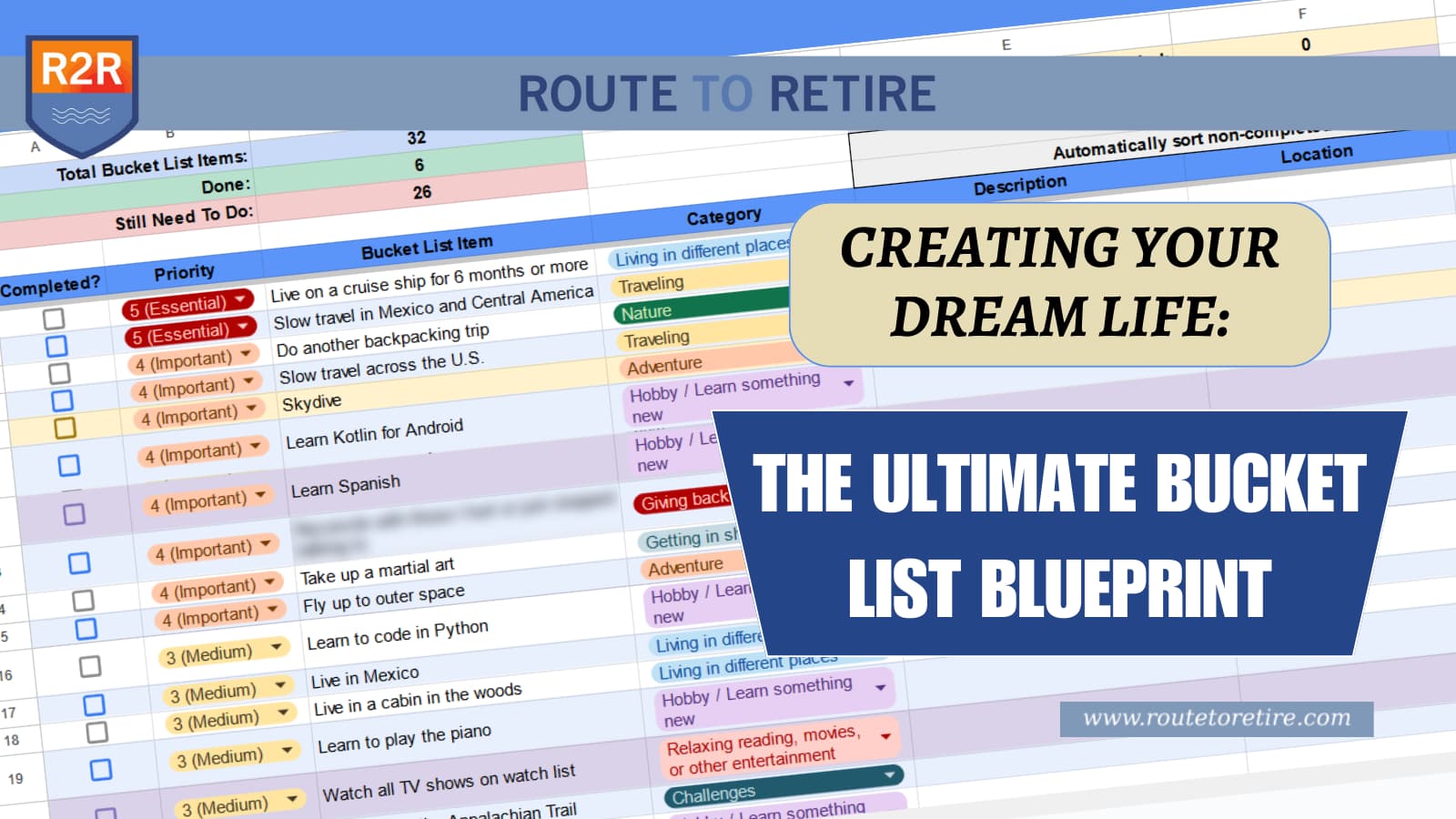
Alex Rose's The Life List: Your Ultimate Bucket Guide provides a structured, actionable framework designed to transform passive dream lists into achievable life milestones. By categorizing goals across experiential travel, skill mastery, personal growth, and legacy projects, the guide bridges the gap between aspirational bucket lists and realistic, scheduled execution.
Traditional bucket lists frequently suffer from being disorganized wish lists that people postpone indefinitely until retirement or a sudden health crisis. In contrast, modern goal architecture treats life planning as an iterative, living project. Alex Rose’s approach repositions experiential planning from a morbid "things to do before I die" inventory into a vibrant, intentional roadmap for personal fulfillment. Whether you are seeking to outline multi-country expeditions, master complex disciplines, or cultivate deeper personal relationships, understanding the core philosophy and logistical mechanics of this life guide provides the clarity required to move from contemplation to decisive action.
Understanding the Architecture of Alex Rose's Life List Framework
The primary distinction between a conventional bucket list and the system outlined in Alex Rose's guide lies in operational design. Most people compile bucket lists as sporadic notes, saving social media posts or scribbling ideas in notebooks without assigning timelines, estimated resource requirements, or developmental stages. Rose's framework treats your lifetime aspirations as a coordinated portfolio of experiences, demanding the same deliberate management one would apply to an investment portfolio or a professional career track.
The underlying philosophy shifts focus from mortality to vitality. Rather than dwelling on the finite nature of life as a countdown, the framework emphasizes maximizing energy, engagement, and alignment during each decade. A well-designed life list acknowledges that physical capabilities, familial responsibilities, and financial liquidity shift significantly across different chapters of adulthood. Engaging with high-exertion mountaineering, multi-week backcountry trekking, or intensive athletic feats makes the most sense during phases of peak physical resilience, whereas high-capital philanthropic projects or extended, contemplative cultural immersions may fit more naturally into later stages.
By establishing clear criteria for what belongs on a life list, the framework prevents "experience collecting"—the shallow pursuit of checking off tourist destinations purely for vanity or social validation. Every item included must satisfy personal values rather than external trends. This intentionality ensures that when you commit substantial financial resources and time to an objective, the resulting memory provides sustained psychological satisfaction rather than immediate buyer's remorse.
Core Categorization: Organizing Aspirations Beyond Travel
A common failure mode of modern bucket lists is an excessive concentration on international tourism. While geographic exploration is a vital component of human curiosity, a life centered solely on leisure travel leaves other critical dimensions of personal development neglected. The framework balances fulfillment by categorizing milestones across four primary pillars:
1. High-Impact Experiential Travel
This domain covers significant cross-cultural expeditions, wildlife encounters, and geographical milestones that challenge your comfort zone. Rather than listing generic locations such as "visit Japan" or "see Europe," the system insists on concrete, vivid parameters. Examples include cycling across Japan’s Shimanami Kaido during the autumn harvest or participating in a biological survey expedition in the Galápagos Islands. Specificity establishes clear criteria for completion and drives logistical preparation.
2. Skill Mastery and Intellectual Growth
Personal growth requires active effort rather than passive consumption. This category focuses on capabilities that require deliberate practice and intellectual rigor. Items might include achieving professional fluency in a second language, earning an advanced private pilot certification, learning classical woodworking to build a family dining table, or mastering technical scuba diving. These accomplishments permanently alter your self-identity and broaden your practical agency.
3. Physical Endurance and Athletic Feats
Physical vitality underpins the ability to enjoy all other life domains. Athletic milestones serve as temporal markers of health and resilience. Rather than vague intentions to "get fit," the guide recommends time-bound, measurable challenges: finishing an Olympic-distance triathlon, completing a self-supported 100-mile ultra-walk, or achieving a specific strength standard relative to body weight.
4. Contribution, Creation, and Legacy
A holistic life requires contributing beyond oneself. This quadrant encompasses creative outputs and community investments that outlast daily routines. Milestones in this category might include publishing an investigative nonfiction manuscript, establishing an endowed scholarship for underprivileged students, restoring a tract of native forest, or mentoring early-stage entrepreneurs.
- The Life List
- Experiential Travel
- Specific expeditions
- Cultural immersion
- Skill Mastery
- Language fluency
- Technical crafts
- Physical Feats
- Endurance events
- Strength metrics
- Contribution & Legacy
- Creative publishing
- Philanthropic endowments
- Experiential Travel
The Three-Tier Horizon System: Prioritizing Your Milestones
A list of one hundred unprioritized goals generates cognitive paralysis. When everything feels equally important and distant, daily obligations reliably crowd out extraordinary experiences. To counter this inertia, the guide structures items into a three-tiered horizon model that governs planning cadences and capital allocation.
Tier 1: Micro-Adventures (Quarterly Execution)
Micro-adventures require minimal capital outlay and no more than two to three days of continuous time. These activities act as recurring behavioral anchors that maintain momentum. Examples include completing an overnight winter campout within regional state parks, attending an intensive three-day culinary immersion, or navigating an unfamiliar coastal waterway by kayak. Tier 1 items must be scheduled within a rolling ninety-day calendar window.
Tier 2: Mid-Horizon Projects (Annual Milestones)
Tier 2 milestones require dedicated budget planning, logistical coordination, and deliberate training spanning six to eighteen months. These items represent substantial commitments, such as undertaking an expedition to trek the Haute Route in Switzerland, obtaining a technical sailing skipper license, or running your first marathon. Individuals should typically target one to two Tier 2 achievements per calendar year to balance career and family bandwidth.
Tier 3: Pinnacle Expeditions and Life Feats (Five- to Ten-Year Horizons)
Pinnacle objectives represent massive logistical, financial, or personal investments that redefine an era of your life. Examples include undertaking a multi-month circumnavigation by sailboat, taking a self-funded career sabbatical to conduct fieldwork, or summiting an iconic global peak. These milestones demand continuous background funding and progressive physical or technical preparation spanning half a decade or longer.
Methodological Comparison: Life List vs. Conventional Approaches
Understanding how structured life planning contrasts with conventional goal-setting models clarifies why traditional approaches often stall out.
| Evaluation Metric | Conventional Bucket List | Standard SMART Goals | Alex Rose's Life List Framework |
|---|---|---|---|
| Primary Driver | Escapism and mortality anxiety | Professional productivity and KPIs | Intrinsic values and lifelong vitality |
| Time Horizon | Indefinite ("Before I die") | Short-term (Quarterly or annual) | Multi-tiered (90 days to multi-decade) |
| Financial Integration | Rarely accounted for; impulse-based | Tied to corporate or personal budgets | Dedicated experiential sinking funds |
| Scope of Categories | Heavily skewed to consumer travel | Skewed toward career and finance | Balanced: Travel, Skills, Fitness, Legacy |
| Actionable Architecture | Static list on paper or digital notes | Strict sequential performance targets | Modular portfolio with staged prerequisites |
| Review Cadence | Infrequent; often forgotten | Weekly or monthly reviews | Bi-annual alignment and feasibility audits |
Practical Implementation: Step-by-Step Blueprint
Transforming a conceptual list into lived experiences demands a repeatable engineering process. The guide outlines four distinct phases for moving from initial brainstorming to active execution.
Step 1: The Unconstrained Inventory Audit
Begin with an unedited extraction of every experience, skill, location, and creative project you have ever contemplated. Write without evaluating cost, social feasibility, or calendar availability. The objective in this initial stage is psychological clearance: capturing dormant ambitions that have lingered in the background of your consciousness.
Step 2: The Ruthless Deletion and Authenticity Filter
Review the raw inventory and challenge every single entry with critical diagnostic questions:
- Am I pursuing this because I genuinely crave the day-to-day reality of the experience, or do I merely desire the social prestige of having done it?
- If I were legally prohibited from photographing or discussing this milestone publicly, would I still commit my time and capital to it?
Strip away any item that exists purely to impress external observers. What remains should reflect your personal curiosities, values, and intrinsic motivations.
Step 3: Feasibility Auditing and Prerequisite Mapping
Every ambitious milestone is actually the end result of a chain of dependencies. Break each remaining Tier 2 and Tier 3 goal into its necessary precursors:
- Objective: Trek Mount Kilimanjaro
- Prerequisites:
- Medical & Altitude Clearance (Month 1)
- Zone 2 Aerobic Conditioning & Stair Training (Months 2–6)
- Gear Procurement: Technical Layering & Broken-In Boots (Months 3–4)
- Logistics: Route Selection (Lemosho/Machame) & Outfitter Booking (Month 4)
- Prerequisites:
Mapping prerequisites transforms an intimidating, distant dream into a series of routine administrative and physical tasks that can be addressed systematically.
Step 4: Sinking Fund Allocation and Scheduling
An unfinanced aspiration is merely a wish. Establish a distinct high-yield savings sub-account dedicated exclusively to your life list. Calculate the total estimated cost of your next scheduled Tier 1 and Tier 2 milestones, including gear, travel insurance, permits, coaching, and transit. Automate recurring transfers on every pay cycle directly into this fund. Once capital reaches 50% of the projected requirement, book non-refundable components (permits or major transit) to create irreversible positive commitment.
Mitigating Common Pitfalls in Long-Term Milestone Planning
Execution breakdowns in life planning follow predictable patterns. Awareness of these operational traps prevents wasted resources and emotional disillusionment.
The Consumerist Experience Trap
Modern commercial marketing reframes consumer spending as "living your best life." Checking into luxury resorts or taking packaged tours often delivers comfort rather than genuine personal expansion. Ensure your list challenges your agency. Prioritize milestones that require you to navigate unfamiliar environments, solve novel problems, or physically transport yourself across terrain. True growth stems from friction and capability, not purchasing power.
Someday Syndrome and Calendar Deferral
The most perilous word in personal planning is "someday." Without specific target dates, life automatically fills your calendar with urgent professional demands, routine chores, and passive consumption. Protect your milestones by actively blocking calendar space for Tier 2 projects at least nine to twelve months in advance, treating those dates with the same non-negotiable seriousness you would accord a mandatory medical procedure or business engagement.
Value Drift and Rigid Dogmatism
Who you are in your early twenties will not match who you are in your forties or sixties. A major flaw in traditional bucket lists is an obstinate commitment to goals written years prior that no longer reflect your values. Rose's framework mandates an annual audit where you actively retire items that no longer resonate. Erasing an outdated goal is not an admission of failure; it is an intelligent reallocation of finite time and attention toward experiences that genuinely matter to your current self.
Integrating Logistics, Health, and Financial Reserves
Executing life milestones throughout 2026 and across subsequent decades requires solid defensive fundamentals. The highest ambitions collapse if neglected logistics, legal risks, or physical injuries intervene during execution.
Health Prerequisites and Physical Baselines
Comprehensive life lists demand functional longevity. Ensure your physical baseline supports your aspirations by integrating consistent cardiovascular conditioning (such as Zone 2 aerobic base work) and functional resistance training into weekly routines. Prior to committing non-refundable capital to high-altitude mountaineering, open-water long-distance swimming, or rigorous remote expeditions, obtain comprehensive physiological screenings, stress tests, and joint mobility assessments from qualified sports medicine clinicians.
Travel Logistics, Visas, and Political Risk
International expeditions require continuous monitoring of diplomatic and logistical parameters. Keep track of international passport validity standards (most nations enforce a strict six-month validity rule beyond your planned departure date) and monitor entry visa requirements and regional entry taxes. For remote or politically complex environments, verify local requirements through official governmental resources such as the U.S. Department of State Travel Advisories or equivalent consular services in your home nation.
Dedicated Insurance and Risk Architecture
Standard domestic health and property insurance policies rarely provide adequate protection during high-risk domestic endeavors or international travel. For Tier 2 and Tier 3 expeditions, secure specialized trip cancellation and comprehensive evacuation coverage. If participating in technical sports—such as mountaineering with ropes, scuba diving below standard recreational limits, or off-piste skiing—confirm that your policy explicitly names and covers those activities. Organizations such as the Divers Alert Network (DAN) or Global Rescue offer targeted evacuation and medical safety nets that mitigate catastrophic financial and physical exposures.
Frequently Asked Questions
How many items should be included on a comprehensive life list?
A functional life list typically contains between 50 and 100 total items across all four categories, but only a small portion should be active at any given moment. Maintain no more than three Tier 1 micro-adventures and one Tier 2 milestone in active planning at one time. The remaining entries serve as an organized conceptual repository, ready to be scheduled as previous goals are completed and resources become available.
What is the primary difference between a bucket list and a life list?
A traditional bucket list tends to be an unorganized collection of exotic travel destinations and high-adrenaline thrills compiled under the passive lens of "things to do before I die." A life list is an organized, proactive life management strategy that balances travel with skill acquisition, creative output, physical conditioning, and legacy projects, complete with resource schedules and actionable timelines.
How should I budget for high-cost Tier 3 pinnacle expeditions?
Establish a dedicated experiential sinking fund separate from your emergency savings and retirement portfolios. Calculate the all-inclusive cost—including specialized training, technical gear, vaccinations, transit, permits, and lost earnings—and divide that figure by the number of months until your target execution date. Automate this monthly allocation into a yield-generating account to ensure the experience is fully paid for before departure.
What should I do if my physical health changes and I can no longer complete an item?
Adapt the underlying principle of the goal rather than abandoning it entirely. If an orthopedic injury prevents you from running a mountain marathon, redirect that drive into non-impact disciplines such as long-distance coastal sea kayaking, open-water navigation, or competitive hand-cycling. The core objective of the framework is cultivating resilience and personal agency, which can be expressed through multiple physical mediums.
How frequently should I audit and update my life list?
Conduct a formal alignment audit twice a year. Use these check-ins to review your experiential sinking fund balances, confirm logistical milestones for upcoming Tier 2 projects, remove items that no longer align with your core values, and introduce new goals inspired by recent personal development.
Strategic Next Steps: Initiating Your Personalized Life Roadmap
Constructing a meaningful life requires the same disciplined project management applied to enterprise objectives. Passive dreaming yields vague regrets; systematic execution yields a rich catalog of lived experiences, practical capabilities, and enduring memories.
To begin implementing the principles outlined in Alex Rose's The Life List: Your Ultimate Bucket Guide, commit to three immediate operational actions this week:
- Conduct an Authenticity Audit: Draft your current list of lifetime ambitions and strike through any item driven primarily by external validation or social expectations. Keep only the pursuits that spark genuine personal curiosity and intrinsic drive.
- Select One Immediate Tier 1 Milestone: Identify a low-cost, high-engagement micro-adventure that can be executed within the next ninety days. Open your calendar immediately, select the specific weekend, and make the necessary initial reservation or booking.
- Establish an Experiential Sinking Fund: Open an independent savings account labeled specifically for your life milestones. Automate a sustainable recurring contribution on every pay cycle, ensuring your future adventures and developmental goals are methodically funded rather than left to chance.
Review your portfolio of goals bi-annually, adjust your course as your life situation evolves, and treat your time as the finite, precious resource that it is.