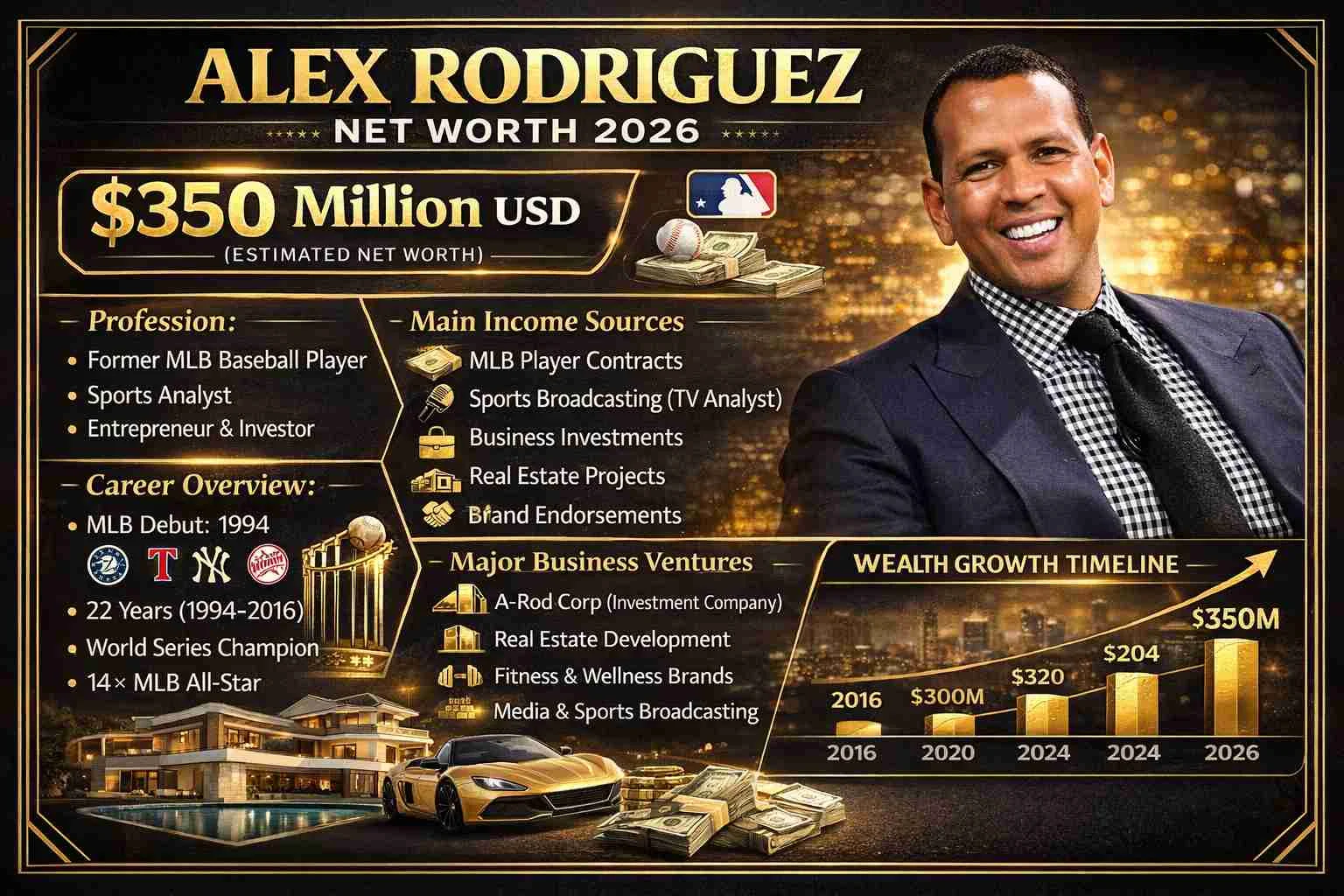
In 2018, Alex Rodriguez’s estimated net worth was approximately $350 million. This figure reflected a diverse portfolio built upon record-breaking professional baseball contracts, extensive real estate holdings, a burgeoning private equity firm, and various strategic corporate endorsements. His financial profile during this period transitioned from that of a high-earning athlete to a sophisticated institutional investor and entrepreneur.
The Foundation of Wealth: Professional Baseball Earnings
The cornerstone of Alex Rodriguez’s wealth originated from his historic career in Major League Baseball (MLB). By 2018, two years removed from his final game as a New York Yankee, the long-term impact of his contracts remained a primary driver of his liquid capital.
His earning power was defined by two landmark contracts. The first was his 2001 ten-year, $252 million deal with the Texas Rangers, which at the time set a precedent for professional athlete compensation. The second was his record-shattering ten-year, $275 million contract extension with the New York Yankees signed in 2007. These figures represent gross earnings; when accounting for federal and state taxes, agent fees, and living expenses, the net liquidity retained by the end of 2018 was substantial, providing the seed capital necessary for his transition into the private sector.
Transitioning to A-Rod Corp: Business and Investments
By 2018, Rodriguez had institutionalized his business interests under the umbrella of A-Rod Corp. This holding company served as the engine for his post-baseball career, focusing on three core verticals: real estate, sports wellness, and media/entertainment.
Real Estate Development
A-Rod Corp maintained a significant presence in the real estate market. The strategy focused on the acquisition and management of multi-family residential properties, particularly in underserved markets across the United States. In 2018, his portfolio included thousands of residential units. This asset class provided steady cash flow and tax advantages, effectively hedging against the volatility associated with venture capital and entertainment investments.
Strategic Private Equity and Venture Capital
Rodriguez leveraged his personal brand and network to secure positions in private equity deals. His approach involved both direct investment and advisory roles in sectors ranging from fitness and technology to beverage distribution. His partnership with UFC Gyms and investments in various tech startups illustrated a shift toward building equity in growth-stage companies rather than merely collecting endorsement checks.
Endorsements and Media Presence
While his salary income ceased in 2016, his income from brand partnerships and media obligations remained a critical component of his 2018 net worth calculation. During this year, he was highly active as a broadcast analyst for ESPN’s Sunday Night Baseball and as a contributor to FOX Sports. These roles not only provided consistent annual income but also kept his personal brand—and by extension, his business ventures—in the public eye.
His endorsements in 2018 included high-profile associations with brands such as Nike and various luxury watch and financial service providers. These partnerships were often structured to include performance-based incentives or equity stakes, contributing to the appreciation of his total wealth throughout the year.
Comparative Financial Analysis: 2018 Status
To understand the scale of his financial activity, it is helpful to look at the primary components of his wealth allocation during that calendar year.
| Asset Class | Primary Characteristics in 2018 | Contribution to Wealth |
|---|---|---|
| Professional Earnings | Historical accumulation from MLB | Primary source of baseline capital |
| Real Estate | Multi-family residential units | Long-term appreciation and cash flow |
| Private Equity | Direct investments (A-Rod Corp) | High-growth, risk-adjusted returns |
| Media/Broadcasting | Annual salary from ESPN/FOX | Consistent liquid income |
| Endorsements | Multi-year contracts | Brand equity and performance bonuses |
Requirements for Sustaining Multi-Million Dollar Portfolios
Maintaining a net worth in the multi-hundred-million-dollar range requires a shift from wealth accumulation to wealth preservation and strategic allocation. By 2018, Rodriguez’s financial structure required:
- Tax Mitigation: Utilizing corporate structures to manage the tax burden on both salary and capital gains.
- Diversification: Moving away from total reliance on sports-related income to a mix of real estate, private business equity, and media income.
- Active Management: Employing a team of financial advisors, tax attorneys, and real estate professionals to oversee the daily operations of A-Rod Corp.
Failure to diversify would have left his wealth exposed to the cyclical nature of the entertainment industry and the market risks inherent in professional sports-adjacent businesses.
Frequently Asked Questions
What was the primary source of Alex Rodriguez’s wealth in 2018?
The primary source was the accumulation of historical salary earnings from his record-breaking MLB contracts, which provided the capital base for his diversified investment firm, A-Rod Corp.
Did Alex Rodriguez’s media work significantly impact his net worth?
Yes. His roles at ESPN and FOX provided substantial recurring annual income, which, while smaller than his former baseball salary, served as a stable revenue stream for reinvestment into his private equity portfolio.
How did A-Rod Corp impact his 2018 financial standing?
A-Rod Corp allowed Rodriguez to transition from an athlete to a principal investor. By aggregating his real estate and venture capital investments into a single corporate structure, he was able to leverage tax benefits and increase the scale of his investments.
What are the risks associated with high-net-worth portfolios like his?
The primary risks include market volatility in real estate and the potential for underperformance in private equity startups. Maintaining such wealth requires constant rebalancing of assets to ensure the portfolio survives economic downturns.
Strategic Next Steps for Wealth Management
For individuals looking to understand or emulate the financial trajectory established by figures like Alex Rodriguez, the primary takeaway is the necessity of an "exit strategy" from high-income careers. By 2018, Rodriguez had clearly prioritized the conversion of active income (salary) into passive or equity-based income (real estate and investments).
If you are evaluating your own wealth strategy, consider the following:
- Audit your income sources: Determine how much of your wealth is tied to active, replaceable labor versus appreciating assets.
- Invest in professional expertise: High-net-worth management is rarely a solo endeavor; access to specialized legal and tax counsel is required to manage growth effectively.
- Focus on scalability: Ensure that your investments have a path to growth independent of your direct, daily involvement.
Disclaimer: This information is for educational purposes and does not constitute financial, legal, or investment advice. Individual financial situations vary significantly; consult with a qualified professional before making major investment decisions.