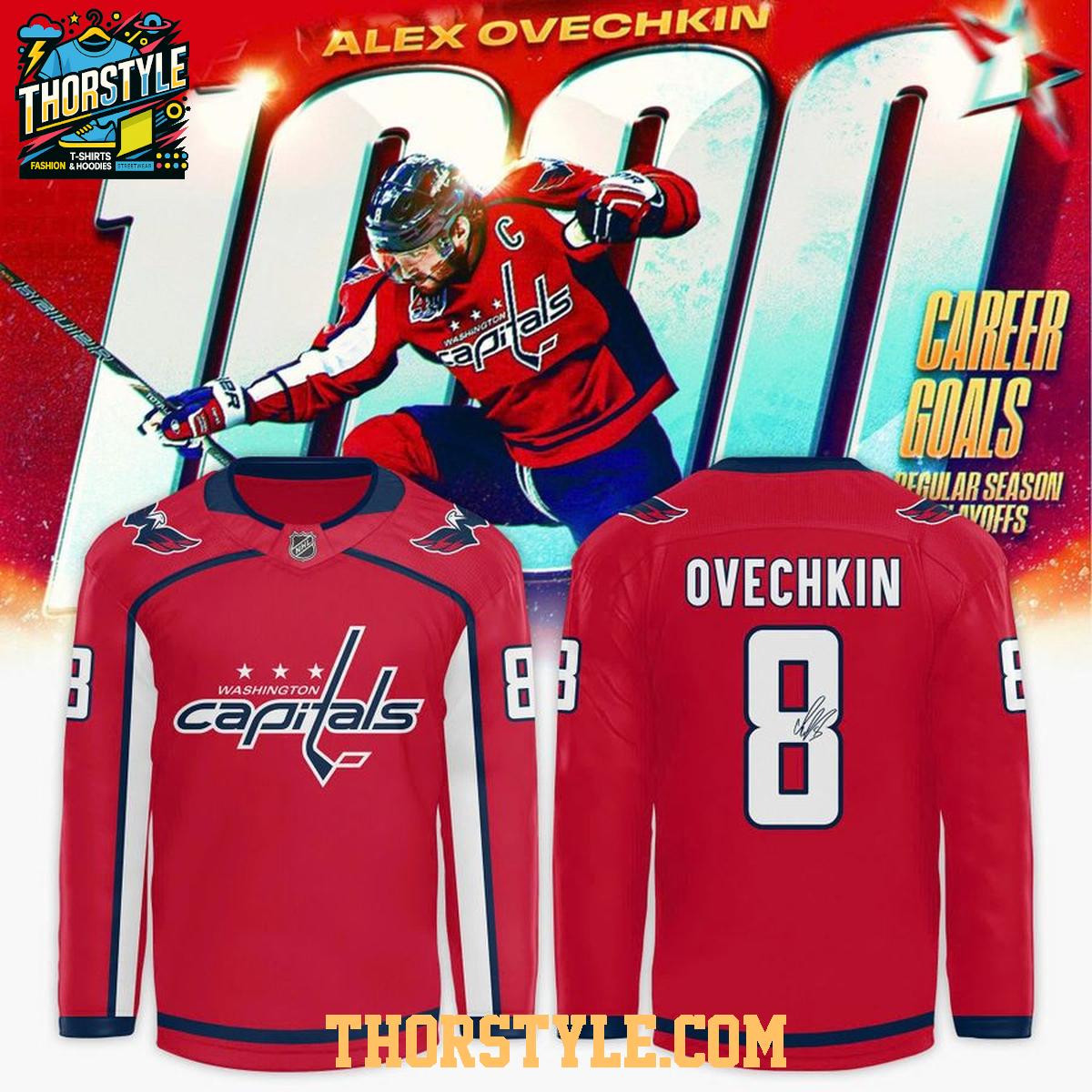
Alexander Ovechkin stands as one of the most prolific goalscorers in the history of the National Hockey League, reshaping how analysts and fans view elite offensive longevity. Drafted first overall by the Washington Capitals in the 2004 NHL Entry Draft, the Russian winger entered a league emerging from a lock-out and immediately transformed the franchise into a perennial contender. Over more than two decades in North American professional hockey, his career has been defined by an iconic left-circle one-timer, physical play, durable health, and an unrelenting pursuit of Wayne Gretzky’s all-time career goals record. Understanding his trajectory requires examining his foundational statistics, historical context, milestone achievements, and his broader impact on the sport of hockey.
The Foundations of an Elite Goalscorer
From his rookie season in 2005–2006, Ovechkin established an unprecedented scoring standard by capturing the Calder Memorial Trophy with 52 goals and 106 points. Unlike many modern elite playmakers who rely purely on speed or intricate stickhandling, Ovechkin combined sheer physical power with a world-class wrist shot and a thunderous one-timer. His preferred office on the left side of the offensive zone—commonly referred to as his "office"—became a focal point for opposing penalty killers who nonetheless failed to neutralize it for two decades.
His playing style rejected the conventional wisdom that physical forwards inevitably suffer early career burnouts. Throughout his tenure with the Washington Capitals, Ovechkin missed remarkably few games due to injury, a testament to his durable conditioning and unique body architecture. This durability laid the numerical foundation necessary to approach milestones previously thought unreachable in the modern, defensively structured NHL.
Decoding the Statistical Milestones and Records
Ovechkin’s career statistics reflect an extraordinary blend of peak dominance and sustained excellence across multiple eras of NHL hockey. He has captured the Maurice "Rocket" Richard Trophy as the league's leading goalscorer a record nine times, a feat that demonstrates his ability to adapt his game as goaltending equipment evolved and defensive systems tightened.
Beyond single-season awards, his cumulative records place him in rare company. He sits comfortably among the elite tier of all-time point scorers while maintaining the highest goals-per-game ratio among multi-decade veterans. The table below outlines key statistical benchmarks comparing Ovechkin’s career production against historical legends.
| Metric / Milestone | Alexander Ovechkin | Wayne Gretzky | Gordie Howe | Jaromir Jagr |
|---|---|---|---|---|
| Primary Position | Left Wing | Center | Right Wing | Right Wing |
| Active Seasons | 21+ Seasons | 20 Seasons | 26 Seasons | 24 Seasons |
| Career Regular-Season Goals | 800+ | 894 | 801 | 766 |
| Rocket Richard Trophies | 9 | N/A (Award created later) | N/A | N/A |
| Hattricks | 31+ | 50 | 4 | 15 |
The Pursuit of Wayne Gretzky's All-Time Goal Record
For generations, Wayne Gretzky's record of 894 career regular-season goals was considered an unbreakable monument of professional sports. While Gretzky achieved his total primarily through elite playmaking and an unmatched hockey IQ, Ovechkin approached the record through pure, relentless volume shooting. Every season past his mid-30s brought intense media scrutiny, as every goal moved him closer to Gretzky’s once-sacrosanct threshold.
Ovechkin surpassed Gordie Howe’s career total of 801 goals to secure second place all-time, narrowing the gap on Gretzky with remarkable consistency even as his team underwent roster transitions. This pursuit altered how television networks broadcast Capitals games, turning routine winter matchups into national historical events. His ability to maintain a high shooting percentage while being the primary focus of every opponent's defensive game plan remains an anomaly in modern sports analytics.
Contextualizing Playoff Success and the Stanley Cup
While regular-season goalscoring defined Ovechkin's early reputation, critics for years pointed to early playoff exits as a blemish on his resume. Despite consistent regular-season dominance, the Washington Capitals repeatedly fell short in the second round of the Stanley Cup Playoffs, often against arch-rivals like the Pittsburgh Penguins.
The narrative shifted definitively during the 2018 Stanley Cup Playoffs. Ovechkin led the Capitals through a grueling postseason run, capturing his first Stanley Cup championship, the Conn Smythe Trophy as playoff MVP, and the elusive validation of his leadership. His performance during that playoff run silenced lingering questions regarding his ability to elevate his game in high-stakes elimination matches, cementing his status as a complete leader who could deliver a championship to a non-traditional hockey market.
International Competition and Global Legacy
Ovechkin’s impact extends far beyond the National Hockey League, encompassing a storied international career representing Russia at the IIHF World Championships and Winter Olympic Games. Though an Olympic gold medal eluded him, his willingness to travel across the globe to represent his country during the prime of his career demonstrated fierce national pride.
Within the broader hockey ecosystem, Ovechkin's legacy bridges the gap between the Soviet-era style of creativity and the hyper-athletic, structured demands of the 21st-century NHL. He inspired a new generation of Russian hockey stars who grew up watching his highlight-reel goals and physical dominance, many of whom have since transitioned to the NHL carrying similar stylistic traits.
How to Evaluate Ovechkin's All-Time Standing
Evaluating an active legend requires looking past raw emotion and examining structural metrics, era adjustments, and positional value.
- Adjusted Scoring Era: Consider that Ovechkin played through the dead-puck era remnants, the subsequent obstruction crackdowns, and modern defensive systems featuring butterfly goaltenders and advanced video coaching.
- Durability and Volume: Assess his games-played-to-goals ratio, which demonstrates that his totals are built on both high-end efficiency and extraordinary durability across 82-game schedules.
- Positional Scarcity: Recognize that elite goalscoring historically concentrates at the center position, making Ovechkin's status as a dominant left-winger uniquely valuable.
- Team Impact: Factor in his leadership transformation, evolving from a purely offensive dynamo into a physical, emotional captain who guided a veteran core to a championship.
Frequently Asked Questions
How many goals does Alex Ovechkin have in his career?
Alex Ovechkin has scored over 850 regular-season goals in the NHL, placing him securely second on the all-time career goals list behind only Wayne Gretzky, who finished his career with 894 goals.
Has Alex Ovechkin won a Stanley Cup?
Yes, Alex Ovechkin won his first and only Stanley Cup in 2018 with the Washington Capitals, defeating the Vegas Golden Knights in five games and earning the Conn Smythe Trophy as the most valuable player of the postseason.
How many Maurice "Rocket" Richard Trophies has Ovechkin won?
Ovechkin has won the Maurice "Rocket" Richard Trophy nine times, given annually to the NHL's leading goalscorer. This stands as the most scoring title wins by any player in league history.
What is Alex Ovechkin's signature shot?
Ovechkin's signature shot is a powerful one-timer taken from the left faceoff circle, an area on the ice that opposing teams and media members famously refer to as his "office."
Will Alex Ovechkin break Wayne Gretzky's record?
Ovechkin's pace places him within striking distance of breaking Wayne Gretzky's all-time record of 894 goals, making his pursuit one of the most closely watched milestones in sports history.
Maximizing Your Appreciation of Modern Hockey History
To fully appreciate the remainder of Ovechkin’s career, follow situational special teams play, tracking how the Capitals utilize him on the power play where his one-timer remains most lethal. Watch how his defensive zone coverage and physical forechecking have evolved to preserve energy over an 82-game season. Understanding these tactical adjustments reveals that his longevity is not merely a product of natural talent, but of strategic physical preservation and an unmatched competitive drive that continues to redefine athletic aging curves in professional hockey.