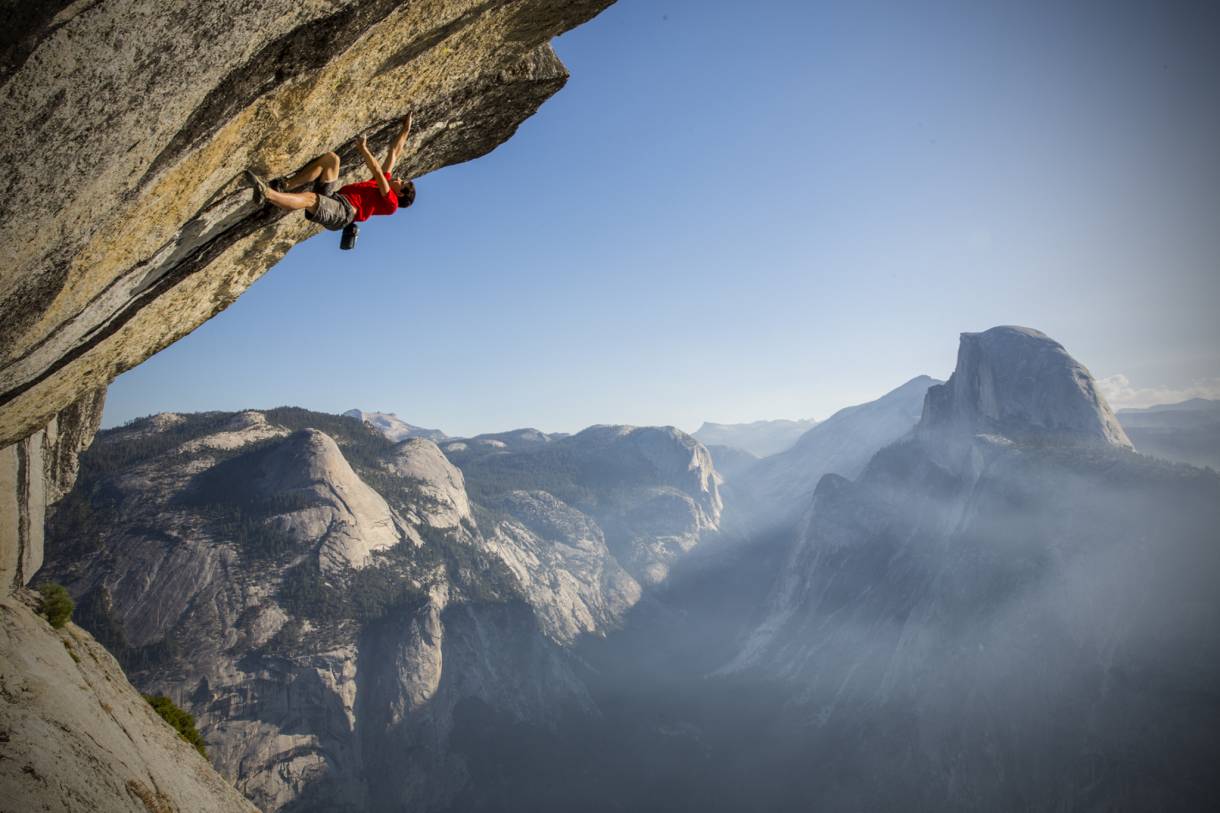
Alex Honnold secured his legendary status not by walking red carpets, but by scaling vertical stone without ropes, culminating in his Academy Award-winning documentary Free Solo, which transformed extreme adventure sports into a global cinematic phenomenon and captured a shocking Oscar victory.
The Evolution of Free Solo Climbing Before the Academy Award
Free solo climbing—ascending sheer rock faces without ropes, harnesses, or safety gear—long occupied a hyper-niche corner of extreme sports. Practitioners accepted a binary outcome for every mistake: survival or absolute catastrophe. Within this subculture, Alex Honnold had already established himself as a generational anomaly long before Hollywood took notice. His meticulous preparation, pre-calculations of movement, and profound psychological control separated him from daredevils who relied purely on impulse.
When Honnold announced his intention to free solo El Capitan in Yosemite National Park—a 3,000-foot vertical granite wall often described as the center of the big-wall universe—he raised the stakes of human physical achievement. The endeavor was not merely a physical test; it was an exercise in managing fear on a scale few minds could comprehend. Documenting this feat required a film crew composed of elite climbers who could operate heavy camera equipment while hanging from ropes on the same terrifying vertical walls, facing their own moral and technical dilemmas about whether filming such a high-risk project encouraged unnecessary danger.
The Cinematic Partnership Behind Free Solo
Bringing Honnold’s ascent of El Capitan to the screen required an unprecedented fusion of documentary filmmaking and extreme athletics. Directed by Elizabeth Chai Vasarhelyi and Jimmy Chin, the production faced a paralyzing central question: How do you film a documentary where the subject's life hangs in the balance, knowing that the presence of cameras could influence his focus, or worse, that the crew might capture a fatal fall in real time?
The filmmakers adopted a rigorous ethical and technical framework. Chin and Vasarhelyi deployed a small, specialized team of cinematographer-climbers, including Mikey Schaefer and Clair Popkin, who maintained rigorous distance from Honnold during his practice runs and the final push. They used telephoto lenses to capture intimate details of Honnold’s facial expressions and foot placements without encroaching on his mental space. This meticulous boundary-setting preserved the absolute authenticity of the climb while ensuring that the cinematic apparatus did not become an artificial catalyst for disaster.
The Shocking Road to the Academy Awards
Documentary features chronicling extreme sports rarely break through the insular voting blocks of the Academy of Motion Picture Arts and Sciences. Historically, the Academy favors historical retrospectives, social justice issues, investigative journalism, or intimate human-interest portraits over adrenaline-fueled adventure films. When Free Solo premiered at the Telluride Film Festival in August 2018 and subsequently swept audience awards at the Toronto International Film Festival, industry analysts viewed it as a box-office success rather than an Oscar contender.
The campaign for the 91st Academy Awards in 2019 pitted Free Solo against formidable, socially conscious competitors such as Minding the Gap, Of Fathers and Sons, Hale County This Morning, This Evening, and RBG. Traditional Oscar prognosticators predicted that the Academy would shy away from a film about climbing cliffs, categorizing it as an action reel rather than high art. However, the film's unexpected nomination for Best Documentary Feature shifted the narrative. The shocking win on February 24, 2019, at the Dolby Theatre in Hollywood validated a shift in Academy voting demographics toward visual storytelling that explores the absolute outer limits of human psychology and physical endurance.
Critical Reception and Cultural Impact of the Victory
The Oscar victory stunned Hollywood and reverberated deeply through the outdoor community. For decades, extreme sports were relegated to specialized broadcast segments or direct-to-video reels watched primarily by participants. Free Solo bridged the chasm between fringe athleticism and mainstream cultural discourse. Critics praised the film not merely for its heart-stopping cinematography, but for its unflinching exploration of romantic relationships, neurodiversity, and the obsessive pursuit of excellence.
Major Milestones in the Journey of Free Solo
| Milestone / Event | Date / Period | Significance to the Project |
|---|---|---|
| First Successful El Capitan Free Solo | June 3, 2017 | The physical achievement executed without cameras present for the final run, proving the concept. |
| World Premiere at Telluride | August 31, 2018 | Established critical momentum and secured distribution with National Geographic Documentary Films. |
| Academy Award Nomination | January 22, 2019 | Broke traditional documentary barriers by entering the Best Documentary Feature category. |
| Academy Award Win | February 24, 2019 | Marked the first time an extreme sports documentary of this nature secured an Oscar. |
This triumph transformed public perception of risk. Rather than glorifying recklessness, the film illuminated the immense cognitive architecture required to mitigate mortal danger. Honnold became an unexpected household name, appearing on late-night talk shows and TED stages, where he consistently deflected praise to emphasize that his achievements were the result of decades of deliberate practice rather than innate recklessness.
Ethical Controversies and the Burden of Representation
The crossover success of Free Solo introduced complex ethical debates regarding the glamorization of high-risk sports. Critics within and outside the climbing community questioned whether documenting such endeavors encourages amateur climbers to attempt fatal stunts without possessing Honnold’s elite skill set or psychological fortitude. Documentary directors Vasarhelyi and Chin addressed these criticisms directly in media rounds, emphasizing that Honnold’s climb was an expression of a singular, highly calculated mastery rather than an invitation to reckless imitation.
Furthermore, the film forced audiences to confront the emotional collateral damage experienced by loved ones. Sanni McCandless, Honnold’s partner at the time, emerged as a central figure in the narrative, highlighting the profound anxiety carried by those who love individuals engaged in lethal pursuits. This emotional honesty elevated the film from a technical showcase of athletic prowess into a deeply relatable exploration of love, fear, and individual autonomy.
Legacy and Ongoing Influence on Documentary Filmmaking
Years after its landmark victory, Free Solo remains a watershed moment for adventure documentary filmmaking. It permanently altered the economics of outdoor cinema, proving that stories shot under extreme environmental constraints could achieve commercial viability and critical validation on the world's highest stage. Production companies subsequently increased investment in remote-location technical crews, utilizing drone cinematography and specialized stabilization rigs that trace their operational lineage back to the innovations pioneered during the filming of Honnold’s ascent.
For Alex Honnold, the Oscar win did not alter his fundamental relationship with climbing. He continued to pursue obscure, difficult big-wall routes around the globe, maintaining the austere lifestyle that defined his early career. The golden statuette sitting on a shelf served not as a monument to a single day in Yosemite, but as an artifact of an extraordinary cultural moment when mainstream cinema paused to acknowledge the terrifying beauty of absolute focus.
Frequently Asked Questions
Did Alex Honnold get paid for winning the Oscar?
No monetary prize is attached to winning an Academy Award. The honor is purely prestige-based, though winning an Oscar significantly increases the commercial value, streaming distribution licensing fees, and cultural longevity of the winning film.
Was the camera crew in danger while filming Free Solo?
Yes. The camera operators were elite climbers operating heavy cinematic gear while suspended on ropes alongside Honnold. They faced the constant psychological strain of knowing their presence could distract him, as well as the risk of witnessing a fatal accident.
How did the filmmakers handle the possibility of a fatal fall during production?
Directors Elizabeth Chai Vasarhelyi and Jimmy Chin had extensive ethical discussions with the crew and Honnold regarding safety protocols. They agreed that if Honnold appeared unprepared or if weather conditions degraded, filming would halt. Ultimately, Honnold controlled the timeline of when cameras were allowed near the wall.
Why was the Oscar win considered shocking?
Academy voters historically favored traditional social, political, and historical documentaries over sports-centric films. Free Solo broke this unwritten precedent, overcoming industry skepticism to win against heavy-hitting investigative and social justice documentaries.
What impact did the documentary have on Yosemite National Park?
The film amplified global awareness of Yosemite’s big-wall climbing culture, leading to a surge in visitor interest regarding rock climbing history, while also reinforcing park safety and environmental preservation discussions.
Where can viewers watch Free Solo?
Free Solo is available for streaming on various digital platforms, including Disney+ and Hulu, through National Geographic distribution channels, as well as digital rental storefronts.
Next Actions and Further Exploration
For readers seeking to understand the intersection of extreme athletics and documentary storytelling, reviewing the companion making-of featurettes and reading published interviews with directors Jimmy Chin and Elizabeth Chai Vasarhelyi offers deeper technical insight. Examining the works of other mountain documentarians provides broader context on how modern camera technology captures vertical environments without compromising athlete safety.