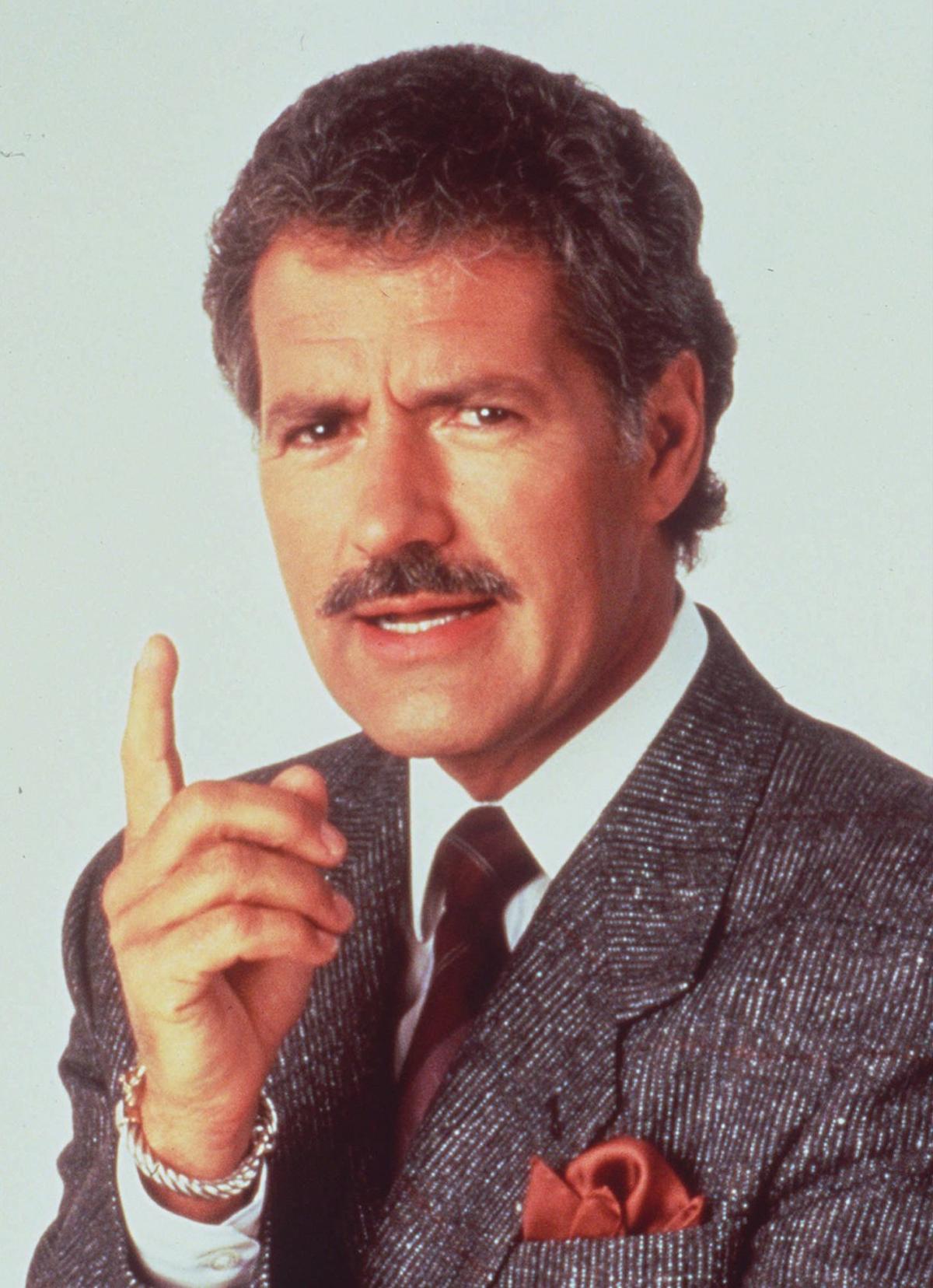
Alex Trebek was a legendary Canadian-American television personality best known for hosting the syndicated game show Jeopardy! for 37 seasons, from 1984 until his death in 2020. His career spanned six decades, during which he became a symbol of intelligence, reliability, and cultural excellence, earning eight Daytime Emmy Awards for Outstanding Game Show Host and a Lifetime Achievement Award.
The Early Foundations of a Broadcasting Giant
Born George Alexander Trebek on July 22, 1940, in Sudbury, Ontario, the man who would become the face of American trivia began his journey in a bilingual household. His father, George Edward Trebek, was a Ukrainian immigrant who worked as a chef, and his mother, Lucille Lagacé, was a Franco-Ontarian. This multicultural upbringing provided Trebek with a linguistic versatility that would later become a hallmark of his hosting style, particularly his precise pronunciation of foreign terms and names on Jeopardy!.
Trebek’s academic path was rooted in the humanities. He attended the University of Ottawa, where he earned a degree in philosophy in 1961. While a student, he began working for the Canadian Broadcasting Corporation (CBC) to pay his tuition. It was here that he discovered his natural aptitude for the airwaves. He started as a fill-in announcer and quickly moved into news and sports reporting. By the mid-1960s, he was hosting a variety of programs, including Music Hop, a teen music show, and Reach for the Top, a high school quiz show that served as a precursor to his later success in the trivia genre.
His transition to American television in 1973 was spurred by fellow Canadian Alan Thicke, who encouraged him to move to Los Angeles. His first US gig was hosting the NBC game show The Wizard of Odds. Although that show was short-lived, it established Trebek as a capable and charming presence, leading to a string of hosting roles throughout the 1970s and early 1980s.
The Resurrection of Jeopardy! and the "Professor" Persona
While Trebek was a seasoned professional by 1984, his life changed forever when producer Merv Griffin chose him to host the revival of Jeopardy!. The show had previously enjoyed a successful run with Art Fleming, but the 1984 version needed a host who could handle the increased pace and the intellectual rigor of the "answer-and-question" format.
Trebek did not merely read clues; he acted as a moderator and an arbiter of truth. He brought a "schoolmaster" aesthetic to the set, occasionally correcting contestants’ pronunciations or offering a stern but fair critique of a missed opportunity. This persona was not intended to be elitist; rather, it was a reflection of Trebek’s genuine respect for the material. He believed that the show was the star, and his role was to facilitate the exchange of knowledge.
Under his stewardship, Jeopardy! grew from a standard game show into a cultural institution. He presided over more than 8,000 episodes, a feat that earned him a Guinness World Record for the most game show episodes hosted by the same presenter. His longevity allowed him to witness and guide the show through various eras, including the legendary 74-game winning streak of Ken Jennings in 2004, which revitalized the show's ratings and cemented its place in the modern zeitgeist.
Key Facts and Career Milestones
To understand the breadth of Alex Trebek’s impact, one must look at the specific milestones and data points that defined his professional life. As of 2026, his records and achievements remain a benchmark for all television presenters.
| Category | Significant Detail | Impact/Record |
|---|---|---|
| Total Episodes | Over 8,200 episodes of Jeopardy! | Guinness World Record holder for most episodes hosted. |
| Emmy Awards | 8 Daytime Emmys for Outstanding Game Show Host | Most wins in this specific category for a single show. |
| Lifetime Achievement | Received in 2011 from the National Academy of Television Arts and Sciences | Recognition of a career spanning nearly 50 years at the time. |
| Philanthropy | Donated 62 acres of land in the Santa Monica Mountains | Created the Trebek Open Space park for public use. |
| Education Advocacy | Hosted the National Geographic Bee for 25 years | Encouraged geographic literacy among youth across America. |
| Military Support | Completed 13 USO tours | Provided morale and entertainment for troops stationed overseas. |
Beyond the Podium: Philanthropy and Personal Advocacy
Alex Trebek’s legacy is not confined to the television studio. He was a man of deep convictions and significant charitable reach. One of his most enduring legacies was his commitment to the environment and education. In 1998, he donated 62 acres of land in the Hollywood Hills to the City of Los Angeles, ensuring that the space would remain an open nature preserve rather than a site for luxury development. This area, now known as the Trebek Open Space, provides trails for hikers and protects local wildlife.
His work with World Vision took him to some of the most impoverished regions of the world. He traveled to Africa, Asia, and South America to film documentaries and advocate for clean water, nutrition, and childhood education. Unlike many celebrity endorsements, Trebek’s involvement was hands-on; he often spent weeks in the field, using his platform to humanize the struggles of those in developing nations.
Furthermore, his 25-year tenure as the host of the National Geographic Bee demonstrated his belief that knowledge—specifically of the world around us—was a prerequisite for responsible citizenship. He was often quoted saying that his greatest hope for the show was that it would inspire people to remain curious about the world throughout their lives.
The Final Battle and the "The Answer Is..." Legacy
In March 2019, Trebek released a video message that shocked the world: he had been diagnosed with Stage IV pancreatic cancer. In typical Trebek fashion, he delivered the news with a mix of pragmatism and optimism, noting that he had to beat the odds because his contract required him to host for three more years.
The period between his diagnosis and his passing on November 8, 2020, was perhaps the most influential segment of his career. He became a public face for cancer patients, speaking openly about the physical and mental tolls of chemotherapy. He used his platform to advocate for early detection and to provide hope to those facing similar diagnoses.
During this time, he wrote his memoir, The Answer Is...: Reflections on My Life, which was published in 2020. The book offered fans a rare glimpse into the man behind the podium—his penchant for home repair, his love for his wife Jean and their children, and his humble view of his own fame. His final episodes, which aired posthumously in early 2021, were a masterclass in professional grace, as he continued to perform at his peak despite his declining health.
The Enduring Influence on Broadcasting Standards
As we look at the landscape of television in 2026, Trebek’s influence remains palpable. He set a standard for "intellectual entertainment" that few have been able to replicate. Before Trebek, game show hosts were often seen as "carny barkers"—high-energy, flamboyant, and secondary to the spectacle. Trebek proved that a host could be quiet, authoritative, and sophisticated while still maintaining mass-market appeal.
His legacy is also seen in how Jeopardy! managed the transition following his death. The rigorous search for a permanent successor highlighted just how difficult it was to find someone who possessed his unique blend of intellectual gravitas and timing. The current format of the show continues to honor his memory by maintaining the strict standards of accuracy and fairness that he championed for nearly four decades.
Frequently Asked Questions
What was Alex Trebek's first American game show?
His first American game show was The Wizard of Odds, which premiered in 1973. Although the show only lasted one season, it was significant because it brought Trebek to the United States and introduced him to the American television audience, eventually leading to more successful roles in shows like High Rollers and Battlestars.
How many Emmy Awards did Alex Trebek win?
Alex Trebek won a total of eight Daytime Emmy Awards for Outstanding Game Show Host for his work on Jeopardy!. Additionally, he received a Lifetime Achievement Award from the National Academy of Television Arts and Sciences in 2011, acknowledging his long-term contributions to the industry.
What was the cause of Alex Trebek's death?
Alex Trebek passed away on November 8, 2020, following a lengthy and courageous battle with Stage IV pancreatic cancer. He had been diagnosed in March 2019 and continued to host Jeopardy! through much of his treatment, filming his final episodes just weeks before his death.
Did Alex Trebek ever compete as a contestant on a game show?
While Trebek was famous for being the "all-knowing" host, he rarely appeared as a contestant. However, he did make a memorable appearance as a guest on Celebrity Classic Concentration and appeared in numerous cameos on scripted shows like The X-Files and Cheers, where he played himself as the host of Jeopardy!.
How did Alex Trebek contribute to the University of Ottawa?
Trebek was a loyal alumnus of the University of Ottawa, donating millions of dollars over his lifetime. His contributions funded the Alex Trebek Forum for Dialogue and the Alex Trebek Alumni Hall. He also established several scholarships to support students in their academic pursuits, ensuring his commitment to education would continue long after his career ended.
Engaging with the Trebek Legacy Today
For those looking to honor Alex Trebek’s memory or learn more about the standards he set for broadcasting, several avenues remain open as of 2026. Reading his memoir, The Answer Is..., remains the best way to understand his personal philosophy and the "why" behind his iconic career. Furthermore, supporting the Pancreatic Cancer Action Network (PanCAN) is a direct way to contribute to the cause Trebek championed during his final years.
Fans can also visit the Trebek Open Space in Los Angeles, which stands as a physical testament to his belief in the preservation of nature and public service. By maintaining curiosity and a respect for factual knowledge, audiences can uphold the primary value that Alex Trebek spent sixty years bringing to the world.