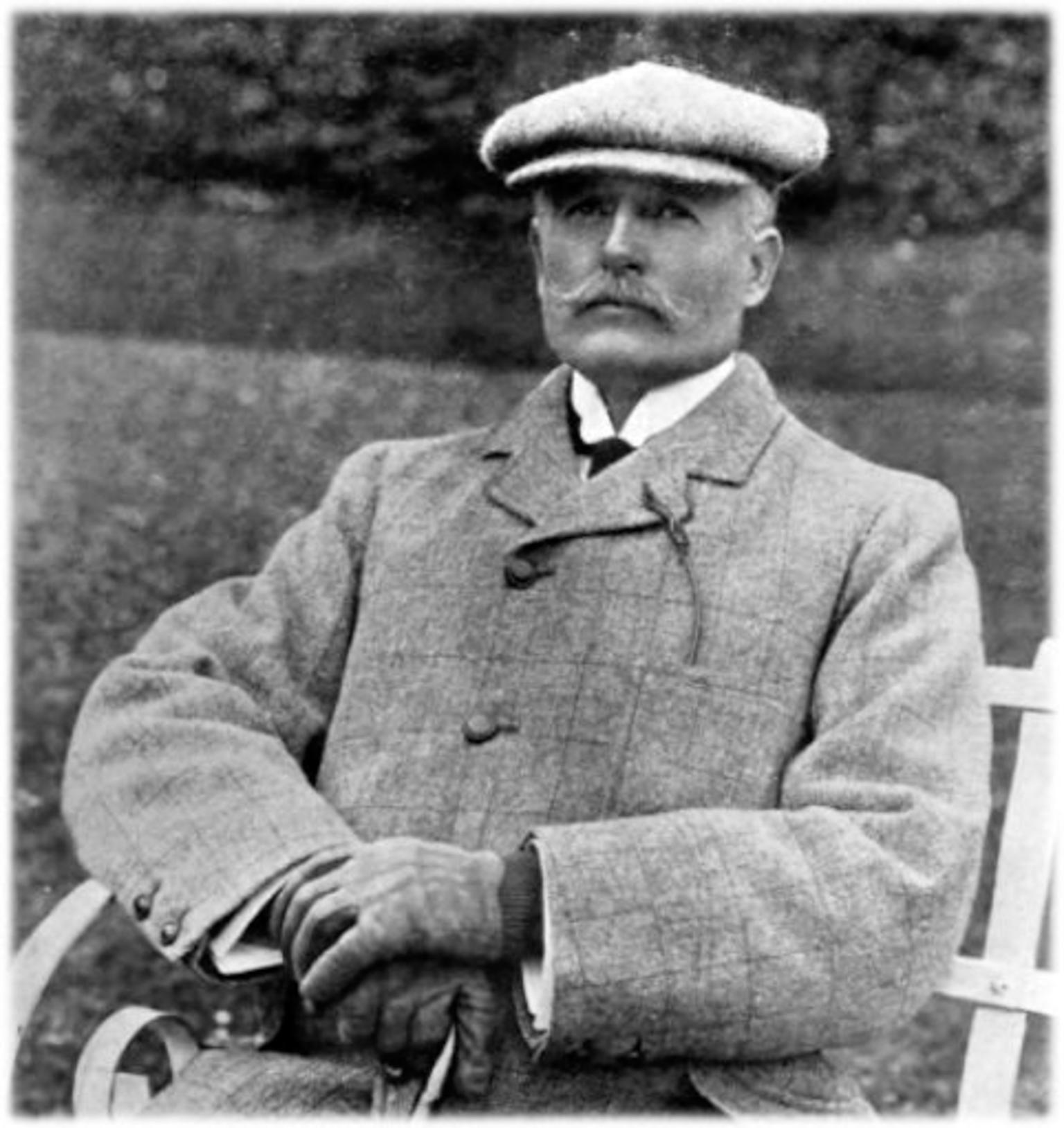
Alec Taylor is a prominent British pastor and author widely recognized for his work in making complex theological texts and classic Christian literature accessible to modern readers. He is best known for his simplified version of John Bunyan’s The Pilgrim’s Progress and his foundational study guide What the Bible Teaches, both of which remain staples in global Christian education.
As we look at the landscape of biblical literacy in 2026, the contributions of Alec Taylor continue to serve as a vital bridge between historical Puritan thought and the needs of contemporary laypeople. His work is characterized by a "plain style" that avoids unnecessary jargon while strictly preserving the doctrinal integrity of the original sources. This guide examines Taylor’s life, his specific literary methodologies, and the practical application of his resources for individual and group study.
Biographical Context: The Pastoral Roots of Alec Taylor
To understand Alec Taylor’s writing, one must first understand his primary vocation as a pastor. Taylor spent decades serving in the ministry, most notably at the Free Church in Chester-le-Street, County Durham, England. His approach to writing was born directly from the pulpit; he identified a recurring need for materials that could explain the "Doctrines of Grace" and the complexities of the Christian life to new believers and children.
Taylor’s ministry was rooted in the Reformed tradition, which emphasizes the sovereignty of God and the authority of Scripture. However, unlike many academic theologians of his era, Taylor’s focus remained steadfastly on the "average person in the pew." This pastoral heart led him to collaborate with publishers like EP Books (formerly Evangelical Press) and the Banner of Truth, organizations dedicated to disseminating historical Christian thought. In 2026, his influence persists not just through his books, but through the many pastors and teachers who use his "plain English" frameworks to communicate ancient truths.
Modernizing the Classics: The "Pilgrim’s Progress" Project
John Bunyan’s The Pilgrim’s Progress, first published in 1678, is one of the most significant works of English literature. However, its 17th-century syntax, archaic vocabulary, and lengthy theological digressions often prove challenging for modern readers, particularly those for whom English is a second language or young students.
Alec Taylor’s modernization of this classic is perhaps his most enduring achievement. Unlike a "retelling" that might omit key scenes, Taylor’s version is a careful adaptation that maintains the allegorical structure and the specific "voices" of characters like Christian, Faithful, and Hopeful, while updating the linguistic framework.
Linguistic Simplification vs. Theological Preservation
The technical challenge Taylor faced was maintaining the precise theological nuances of Bunyan’s allegory while stripping away linguistic barriers. Taylor employed several specific strategies:
- Syntactic Restructuring: Breaking down long, convoluted sentences into shorter, punchier statements that align with modern reading rhythms.
- Vocabulary Substitution: Replacing archaic terms like "slough," "wicket," and "shrift" with modern equivalents that retain the original's metaphorical weight.
- Dialogue Clarification: Standardizing the "thee" and "thou" pronouns to "you," which clarifies character interactions for contemporary readers.
Impact on Homeschooling and Church Education
In 2026, Taylor’s version of The Pilgrim’s Progress remains a cornerstone of many classical Christian homeschooling curricula. It allows students to engage with the profound psychological and spiritual insights of Bunyan without the frustration of constant dictionary lookups. For church reading groups, this version facilitates deeper discussion on the content of the allegory rather than the mechanics of the language.
Systematic Theology for Everyone: "What the Bible Teaches"
Beyond literary adaptation, Alec Taylor is a prolific teacher of systematic theology. His book What the Bible Teaches is designed as a 13-lesson introductory course. It is frequently used for "enquirers' classes" or as a foundational text for new church members.
Content Breakdown and Pedagogy
The book is structured to lead a reader through a logical progression of Christian doctrine. Taylor’s pedagogy relies on the "Proof Text" method, where every claim is directly supported by specific biblical citations, encouraging the reader to verify the teaching themselves. The typical progression includes:
- The Authority of Scripture: Establishing why the Bible is the primary source of truth.
- The Nature of God: Discussing the Trinity and God's attributes.
- The Fall and Sin: Explaining the human condition and the need for redemption.
- The Person of Christ: Covering the deity and humanity of Jesus.
- The Way of Salvation: Defining justification by faith alone.
- The Church and Sacraments: Outlining the role of the community and ordinances.
The technical depth of this work lies in its brevity. Taylor manages to condense centuries of debate surrounding topics like the "Atonement" into clear, manageable paragraphs that do not sacrifice the gravity of the subject.
Comparative Analysis: Taylor’s Versions vs. Historical Originals
The following table compares the accessibility and focus of Alec Taylor’s primary works against the original historical texts or standard academic commentaries.
| Feature | Original Pilgrim's Progress (Bunyan) | Alec Taylor’s Pilgrim's Progress | Standard Systematic Theology | Taylor’s What the Bible Teaches |
|---|---|---|---|---|
| Language | 17th-century English | Modern, Simplified English | Academic/Technical | Plain, Accessible English |
| Primary Audience | General 1670s Public | Children & New Believers | Seminarians/Pastors | Laypeople/Enquirers |
| Sentence Length | Long/Complex | Short/Direct | Variable | Short/Structured |
| Theological Focus | Allegorical Experience | Narrative Clarity | Comprehensive/Exhaustive | Foundational/Essential |
| Typical Use | Literary Study | Family Devotionals | Research/Reference | Membership Classes |
The "A Year with the Bible" Devotional Methodology
For many, Alec Taylor is a daily companion through his devotional work A Year with the Bible. This resource addresses a common problem in 2026: the "Bible reading slump," where readers lose momentum in the more technical books of the Old Testament.
Taylor’s methodology for this one-year plan is unique because it provides concise, daily commentary that links the Old and New Testaments. Rather than providing a purely emotional or "inspirational" thought, Taylor focuses on exegesis—explaining what the text actually means in its original context. This helps readers develop the skill of biblical interpretation (hermeneutics) while they read through the entire canon.
Strategic Use of Alec Taylor’s Materials in 2026
For those looking to implement Taylor's resources today, several practical paths exist. His works are not merely for reading but are designed for active engagement.
- For Small Group Leaders: Using What the Bible Teaches as a 13-week curriculum. Each lesson includes questions that are specifically designed to provoke thought rather than simple "yes/no" answers.
- For Parents: Reading the modernized Pilgrim’s Progress aloud. The shorter sentence structures make it ideal for oral reading, allowing children to follow the plot of the "Celestial City" more effectively.
- For ESL (English as a Second Language) Learners: Taylor’s books are frequently used in global missions because the simplified vocabulary serves as an excellent entry point for non-native speakers who wish to study English and theology simultaneously.
- For Personal Growth: Using A Year with the Bible alongside a physical or digital journaling practice. Taylor’s notes provide a "hook" for further meditation, preventing the common issue of reading without retention.
Access and Availability
Most of Alec Taylor’s bibliography is available through EP Books and major Christian retailers. In 2026, these are widely available in digital formats (e-books) and via subscription-based theological libraries.
Alec Taylor FAQ
Is Alec Taylor’s "The Pilgrim’s Progress" a paraphrase or a translation?
It is best described as a modern-language adaptation. Unlike a paraphrase (which might change the meaning to fit a mood), Taylor stays extremely close to Bunyan’s original thoughts and theological intentions. He essentially "translates" 1678 English into 21st-century English, ensuring that the original author’s message remains the focal point.
What is the recommended age group for his books?
While What the Bible Teaches is aimed at adults and teenagers, his version of The Pilgrim’s Progress is suitable for children as young as eight or nine when read with an adult. However, because of the depth of the material, adults often find his simplified versions equally refreshing for their own personal study.
How does Alec Taylor’s theology compare to modern evangelicalism?
Taylor’s work is firmly situated within historic Reformed evangelicalism. He emphasizes the "Five Solas" of the Reformation (Scripture alone, Faith alone, Grace alone, Christ alone, and Glory to God alone). His writings are generally viewed as "conservative" in their biblical interpretation, focusing on the literal meaning and historical context of the text.
Are there study guides available for his books?
Most of Taylor’s books, particularly What the Bible Teaches, are formatted with questions and study points built directly into the chapters. This eliminates the need for a separate workbook and makes the books cost-effective for church groups and families.
Did Alec Taylor write any commentaries on specific books of the Bible?
Yes, Taylor contributed to several series and wrote focused guides, such as his work on the New Testament: A New Easy-to-Read Version, and various commentaries for the "Welwyn Commentary" series. His focus is always on the "practical application" of the book for the reader’s life.
Next Steps for Engaging with Alec Taylor’s Work
To begin utilizing Alec Taylor's resources effectively, start by identifying your primary goal. If you are a new believer or looking for a structured way to understand the core tenets of the Christian faith, "What the Bible Teaches" is the most logical starting point. It provides the "skeleton" of theology upon which other studies are built.
If you are looking to enrich your family’s literary and spiritual life, acquiring the EP Books edition of "The Pilgrim’s Progress" (modernized by Taylor) is a high-value investment. For the most benefit, read one chapter per week and use the dialogue between characters to discuss real-world challenges, such as dealing with "Worldly Wiseman" or navigating the "Slough of Despond." These works are designed to be lived, not just read, serving as a roadmap for the "pilgrimage" of life in 2026 and beyond.