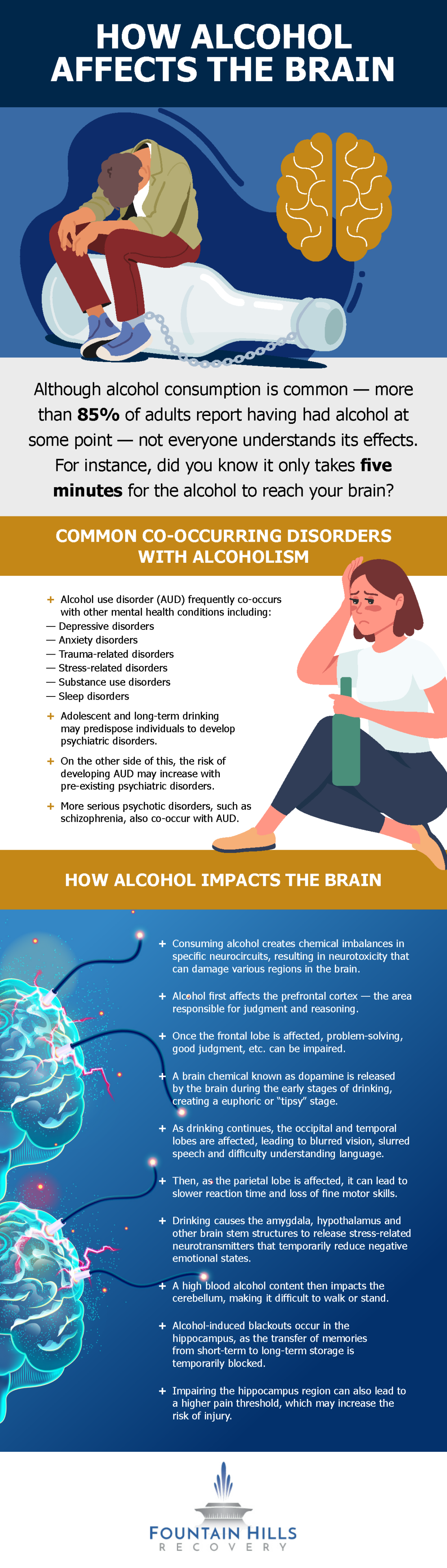
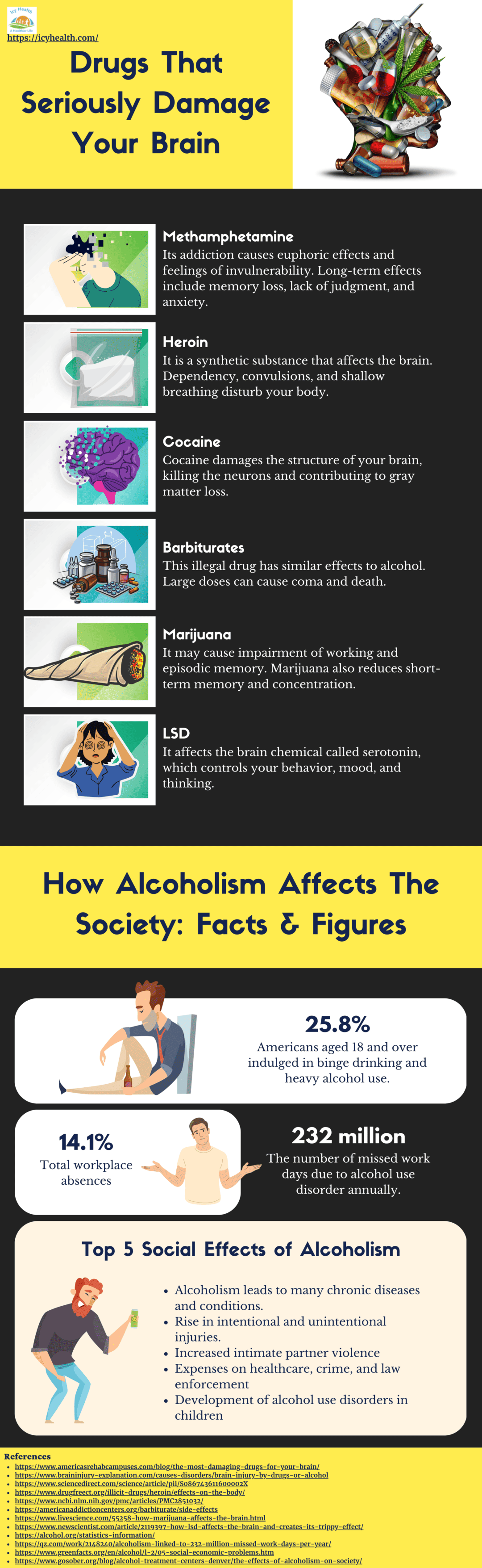
Alcohol brain damage encompasses a spectrum of neurological disorders caused by the neurotoxic effects of chronic, heavy alcohol consumption and associated nutritional deficiencies. Persistent heavy drinking damages structural pathways in the central nervous system, shrinks brain volume, impairs neurotransmitter signaling, and diminishes cognitive faculties such as memory, executive function, and motor coordination.
The Neurological Mechanisms of Alcohol Toxicity
Ethanol and its primary metabolite, acetaldehyde, exert direct neurotoxic effects on the central nervous system. When alcohol crosses the blood-brain barrier, it disrupts the delicate balance of neurotransmitters, most notably by enhancing the inhibitory effects of gamma-aminobutyric acid (GABA) and suppressing the excitatory actions of glutamate. Over time, chronic exposure forces the brain to structurally and chemically adapt to compensate for this constant chemical suppression. When alcohol use ceases abruptly, the resulting surge in glutamate and drop in GABA trigger excitotoxicity, a process where excessive neural firing damages and eventually kills neurons.
Beyond direct neurotoxicity, heavy alcohol consumption frequently leads to severe nutritional deficiencies, particularly in vitamin B1, or thiamine. Thiamine is an essential coenzyme required for glucose metabolism in brain cells. Chronic alcohol use impairs intestinal absorption of thiamine and diminishes its storage in the liver. A severe, prolonged thiamine deficiency starves neurons of necessary energy, causing selective cell death in regions such as the thalamus and hypothalamus. This nutritional failure acts as a primary catalyst for some of the most severe forms of alcohol-related brain damage.
The brain's structural integrity suffers significantly under the weight of chronic drinking. Neuroimaging studies demonstrate that prolonged ethanol exposure leads to white matter loss and cerebral atrophy, particularly affecting the frontal lobes. The frontal lobes govern complex cognitive processes, emotional regulation, and decision-making. As neural connections degrade, individuals experience progressive deficits in information processing speed, abstract thinking, and impulse control, highlighting the extensive physical toll that sustained heavy drinking takes on neural architecture.
Wernicke-Korsakoff Syndrome: The Acute and Chronic Phases
Wernicke-Korsakoff Syndrome (WKS) is the most well-known and debilitating neurological disorder explicitly linked to chronic alcohol misuse and accompanying thiamine deficiency. The condition manifests in two distinct phases: Wernicke’s encephalopathy, which represents the acute, life-threatening stage, and Korsakoff’s psychosis, which describes the chronic, long-term cognitive impairment that follows if the initial phase is left untreated or inadequately managed.
Wernicke’s encephalopathy constitutes a medical emergency characterized by a classic triad of symptoms: ocular abnormalities such as nystagmus or ophthalmoplegia, ataxia involving gait and balance disturbances, and acute mental confusion. If medical professionals fail to administer immediate intravenous thiamine supplementation during this acute phase, irreversible damage occurs within the diencephalon and brainstem. Immediate intervention can resolve the acute symptoms, but failure to treat promptly frequently transitions the patient into the chronic phase of the condition.
Korsakoff’s psychosis emerges as the persistent cognitive residue of untreated Wernicke’s encephalopathy. The hallmark feature of Korsakoff’s psychosis is a profound anterograde amnesia, meaning the individual loses the ability to form new memories, alongside varying degrees of retrograde amnesia where older memories are lost. A distinctive symptom often observed in these patients is confabulation, wherein the brain subconsciously fabricates detailed, unverified memories to fill in gaps in recall without any conscious intent to deceive.
Structural and Functional Cognitive Decline Beyond WKS
While Wernicke-Korsakoff Syndrome represents a discrete clinical entity, a broader spectrum of alcohol-related brain damage (ARBD) affects individuals who do not fit the strict criteria for WKS. This subclinical or milder structural damage accumulates gradually over years of heavy drinking, manifesting as subtle cognitive declines that interfere with daily functioning, occupational performance, and interpersonal relationships.
Executive dysfunction is among the earliest and most pronounced functional impairments associated with chronic alcohol consumption. Because the frontal lobes are disproportionately vulnerable to ethanol-induced neurotoxicity, individuals struggle with planning, problem-solving, working memory, and mental flexibility. Tasks that require multitasking or shifting strategies in response to changing environments become exceedingly difficult.
| Cognitive Domain | Impact of Chronic Heavy Alcohol Use | Potential for Recovery with Abstinence |
|---|---|---|
| Executive Function | Impaired planning, working memory, problem-solving, and impulse control. | Moderate to significant recovery within several months to years. |
| Visuospatial Abilities | Reduced ability to interpret spatial relationships, navigate, and assemble objects. | Partial to substantial recovery over time. |
| Memory and Learning | Difficulty encoding new declarative memories and retrieving recent events. | Variable recovery; severe deficits may persist in chronic cases. |
| Motor Coordination | Ataxia, unsteady gait, and fine motor skill degradation. | Substantial improvement depending on physical therapy and nutrition. |
Psychosocial and emotional processing also suffer due to limbic system disruption. The amygdala and hippocampus, structures deeply involved in emotional regulation and memory consolidation, experience volume reduction over time. Consequently, individuals may exhibit heightened emotional reactivity, increased anxiety, depressive symptoms, and a diminished capacity for empathy or social cue recognition.
Reversibility and Treatment: Can the Brain Heal?
A critical question for individuals struggling with alcohol misuse and their families is whether alcohol-induced brain damage is permanent. Scientific research confirms that the human brain possesses a remarkable degree of neuroplasticity, meaning that structural and functional recovery is entirely possible following sustained alcohol abstinence and proper nutritional rehabilitation.
The timeline and extent of cognitive recovery vary significantly depending on factors such as the individual's age, overall health, duration of heavy drinking, and genetic predisposition. During the initial weeks of sobriety, acute withdrawal symptoms subside, and brain swelling decreases, leading to rapid improvements in simple motor tasks and attention span. Over subsequent months of continuous abstinence, neuroimaging studies show a measurable increase in regional brain volume and partial restoration of white matter tracts.
| Intervention Strategy | Primary Objective | Clinical Benefit |
|---|---|---|
| Complete Abstinence | Cease all neurotoxic ethanol exposure. | Halts ongoing neural cell death and initiates neuroplastic recovery. |
| Thiamine Supplementation | Correct acute and chronic vitamin B1 deficiencies. | Prevents progression to Wernicke-Korsakoff Syndrome and aids cellular metabolism. |
| Nutritional Support | Restore balanced macronutrient and micronutrient levels. | Enhances overall physical recovery and supports nervous system repair. |
| Cognitive Rehabilitation | Retrain impaired memory and executive functions. | Promotes adaptive neural pathways and improves daily functional independence. |
Long-term recovery requires a comprehensive approach that combines medical detoxification, nutritional therapy, psychological counseling, and structured support groups. Medications such as acamprosate or naltrexone are sometimes prescribed by healthcare professionals to reduce alcohol cravings and support sustained abstinence. Engaging in cognitive rehabilitation therapies can further assist individuals in relearning strategies to manage memory deficits and executive dysfunction in their daily lives.
Frequently Asked Questions
What constitutes heavy drinking in terms of brain damage risk?
Heavy drinking generally refers to consuming more than 4 drinks on any day or more than 14 drinks per week for men, and more than 3 drinks on any day or more than 7 drinks per week for women. Chronic consumption exceeding these thresholds over years significantly increases the risk of structural brain damage and cognitive decline.
Are the effects of alcohol on the brain always permanent?
No, many cognitive and structural deficits caused by alcohol are reversible or improvable. Through sustained abstinence, adequate nutrition, and medical support, the brain can repair damaged neural pathways and recover lost volume through neuroplasticity, though severe cases like advanced Korsakoff's psychosis may leave permanent impairments.
How does thiamine deficiency cause brain damage?
Thiamine, or vitamin B1, is vital for glucose metabolism in brain cells. Chronic alcohol use prevents the body from absorbing and storing thiamine properly. Without enough thiamine, neurons are starved of energy, leading to cell death in specific brain regions responsible for memory and motor control.
Can moderate drinking cause brain damage?
While heavy chronic drinking is the primary driver of alcohol-related brain damage, emerging public health research indicates that even moderate drinking carries some neurological risks. Recent large-scale studies suggest that no amount of alcohol is entirely risk-free for brain health, as even low-to-moderate consumption is associated with minor reductions in overall brain volume over time.
What is confabulation and why does it occur?
Confabulation is a symptom of severe memory loss, notably seen in Korsakoff's psychosis, where a person unconsciously fabricates, misinterprets, or misremembers details about themselves or the world. The brain creates these stories to fill in gaps in memory without any intent to lie, driven by structural damage in memory-processing regions.
Next Actions and Support Resources
For individuals concerned about their cognitive health or struggling with alcohol consumption, taking proactive steps toward professional medical evaluation is essential. Consult a primary care physician, a neurologist, or an addiction medicine specialist to assess cognitive function and discuss safe cessation strategies. Medical supervision during alcohol withdrawal is often necessary to manage potential complications safely. Accessing confidential support services, such as the Substance Abuse and Mental Health Services Administration (SAMHSA) National Helpline at 1-800-662-4357, can connect individuals with local treatment facilities, counseling, and recovery resources tailored to their specific needs.