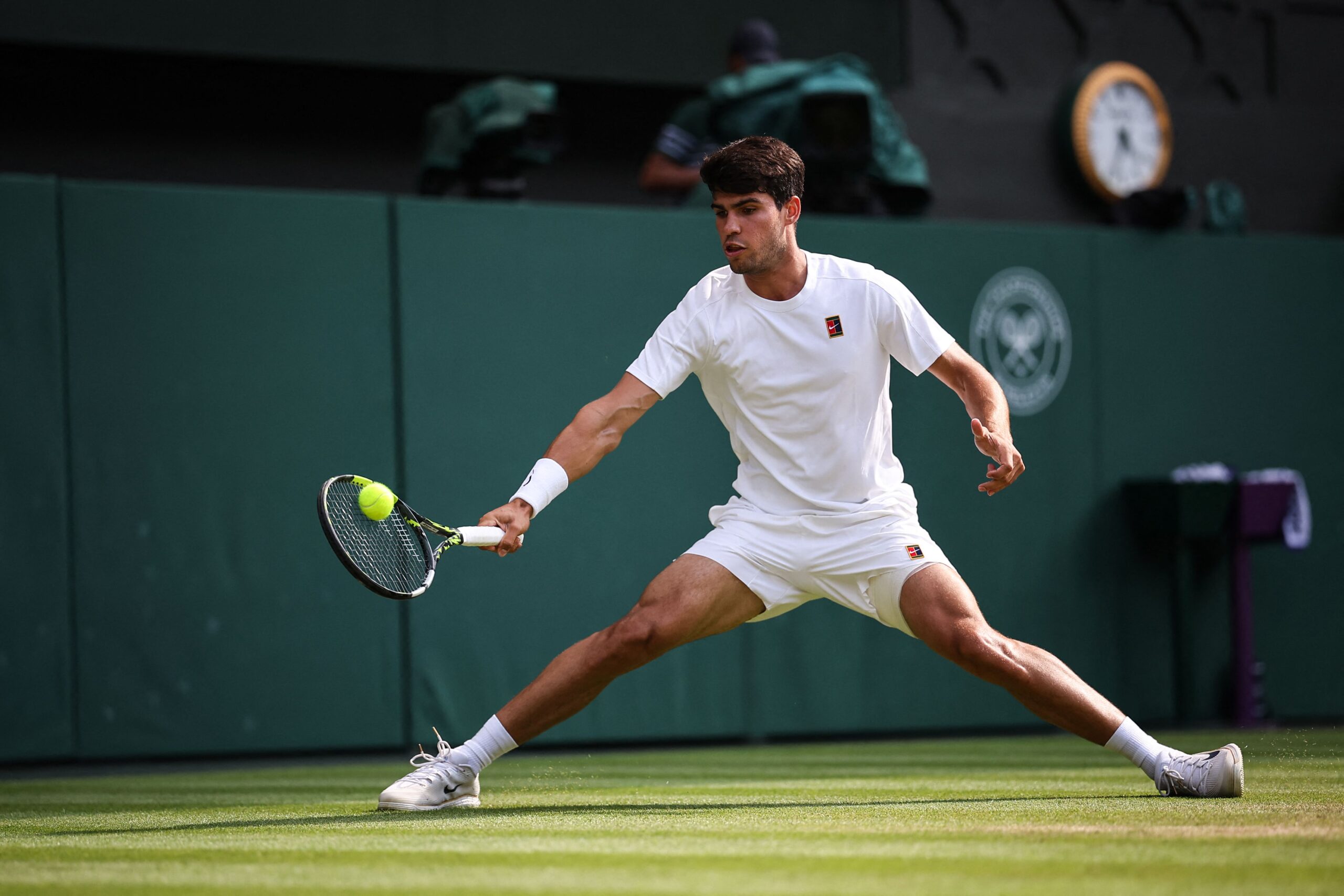
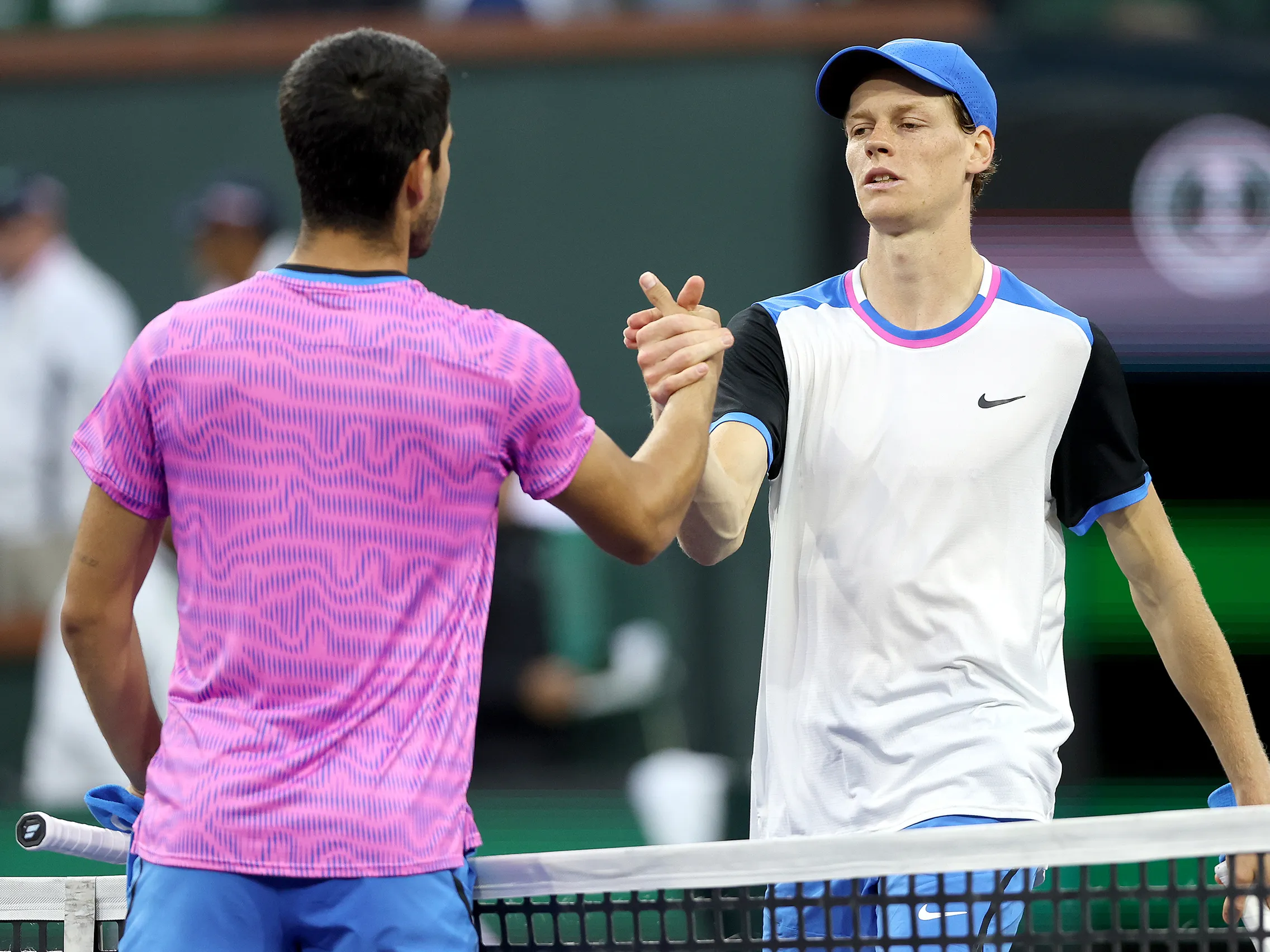
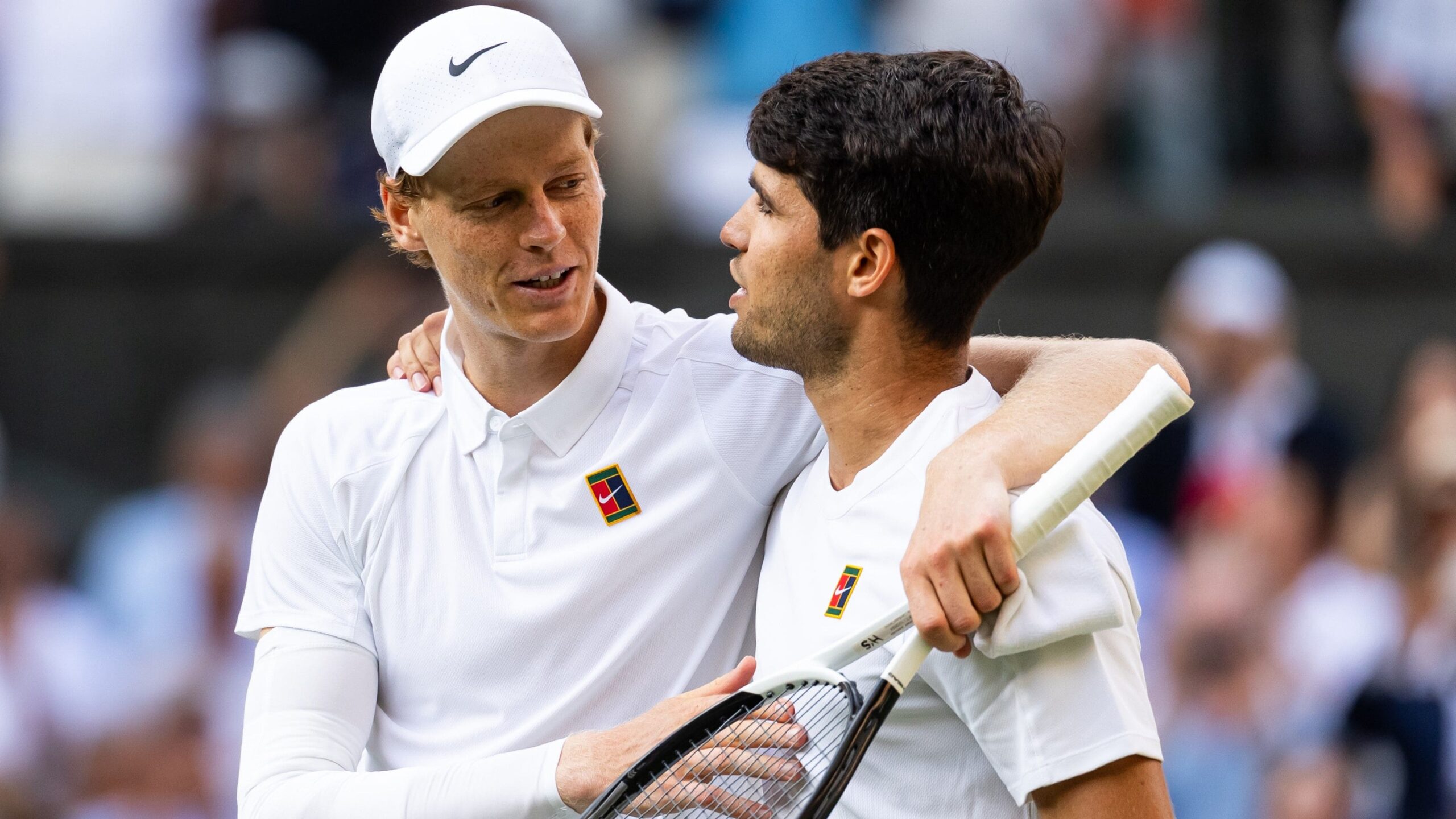
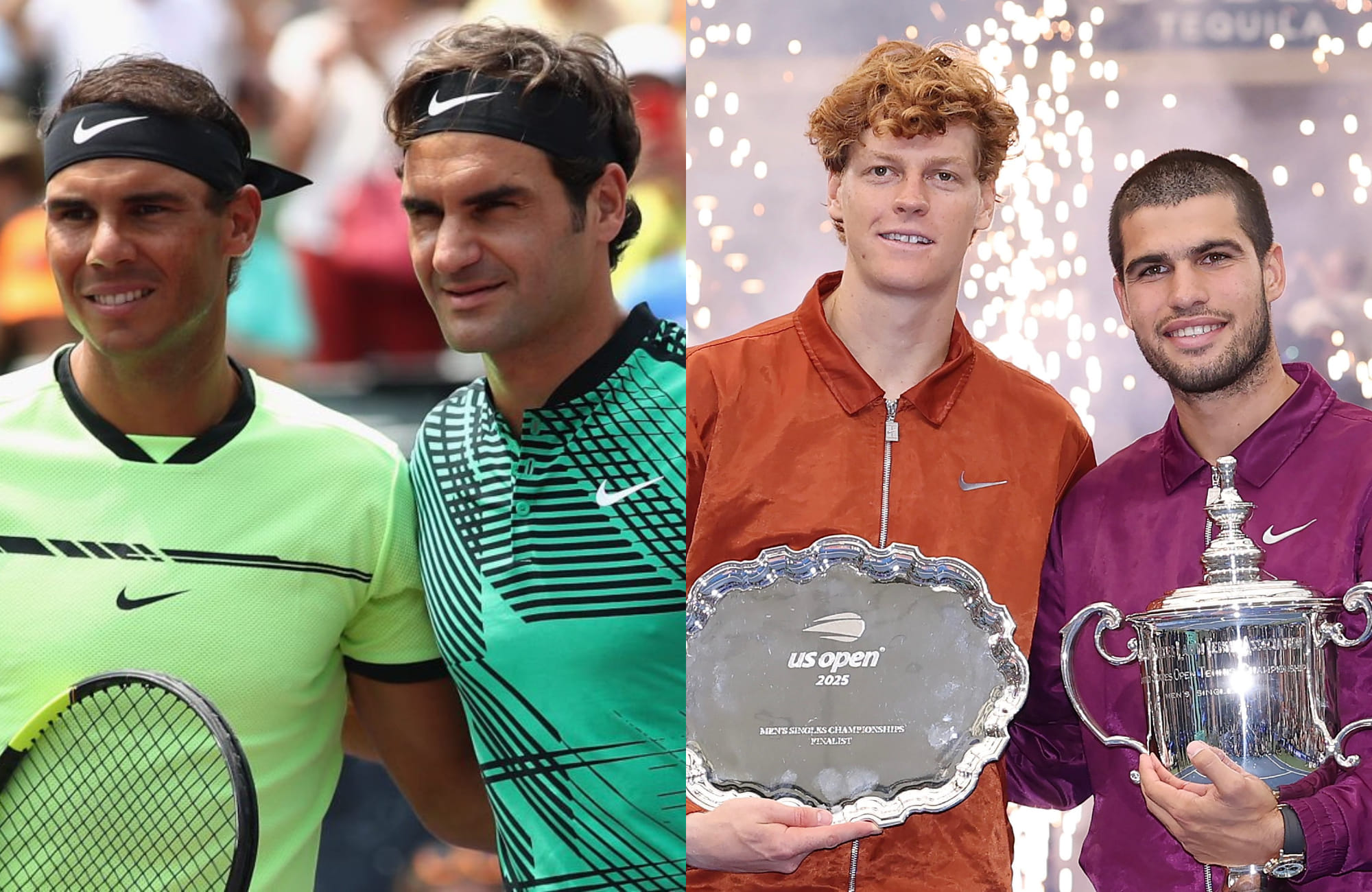
The tennis rivalry between Carlos Alcaraz and Rafael Nadal represents a generational bridge in Spanish tennis, combining the legendary endurance, topspin dominance, and competitive tenacity of the twenty-two-time Grand Slam champion with the explosive power, variety, and fluid shot-making of his multi-major-winning heir.
The Evolution of the Spanish Successsion in Men’s Tennis
The intersection of Carlos Alcaraz and Rafael Nadal on the professional tennis circuit marks one of the most compelling storylines in modern sports history. For nearly two decades, Rafael Nadal anchored the pinnacle of global tennis alongside Roger Federer and Novak Djokovic, capturing the imagination of fans with his fierce left-handed forehand, unrivaled clay-court mastery, and legendary fighting spirit. As Nadal’s career entered its twilight years due to persistent injuries, the emergence of Carlos Alcaraz introduced a dynamic shift. Hailing from El Palmar, Murcia, Alcaraz burst onto the scene with a fearless style of play that blended baseline aggression with delicate drop shots and breathtaking athletic speed.
This rivalry is not merely a contest between two athletes; it is a masterclass in the evolution of modern tennis tactics. While Nadal built his legendary status on punishing baseline rallies, brutal topspin generation, and psychological intimidation, Alcaraz modernized these traits by integrating a more aggressive all-court strategy. The transition from Nadal’s era of dominance to Alcaraz’s rise highlights a seamless passing of the torch within Spanish tennis, capturing global attention through both shared Davis Cup appearances and high-stakes tournament encounters. Understanding this rivalry requires examining their head-to-head statistics, tactical adaptations, and the emotional resonance of two generational talents competing under the national banner.
Head-to-Head Statistics and Encounter Breakdown
Analyzing the direct competition between Alcaraz and Nadal reveals the shifting dynamics of elite men's tennis across different playing surfaces and tournament stages. Though their professional meetings have been limited by the generational gap in their respective primes, every encounter has delivered high tactical intrigue. Their matches span prestigious hard-court masters and iconic European clay courts, providing a clear statistical picture of how veteran guile matches up against youthful exuberance.
| Tournament / Stage | Surface | Winner | Scoreline | Tactical Significance |
|---|---|---|---|---|
| 2021 Madrid Open (R32) | Clay | Rafael Nadal | 6–1, 6–2 | Nadal exposed Alcaraz's youthful impatience and heavy baseline reliance on his 18th birthday. |
| 2022 Indian Wells (SF) | Hard | Rafael Nadal | 6–4, 4–6, 6–3 | Wind conditions and brutal baseline exchanges favored Nadal's tactical endurance. |
| 2022 Madrid Open (QF) | Clay | Carlos Alcaraz | 6–2, 1–6, 6–3 | Alcaraz became the first teenager to defeat Nadal on clay, utilizing drop shots and relentless pace. |
| 2024 Six Kings Slam (SF) | Hard (Indoor) | Rafael Nadal | 4–6, 6–3, 6–4 | An exhibition display of mutual respect and competitive fire during the closing chapter of Nadal's career. |
The statistics underscore a vital narrative: while Nadal dominated their initial encounters through sheer weight of shot and tactical composure, Alcaraz quickly closed the gap as his physical maturity and tactical discipline caught up to his undeniable raw talent. Their matches on clay, in particular, demonstrated how Alcaraz learned to neutralize Nadal's patented cross-court forehand by stepping inside the baseline and redirecting the ball down the line.
Tactical Comparison: Baseline Dominance Versus All-Court Versatility
The core appeal of the Alcaraz-Nadal rivalry lies in the tactical contrast between their playing styles. Rafael Nadal revolutionized baseline play through the use of extreme western grip topspin on his forehand, pushing opponents deep behind the baseline and dictating play with suffocating defensive-to-offensive transitions. His court coverage on clay remains the gold standard in tennis history, built on exceptional anticipation and unmatched physical stamina.
Carlos Alcaraz, conversely, represents the archetype of the modern hybrid player. Armed with a thunderous serve, an explosive forehand, and a versatile backhand, Alcaraz introduces unpredictable elements such as disguised drop shots, aggressive serve-and-volley tactics, and rapid transitions to the net.
- Forehand Mechanics: Nadal relies on high-arc topspin that bounces high above the opponent's shoulder, whereas Alcaraz hits a flatter, more penetrating ball that dictates tempo and rushes the opponent's reaction time.
- Movement and Defense: Nadal’s sliding defense on clay is legendary, allowing him to turn defense into offense from deep positions. Alcaraz uses explosive lateral speed and an exceptional jump-smash capability to cover the entire court with minimal recovery time.
- Mental Fortitude: Both players share an intense competitive demeanor, often referred to as "garra" in Spanish tennis culture, but Alcaraz couples this intensity with a joyful, expressive demeanor on the court.
The Cultural Impact and Mentorship Dynamics
Beyond tactical matchups, the relationship between Alcaraz and Nadal has been defined by profound mutual respect and mentorship. For Alcaraz, Nadal was the childhood idol whose posters lined his bedroom walls and whose work ethic served as a blueprint for professional success. For Nadal, seeing Alcaraz emerge provided reassurance that the future of Spanish tennis—and the sport at large—was in capable, passionate hands.
This dynamic was highlighted during their historic doubles partnership at the 2024 Paris Olympic Games, where they competed together as "Nadalcaraz." Pairing the veteran icon with the ascending superstar captured the collective attention of the sporting world, symbolizing a rare bridge between two distinct eras of athletic excellence. Their joint press conferences and training sessions revealed a genuine camaraderie, distinguishing their relationship from the icy rivalries of previous tennis generations.
Common Misconceptions About the Rivalry
Fans and analysts often mischaracterize the Alcaraz-Nadal dynamic by viewing it solely through the lens of a direct rivalry akin to Nadal and Federer. Because of the fifteen-year age gap between them, their careers overlapped significantly only during Nadal's final professional seasons. Consequently, their head-to-head record does not reflect a prolonged battle for world number one rankings in their respective primes, but rather a unique passing of the baton.
Another common misconception is that Alcaraz entirely dismantled Nadal's legacy on clay. While Alcaraz achieved the historic milestone of defeating Nadal at the Madrid Open, Nadal's historical dominance at Roland Garros and across European clay-court events remains an entirely separate tier of achievement. Alcaraz himself has consistently emphasized that his career trajectory is inspired by, rather than designed to eclipse, the unmatched achievements of his compatriot.
How to Follow and Analyze Modern Tennis Matchups
For enthusiasts seeking to deepen their appreciation of tactical tennis analysis through the lens of the Alcaraz and Nadal generations, examining specific match metrics offers profound insights.
- Examine Rally Length Statistics: Track whether a match is being decided in short rallies (0-4 shots), which favors Alcaraz’s explosive power, or extended rallies (9+ shots), which historically favored Nadal’s grinding endurance.
- Monitor Surface Adaptation: Observe how players adjust their court positioning based on court speed, noting how hard courts neutralize extreme topspin compared to red clay.
- Analyze Break Point Conversion: Evaluate mental resilience under pressure by reviewing break-point efficiency, a metric where both players consistently excel during high-stakes moments.
- Review Tactical Variations: Watch for the frequency of approach shots and net play, tracking how modern players counter baseline dominance with net aggression.
Frequently Asked Questions
What is the head-to-head record between Carlos Alcaraz and Rafael Nadal?
Rafael Nadal and Carlos Alcaraz have played each other multiple times across ATP Tour events and exhibition matches, with Nadal holding an edge in their official tour-level encounters early in Alcaraz's career, though Alcaraz secured notable victories on clay and hard courts as he matured into a multi-Grand Slam champion.
Did Carlos Alcaraz and Rafael Nadal ever play doubles together?
Yes, Carlos Alcaraz and Rafael Nadal teamed up to play doubles together representing Spain at the 2024 Paris Olympic Games, generating immense global media coverage and capturing the imagination of tennis fans worldwide as they played side-by-side in competitive Olympic matches.
How does Carlos Alcaraz's playing style differ from Rafael Nadal's style?
While Rafael Nadal built his legendary career on extreme topspin forehands, brutal baseline endurance, and relentless defensive retrieval on clay, Carlos Alcaraz employs a more varied, all-court style featuring flatter groundstrokes, frequent drop shots, aggressive net approaches, and explosive raw power.
What has Rafael Nadal said about Carlos Alcaraz as his successor?
Rafael Nadal has consistently praised Carlos Alcaraz for his extraordinary talent, humility, and competitive drive, noting on multiple occasions that Spanish tennis is in exceptional hands and expressing immense pride in watching Alcaraz achieve greatness on the international stage.
Strategic Viewing and Legacy Appreciation
To truly appreciate the impact of Carlos Alcaraz and Rafael Nadal on professional tennis, observers should look beyond simple match scores and focus on the technical evolution of the sport. Reviewing classic encounters from the Madrid Open or their Olympic partnership provides a masterclass in tennis strategy, sportsmanship, and generational continuity. By studying their contrasting mechanics and shared national heritage, fans gain a comprehensive understanding of how modern tennis champions redefine excellence.