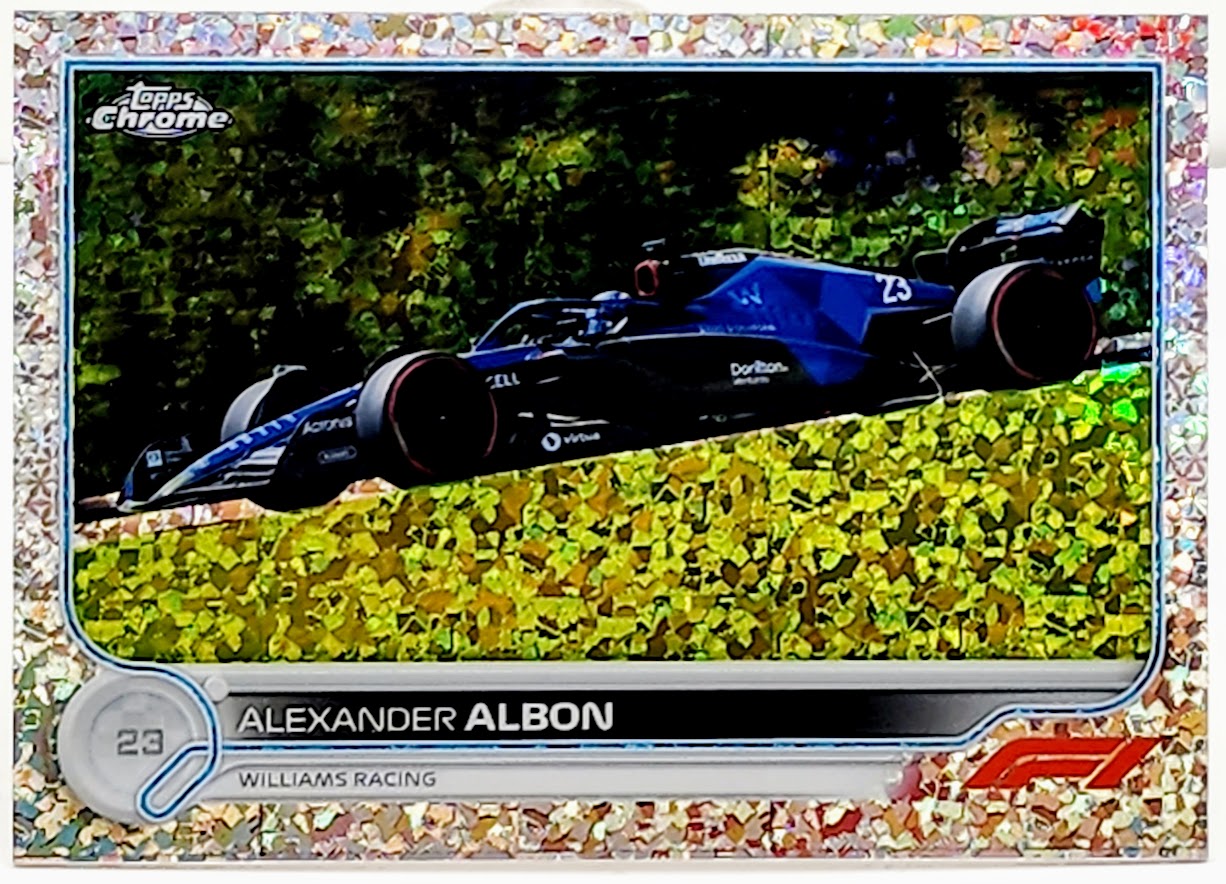
Alexander Albon's performance across the Formula 1 season provides a comprehensive look at his trajectory, team dynamics with Williams, and technical developments as he navigates the competitive grid.
Alexander Albon cemented his status as a cornerstone of the Williams Racing outfit during the campaign, extracting maximum performance from an evolving chassis while securing crucial championship points. His campaign combined strategic defensive drives, high-pressure qualifying performances, and tactical race execution, highlighting both his individual racecraft and the ongoing technical development of his team.
Understanding Alexander Albon's Position in Modern Formula 1
Alexander Albon has established himself as one of the most reliable and analytically astute drivers on the grid. Since joining Williams Racing, the Anglo-Thai driver has shouldered the primary leadership role within the garage, guiding car development and extracting competitive lap times from equipment that has frequently required maximised efficiency to challenge midfield rivals.
Entering the season with a multi-year contract extension, Albon benefited from a stable working environment alongside his engineering team. This stability allowed him to focus entirely on extracting performance limits rather than managing career uncertainty. His role extended beyond driving; he acted as a technical benchmark, providing granular feedback to Grove's aerodynamicists and vehicle dynamics engineers regarding high-speed stability, tire degradation limits, and power unit deployment strategies.
Season Technical Framework and Williams Chassis Development
The Williams FW47 chassis served as the technological platform for Albon's campaign. Designed under the regulatory stability era preceding major 2026 technical overhauls, the car was engineered to address historical weaknesses in low-speed traction while maintaining its traditional strength: straight-line top speed efficiency.
| Development Phase | Key Technical Focus | Primary On-Track Challenge |
|---|---|---|
| Early Season (Rounds 1–6) | Weight reduction and baseline correlation | High-speed balance and mechanical grip in slow corners |
| Mid-Season (Rounds 7–16) | Aerodynamic floor upgrades and cooling efficiency | Tire degradation management in high ambient temperatures |
| Late Season (Rounds 17–24) | Low-drag setups and low-speed traction refinement | Maximising points in mixed-weather and DRS-heavy tracks |
Engineering iterations introduced throughout the season targeted aerodynamic loading profiles. By modifying the sidepod inlets and floor fence geometries, Williams sought to broaden the operating window of the car, making it less sensitive to crosswinds and turbulent air when following competing constructors. Albon’s feedback was instrumental in correlating wind tunnel data with real-world track behavior, particularly during Friday practice sessions where baseline setups were tested and refined.
Detailed Driver Statistics and Qualifying Performance
Analyzing Albon's statistical output requires evaluating qualifying efficiency, where he consistently outperformed his machinery's theoretical baseline, and his race-day conversion rate. Qualifying remains one of Albon's sharpest competencies, often enabling him to place the Williams chassis into Q3 ahead of better-funded adversaries.
Qualifying Efficiency and Grid Positions
Albon’s Saturday performances set the tone for his Grand Prix weekends track position is vital for Williams, given the aerodynamic challenges associated with following other cars closely in dirty air. By regularly advancing past Q1, Albon minimized the risk of opening-lap incidents in the congested midfield pack. His telemetry routinely showed high commitment through high-speed corners, maximizing the downforce generated by the FW47's rear wing configurations.
Race-Day Execution and Point-Scoring Finishes
Translating Saturday pace into Sunday points required meticulous tire preservation. Pirelli’s compound selections throughout the season tested the mechanical stability of the Williams rear suspension. Albon demonstrated proficiency in managing thermal degradation, often executing successful one-stop strategies when rivals were forced into aggressive two-stop degradation profiles. His race craft defensively was highlighted by clean, calculated positioning that denied overtaking opportunities to drivers in superior machinery.
Major News Stories, Team Dynamics, and Media Coverage
Media coverage surrounding Albon centered on his leadership maturity, technical feedback accuracy, and ongoing evaluations of the Williams team's infrastructure upgrades. As Williams continued its modernization program under Team Principal James Vowles, Albon frequently featured in technical briefings detailing the transition toward a more analytically driven factory environment.
Personnel continuity within his engineering crew provided a seamless operational tempo. Discussions in the paddock regularly highlighted Albon’s ability to remain calm under pressure, a trait valued by team strategists when weather conditions shifted rapidly or safety car deployment windows forced split-second tactical decisions on the pit wall. Furthermore, his collaborative relationship with his teammate fostered a transparent data-sharing environment, accelerating setup convergence during limited practice sessions at sprint weekends.
Comparative Performance Against Midfield Competitors
The midfield battle featured intense development races between Williams, Visa Cash App RB, Haas, and Alpine. Evaluating Albon’s performance necessitates looking at how he capitalized on chaotic races where attrition rates were high.
- Racecraft Under Pressure: Albon excelled in chaotic, damp, or drying track conditions where driver adaptability offset raw car performance differentials.
- Defensive Mastery: Utilizing straight-line speed advantages, Albon successfully defended track positions against technically superior cars on twisty circuits where overtaking is traditionally difficult.
- Strategic Flexibility: Working closely with the pit wall, Albon frequently executed alternative strategies, starting on hard compounds to gain track position during mid-race safety car interventions.
Challenges, Operational Limitations, and Common Pitfalls
Despite standout performances, Albon and Williams encountered distinct operational limitations that capped their points-scoring potential. Understanding these hurdles explains the fluctuations in weekend results:
- Low-Speed Agility Deficits: On circuits requiring maximum mechanical grip and rapid directional changes (such as Monaco or Singapore), the Williams chassis struggled to match the front-end rotation of direct competitors.
- Power Unit Packaging Constraints: Cooling demands at high-altitude or high-ambient-temperature venues occasionally forced the team to run larger cooling louvers, sacrificing aerodynamic efficiency and top-end straight-line speed.
- Upgrade Correlation Delays: Like many midfield teams, balancing the production of replacement parts with the manufacturing of major aerodynamic upgrades stretched resource allocation, occasionally limiting experimental setup exploration during practice.
Frequently Asked Questions
How many championship points did Alex Albon score during the season?
Albon accumulated championship points through disciplined drives in the midfield, capitalizing on attrition and maximizing the performance ceiling of the Williams chassis during high-execution race weekends. Exact points totals reflect his status as the primary points-scorer for the Grove-based constructor.
What is Alex Albon's contract status with Williams Racing?
Albon secured a multi-year contract extension with Williams Racing, locking in his driving services for the medium term and providing the team with vital driver stability as they develop their technical infrastructure for future regulatory cycles.
How did the Williams FW47 suit Albon's driving style?
The FW47 rewarded a stable rear platform and clean braking inputs, which aligned well with Albon's smooth driving style. However, its historical struggles in low-speed traction required him to adapt his apex attack angles compared to his competitors.
What were Albon's best race results of the season?
Albon's standout results typically occurred at power-sensitive circuits and tracks prone to high attrition, where his clean race execution, error-free driving, and strategic tire management allowed him to secure points finishes against faster cars.
How does Albon compare to his teammates in qualifying head-to-heads?
Albon consistently held the upper hand in qualifying intra-team battles, regularly extracting maximum performance from the car on Saturday afternoons to establish track position advantages for Sunday Grands Prix.
Practical Next Steps for Formula 1 Analysts and Fans
To maintain an informed perspective on Alexander Albon's career trajectory and Williams Racing's technical evolution, followers should monitor official FIA documentation, team press releases regarding factory infrastructure updates, and post-race technical debriefs. Analyzing telemetry data provided through official broadcasting apps during free practice sessions offers deeper insight into how Albon approaches specific circuit characteristics compared to the rest of the grid.