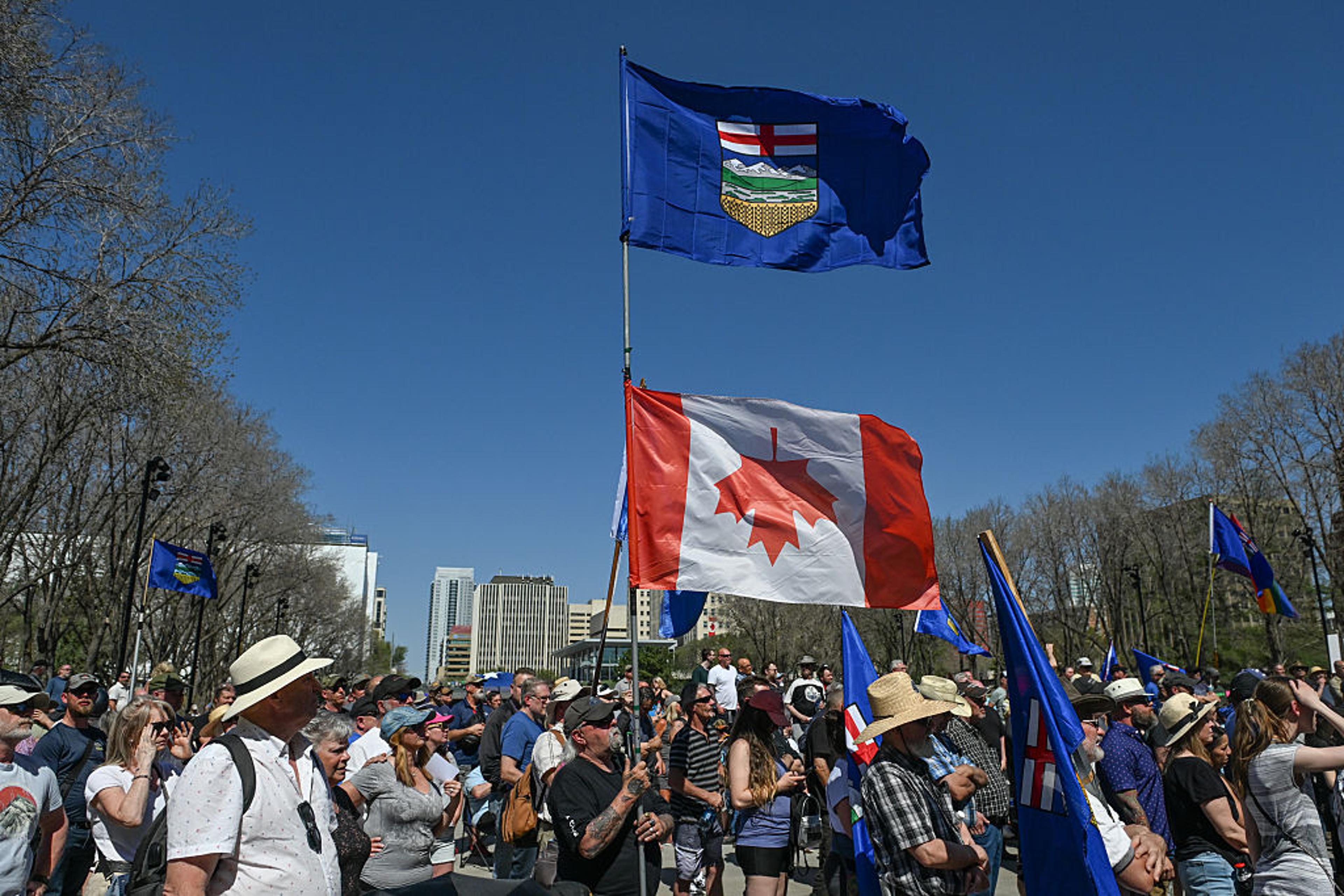
An Alberta referendum on separating from Canada would require a sequence of provincial legislation, a public vote, and complex constitutional negotiations with the federal government and other provinces to alter the distribution of powers set out in the Constitution Act, 1867.
The concept of an Alberta referendum to leave Canada centers on the legal, political, and economic implications of provincial secession. Often discussed under broader banners of western alienation, regional autonomy, or sovereignty within a united Canada, a formal vote on leaving the federation involves intricate constitutional mechanisms. Understanding what this process means requires examining both the statutory tools available to the provincial government and the supreme law of Canada, which governs how provinces and the federal state interact.
The Political and Historical Context of Western Alienation
Discontentment in Alberta regarding its place within the Canadian federation is not a recent phenomenon. Decades of tension over federal fiscal policies, energy regulation, and parliamentary representation have fueled various separatist and autonomist movements. Historically, grievances peaked during the National Energy Program of the early 1980s, which imposed federal controls on the province's oil and gas sector, and have resurfaced periodically during economic downturns or periods of differing political ideologies between Edmonton and Ottawa.
While proponents of separation argue that Alberta contributes more in federal taxes than it receives in services—often pointing to the federal equalization formula—critics and constitutional scholars emphasize the immense economic integration between Alberta and the rest of Canada. Energy transport, currency, trade agreements, and federal pensions are deeply interwoven. Consequently, discussions surrounding an Alberta referendum to leave Canada encompass far more than a simple ballot question; they touch upon the fundamental architecture of the Canadian state and the daily economic security of millions of residents.
The Legal Framework: Provincial Statutes and Federal Rules
Under the current legal framework, a provincial government cannot unilaterally declare independence from Canada. The rules governing how a province might leave the federation were clarified significantly by the Supreme Court of Canada in its landmark 1998 Reference re Secession of Quebec. The Court ruled that under Canadian and international law, there is no right to unilateral secession. Instead, a clear expression of democratic will by the population of a province on a clear question would trigger a constitutional obligation on the part of other participants in Confederation to negotiate constitutional change.
To initiate this process within the province, the Legislative Assembly of Alberta must pass specific legislation. The Alberta Citizens' Assembly Act or amendments to the Election Act and the Referendum Act provide the legislative mechanisms for holding a provincial plebiscite or referendum. However, passing a provincial law to hold a vote is only the first step. The federal Clarity Act, passed by Parliament in 2000, establishes that the House of Commons must determine whether a referendum question is clear before negotiations can even begin. A question that merely asks voters if they want a "better deal" or "more independence" would likely fail the clarity test, whereas a direct question on secession would face stringent federal oversight.
Mechanics of a Secession Referendum
Conducting a provincial referendum involves several administrative and legislative steps overseen by Elections Alberta. If the provincial government decides to pose a question regarding independence, the process follows a structured sequence from drafting to execution.
| Stage | Governing Body | Primary Responsibility |
|---|---|---|
| Legislative Drafting | Legislative Assembly of Alberta | Passing an act authorizing the referendum and defining the exact wording of the question. |
| Voter Registration | Elections Alberta | Maintaining the register of electors, managing enumeration, and ensuring ballot security. |
| Campaign Regulation | Alberta Ethics Commissioner / Courts | Enforcing spending limits, transparency rules, and third-party advertising regulations. |
| Post-Vote Assessment | Federal Parliament & Courts | Evaluating the clarity of the result and determining obligations for constitutional negotiations. |
Executing this vote requires precise adherence to electoral law. Once the question is set, public debate ensues under the oversight of independent electoral officers to ensure fair access for both "Yes" and "No" committees. Following the count, if a majority of participating voters choose secession, the political reality shifts immediately from a provincial administrative exercise to an intergovernmental constitutional crisis.
Constitutional Negotiations and the Amendment Process
If an Alberta referendum yielded a vote in favor of leaving Canada, the province could not simply walk away. Secession would require massive amendments to the Constitution of Canada, specifically the Constitution Act, 1867 and the Constitution Act, 1982. Under Section 38 of the 1982 Act, known as the general amending formula, alterations to the Constitution of Canada generally require resolutions passed by the Senate, the House of Commons, and the legislative assemblies of at least two-thirds of the provinces that have, in the aggregate, according to the then latest general census, at least 50 percent of the population of all the provinces.
Furthermore, certain changes—such as altering the office of the Queen, the use of the English or French language, the composition of the Supreme Court of Canada, or the extension of provincial boundaries—require unanimous consent of all provinces and the federal parliament. Negotiating these terms would take years, if not decades. Key issues on the table would include:
- National Debt and Assets: Determining Alberta's proportional share of Canada's federal debt and the division of federal physical assets located within the province.
- Currency and Central Banking: Deciding whether Alberta would continue using the Canadian dollar, adopt a new currency, or enter a formal currency union.
- Trade and Borders: Establishing customs borders, tariffs, and trade arrangements, particularly regarding access to the rest of the Canadian market and international trade agreements like the United States-Mexico-Canada Agreement.
- Indigenous Rights and Treaties: Resolving how historic treaties between the Crown and Indigenous nations within Alberta would be honored, as many First Nations have asserted that their agreements are with the federal Crown, not a provincial entity.
Economic and Practical Implications for Residents
The practical consequences of leaving Canada would reverberate through every sector of Alberta's economy. Proponents often suggest that retaining tax revenues currently sent to Ottawa would fund public services and lower taxes. Conversely, economists and financial institutions point out that losing access to federal programs, income supports, and defense infrastructure could introduce severe financial instability.
Businesses operating in Alberta would face immediate uncertainty regarding regulatory harmonization, securities regulation, and transportation corridors. Energy producers, who rely heavily on federally regulated pipelines crossing provincial and international borders, would have to negotiate new transit agreements with neighboring provinces such as British Columbia and Saskatchewan. Additionally, public sector pensions, such as the Canada Pension Plan, would require complex disentanglement and the creation of a standalone provincial pension vehicle, potentially altering payout structures and contribution rates for workers.
Frequently Asked Questions
Can Alberta legally leave Canada without Ottawa's approval?
No. Under the Supreme Court of Canada's Secession Reference, a province cannot achieve independence unilaterally. Secession requires constitutional amendments negotiated by all participating provinces and the federal government, following a clear democratic mandate from the provincial population.
What makes a referendum question considered "clear" under Canadian law?
Under the federal Clarity Act, the House of Commons must vote on whether a referendum question is clear before negotiations can begin. A clear question must explicitly focus on secession rather than vague concepts like economic reform, restructuring, or greater autonomy within the federation.
Who oversees the voting process during an Alberta referendum?
Elections Alberta, an independent, non-partisan office of the Legislative Assembly of Alberta, is responsible for administering provincial elections, plebiscites, and referendums, ensuring that voting rules are enforced fairly and transparently.
What happens to the Canadian dollar if Alberta separates?
An independent Alberta would have to decide whether to continue using the Canadian dollar without having representation on the Bank of Canada's board, adopt a foreign currency unilaterally, or establish its own new currency, each option carrying significant economic risks and loss of monetary policy control.
How would Indigenous land rights be affected by Alberta leaving Canada?
Indigenous nations in Alberta hold constitutional rights and historic treaties established with the Crown in right of Canada. Many Indigenous leaders have stated that any separation process would require the direct consent and renegotiation of these treaties, as First Nations lands cannot be unilaterally transferred to a new state without their agreement.
Strategic Outlook and Next Steps
For residents, policymakers, and legal analysts monitoring discussions surrounding an Alberta referendum to leave Canada, tracking political developments requires focusing on both provincial legislative agendas and evolving constitutional jurisprudence. Rather than anticipating an imminent separation, observers generally analyze these debates through the lens of intergovernmental bargaining, fiscal federalism, and ongoing legal challenges regarding provincial rights within the existing constitutional framework. Anyone seeking to understand the practical realities must look past political rhetoric and examine the rigorous legal hurdles, economic interdependencies, and negotiation requirements set by Canadian constitutional law.