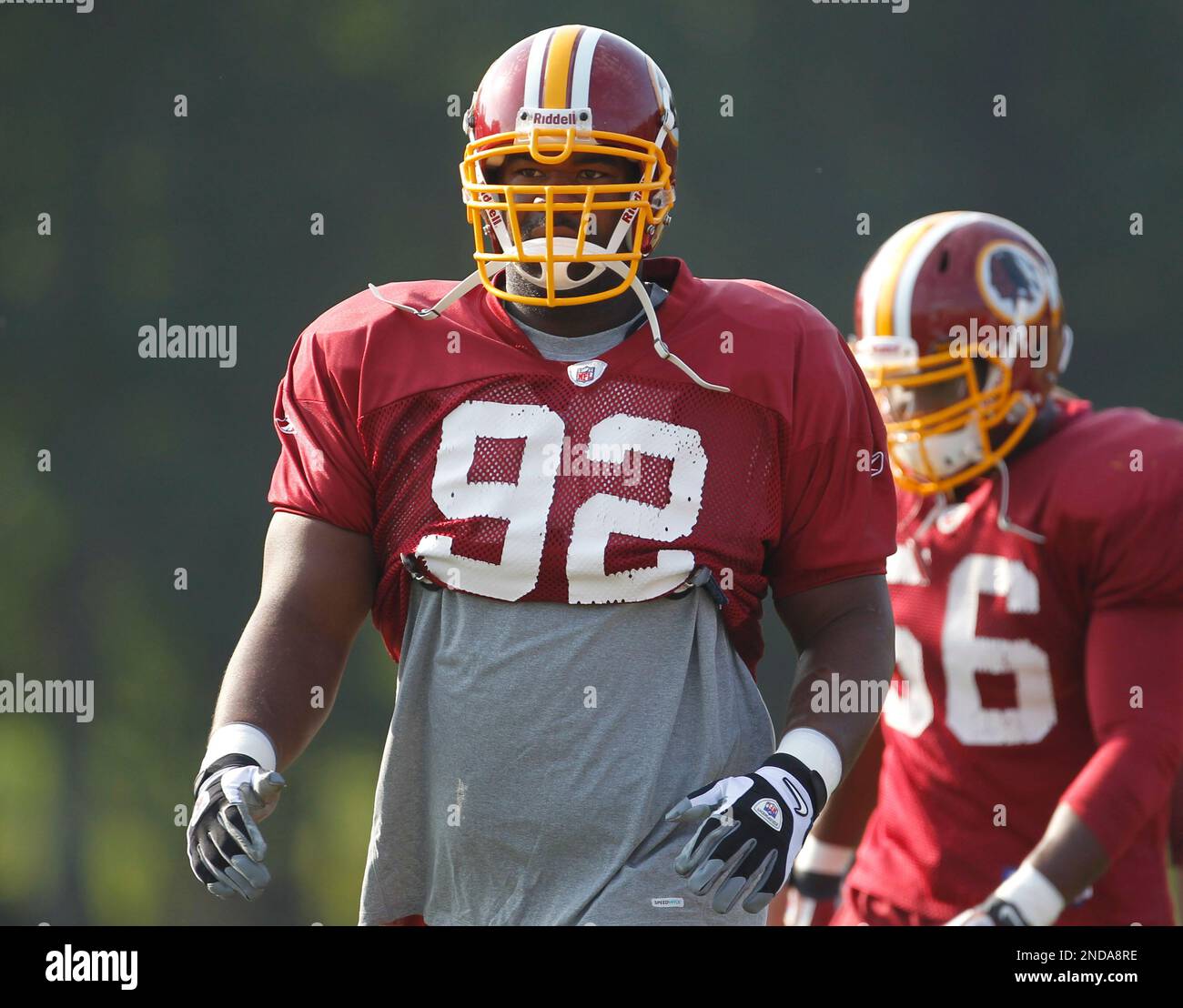
The massive contract signed by defensive tackle Albert Haynesworth with the Washington Redskins in 2009 stands as one of the most cautionary tales in National Football League history, highlighting how excessive guaranteed money and schematic incompatibility can devastate a franchise's salary cap and locker room culture.
The Context of the 2009 Free Agency Frenzy
In the spring of 2009, Albert Haynesworth was widely regarded as the most dominant interior defensive lineman in the National Football League. During his tenure with the Tennessee Titans, particularly under the guidance of defensive coordinator Jim Schwartz, Haynesworth utilized a ferocious blend of size, lateral agility, and explosive power to disrupt opposing offenses single-handedly. His performance during the 2007 and 2008 seasons earned him consecutive Pro Bowl selections and First-team All-Pro honors, making him the most coveted unrestricted free agent on the market.
For the Washington Redskins, under the ownership of Daniel Snyder and the front office direction of executive Vinny Cerrato, landing Haynesworth was viewed as a transformative move. The franchise had a long-established history of pursuing high-profile, marquee free agents—often referred to historically as "offseason champions"—in an attempt to bypass the slower, more deliberate process of building through the NFL Draft. The pursuit of Haynesworth was aggressive, fueled by an organizational desire to make a massive splash and instantly elevate the defense into an elite unit capable of competing in the rugged NFC East.
Anatomy of the Record-Breaking Deal
The agreement finalized in February 2009 shattered financial precedents for defensive linemen. Haynesworth signed a seven-year contract worth $100 million. While the total headline value of the deal drew considerable media attention, the most critical element of the contract was its structure: an unprecedented $41 million guaranteed.
To secure his services, the Redskins structured the agreement with a massive signing bonus and early guarantees that stripped the franchise of standard financial leverage. In professional sports contracts, guaranteed money dictates player motivation and team flexibility. By committing $41 million upfront across the first few years of the deal, Washington heavily mortgaged its future salary cap space.
| Contract Parameter | Details and Financial Terms |
|---|---|
| Total Value | $100,000,000 over 7 years |
| Guaranteed Money | $41,000,000 |
| Signing Bonus | $21,000,000 |
| First-Year Payout | $32,000,000 |
| Cap Impact (2009) | Approximately $5.4 million (structured to rise later) |
This structure left the front office with virtually no financial escape hatch or ability to penalize underperformance. When dealing with elite athletes who have secured generational wealth upfront, the lack of non-guaranteed leverage frequently introduces severe risk regarding work ethic and compliance with coaching directives.
Schematic Incompatibility and Early Friction
The fundamental flaw in the acquisition of Haynesworth was not merely financial; it was deeply tactical. In Tennessee, Jim Schwartz operated a specialized 4-3 defense that frequently utilized a "one-gap" attacking philosophy. This scheme allowed Haynesworth to explode upfield immediately at the snap, utilizing his physical gifts to disrupt the backfield without heavy two-gap responsibilities.
Upon arriving in Washington, the Redskins initially deployed a 4-3 scheme under defensive coordinator Greg Blache, but the team's broader defensive philosophy and coaching style did not maximize Haynesworth's specific skill set in the same manner. Furthermore, when Mike Shanahan was hired as head coach in 2010 alongside defensive coordinator Jim Haslett, the team transitioned toward a 3-4 base defense.
In a 3-4 alignment, nose tackles and defensive ends are often tasked with absorbing double teams, maintaining gap integrity, and freeing up inside linebackers to make tackles—a role colloquially known as a "two-gap" anchor. Haynesworth openly despised this responsibility, viewing it as a misuse of his talents that would limit his statistical production and wear down his body. Friction between the player and the new coaching staff escalated rapidly, resulting in public complaints, missed offseason workouts, and disciplinary actions.
The Breaking Point and Decline in Washington
The relationship between Haynesworth and the Redskins deteriorated past the point of repair during the 2010 calendar year. Frustrated by his role in the 3-4 defense and his conditioning levels, the coaching staff demoted him to a part-time reserve role. Haynesworth famously failed the team's mandatory conditioning test at the start of training camp, leading to immediate public scrutiny and further erosion of trust within the locker room.
| Season | Games Played | Sacks | Combined Tackles | Team Context & Outcome |
|---|---|---|---|---|
| 2009 | 13 | 4.0 | 40 | Jim Zorn coached; defense showed flashes, but team finished 4-12. |
| 2010 | 8 | 2.5 | 13 | Mike Shanahan era begins; Haynesworth benched, traded away in 2011. |
As tensions mounted, trade rumors swirled throughout the 2010 season. Haynesworth's commitment to team rules was openly questioned by teammates and coaches alike, leading to inactive game-day statuses and eventual suspensions for conduct detrimental to the team. The massive financial investment had devolved into an untenable distraction. In February 2011, the Redskins mercifully cut ties with the defensive tackle, trading him to the New England Patriots for a late-round draft pick, leaving behind millions in dead money against their salary cap.
Lasting Lessons and Front Office Evolution
The fallout from the Albert Haynesworth contract served as a watershed moment for the Washington franchise and offered a broader blueprint of what modern NFL front offices must avoid. The episode permanently altered how the organization approached free agency, steering them away from splashy, aging veteran acquisitions and toward disciplined cap management.
Several core lessons emerged from the failed partnership:
- Fit Over Fame: Accumulating high-priced talent without verifying scheme compatibility is a recipe for regression. A player must fit the tactical identity of the coaching staff.
- Leverage in Guarantees: Front offices must protect themselves with performance-based escalators, roster bonuses, and manageable dead-cap hits rather than massive, front-loaded guarantees.
- Locker Room Chemistry: High-profile acquisitions who display resistance to organizational culture can fracture team cohesion faster than a lack of raw talent.
Modern NFL general managers routinely study the Haynesworth contract as a primary example of how unsustainable financial commitments can cripple a roster's depth and stunt long-term competitiveness.
Frequently Asked Questions
Why did the Washington Redskins sign Albert Haynesworth in 2009?
The Redskins signed Haynesworth to a massive contract because he was widely considered the most dominant interior defensive lineman in the NFL after back-to-back All-Pro seasons with the Tennessee Titans. Ownership and the front office wanted an immediate, high-impact player to anchor their defense and spark national excitement.
What was the total value of Albert Haynesworth's contract?
The contract was worth $100 million over seven years, which included an unprecedented $41 million in guaranteed money. This made it one of the largest defensive contracts in NFL history at that time.
Why did Haynesworth struggle after joining Washington?
Haynesworth struggled due to a combination of schematic incompatibility, conditioning issues, and friction with incoming head coach Mike Shanahan. While he excelled in a one-gap attacking 4-3 scheme in Tennessee, subsequent coaching changes and a shift toward a 3-4 defense required him to play a two-gap anchoring role that he resisted.
How did the contract end?
After just two turbulent seasons marked by benchings, conditioning failures, and public disputes, the Redskins traded Haynesworth to the New England Patriots in February 2011 for a draft pick, effectively absorbing a massive financial loss and dead-cap penalty.
What are the main takeaways NFL teams learned from this deal?
Teams learned to prioritize scheme fit over sheer star power, avoid handing out unmanageable guaranteed money that strips the franchise of roster leverage, and recognize the importance of cultural alignment within the locker room.
Strategic Next Steps for Evaluating Major Free Agent Signings
For analysts, sports executives, and observers evaluating modern NFL roster construction, analyzing historical failures like the Haynesworth contract provides a crucial baseline for assessing risk. When examining contemporary free agent splashes, always audit the player's historical athletic utilization, verify whether incoming coaching changes threaten their specialized skill set, and scrutinize the guaranteed money structure to ensure the franchise retains financial maneuverability if performance declines.