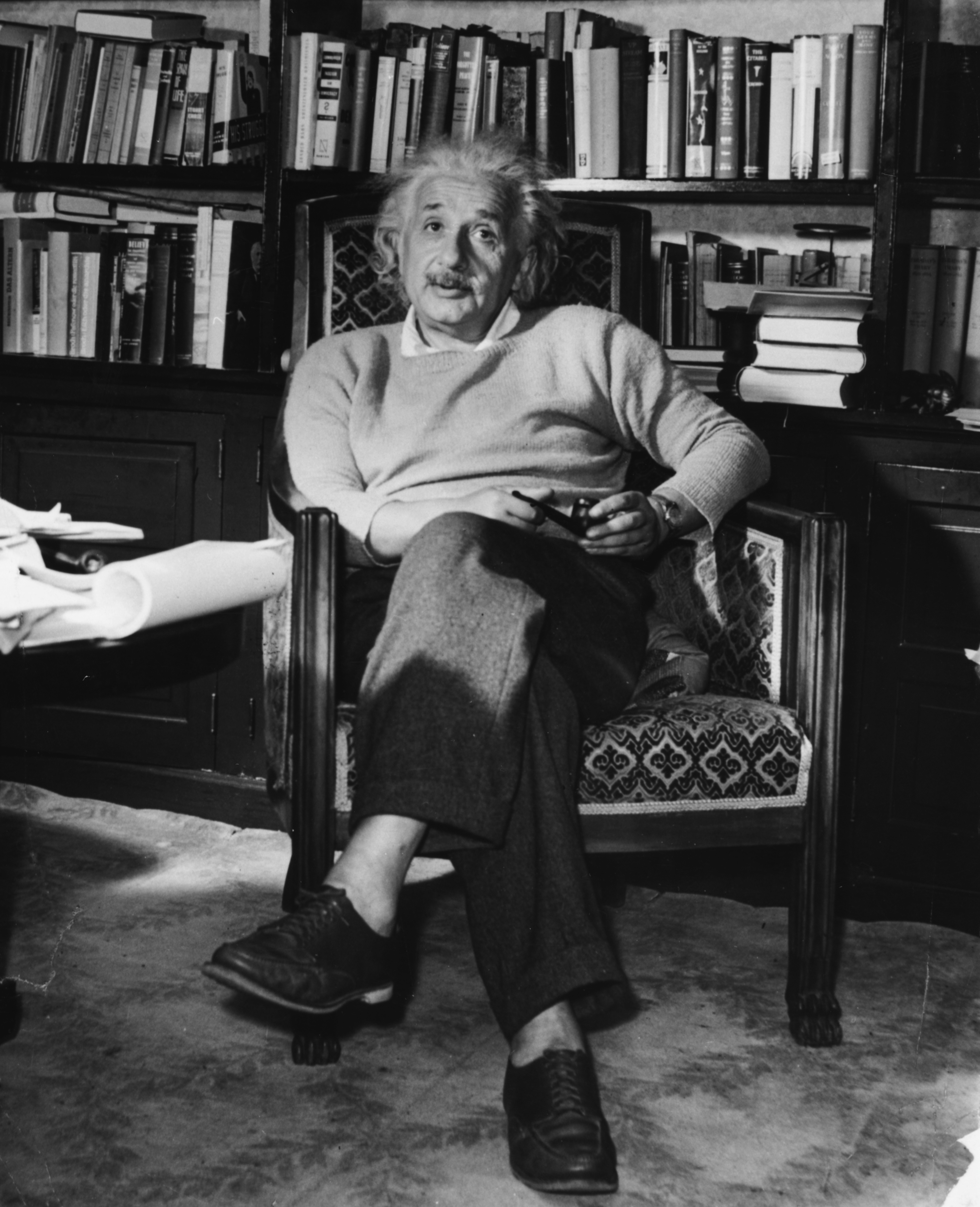
At his death in 1955, Albert Einstein’s personal financial estate was valued at approximately $95,000—equivalent to roughly $1.1 million today—comprising liquid savings, personal property, and his residential home in Princeton, New Jersey. Today, the intellectual property and commercial licensing portfolio generated by his legacy is valued in the hundreds of millions of dollars, managed by the Hebrew University of Jerusalem.
The Financial Reality of Einstein’s Estate at Death (1955)
When Albert Einstein passed away on April 18, 1955, at Penn Medicine Princeton Medical Center, his wealth reflected that of a comfortable, highly respected academic rather than an ultra-wealthy celebrity. Unlike modern public figures who monetize global fame through corporate endorsements, media rights, and venture investments, Einstein lived a modest lifestyle focused primarily on scientific inquiry and humanitarian efforts.
Probate filings and financial records following his death indicated that his tangible net worth sat between $85,000 and $95,000. Adjusted for economic growth and consumer price inflation, that sum equals approximately $1 million to $1.1 million in current terms.
1955 Financial Breakdown:
- Liquid Accounts & Securities: ~$65,000 (Savings accounts, US Treasury bonds)
- Real Property (112 Mercer St): ~$20,000 (Assessed residential market value)
- Personal Effects & Books: ~$10,000 (Furniture, personal library, violins)
Einstein’s primary source of earned income during the latter half of his career came from the Institute for Advanced Study in Princeton, New Jersey. Joining the faculty in 1933 after fleeing Nazi-dominated Germany, Einstein was offered a starting annual salary of $15,000—a substantial academic compensation package during the Great Depression, negotiated on his behalf by Abraham Flexner. While this income placed him comfortably in the upper-middle class, Einstein spent generously on political causes, refugee support, and civil rights organizations, limiting the accumulation of massive cash reserves.
The Nobel Prize Settlement and Family Financial Commitments
A common misconception is that Einstein retained the financial proceeds from his 1921 Nobel Prize in Physics (awarded in 1922). In reality, the entirety of the monetary award—totaling 121,572 Swedish kronor (roughly $32,000 at the time, or over $500,000 today)—never entered Einstein's permanent personal investment portfolio.
Under the terms of his 1919 divorce agreement with his first wife, Mileva Marić, Einstein agreed that if he were to win a Nobel Prize, the full cash prize would be transferred into a Swiss bank account held in trust for their two surviving sons, Hans Albert and Eduard.
- Capital Restrictions: The principal sum was legally locked in trust to ensure the long-term security of the children.
- Income Rights: Mileva Marić was permitted to draw the interest derived from the trust capital to cover living expenses, healthcare, and educational costs for the family in Zurich.
- Real Estate Purchases: Portions of the capital were eventually used to purchase residential apartment buildings in Zurich to generate rental income for Marić and care for their younger son, Eduard, who required lifelong institutional care for schizophrenia.
Consequently, by the time Einstein died in 1955, his first family had absorbed the monetary benefits of his Nobel award, leaving his personal estate independent of those historic funds.
The Structure of Einstein’s Last Will and Testament
Einstein executed his final last will and testament on March 18, 1950, naming his long-time financial advisor and friend, Dr. Otto Nathan, and his personal secretary, Helen Dukas, as co-executors and trustees. The legal framework of the will distinguished sharply between physical assets and intellectual assets.
Real Estate and Physical Property
Einstein left his home at 112 Mercer Street in Princeton, New Jersey, along with his personal effects, furniture, and household goods, to his stepdaughter, Margot Einstein, and Helen Dukas, granting them the right to live in the home for the remainder of their lives. Einstein explicitly requested in his personal notes that his home not be turned into a museum or public monument, desiring that his private life remain private after his death.
The Literary Estate and Intellectual Property
The critical component of Einstein’s will—and the foundation of his modern asset value—was Clause 13. In this provision, Einstein directed that all of his scientific manuscripts, letters, personal papers, copyrights, publication royalties, and literary rights be transferred into a testamentary trust.
- Life Beneficiaries: Helen Dukas and Margot Einstein were named primary income beneficiaries of the trust during their lifetimes.
- Ultimate Residuary Beneficiary: Upon the death of the primary beneficiaries, the entire legal ownership of the literary estate was designated to pass unconditionally to the Hebrew University of Jerusalem, an institution Einstein had co-founded in 1918 and actively supported throughout his life.
Following the death of Helen Dukas in 1982 and Margot Einstein in 1986, full legal ownership of the literary estate and associated rights officially transferred to Hebrew University.
Modern Estate Valuation: How Hebrew University Monetized the Legacy
While Einstein’s physical assets in 1955 were modest, his posthumous intellectual property turned his estate into one of the most commercially valuable literary legacies in history. Hebrew University established the Albert Einstein Archives, housing over 80,000 physical documents, scientific notes, and personal letters.
To handle the commercial inquiries surrounding Einstein's image, name, and equations, Hebrew University partnered with global rights representation agencies (such as Corbis, GreenLight, and later BEN Group) to manage worldwide licensing.
Posthumous Commercial Asset Drivers:
- Scientific Rights: Publishing royalties, academic republications, historical compilations
- Brand Licensing: Consumer electronics, apparel, educational software, collectibles
- Media & Likeness: Advertising campaigns (e.g., Apple, Salesforce, Disney, Smart TV)
- Trademarks: Registered wordmarks for "Albert Einstein" and iconic mathematical symbols
Throughout the 2000s and 2010s, Einstein consistently ranked among the top-earning deceased celebrities on annual financial lists compiled by outlets such as Forbes. During peak commercial periods, the licensing of his name and likeness generated between $10 million and $18 million in annual royalty revenue for Hebrew University.
If evaluated as a commercial enterprise using standard valuation multiples for intellectual property portfolios (typically 8x to 12x annual recurring royalty cash flow), the commercial rights to the Einstein brand are valued between $100 million and $200 million, excluding the priceless historical value of the physical original manuscripts.
Legal Precedents and Boundaries of Post-Mortem Publicity Rights
The transformation of Einstein’s financial legacy from a literary estate into a commercial branding powerhouse created landmark legal disputes regarding post-mortem right of publicity (Right of Publicity).
The most consequential court case occurred in 2012: Hebrew University of Jerusalem v. General Motors LLC in the U.S. District Court for the Central District of California. General Motors had used an image of Einstein’s face pasted onto a muscular body in a 2009 advertisement for the Terrain vehicle, accompanied by the slogan "Underdog." Hebrew University sued GM for copyright and publicity rights infringement.
Legal Framework Governing the Estate Today:
- Right of Publicity: Expired in 2005 under federal ruling (50-year post-mortem limit applied)
- Copyright Protection: Valid for original writings, letters, and unpublished manuscripts
- Trademark Law: Active protection for commercial usage of "Albert Einstein" wordmarks
Federal District Judge A. Howard Matz ruled in favor of General Motors on the right of publicity claim. The court held that under New Jersey law (where Einstein resided and died in 1955), the post-mortem right of publicity endured for a maximum of 50 years after death. Because Einstein died in 1955, his right of publicity expired in April 2005.
Impact of the 2012 Ruling on Estate Valuation
- Publicity Rights vs. Trademarks: While general commercial use of his likeness for generic depictions became harder to restrict purely under publicity statutes after 50 years, Hebrew University retains extensive trademark registrations for the name "Albert Einstein" across broad commercial categories.
- Copyright Control: The original text of his letters, personal photographs owned by the archive, and scientific papers remain strictly protected under federal and international copyright laws.
- Current Valuation Strategy: Modern monetization focuses heavily on authorized corporate partnerships, high-value archival publications, museum exhibitions, and registered trademark licensing rather than broad publicity lawsuits.
Comparative Breakdown: Einstein's Financial Estate (1955 vs. Present)
| Financial Category | 1955 Estate Value (At Death) | Modern Value / Annual Yield | Governing Legal/Financial Mechanism |
|---|---|---|---|
| Liquid Capital & Bonds | $65,000 | ~$750,000 (inflation-adjusted) | Personal Bank Accounts & US Treasuries |
| Real Estate Property | $20,000 (112 Mercer St.) | ~$1.2 Million - $1.5 Million | Private Residential Real Estate |
| Nobel Prize Capital | $32,000 (1922) | Distributed / Depleted | 1919 Divorce Settlement Trust (Zurich) |
| Annual Licensing Income | $0 (Commercial licensing inactive) | $10M – $18M / year (peak) | Hebrew University IP Management |
| Total IP Portfolio Value | Negligible / Unquantified | $100M – $200M+ (estimated) | Trademarks, Copyrights & Archives |
Frequently Asked Questions
Did Albert Einstein leave his fortune to his children?
No, Einstein did not leave the bulk of his estate or intellectual property to his surviving children. His Nobel Prize money was placed into a Swiss trust for his sons during his 1919 divorce. In his final 1950 will, he established a trust for his personal secretary and stepdaughter during their lifetimes, after which all rights transferred to the Hebrew University of Jerusalem.
Who owns the commercial rights to Albert Einstein’s name today?
The Hebrew University of Jerusalem holds the legal ownership of Albert Einstein’s literary estate, personal papers, copyrights, and commercial registered trademarks. The university manages international licensing requests through brand management agencies.
How much money did Einstein earn from the Nobel Prize?
Einstein was awarded approximately 121,572 Swedish kronor for the 1921 Nobel Prize in Physics, which converted to roughly $32,000 USD at the time. Under his 1919 divorce agreement, the entire capital sum went into a trust for his ex-wife Mileva Marić and their two sons.
What happened to Albert Einstein’s house in Princeton?
Einstein’s residence at 112 Mercer Street was left to his stepdaughter Margot Einstein and secretary Helen Dukas for their lifetime use. Per Einstein’s explicit instructions to prevent it from becoming a tourist shrine, the house was sold as a private home following Margot's death and remains a private residence today.
Can companies use Albert Einstein’s image without permission?
Using Einstein's name or likeness commercially remains legal risky. Although a 2012 federal court ruling established that his post-mortem right of publicity in certain jurisdictions expired 50 years after his 1955 death, the Hebrew University of Jerusalem actively defends extensive international trademarks covering the name "Albert Einstein" and holds copyrights to major photographs and writings.
Key Lessons from Einstein’s Estate and IP Legacy
Einstein’s financial trajectory offers key insights into the difference between personal net worth during one's lifetime and the long-term economic power of intellectual capital:
- Separate Tangible Assets from Intellectual Property: Einstein’s standard estate assets were modest, but his structured bequest of scientific papers created a perpetual funding asset for an academic institution.
- Utilize Specific Trusts for Complex Family Dynamics: By dedicating his Nobel Prize money directly to a structured Swiss trust in 1919, Einstein fulfilled long-term financial duties to his children without entangling his ongoing academic income.
- Plan for Institutional Stewardship: Selecting a permanent academic institution like the Hebrew University as a residuary beneficiary ensured that his literary estate would be maintained, cataloged, and protected by professional legal teams across decades.
Creators, authors, and researchers seeking to preserve their intellectual work should establish clear testamentary directions regarding copyrights, digital assets, and trademark rights, distinguishing ongoing physical possessions from long-term intellectual property rights.