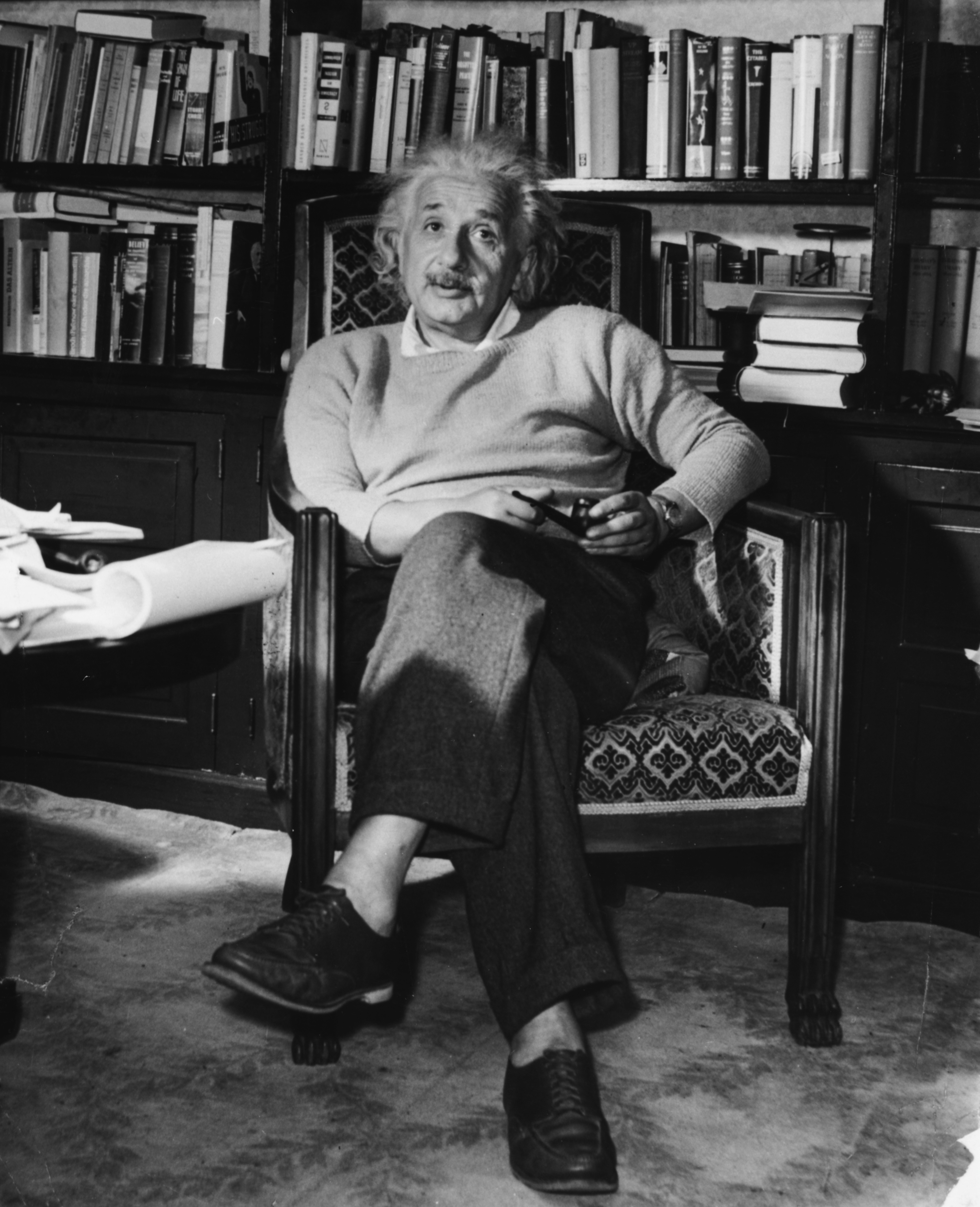
At the time of his death in 1955, theoretical physicist Albert Einstein possessed a personal net worth of approximately $65,000, which evaluates to roughly $750,000 in contemporary inflation-adjusted terms. Although Einstein lived a modest lifestyle and never accumulated massive personal liquid wealth during his lifetime, his posthumous intellectual property estate generates tens of millions of dollars annually through global commercial licensing.
Busting the Myths Around Albert Einstein's Wealth
Popular culture often presents conflicting narratives regarding the financial status of history’s most famous scientist. Some historical accounts portray Albert Einstein as a completely unworldly academic who cared nothing for money, while modern viral claims occasionally attribute absurd billionaire status to his legacy. The truth occupies a far more nuanced middle ground. Einstein was pragmatic about his financial needs, highly generous with his earnings, and acutely aware of the economic stability required to pursue research independently.
Einstein did not pursue private commercial enterprises, corporate equity, or real estate speculation. Instead, his income derived primarily from academic salaries, international lecture fees, book royalties, and prestigious honors such as the Nobel Prize. He prioritized institutional stability over personal luxury, frequently directing excess capital toward charitable causes, family support, and refugees escaping political oppression in Europe.
Understanding Einstein's true net worth requires separating his personal bank balance at death from the immense modern value generated by his brand name, likeness, and intellectual property portfolio.
Early Academic Earnings and the Nobel Prize Settlement
Albert Einstein’s financial journey began modestly. In 1902, after struggling to find a university position, he secured employment as a class III technical examiner at the Swiss Patent Office in Bern. His starting annual salary was 3,500 Swiss francs (equivalent to roughly $600 USD at the time), which provided a comfortable middle-class baseline for his early scientific papers, including his ground-breaking work on special relativity in 1905.
As his international reputation grew, Einstein transitioned into academia, holding positions in Zürich, Prague, and Berlin. By 1914, his appointment as Director of the Kaiser Wilhelm Institute for Physics and Professor at the Humboldt University of Berlin carried a substantial annual salary of 12,000 marks, placing him firmly in the upper-middle class of European academia.
- Patent Office (1902)
- University Posts (1909–1914)
- Berlin Directorship (1914)
- Nobel Prize (1921/1922)
The most famous financial transaction of Einstein's mid-life occurred around his 1921 Nobel Prize in Physics (awarded in 1922). As part of his 1919 divorce agreement from his first wife, Mileva Marić, Einstein contractually agreed that if he were to win a Nobel Prize, the full cash award would be transferred to a Swiss trust for Marić and their two sons, Hans Albert and Eduard.
- Award Amount: 121,572.15 Swedish kronor (approximately $32,000 USD in 1922).
- Inflation-Adjusted Value: Equivalent to over $580,000 today.
- Allocation: Capital was deposited into a Zurich bank account; Marić drew interest to purchase real estate and pay for medical expenses for their ill son, Eduard.
Consequently, despite winning science's richest prize, Einstein personally retained none of the cash proceeds from the award.
The Princeton Years: Salary at the Institute for Advanced Study
In 1933, fleeing Nazi persecution in Germany, Einstein permanently relocated to the United States to join the newly formed Institute for Advanced Study (IAS) in Princeton, New Jersey. The negotiation over his Princeton compensation highlights Einstein's famous indifference toward excessive compensation—and the institution's insistence on paying him fairly.
When founding director Abraham Flexner asked Einstein what salary he required, Einstein famously requested an annual compensation of $3,000. Flexner, recognizing that such a low figure was unbefitting a world-renowned scholar and would undercut academic pay standards, insisted on paying Einstein $10,000 per year (equivalent to roughly $235,000 in present-day terms). His salary was later raised to $16,000 annually.
| Timeline / Event | Nominal Value (USD at Time) | Estimated 2026 Adjusted Value | Primary Income Source / Asset Type |
|---|---|---|---|
| 1902 (Swiss Patent Office) | $600 / year | ~$22,000 / year | Civil service entry-level salary |
| 1922 (Nobel Prize Cash Award) | ~$32,000 | ~$580,000 | Nobel Committee stipend (transferred to ex-wife) |
| 1933 (Princeton IAS Initial Salary) | $10,000 / year | ~$235,000 / year | Academic research appointment |
| 1945 (Princeton IAS Senior Salary) | $16,000 / year | ~$270,000 / year | Senior professor compensation & consulting |
| 1955 (Net Worth at Death) | $65,000 | ~$750,000 | Cash, savings bonds, personal effects, modest home |
| Modern Era (Annual Estate Income) | $10,000,000 – $18,000,000 | $10M – $18M annually | Posthumous image rights, licensing, IP royalties |
During his 22 years in Princeton, Einstein supplemented his institutional salary with royalties from popular science books, such as The Evolution of Physics (co-authored with Leopold Infeld in 1938), as well as occasional consulting fees and paid public lectures. However, a significant portion of his surplus cash was routinely donated to humanitarian organizations, refugee relief funds, and civil rights groups.
Breakdown of Einstein’s Estate at Death (1955)
Albert Einstein passed away on April 18, 1955, at Princeton Hospital at the age of 76. His last will and testament outlined a straightforward distribution of his modest physical estate.
Cash, Equities, and Real Estate
The official probate record valued his gross personal estate at approximately $65,000. Key components included:
- Real Estate: The modest two-story home located at 112 Mercer Street in Princeton, New Jersey. In his will, he bequeathed the property to his stepdaughter, Margot Einstein, and his long-time secretary, Helen Dukas, for use during their lifetimes.
- Bank Accounts and Treasury Securities: Cash balances and U.S. savings bonds accumulated during his years in the United States.
- Personal Effects: His personal library, academic correspondence, manuscripts, and his cherished musical instruments, including his violins (one of which was willed to his grandson, Bernhard Caesar Einstein).
Einstein explicitly directed that his body be cremated and his ashes scattered at an undisclosed location to prevent his resting place from becoming a public monument or shrine.
Posthumous Financial Powerhouse: Rights, Licensing, and Hebrew University
While Einstein was comfortably middle-class in life, his posthumous financial legacy became an economic juggernaut. This transition was entirely governed by the instructions set forth in his final will.
- Einstein's Last Will (1950)
- Literary Estate Executors: Helen Dukas & Otto Nathan
- Ultimate Beneficiary: Hebrew University of Jerusalem
- Rights Management (Licensing, Name, Likeness, Trademarks)
The Hebrew University Bequest
Einstein was one of the co-founders of the Hebrew University of Jerusalem, serving on its first Board of Governors. In his will, he designated that all of his physical manuscripts, personal papers, copyright interests, and intellectual property rights be bequeathed to the university upon the deaths of his secretary Helen Dukas and stepdaughter Margot Einstein.
When the literary estate transferred entirely to Hebrew University in the 1980s, the institution established the Albert Einstein Archives. Beyond housing over 80,000 historical documents, the university gained control over the commercial rights associated with Einstein's name and likeness.
Commercial Licensing and Royalties
Under modern legal frameworks governing post-mortem publicity rights, Hebrew University actively manages and enforces the Albert Einstein brand. Recognized routinely by Forbes on its annual list of top-earning deceased celebrities, the Einstein estate generates substantial annual revenue through licensing agreements across multiple global sectors:
- Technology & Software: Enterprise branding, such as Salesforce's artificial intelligence platform ("Salesforce Einstein").
- Consumer Electronics & Toys: The famous "Baby Einstein" line of educational toys and media (originally created by Julie Aigner-Clark and later acquired by Disney and Kids II).
- Luxury Goods & Apparel: Limited-edition timepieces (such as Montblanc writing instruments), apparel, and collectibles featuring his famous photographs and formulas.
- Advertising Campaigns: Global campaigns for major corporations utilizing his iconic image to symbolize innovation, intelligence, and scientific discovery.
Annual licensing revenues for the estate consistently range between $10 million and $18 million, making Einstein's posthumous brand far more lucrative financially than any income he earned while alive.
Factors Influencing Historical Net Worth Calculations
Evaluating historical net worth figures requires contextualizing changing economic standards, tax structures, and currency values. Several distinct financial variables shaped Einstein's monetary trajectory:
- Hyperinflation in Weimar Germany: During the 1920s, high inflation in Germany wiped out a significant portion of cash savings held in marks, accelerating Einstein's decision to hold assets in foreign accounts (such as Swiss francs).
- Divorce Capital Allocations: Transferring 100% of the 1921 Nobel Prize capital directly to Switzerland permanently altered his personal liquid capital reserves during his most productive decade.
- U.S. Income Tax Rates: During the late 1930s and 1940s, top marginal federal income tax rates in the United States exceeded 80% to 90%, significantly capping the net liquid wealth accumulation of high earners who relied on standard salaries.
- Evolution of Intellectual Property Law: During Einstein's lifetime, publicity rights and image licensing were virtually non-existent legal concepts. The commercial exploitation of a historical figure's identity developed primarily in the late 20th century, long after his passing.
Frequently Asked Questions
Did Albert Einstein keep his Nobel Prize money?
No, Albert Einstein did not keep the money from his 1921 Nobel Prize in Physics. Under the terms of his 1919 divorce decree from his first wife, Mileva Marić, he committed the full monetary value of any future Nobel Prize award to a Swiss trust for Marić and their two children.
How much did Princeton pay Albert Einstein per year?
When Albert Einstein joined the Institute for Advanced Study in Princeton in 1933, his starting annual salary was set at $10,000. By the time of his retirement and later years, his annual compensation had risen to $16,000, placing him among the highest-paid academic researchers of his era.
Who currently owns the commercial rights to Albert Einstein's image and name?
The commercial rights to Albert Einstein's name, likeness, and literary estate belong to the Hebrew University of Jerusalem, as specified in Einstein's last will and testament. The university actively manages these rights through specialized international licensing agencies.
How much money does Albert Einstein's estate generate per year today?
The Albert Einstein estate routinely generates between $10 million and $18 million per year in global revenue through commercial licensing, trademark agreements, and intellectual property usage, funding academic research and archival preservation at Hebrew University.
Was Albert Einstein considered rich during his lifetime?
Albert Einstein was comfortably middle-class to upper-middle-class by the standards of his era, but he was not exceptionally wealthy. His financial focus remained fixed on scientific research, academic security, and philanthropic donations rather than private business ventures or luxury accumulation.
Evaluating Historical Intellectual Property Assets
Analyzing historical figures like Albert Einstein illustrates the distinct boundary between lifetime earning capacity and the long-term value of intellectual property. When evaluating historical net worths or estate structures, researchers and financial analysts should consider several key practices:
- Separate Personal Estate Value from Brand Value: Distinguish between physical liquid assets held at death ($65,000 for Einstein) and the intangible valuation of posthumous publicity rights.
- Apply Contextual Inflation Adjustments: Compare historical salaries against contemporary wage indices rather than relying solely on raw currency conversions to understand purchasing power accurately.
- Review Estate Beneficiary Designations: Recognize that non-profit institutional beneficiaries (such as universities or research foundations) can leverage long-term brand equity far more effectively over decades than private individual heirs bound by standard generational wealth transfer challenges.