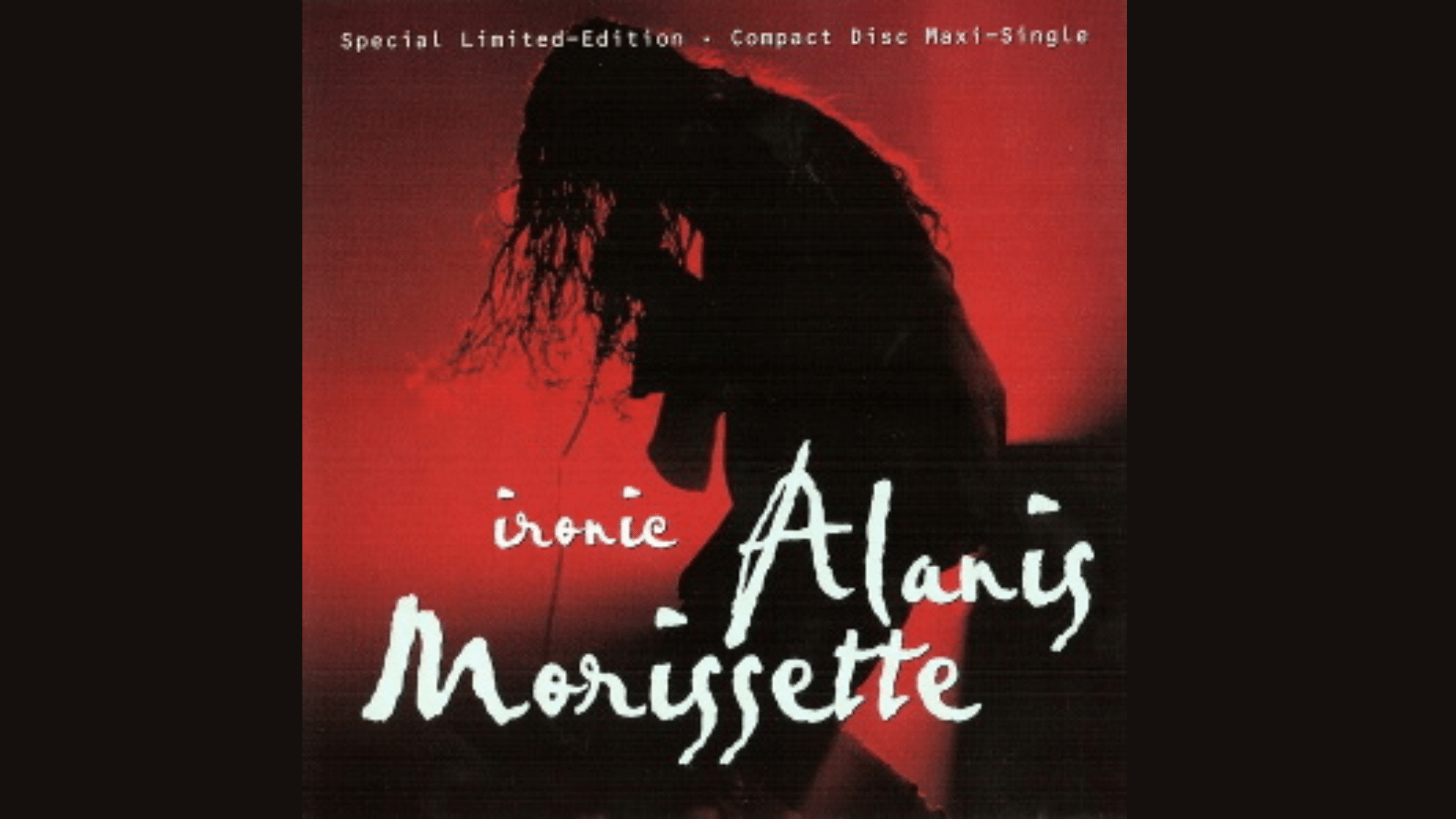
Alanis Morissette’s 1995 smash hit "Ironic" is a cultural touchstone, yet its enduring fame stems primarily from a massive linguistic irony: almost none of the scenarios described in the song actually meet the technical definition of irony. Instead, they are examples of unfortunate coincidence, bad luck, and Murphy’s Law.
The Linguistic Definition of Irony Versus Misfortune
To understand why the lyrics of "Ironic" sparked decades of debate, linguistics and literary theory must be applied to everyday speech. True irony involves a stark contrast between expectation and reality, specifically when the outcome is the exact opposite of what was reasonably expected. There are three primary forms of irony recognized in literature and linguistics: verbal, situational, and dramatic.
Verbal irony occurs when a speaker says one thing but means another, often for humorous or emphatic effect, such as calling a hurricane "lovely weather." Dramatic irony takes place when the audience or reader knows a vital piece of information that the characters do not, creating suspense or tragedy. Situational irony—the category most relevant to the debate surrounding the song—happens when an event directly contradicts the logical expectations of the participants or observers.
A classic example of situational irony is a fire station burning down. A fire station is specifically designed, equipped, and staffed to prevent and extinguish fires; therefore, its total destruction by fire defies all reasonable expectation in a way that highlights a profound contradiction. By contrast, a traffic jam when you are already late is intensely frustrating, but it does not defy logical expectation. Traffic infrastructure is prone to congestion, meaning delays are an unfortunate risk rather than an ironic twist of fate.
Breaking Down the Verses: What Is and Isn’t Ironic
Examining the specific scenarios in the song reveals why language purists immediately took issue with the track upon its release. Every scenario relies on bad timing or unfortunate accidents rather than an ironic reversal of expectations.
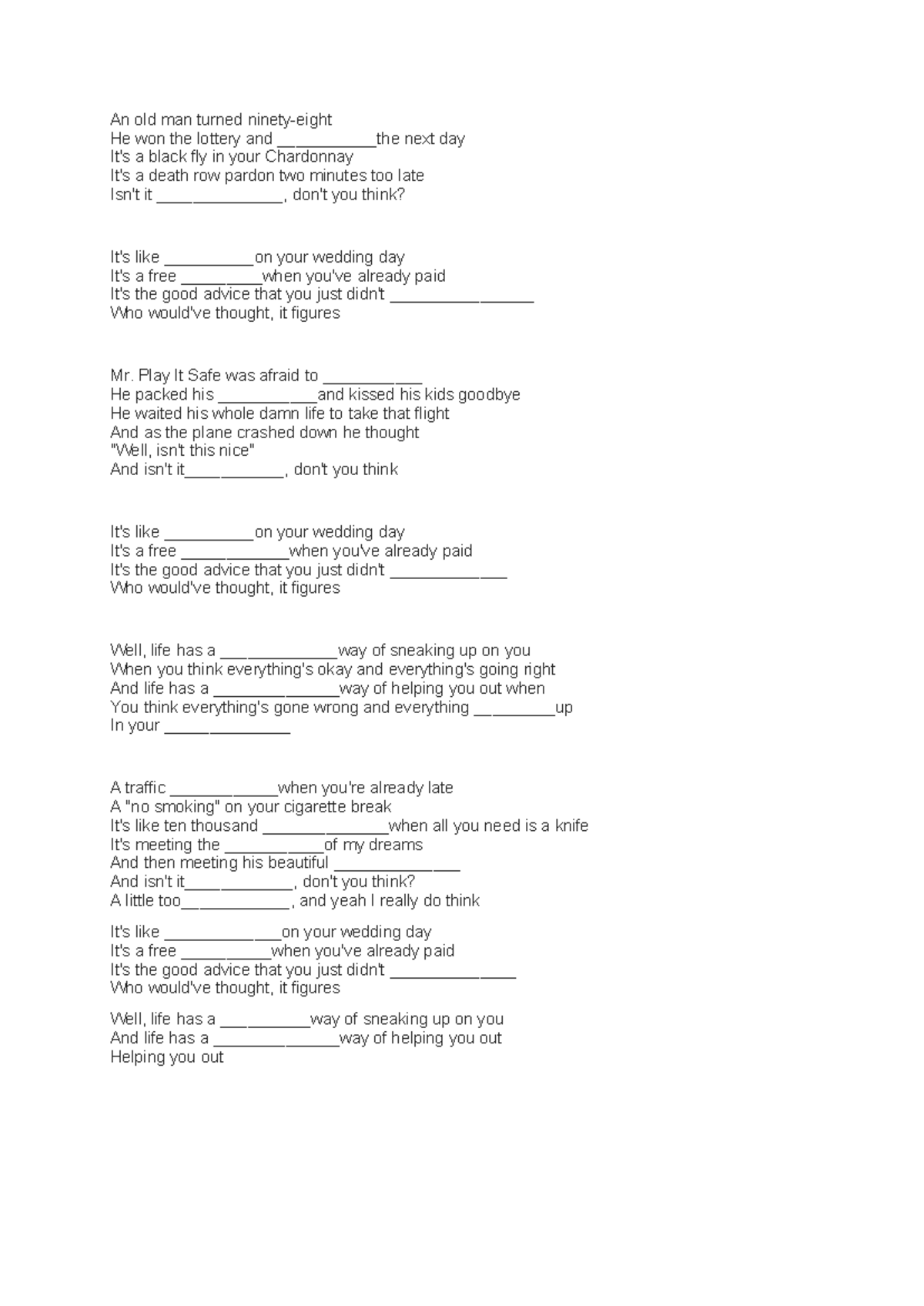
In the first verse, a man who has waited his whole life to take a flight finally buys a ticket, and his plane crashes. While catastrophic, tragic, and deeply unfortunate, this is bad luck. If a newly instated head of airline safety died on the very first commercial flight of an aircraft they personally certified as unsinkable due to a structural flaw they overlooked, that would approach situational irony.
Another heavily debated line features an old man turning ninety-theft, winning the lottery, and dying the next day. This is morbid coincidence and terrible timing. It becomes ironic only if winning the lottery somehow directly triggered his demise through an absurd, unexpected mechanism tied to the nature of the prize itself.
| Song Lyric Scenario | Categorization | Why It Fails or Passes the Irony Test |
|---|---|---|
| Rain on your wedding day | Bad Luck / Coincidence | Weather patterns are random; rain does not subvert the purpose of a wedding. |
| Free ride when you’ve already paid | Financial Waste | An administrative error or redundancy, not an inversion of expectation. |
| Good advice that you just didn't take | Human Error | Ignoring counsel leads to expected consequences, not a reversal of reality. |
| Traffic jam when you're already late | Frustrating Coincidence | Congestion is a standard urban risk, not the opposite of what traffic does. |
| A "no smoking" sign on your cigarette break | Mild Inconvenience | Hypocritical or ironic only if the sign was placed by the cigarette manufacturer. |
| Meeting the man of my dreams, and his beautiful wife | Unfortunate Timing | A heartbreaking coincidence, but relationship dynamics follow standard probabilities. |
The Cultural Backlash and Public Discourse
When "Jagged Little Pill" dominated global charts in the mid-1990s, listeners quickly began dissecting the lyrical content. Radio DJs, comedians, and English teachers alike pointed out that Morissette had built an entire anthem around misuse of the word. The song became a lightning rod for discussions regarding declining linguistic precision in popular culture.
For years, the song served as the go-to pop culture reference for semantic inaccuracy. Talk show hosts grilled Morissette about the lyrics during interviews, and early internet message boards filled up with threads debating whether any line in the song qualified as genuine irony. This widespread public scrutiny transformed the track from a standard alternative rock radio hit into a linguistic case study taught in classrooms worldwide.
Despite the grammatical and semantic critique, the song's massive commercial success was completely unhindered. Listeners connected deeply with the emotional core of the track, which captured the universal feeling of helplessness when life throws unpredictable obstacles in one's path. The shared frustration of bad luck resonated far more powerfully with audiences than strict adherence to literary definitions.
Alanis Morissette’s Response and Evolution Over Time
To her credit, Alanis Morissette has leaned into the grammatical critique with remarkable humor and self-awareness over the years. Rather than becoming defensive, she has publicly acknowledged that the song contains examples of bad luck rather than true irony.
In a notable 2013 appearance on The Late Show with James Corden, Morissette collaborated with the host to record an updated version of the song featuring modern, genuinely ironic scenarios. These new lyrics included references to getting a text from your ex saying they have changed right as you swipe on their dating profile, and getting free Wi-Fi on a flight only to discover your laptop battery is dead.
Furthermore, Morissette brought the updated lyrics to the Broadway stage during the run of Jagged Little Pill, the jukebox musical based on her album. By openly embracing the joke, she disarmed her critics and turned a decades-old linguistic critique into an endearing running gag that celebrated her legacy rather than detracting from it.
Why the Misuse Still Resonates Universally
The enduring cultural fascination with "Ironic" proves that emotional resonance often trumps technical precision in art. When people experience a sequence of frustrating events, they instinctively reach for the word "ironic" to describe the cosmic injustice of their situation.
Language is fluid, and popular usage frequently bends formal definitions to capture nuanced emotional states. While strict dictionary definitions separate irony from coincidence, colloquial speech often treats them as interchangeable descriptors for life's cruelest inconveniences. Morissette captured a universal human sentiment—the feeling that the universe is actively conspiring against your schedule—even if her vocabulary needed a slight grammatical tune-up.
Navigating Linguistic Precision in Modern Media
| Approach | Focus | Cultural Impact |
|---|---|---|
| Strict Linguistic Purism | Adherence to literary definitions | Preserves semantic clarity; can sometimes come across as pedantic. |
| Colloquial Expression | Emotional resonance and relatability | Fosters community connection; risks diluting exact meanings over time. |
| Self-Aware Adaptation | Humor and cultural acknowledgment | Bridges the gap between grammar rules and artistic expression. |
What to Do When Misusing Linguistic Terms
If you find yourself using words outside their strict technical definitions in casual conversation, there is generally no need for alarm. However, if you are writing professionally, editing academic work, or crafting public communications, maintaining semantic precision is vital for clarity and credibility.
- Consult Authoritative Sources: Reference reliable dictionaries and style guides when unsure about the precise definition of literary or technical terms.
- Evaluate the Context: Determine whether your audience expects formal precision or casual, emotionally driven language.
- Revise for Impact: If a word like "ironic" feels too heavy or technically inaccurate for a simple coincidence, substitute clearer terms like "frustrating," "unfortunate," or "unpredictable."
- Embrace Humour: If caught using a term incorrectly, follow Alanis Morissette's lead by acknowledging the error with grace and wit.
Frequently Asked Questions
Is any line in Alanis Morissette's song actually ironic?
Strictly speaking, none of the primary scenarios in the song qualify as true situational irony. They are examples of bad luck, unfortunate timing, and coincidence. The only genuinely ironic element of the song is the fact that a song titled "Ironic" fails to feature actual irony.
What is the difference between irony and a coincidence?
A coincidence is simply a surprising concurrence of events with no causal connection. Irony requires a specific, logical contradiction between expectation and reality, where the outcome directly subverts what was reasonably anticipated based on the circumstances.
Why did Alanis Morissette write lyrics that aren't ironic?
Morissette was writing from an emotional perspective rather than a linguistic one. When she penned the song in her early twenties, she used the word colloquially to describe life's frustrating mishaps, reflecting how everyday speakers use the term to voice exasperation.
How has Alanis Morissette reacted to the criticism of her lyrics?
She has embraced the critique with humor. She has openly admitted on television and in interviews that the song misuses the term and has even performed updated versions featuring genuinely ironic scenarios to poke fun at her past mistake.
Does the song's lack of true irony ruin its musical value?
Not at all. The song remains a beloved classic of 1990s alternative rock because its emotional honesty and catchy melody resonate with the universal human experience of dealing with life's unexpected frustrations.