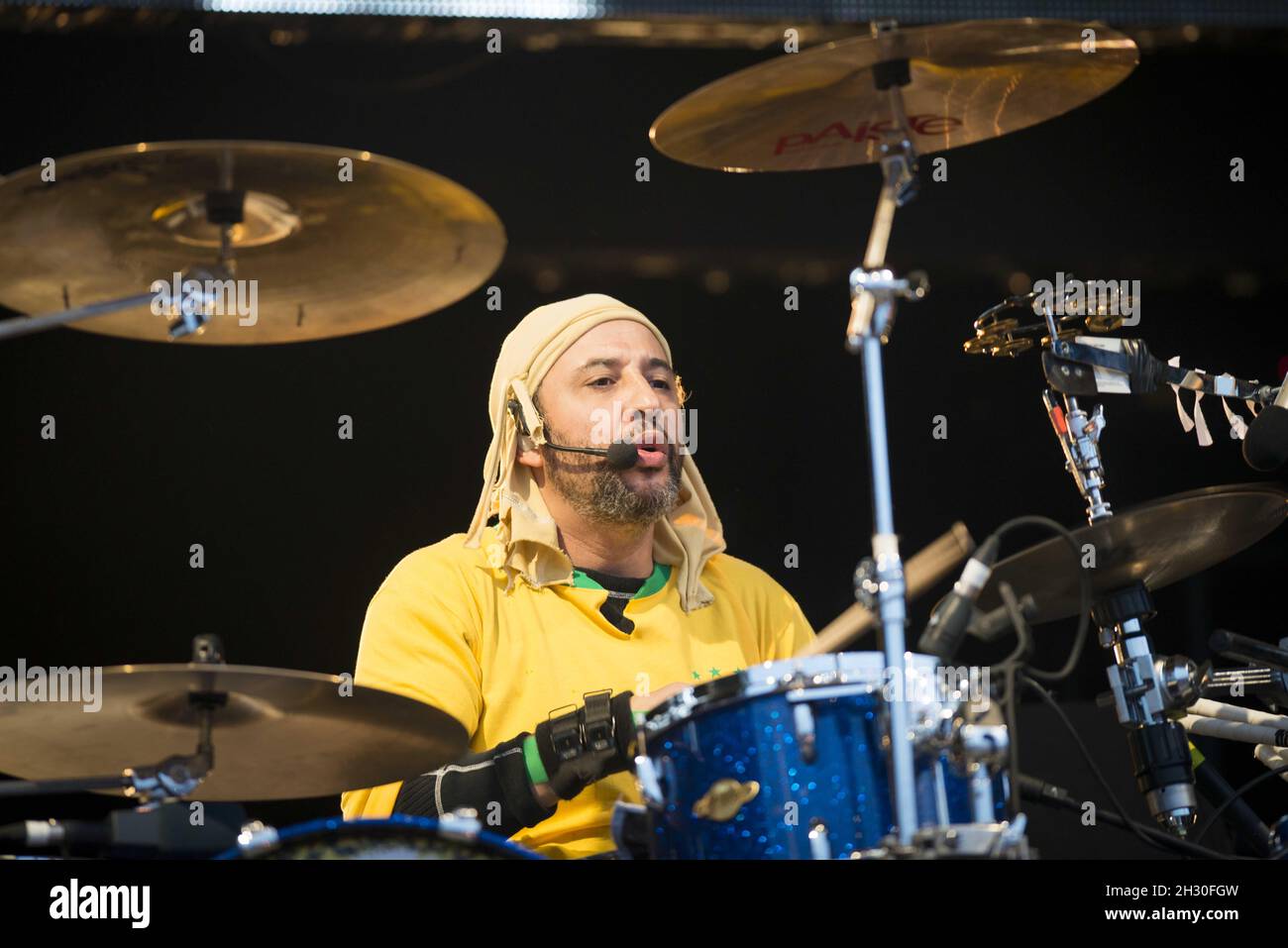
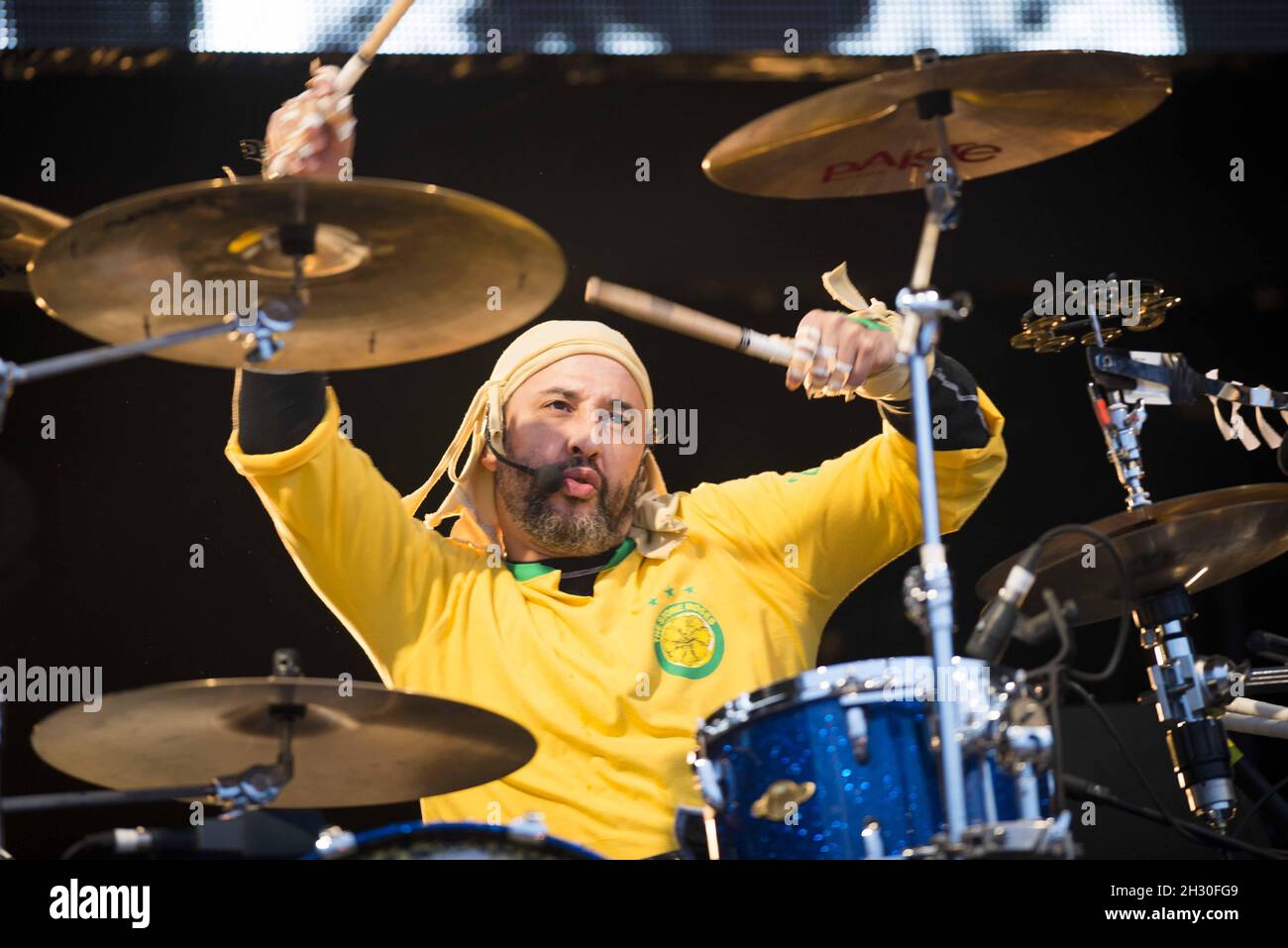
Alan "Reni" Wren is best known as the virtuoso drummer and backing vocalist for the Manchester band The Stone Roses. Widely considered one of the most gifted percussionists of his generation, Reni combined jazz-influenced polyrhythms with a funky, danceable sensibility that defined the "Madchester" sound and influenced decades of British indie and alternative rock.
The Formative Years and the Birth of the Madchester Sound
Born Alan John Wren in Manchester, England, in 1964, the musician who would become known globally as "Reni" showed prodigious talent from a young age. Growing up in a musical environment, he was a self-taught drummer who practiced relentlessly, developing a style that was far more sophisticated than the typical four-on-the-floor punk or post-punk beats prevalent in the early 1980s. By the time he joined The Stone Roses in 1984, he was already a localized legend for his technical proficiency.
Reni was the final piece of the puzzle for The Stone Roses. While Ian Brown provided the charisma, John Squire provided the shimmering guitar textures, and Mani later provided the melodic basslines, Reni provided the "swing." Before his arrival, the band struggled with a heavier, more conventional rock sound. Reni’s ability to infuse rock music with elements of funk, soul, and jazz was the catalyst that transformed them into the pioneers of the "Baggy" scene. This movement bridged the gap between traditional guitar music and the burgeoning acid house culture of the late 80s.
His contribution to the band’s self-titled debut album in 1989 cannot be overstated. Tracks like "I Am the Resurrection" and "Fools Gold" showcased a level of percussive complexity rarely seen in the UK indie charts. In "Fools Gold" specifically, Reni’s breakbeat-style drumming—influenced by the "Funky Drummer" break of Clyde Stubblefield—became a blueprint for how live drums could replicate the hypnotic feel of electronic dance music.
Technical Analysis: Why Reni is a "Drummer's Drummer"
To understand Reni's impact, one must look closely at his technical execution. Unlike many of his contemporaries who relied on power and volume, Reni’s playing was defined by its "ghost notes" and dynamic control. He possessed a rare "light touch" that allowed his drums to breathe, creating a pocket of groove that felt both relaxed and intensely disciplined.
The Polyrhythmic Approach
Reni frequently employed polyrhythms—playing two or more conflicting rhythms simultaneously. He would often maintain a steady, driving beat on the bass drum while executing intricate, jazz-like patterns on the snare and hi-hat. This independence of limbs allowed him to fill the sonic space without overplaying. His use of the ride cymbal was particularly noteworthy; he often played on the bell of the cymbal to add a sharp, rhythmic accent that cut through John Squire’s dense layers of effects-laden guitar.
The "Reni Shuffle"
Much like Bernard Purdie or John Bonham, Reni had a signature "shuffle." This was a swung beat that gave Stone Roses tracks their characteristic "loping" feel. In songs like "Waterfall," his drumming provides a rolling momentum that mimics the fluid nature of the lyrics. This shuffle was not just about the notes played, but the space between them—the "swing" that made people in the Hacienda and across the UK want to dance to a guitar band.
Vocal Harmony as an Instrument
A unique aspect of Reni’s role was his ability to provide complex, high-register backing vocals while performing demanding drum parts. His falsetto harmonies added a lush, psychedelic layer to the band’s sound, often drawing comparisons to The Beach Boys or The Beatles. This duality made him an indispensable asset during live performances, where he would effectively act as the band’s secondary melodic engine.
The Stone Roses Era: Iconic Performances and Evolution
The period between 1988 and 1990 is often cited as the peak of Reni’s influence. During the legendary Spike Island concert in 1990, despite sound issues that plagued the event, Reni’s performance was hailed as a masterclass in endurance and rhythm. He was the anchor that kept the sprawling, ambitious set together.
Following the immense success of their debut, the band entered a period of legal turmoil and creative isolation, culminating in the five-year gap before the release of The Second Coming in 1994. On this record, Reni’s style shifted. Influenced by the heavier blues-rock direction the band took, his drumming became more powerful and expansive. Tracks like "Love Spreads" featured a "Led Zeppelin-esque" weight, yet they still retained the funk-inflected precision that was his trademark.
However, the internal dynamics of the band were fracturing. In 1995, Reni became the first member of the "classic" lineup to depart. His exit was a devastating blow to the fans and the band itself. Mani famously remarked that after Reni left, the "heart" of the band had been ripped out. The Stone Roses would soldier on with replacements, but the chemistry was never the same, leading to their eventual breakup in 1996.
Reni's Signature Gear and Setup
Reni’s choice of equipment has always been focused on achieving a warm, resonant tone that favored his jazz-fusion influences. While his setup evolved over the years, he is most closely associated with Gretsch drums, known for their "Great Gretsch Sound" which suits drummers who require high sensitivity and tonal clarity.
| Component | Preferred Specification/Model | Notable Usage Era |
|---|---|---|
| Drum Kit | Gretsch USA Custom (Natural Maple or White) | 1989-1995, 2011-2017 |
| Snare Drum | Ludwig 402 or Gretsch Chrome over Brass | Throughout his career |
| Cymbals | Zildjian (K Series and A Series) | Peak Roses era (1989-1990) |
| Hi-Hats | 14" Zildjian New Beat | For crisp, articulate "chick" sound |
| Bass Drum | 22" or 24" for added resonance | The Second Coming era |
| Sticks | 5A or 5B Wood Tip | For a balance of power and finesse |
His setup was typically a standard five-piece configuration, but his mastery of the hi-hat was his most distinctive equipment-related trait. He used the hi-hat not just for timekeeping, but as a lead instrument, often incorporating "barks" and half-open shuffles that added a percussive texture to the band's dance-leaning tracks.
Post-Roses and The Rub: The Mystery of the Missing Years
After leaving The Stone Roses in 1995, Reni largely retreated from the public eye, becoming one of the most elusive figures in British rock. Unlike his bandmates who moved on to high-profile projects—Ian Brown to a successful solo career, Mani to Primal Scream, and John Squire to The Seahorses—Reni remained quiet.
In the late 1990s, he formed a new project called The Rub. This band performed a handful of live dates and was reportedly working on an album. Fans who attended the shows described the music as a blend of funk, rock, and soul, with Reni taking on the role of frontman and guitarist as well as drummer. However, no official studio recordings were ever released, and the project eventually dissolved, further cementing Reni’s reputation as a "reclusive genius."
His absence from the music industry for over a decade fueled constant rumors of a Stone Roses reunion. Whenever he was spotted in Manchester, it became headline news in the music press. This period of his life highlighted the "myth of Reni"—the idea of a musician so talented that he didn't need the industry, and whose silence only made his legacy grow.
The 2011 Reunion and the Current Perspective in 2026
The unthinkable happened in 2011 when The Stone Roses announced their reformation. Reni’s return to the drum stool was the most anticipated aspect of the reunion for many critics. There were questions about whether he could still perform at the level required after such a long hiatus. Those doubts were silenced during the band’s 2012 Heaton Park shows. Reni appeared more technically proficient than ever, his playing having lost none of its fluidity or "swing."
The reunion lasted until 2017, encompassing world tours and the release of two new singles, "All for One" and "Beautiful Thing." In 2026, as we look back at his career, Reni’s standing in the pantheon of great drummers is secure. He remains the definitive example of how a drummer can be a songwriter’s best friend—enhancing the melody, driving the rhythm, and providing the "feel" that turns a good song into a timeless anthem.
Why Reni Matters Today
Even in an era dominated by programmed drums and digital precision, Reni’s influence is felt in the "organic" approach of modern indie-soul and alternative bands. Young drummers still study the isolated drum tracks of "I Am the Resurrection" to understand how to balance complexity with groove. His refusal to over-commercialize his talent or participate in the typical "celebrity" machine has also made him a cult icon for those who value artistic integrity over fame.
Frequently Asked Questions
What happened to Reni after The Stone Roses reunion ended in 2017?
Since the final Stone Roses show at Glasgow’s Hampden Park in June 2017, Reni has once again stepped back from the limelight. He has not officially joined any other bands or released solo material. He is known to live a private life in the Manchester area, occasionally appearing at local events but largely avoiding the music industry.
Why was he nicknamed "Reni"?
The nickname "Reni" is a shortened version of "Renegade," a name he was given in his youth because of his rebellious nature and his standout talent compared to his peers. The name stuck and became his professional moniker throughout his career with The Stone Roses.
What was the "Reni Hat"?
During the late 1980s, Reni became synonymous with the bucket hat, which fans began calling the "Reni Hat." It became a staple of the "Madchester" fashion scene and remains a popular accessory at indie music festivals today. Reni originally wore it to keep sweat out of his eyes while drumming, but it quickly became a cultural phenomenon.
Did Reni play on all The Stone Roses songs?
Reni played on the vast majority of the band's classic catalog. However, for some of the later demos and the very final stages of The Second Coming, Robbie Maddix and other percussionists were involved following Reni's departure. The definitive "Roses sound" is almost exclusively attributed to the four-piece lineup including Reni.
What is Reni's most famous drum beat?
Most fans and musicians point to "Fools Gold" as his most iconic beat. It is a 16th-note shuffle that perfectly encapsulates the "indie-dance" crossover. Another contender is "I Am the Resurrection," particularly the extended outro where he engages in a rhythmic "duel" with Mani’s bassline.
Practical Recommendation for Aspiring Drummers
If you are looking to incorporate Reni’s style into your own playing, start by focusing on hi-hat independence. Practice playing a standard 4/4 beat while varying the openings and closings of the hi-hat on the "off-beats." Additionally, study basic jazz rudiments; Reni’s ability to "swing" comes from his jazz background rather than traditional rock drumming. Use lighter sticks (like a 7A or a light 5A) to help develop the "touch" required for his signature ghost notes.