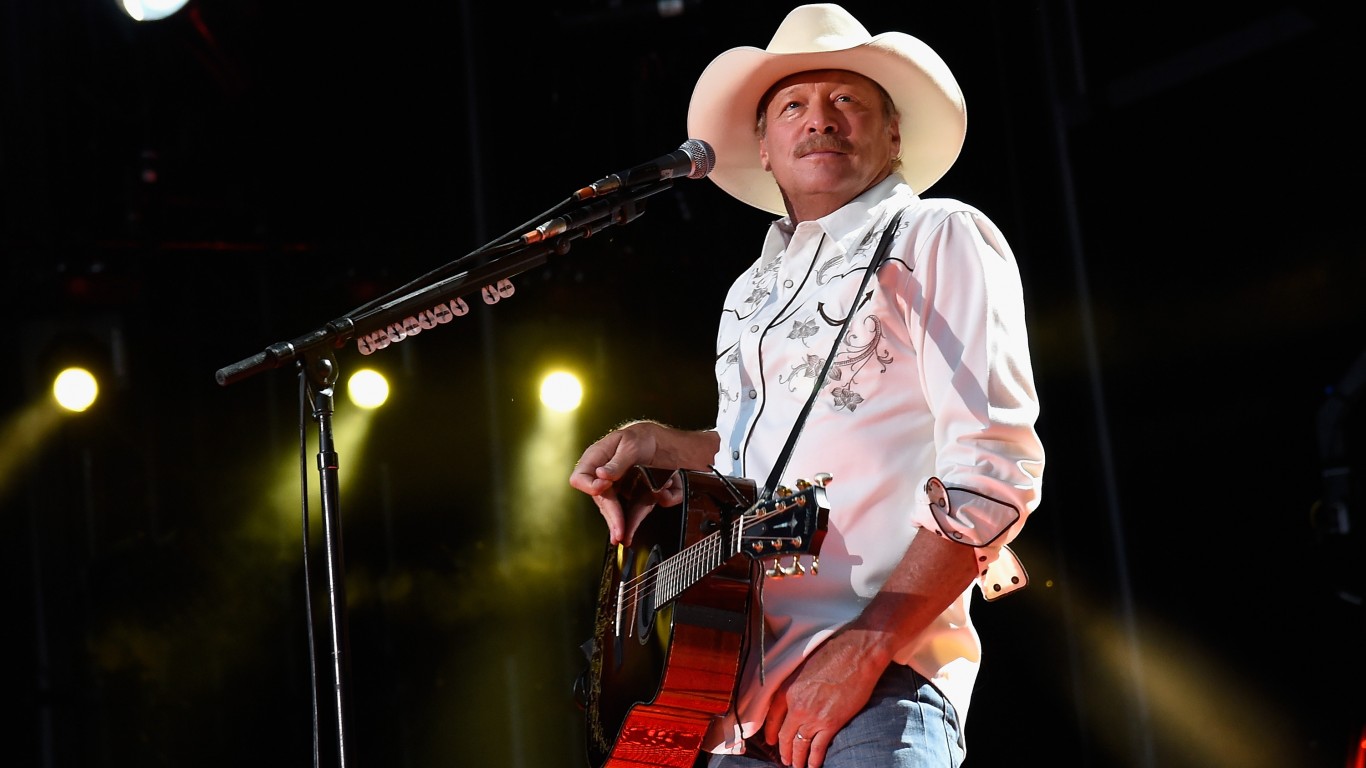
Alan Jackson is a definitive figure in American music, celebrated for his commitment to the "neotraditionalist" country sound. Over a career spanning four decades, he has sold over 75 million records, earned two Grammy Awards, and secured his place in the Country Music Hall of Fame. As of 2026, he remains a revered icon of authentic storytelling.
The Early Life and Roots of a Georgia Legend
Alan Eugene Jackson was born on October 17, 1958, in Newnan, Georgia, to Joseph Eugene "Daddy Gene" Jackson and Mattie Ruth Musick. Growing up in a small house built around his grandfather's toolshed, Jackson’s upbringing was steeped in the values of the rural South. Unlike many of his contemporaries who were groomed for stardom from childhood, Jackson’s path to music was gradual. He grew up singing in church but was primarily focused on mechanics and cars—a passion that would later permeate his songwriting.
His musical awakening occurred in his early twenties. Inspired by the traditional sounds of George Jones, Hank Williams, and Merle Haggard, Jackson began performing in local bands. He married his high school sweetheart, Denise Selig, in 1979. It was Denise who provided the pivotal spark for his career: while working as a flight attendant, she met Glen Campbell at an airport and told him about her husband's talent. Campbell gave her a business card for his publishing company, which eventually led the couple to move to Nashville in 1985.
The transition to Nashville was not an overnight success. Jackson worked in the mailroom of The Nashville Network (TNN) while honing his songwriting craft. This period of "paying dues" was essential, as it allowed him to develop a writing style that was both commercially viable and deeply rooted in the working-class experience. In 1989, he became the first artist signed to the newly formed Arista Nashville label, setting the stage for a decade of unprecedented dominance.
The Neotraditionalist Revolution of the 1990s
When Alan Jackson released his debut album, Here in the Real World, in 1990, country music was at a crossroads. The "Urban Cowboy" phase had faded, and the genre was beginning to lean toward a more polished, pop-oriented production. Jackson, alongside peers like George Strait and Randy Travis, spearheaded the neotraditionalist movement—a return to fiddle, steel guitar, and lyrics focused on the everyday lives of ordinary people.
The success of Here in the Real World was immediate. The title track reached the top of the charts, establishing Jackson as a songwriter with a keen eye for emotional resonance. His follow-up albums, Don't Rock the Jukebox (1991) and A Lot About Livin' (And a Little 'bout Love) (1992), turned him into a household name. Songs like "Chattahoochee" became more than just hits; they became cultural touchstones. The upbeat tempo and nostalgic lyrics of "Chattahoochee" captured the essence of Southern youth, winning the CMA Single and Song of the Year awards in 1993.
Jackson’s refusal to compromise his sound was a hallmark of this era. Even as "stadium country" began to rise, he maintained a stoic, humble stage presence, usually clad in a signature Stetson hat and torn blue jeans. This authenticity resonated with a demographic that felt alienated by the encroaching "pop-country" gloss. By the mid-90s, Jackson was not just a singer; he was the guardian of the genre's soul.
Songwriting Excellence and "Where Were You"
While Jackson’s voice—a warm, resonant baritone—is iconic, his primary contribution to music is his songwriting. He has written or co-written the majority of his hits, a rarity in the Nashville machine. His lyrics often explore the complexities of family, the passage of time, and the dignity of labor. This depth was most profoundly demonstrated following the events of September 11, 2001.
In the wake of the national tragedy, Jackson penned "Where Were You (When the World Stopped Turning)." Unlike other patriotic anthems of the time that focused on vengeance or anger, Jackson’s song was a quiet, introspective examination of grief and faith. He debuted the song at the CMA Awards in November 2001, a performance that is still cited as one of the most significant moments in the history of the awards show. The song earned him his first Grammy for Best Country Song and solidified his status as a songwriter capable of capturing the collective consciousness of a nation.
Other poignant examples of his writing include "Remember When," a masterful chronological look at his marriage to Denise, and "Drive (For Gene)," a tribute to the lessons learned from his father. These songs demonstrate a narrative precision that elevates country music to a high art form, proving that "simple" music can be profoundly sophisticated.
Discography and Chart Achievements
Alan Jackson's statistical record is nearly unparalleled in the genre. With over 35 number-one singles, he ranks among the elite few who have maintained chart relevance across multiple decades. His ability to adapt to changing radio climates while keeping his traditional instrumentation intact is a testament to his artistic integrity.
| Year | Album Title | Notable Singles | Awards/Certifications |
|---|---|---|---|
| 1990 | Here in the Real World | "Wanted," "Chasin' That Neon Rainbow" | 3x Platinum |
| 1991 | Don't Rock the Jukebox | "Dallas," "Midnight in Montgomery" | 4x Platinum |
| 1992 | A Lot About Livin' | "Chattahoochee," "Mercury Blues" | 6x Platinum (Diamond potential) |
| 2001 | Drive | "Where Were You," "Drive (For Gene)" | 4x Platinum |
| 2003 | Greatest Hits Vol. II | "It's Five O'Clock Somewhere" | 6x Platinum |
| 2012 | Thirty Miles West | "So You Don't Have to Love Me Anymore" | No. 1 Billboard 200 |
| 2021 | Where Have You Gone | "Where Have You Gone," "Way Down in My Whiskey" | Final Studio Masterpiece |
The mid-2000s saw Jackson continue his streak with "It's Five O'Clock Somewhere," a collaboration with Jimmy Buffett that became a crossover phenomenon. This track spent eight weeks at number one and earned the Vocal Event of the Year award at the CMAs, demonstrating Jackson's versatility and his ability to appeal to a broad, lifestyle-oriented audience.
Living with Charcot-Marie-Tooth (CMT) Disease
In September 2021, Jackson publicly shared that he had been diagnosed with Charcot-Marie-Tooth (CMT) disease, a hereditary nerve disorder. He revealed that he had been managing the condition for years, but it had begun to significantly affect his balance and mobility on stage. CMT is not fatal, but it is progressive, impacting the peripheral nerves that carry signals from the brain and spinal cord to the muscles.
This revelation gave fans a new perspective on his later performances and his decision to limit touring. In 2024 and 2025, Jackson embarked on his "Last Call: One More for the Road" tour, which served as a farewell to his life as a touring musician. Even with the physical challenges of the disease, Jackson's vocal ability remained remarkably preserved, allowing him to deliver the same rich, steady baritone that fans have loved since 1990. As of 2026, he has largely transitioned into a period of semi-retirement from the road, focusing on his health and family while remaining an active voice in the Nashville community.
Legacy and Influence in 2026
The legacy of Alan Jackson is measured not just in record sales, but in the artists he has influenced. Modern country stars often cite Jackson as the blueprint for how to balance commercial success with artistic tradition. His influence is visible in the resurgence of traditional sounds in the mid-2020s, as a new generation of artists rejects "snap-track" pop in favor of the storytelling Jackson perfected.
In 2017, Jackson was inducted into the Country Music Hall of Fame, the highest honor in the genre. During the ceremony, he was praised not only for his hits but for his character. He has remained married to Denise for over 45 years, and his philanthropic efforts, particularly in his hometown of Newnan and for disaster relief, have been extensive but often quiet.
As we look at his career from the vantage point of 2026, Alan Jackson stands as a bridge between the legends of the past and the future of the genre. He proved that you don't have to shout to be heard and that a song about a wooden boat or a small-town wedding can be as powerful as any stadium anthem.
Frequently Asked Questions
Is Alan Jackson still performing in 2026?
As of 2026, Alan Jackson has significantly reduced his public performances following his "Last Call" tour. While he may make occasional special appearances or studio recordings, he is no longer maintaining a full-time touring schedule due to the progression of Charcot-Marie-Tooth (CMT) disease.
What is Alan Jackson's most successful song?
Statistically, "Chattahoochee" and "It's Five O'Clock Somewhere" are his most commercially successful singles. However, "Where Were You (When the World Stopped Turning)" is considered his most culturally significant work, earning him a Grammy and widespread critical acclaim.
How many albums has Alan Jackson released?
Alan Jackson has released over 20 studio albums, including several gospel and Christmas collections. This count includes his critically acclaimed 2021 album, Where Have You Gone, which many critics view as his final major studio statement.
What is Alan Jackson's net worth in 2026?
Estimates place Alan Jackson's net worth at approximately $150 million to $160 million in 2026. This wealth is derived from his massive record sales, songwriting royalties, and business ventures, including his "Good Time" bar in Nashville and various real estate holdings.
Why is Alan Jackson called the "King of Country Music"?
While the title is often shared with George Strait, Jackson is frequently called the "King" of his era due to his unparalleled ability to write his own hits and his steadfast refusal to abandon traditional country instrumentation during the pop-country eras of the 90s and 2000s.
Exploring the Alan Jackson Catalog
For those looking to understand the depth of Alan Jackson’s contribution to American music, a chronological listening of his discography is highly recommended. Start with Here in the Real World to understand the neotraditionalist foundation, then move to Drive to experience his peak as a songwriter. Finally, his 2021 release Where Have You Gone serves as a poignant bookend to a career defined by honesty and heritage. For enthusiasts of the genre, visiting the Country Music Hall of Fame provides a deeper look at his artifacts and his enduring place in the Nashville narrative.