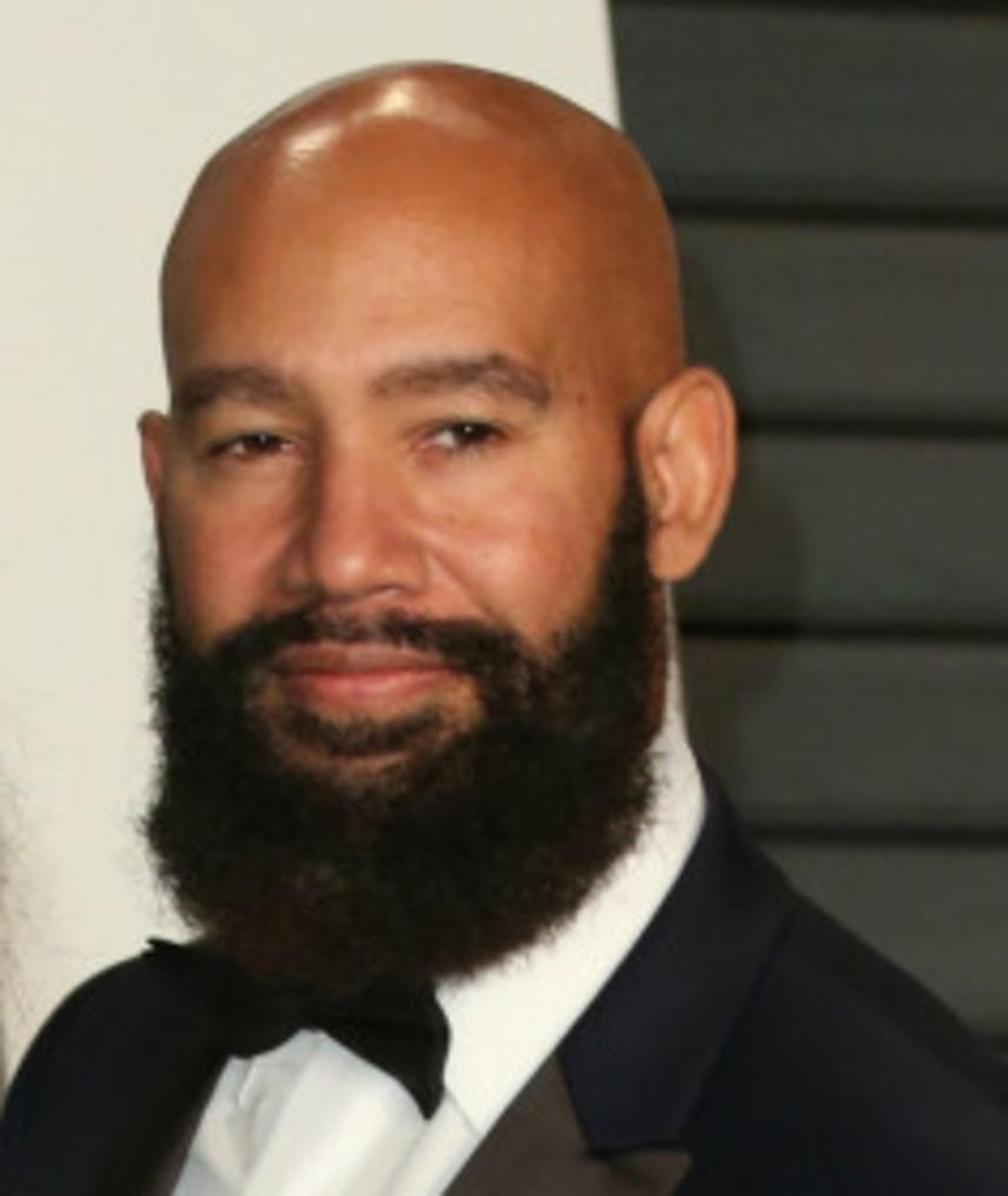
Alan Ferguson is an award-winning American music video director and visual artist celebrated for his sophisticated, minimalist aesthetic and structural precision. Best known for his era-defining collaborations with Solange and Beyoncé, Ferguson has transitioned from high-energy pop-punk visuals to high-concept "visual films" that prioritize architectural composition and cultural symbolism.
Biographical Background: The Roots of a Visual Storyteller
Born on July 5, 1963, in Richmond, Virginia, Alan Ferguson’s upbringing was deeply rooted in the communal and aesthetic traditions of the Black church. He is the son of the late Winifred and William Ferguson, the latter of whom was a prominent pastor. This early exposure to the theater of the pulpit—where storytelling, costume, and spatial arrangement are used to convey profound emotional truths—likely informed Ferguson’s later preference for grand, deliberate imagery.
Unlike many directors who take a traditional path through film school, Ferguson’s trajectory was shaped by his immersion in the music scene. His career blossomed during the late 1990s and early 2000s, a period when music videos were transitioning from simple promotional tools to high-budget cinematic statements. While his personal life became a subject of public interest following his 2014 marriage to singer Solange Knowles (the couple later separated in 2019), Ferguson has consistently maintained a low public profile, preferring to let his visual output define his professional identity. As of 2026, he remains a respected veteran in the industry, often sought after for his ability to translate complex musical themes into cohesive visual languages.
The Evolution of the Ferguson Aesthetic: From Pop-Punk to High Art
To understand the "best films" (in the context of music video cinema) of Alan Ferguson, one must examine the two distinct phases of his career. His early work was characterized by kinetic energy and narrative humor, while his later work shifted toward a static, painterly style that redefined the R&B visual landscape.
The Energetic Early Years (2005–2010)
In the mid-2000s, Ferguson became a go-to director for the pop-punk and alternative rock scene. His work with bands like Fall Out Boy and Panic! At The Disco utilized fast cuts, bright colors, and often humorous, character-driven plots. This era demonstrated his technical proficiency in traditional narrative filmmaking, showing he could manage large sets and complex choreography without losing the personality of the artist.
The Conceptual Shift (2011–Present)
The second phase of Ferguson’s career is marked by a move toward "slow cinema" techniques within the music video format. Starting with his work on Beyoncé’s 4 era and culminating in the visual world of Solange’s A Seat at the Table, Ferguson began to focus on the "tableau" style. This involves wide shots where the subjects are framed within architectural or natural environments, emphasizing the relationship between the human body and the space it occupies. This shift elevated his work from mere music videos to short-form films that are frequently analyzed in academic and artistic circles for their commentary on identity, grace, and geometry.
Essential Filmography: Top Works and Critical Analysis
While Ferguson has not released a traditional 90-minute narrative feature film, his collective work on visual albums and extended music videos functions as a cinematic body of work. Below are the projects that define his legacy.
1. "Cranes in the Sky" – Solange (2016)
Widely considered his masterpiece, this video (co-directed with Solange) serves as a visual companion to the album A Seat at the Table. The "film" is a series of breathtaking tableaus shot across various landscapes. Ferguson’s use of color-blocking and negative space creates a sense of profound isolation and eventual healing. It won a BET Award for Video Director of the Year and is frequently cited as one of the most beautiful music videos ever made.
2. "Dance, Dance" – Fall Out Boy (2005)
A sharp contrast to his later work, this video showcases Ferguson’s talent for narrative irony. Set at a suburban homecoming dance, the video uses a "nerd vs. cool" trope that perfectly captured the mid-2000s zeitgeist. The technical challenge of this shoot involved synchronized choreography and quick-fire editing, proving Ferguson’s versatility across genres.
3. "Party" – Beyoncé ft. J. Cole (2011)
In this project, Ferguson captured a nostalgic, 1980s-inspired "backyard party" aesthetic. Shot at a trailer park in New Jersey, the film is a masterclass in saturation and candid-style cinematography. It demonstrated his ability to make a high-budget production feel intimate and organic, a hallmark of his middle-career work.
4. "Don't Touch My Hair" – Solange (2016)
This film serves as a cultural manifesto. Ferguson utilized symmetry and rhythmic movement to elevate the subject matter. The framing is tight and intentional, focusing on the texture of hair and the geometry of the dancers’ formations. This work solidified Ferguson’s reputation as a director who could blend political statements with high-fashion aesthetics.
Technical Specifications and Stylistic Markers
Analyzing Ferguson’s work requires an understanding of his technical "fingerprints." He often eschews the handheld, shaky camera work common in modern digital media in favor of a steady, tripod-mounted or dolly-driven approach.
| Technical Element | Ferguson’s Approach | Impact on the Viewer |
|---|---|---|
| Framing | Centralized symmetry and wide-angle tableaus. | Creates a sense of order, divinity, and stillness. |
| Color Palette | Monochromatic or complementary color blocking. | Focuses attention on the artist’s form and the environment. |
| Editing Pace | Slow, deliberate cuts that linger on the image. | Allows the viewer to "breathe" and process the visual details. |
| Location Choice | Brutalist architecture, vast deserts, or curated interiors. | Places the human experience within a larger, often stark, context. |
| Choreography | Minimalist, repetitive, and geometric movements. | Emphasizes collective unity rather than individual virtuosity. |
Awards and Professional Recognition
The industry has recognized Alan Ferguson’s contributions with several of its highest honors. His ability to bridge the gap between commercial viability and artistic integrity has made him a staple at award ceremonies.
- BET Awards: In 2017, Ferguson won Video Director of the Year. This was a pivotal moment, as it recognized his collaborative work on the A Seat at the Table visuals, which many critics argued set a new standard for the medium.
- MTV Video Music Awards (VMAs): He has received multiple nominations for Best Direction and Best Choreography over two decades.
- Grammy Recognition: While the Grammy for Best Music Video often goes to the artist, Ferguson’s direction has been the backbone of several nominated projects, contributing to the "Visual Album" trend that redefined how the Recording Academy views short-form film.
Legacy in the Digital Age of 2026
As of 2026, Alan Ferguson’s influence is visible in a new generation of directors who prioritize "vibe" and "aesthetic" over traditional linear storytelling. In an era dominated by short-form vertical video (TikTok and Reels), Ferguson’s commitment to the widescreen, high-fidelity cinematic experience acts as a vital counterpoint. He has proven that music videos can function as "best films" in their own right—works of art that are preserved in museums and studied in film schools.
His legacy is one of visual dignity. Whether he was filming a pop-punk band in a high school gym or a soulful artist on a mountain top, Ferguson’s lens always sought the most elegant version of the truth. He remains a primary architect of the modern visual language of R&B and pop.
Frequently Asked Questions
What is Alan Ferguson's most famous movie or video?
Alan Ferguson is most widely recognized for directing Solange’s "Cranes in the Sky." While he has directed dozens of videos for artists like Katy Perry, John Legend, and Nelly Furtado, "Cranes in the Sky" is cited as his most influential work due to its revolutionary use of minimalist cinematography and its massive impact on 2010s visual culture.
Has Alan Ferguson directed any full-length feature films?
As of 2026, Alan Ferguson has focused primarily on music videos, commercials, and short-form visual albums. He has not released a traditional narrative feature film (such as a drama or action movie) in theaters. However, many industry experts categorize his extended visual projects for the Knowles family as "experimental feature films" due to their length and thematic depth.
What is the "Alan Ferguson style"?
The "Alan Ferguson style" is defined by architectural symmetry, color-blocked costuming, and a "static" camera approach. Instead of following the action with a moving camera, Ferguson often sets a wide, beautiful frame and allows the performers to move within it, similar to how a photographer works or how a director of stage plays arranges a set.
Is Alan Ferguson still active in the film industry in 2026?
Yes, Ferguson continues to work as a senior director and creative consultant. In the mid-2020s, he has shifted toward more brand-based visual storytelling and high-end commercial work, while still occasionally taking on select music video projects for legacy artists who require a high-art cinematic approach.
Who are some of the artists Alan Ferguson has worked with?
His portfolio is diverse, spanning multiple genres. Notable collaborators include Beyoncé, Solange, Fall Out Boy, Panic! At The Disco, Janelle Monáe, Katy Perry, Tally Hall, Gym Class Heroes, and The 1975.
Guidance for Aspiring Visual Directors
For those looking to emulate Alan Ferguson’s success, the primary lesson is the mastery of the frame. Ferguson’s career teaches that you do not need rapid-fire editing to hold an audience's attention; instead, a single, perfectly composed shot can be more powerful than a hundred quick cuts. Study architectural photography and classical painting to understand how to balance a shot. Ferguson’s transition from the high-energy "Dance, Dance" to the meditative "Cranes in the Sky" also highlights the importance of evolution—don't be afraid to change your visual language as your personal tastes and the cultural climate mature.