Alan Dean Foster’s greatest stories are defined by his vast Humanx Commonwealth universe, pioneering novelizations like Star Wars and Alien, and standalone masterpieces such as Midworld. His work is celebrated for its intricate xenobiology, ecological themes, and the ability to expand cinematic universes with literary depth and scientific plausibility.
The Prolific Legacy of Alan Dean Foster
By 2026, the landscape of science fiction has seen many trends come and go, yet the work of Alan Dean Foster remains a cornerstone for readers who value "hard" biological sci-fi and expansive world-building. Foster’s career, spanning over five decades, is characterized by an incredible output that bridges the gap between original space opera and the specialized craft of the media tie-in. Unlike many authors who treat novelizations as mere work-for-hire, Foster treated every project—whether based on his own IP or a major film—as an opportunity to explore the limits of the human (and non-human) condition.
Foster’s primary contribution to the genre is his ability to create "living" ecosystems. He does not simply place characters on a planet; he builds a food web, a climate, and a biological history that dictates the plot. This "ecological storytelling" became his trademark, influencing subsequent generations of writers and filmmakers. From the symbiotic relationships in the Humanx Commonwealth to the terrifyingly plausible biology of the Xenomorph, Foster’s fingerprints are all over the DNA of modern speculative fiction.
The Humanx Commonwealth: A Galactic Foundation
The Humanx Commonwealth stands as Foster’s most significant original contribution to science fiction. Spanning dozens of novels, this series explores a future where humanity has joined forces with the Thranx, an insectoid race. Unlike the "alien invasion" tropes common in the mid-20th century, Foster proposed a peaceful, symbiotic union based on mutual biological and philosophical needs.
The Adventures of Pip and Flinx
The most famous sub-series within the Commonwealth follows Philip "Flinx" Sage and his mini-dragon companion, Pip. Flinx is a product of illegal genetic experimentation, possessing empathic abilities that make him a target and a hero across the stars.
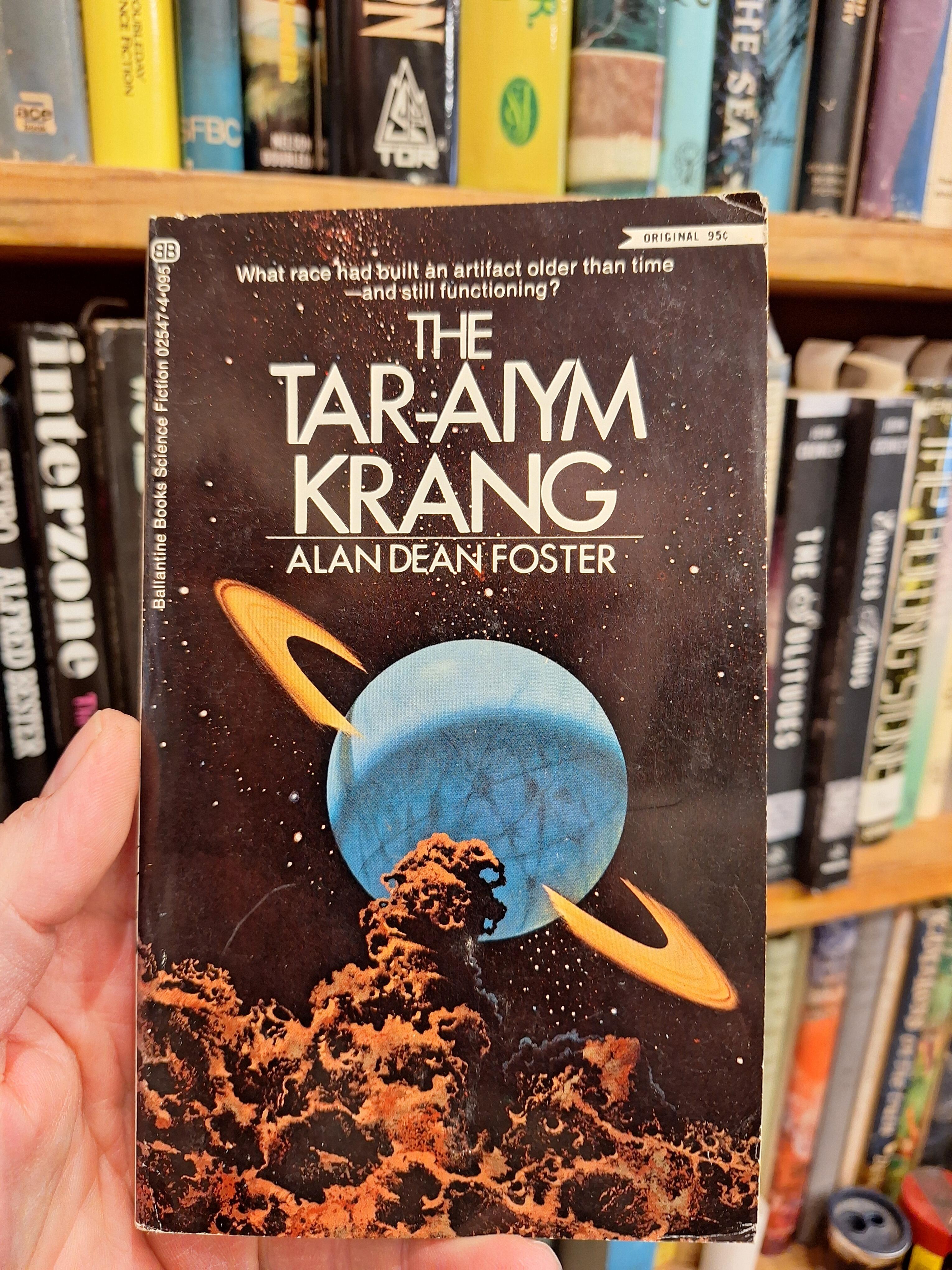
- The Tar-Aiym Krang (1972): This debut novel introduced readers to the Commonwealth and Flinx. It established the "Ancient Ones" trope with a focus on lost technology and the psychological toll of great power.
- Orphan Star (1977): Here, Foster deepened the mystery of Flinx’s origins, taking the reader through diverse planetary environments that showcased his strength in descriptive biology.
- Flinx’s Folly (2003): A mid-point in the saga that raised the stakes to a galactic level, dealing with a threat known as "The Great Empty."
Ecological Masterpieces: Midworld
While part of the Commonwealth, Midworld (1975) is often cited as Foster’s greatest standalone achievement. The story takes place on a planet entirely covered by a multi-layered rainforest, thousands of feet deep. The inhabitants have a telepathic connection to the flora and fauna, a concept that many literary critics note predates the themes found in James Cameron’s Avatar. Foster’s exploration of the "Home Tree" and the intricate defense mechanisms of the jungle remains a masterclass in speculative biology.
The Art of the Novelization: Redefining a Subgenre
Alan Dean Foster is frequently referred to as the "King of the Novelization." For decades, he provided the literary backbone for some of the most successful film franchises in history. He didn't just transcribe scripts; he fixed logic gaps, added character interiority, and built lore that frequently became "canon" in the eyes of fans.
The Star Wars Connection
In 1976, Foster was the ghostwriter for the novelization of the original Star Wars (credited to George Lucas). His contribution to the franchise cannot be overstated. He also wrote Splinter of the Mind's Eye (1978), the very first "Expanded Universe" novel. Intended to be a low-budget sequel if the first film failed, it remains a fascinating "what if" in the history of the franchise, introducing a more atmospheric, planetary-bound adventure for Luke and Leia.
The Alien Trilogy
Foster’s novelizations of Alien, Aliens, and Alien 3 are often considered superior to the average tie-in. He took Ridley Scott and James Cameron’s visuals and grounded them in hard science. He provided the Xenomorph with a sense of "otherness" that was psychological as well as physical. By the 2020s, these books had become sought-after collector's items, appreciated for their dark, atmospheric prose that captured the "used future" aesthetic of the films.
The Damned Trilogy: A Unique Take on Humanity
In the early 1990s, Foster released The Damned trilogy (A Call to Arms, The False Mirror, and The War-End). This series flipped the "advanced aliens" trope on its head. In this universe, most alien races are peaceful and physically fragile. When a galactic war breaks out, they discover Earth and its humans—a race of "berserkers" who are uniquely adapted to violence and high-gravity environments.
This series explored the duality of human nature: our capacity for extreme destruction and our potential for loyalty and creativity. It remains a fan favorite for its fast-paced action and the clever way Foster critiques human history through an alien lens.
Comparison of Alan Dean Foster's Core Series
| Series/Work | Primary Genre | Key Theme | Recommended Entry Point |
|---|---|---|---|
| Humanx Commonwealth | Space Opera | Symbiosis and Xenobiology | The Tar-Aiym Krang |
| Spellsinger | Portal Fantasy | Music as Magic | Spellsinger (Book 1) |
| The Damned Trilogy | Military Sci-Fi | Human Resilience/Violence | A Call to Arms |
| Midworld | Ecological Sci-Fi | Environmental Interconnectivity | Standalone Novel |
| Star Wars Novelizations | Space Fantasy | Mythic Heroism | Splinter of the Mind's Eye |
| Alien Novelizations | Sci-Fi Horror | Survival and Biological Horror | Alien (1979 Novelization) |
The Spellsinger Series: Crossing into Fantasy
While primarily known for science fiction, Foster’s Spellsinger series is a significant part of his 1980s output. It follows Jonathan Meriweather, a law student who is transported to a world of anthropomorphic animals. In this world, music—specifically rock and roll—is the source of powerful magic.
The series is notable for its humor and its creative use of lyrics from the real world as "spells." Despite its whimsical premise, Foster applies his usual rigor to the world-building, creating a consistent internal logic for how music interacts with the physical world. For many readers, this series served as a gateway between the sci-fi and fantasy sections of the bookstore.
Why Foster’s Work Persists in 2026
As we evaluate his career from the vantage point of 2026, Foster’s relevance stems from his optimism and his scientific curiosity. In an era where much of science fiction turned toward the dystopian or the nihilistic, Foster’s Humanx Commonwealth offered a vision of a future where different species could not only coexist but thrive together.
Furthermore, his commitment to biological realism has aged better than the technological "gadgetry" of many of his contemporaries. While his computers might occasionally seem dated, his descriptions of alien ecosystems and evolutionary paths remain grounded in principles that continue to fascinate modern biologists and speculative thinkers.
Essential Reading Guide for New Readers
If you are looking to explore the "Greatest Stories" of Alan Dean Foster, the following sequence is recommended to appreciate the breadth of his talent:
- Start with Midworld: It represents the peak of his world-building and is a self-contained story that requires no prior knowledge of his other works.
- Move to the early Flinx novels: Read The Tar-Aiym Krang and Orphan Star to understand the foundation of the Commonwealth.
- Explore the Novelizations: If you are a fan of cinema, read his version of Alien. It provides a masterclass in how to translate visual horror into a literary format.
- The Damned Trilogy: For a more modern, high-stakes military sci-fi experience that questions what it means to be "human."
FAQ: Understanding Alan Dean Foster’s Impact
Did Alan Dean Foster write the first Star Wars sequel?
Yes, he wrote Splinter of the Mind's Eye, published in 1978. It was the first original novel in the Star Wars universe and served as a sequel to the first film before The Empire Strikes Back was produced.
What is the best order to read the Humanx Commonwealth books?
The "Flinx and Pip" adventures are usually read chronologically, starting with For Love of Mother-Not (a prequel) or The Tar-Aiym Krang. However, Foster’s Commonwealth is vast; standalone books like Nor Crystal Tears (which tells the story of first contact with the Thranx) are also excellent starting points.
Is the Spellsinger series suitable for younger readers?
While it has elements of "portal fantasy" that appeal to younger audiences, the Spellsinger books contain some mature humor and themes typical of 1980s adult fantasy. They are generally considered "Young Adult" to adult in terms of complexity and content.
Why is Alan Dean Foster known for "biological" sci-fi?
Foster has a lifelong interest in biology and the natural world. He focuses on how alien life would realistically evolve in different environments, prioritizing the "logic of the creature" over traditional laser-gun battles.
Did Alan Dean Foster write for Star Trek?
Yes, Foster wrote the novelizations for Star Trek: The Animated Series (known as Star Trek Log 1-10) and the 2009 Star Trek film reboot. He is one of the few authors to have worked significantly in both the Star Wars and Star Trek universes.
Next Steps for Collectors and Fans
For those looking to deepen their collection in 2026, seek out the Centipede Press or Subterranean Press limited editions of Foster’s work. These editions often include new introductions and high-quality illustrations that bring his alien worlds to life. Additionally, checking local used bookstores for original 1970s and 80s Del Rey paperbacks—with their iconic cover art—is a favorite pastime for genre enthusiasts.
Whether you are a fan of cinematic tie-ins or original galactic epics, Alan Dean Foster’s bibliography offers a lifetime of exploration. His "Greatest Stories" are not just relics of the past; they are blueprints for how we might one day interact with the vast, diverse, and biologically complex universe that awaits us.