At the time of his passing in 2019, Alan B. Krueger’s net worth was estimated to be between $1 million and $5 million. His financial legacy was built through a distinguished career as a Princeton University professor, high-level government appointments under two U.S. presidents, and royalties from influential books like Rockonomics.
The Academic Foundation of Alan Krueger’s Wealth
Alan Krueger’s primary financial engine was his long-standing tenure at Princeton University. As the James Madison Professor of Political Economy and a professor of economics and public affairs, Krueger occupied one of the most prestigious chairs in American academia. At Ivy League institutions like Princeton, senior faculty members in the economics department often command salaries ranging from $250,000 to over $400,000 annually, depending on their research output, seniority, and endowed chair status.
Krueger joined the Princeton faculty in 1987, meaning he spent over three decades accumulating wealth through academic compensation, university benefits, and retirement contributions. Beyond his base salary, elite academics often receive housing assistance or low-interest mortgages from the university, which can significantly enhance their net asset value. His role as the founding director of the Princeton University Survey Research Center also provided administrative stipends and further solidified his standing within the university’s financial structure.
His academic contributions were not merely a source of income but served as the platform for his broader consulting and speaking career. As a world-renowned expert on labor markets, Krueger was a frequent participant in exclusive academic conferences and economic forums, which often provide honorariums that supplement a professor's base earnings.
Public Service and Executive Government Compensation
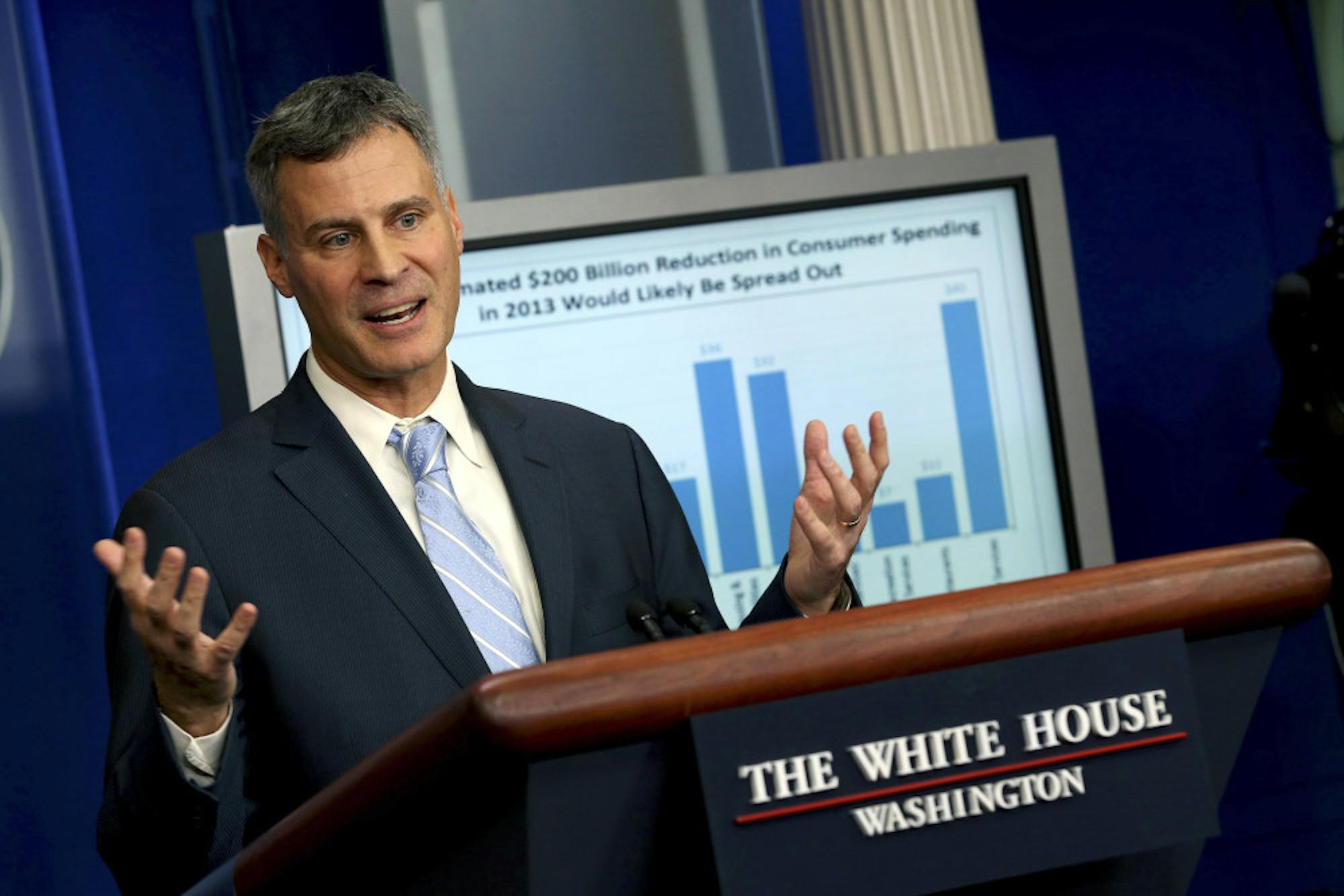
Krueger’s financial profile was also shaped by his high-ranking roles within the United States government. He served as the Chief Economist at the Department of Labor (1994–1995), the Assistant Secretary of the Treasury for Economic Policy (2009–2010), and most notably, the Chair of the White House Council of Economic Advisers (CEA) from 2011 to 2013.
While government service in the U.S. typically pays less than private-sector executive roles or top-tier academic positions, these "Level IV" and "Level II" positions on the Executive Schedule still offered competitive salaries. During his time as CEA Chair, the annual salary for the position was approximately $179,700. However, the true "wealth" generated from these roles often comes in the form of increased marketability.
Holding a cabinet-level advisory position elevates an economist to the global stage, leading to significant increases in speaking fees and book advance potential. For Krueger, his time in the Obama administration solidified his reputation as a "pragmatic labor economist," making him a sought-after voice for global financial institutions and policy think tanks.
Intellectual Property and Published Works: From Labor to Rockonomics
A significant portion of Krueger’s financial legacy stems from his prolific output as an author. Unlike many economists who write strictly for peer-reviewed journals, Krueger successfully pivoted toward the general public with his later works.
His final book, Rockonomics: A Backstage Tour of What the Music Industry Can Teach Us About Economics and Life, published shortly after his death, became a definitive text on the "superstar economy." While academic texts like Myth and Measurement: The New Economics of the Minimum Wage (co-authored with David Card) revolutionized the field, Rockonomics tapped into a broader market.
Author royalties and book advances for high-profile non-fiction can range from the tens of thousands to the hundreds of thousands of dollars. By applying labor economics to the music industry—analyzing ticket pricing, streaming revenue, and the "power law" distribution of wealth among artists—Krueger created a piece of intellectual property that remains a consistent seller in university bookstores and on digital platforms in 2026.
The Great Gatsby Curve and Economic Policy Influence
To understand Alan Krueger’s financial legacy, one must look at his "intellectual capital," specifically the Great Gatsby Curve. Introduced by Krueger in a 2012 speech, this concept illustrated the relationship between high income inequality and low social mobility. This research became a cornerstone of the Obama administration’s economic platform and continues to influence global tax and labor policies today.
Krueger’s research into the minimum wage, conducted with David Card, was perhaps his most financially impactful work—not for his own bank account, but for the millions of workers affected by policy changes. By using "natural experiments" (comparing job growth in New Jersey and Pennsylvania), they proved that raising the minimum wage did not necessarily lead to job losses.
This shift in the economic paradigm earned Krueger numerous awards, including the Kershaw Prize and the Mahalanobis Memorial Medal. While these awards often come with monetary prizes, their primary value lies in the prestige they bring to an economist’s estate, ensuring their research remains the standard for curriculum and government citations.
Estimating Total Assets and Estate Components
When calculating the net worth of an individual like Alan Krueger, one must look beyond liquid cash. His estate likely included a combination of real estate, retirement accounts (403(b) or TIAA-CREF typical of Princeton faculty), and investment portfolios.
| Asset Component | Estimated Value/Source | Impact on Net Worth |
|---|---|---|
| Academic Salary | $300k - $450k annually (Senior Faculty) | High (long-term accumulation) |
| Government Pay | $179k (CEA Chair level) | Moderate (short-term) |
| Real Estate | Primary residence in Princeton, NJ | High (significant appreciation) |
| Book Royalties | Rockonomics, What Makes a Terrorist | Moderate (passive income) |
| Investments | Standard diversified portfolio/retirement | High (30+ years of growth) |
Krueger’s primary residence in Princeton, New Jersey, likely constituted a significant portion of his wealth. Property values in the Ivy League enclave are among the highest in the state, often reaching multi-million dollar valuations for homes near the campus. Furthermore, his long career during a period of significant stock market growth would have allowed for a substantial private investment portfolio.
Comparative Context: Academic Influence vs. Private Wealth
It is important to distinguish between "net worth" and "economic impact." Compared to hedge fund managers or tech executives, an economist’s net worth of $1M to $5M may seem modest. However, within the realm of academic economics, Krueger was in the upper echelon.
His wealth was a byproduct of a life dedicated to public service and empirical research. Unlike some of his contemporaries who moved into high-paying roles at firms like Amazon or Google (where chief economists can earn millions annually), Krueger remained primarily committed to the university and the government. His "financial legacy" is therefore characterized by stability and the monetization of expertise rather than the high-risk, high-reward cycles of the private sector.
FAQ
How much did Alan Krueger earn as CEA Chair?
During his tenure as the Chairman of the Council of Economic Advisers from 2011 to 2013, the salary for this position was set according to the Executive Schedule, Level II. This resulted in an annual salary of approximately $179,700. While this is a high salary for public service, it was likely lower than his total compensation at Princeton when accounting for research grants and endowed chair stipends.
Did Alan Krueger win a Nobel Prize?
Alan Krueger did not win the Nobel Prize in Economic Sciences before his death in 2019. However, many in the field believe he would have shared the 2021 Nobel Prize awarded to his frequent collaborator David Card "for his empirical contributions to labour economics." The Nobel Prize is not awarded posthumously, but Card acknowledged Krueger's essential role in the research that led to the award.
What is the significance of "Rockonomics" to his wealth?
Rockonomics represented Krueger’s transition into "popular" economics. By writing a book that appealed to both music fans and students of finance, he created a durable source of royalty income for his estate. The book analyzed why the top 1% of performers capture the majority of the industry's wealth, a concept that had broad market appeal beyond academic circles.
What was Alan Krueger’s most famous economic theory?
Krueger is most famous for the "Great Gatsby Curve," which he popularized to show that societies with high inequality have lower levels of social mobility. He is also globally recognized for his work on the minimum wage, which used empirical data to challenge the traditional economic assumption that higher wages lead to higher unemployment.
Where did Alan Krueger live?
Alan Krueger lived and worked in Princeton, New Jersey, for the majority of his career. As a senior professor at Princeton University, he resided in one of the most affluent and academically dense areas of the United States, which contributed significantly to his real estate assets and overall net worth.
A Legacy of Empirical Rigor
For those looking to understand Alan B. Krueger’s financial legacy, the focus should remain on the intersection of academic excellence and public policy. While his net worth was substantial for a career academic, his true wealth lay in his influence on how modern governments approach labor, education, and inequality.
To honor his legacy, professionals and students should look toward his work in empirical economics. His shift away from theoretical models in favor of "natural experiments" changed the way we understand the world. For those interested in the financial mechanics of modern industries, reading Rockonomics remains the best way to see Krueger’s mind at work, applying complex labor theories to the tangible world of concert tickets and streaming data. His life serves as a blueprint for how intellectual rigour can lead to both a stable financial life and a lasting impact on global society.