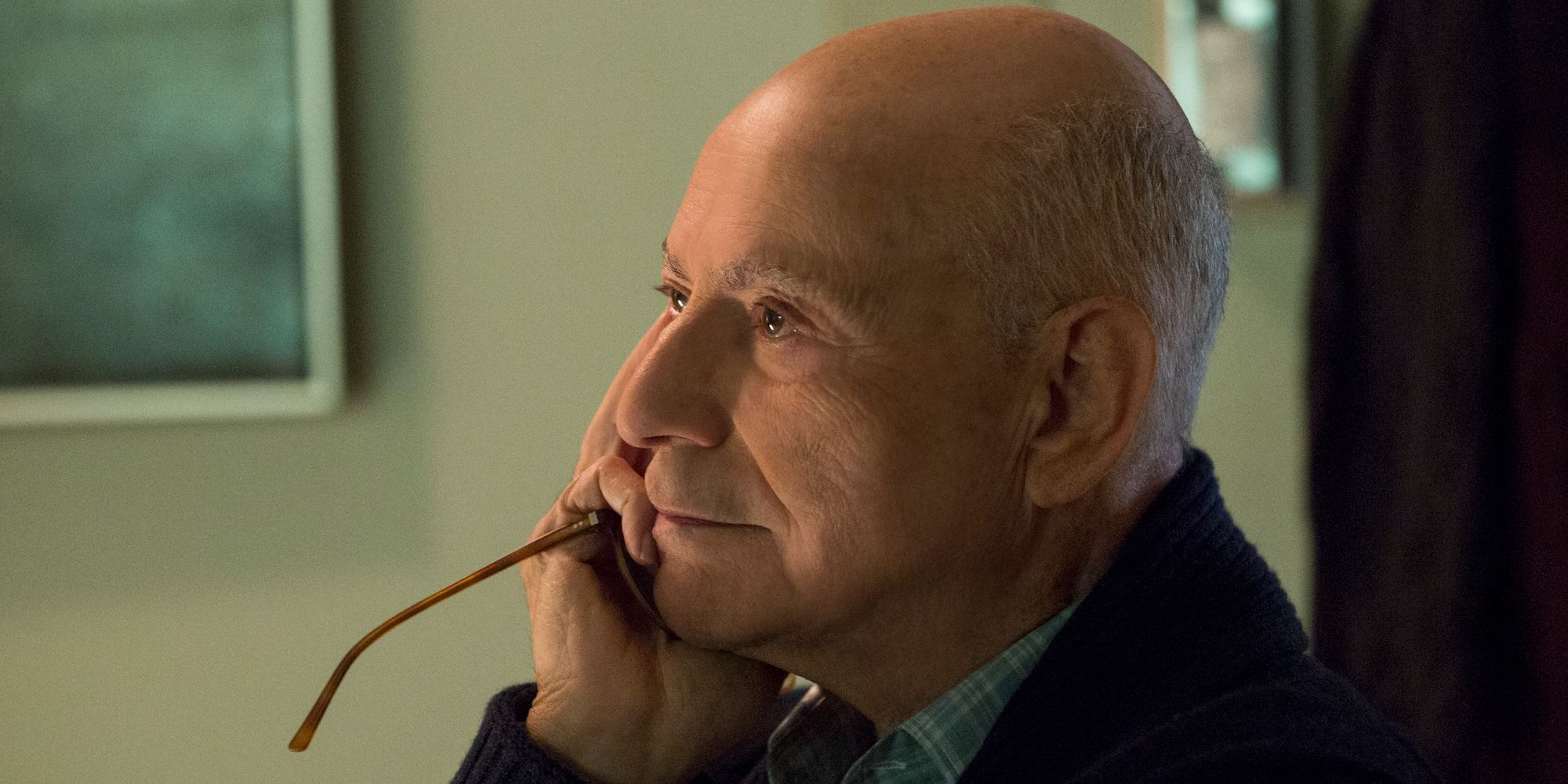
Alan Arkin’s Academy Award journey represents one of the most enduring legacies in Hollywood history, spanning 46 years between his first nomination and his final one. With four nominations and one win, Arkin transitioned seamlessly from a comedic leading man to a revered character actor, leaving an indelible mark on cinema.
The Spectacular Debut: The Russians Are Coming, the Russians Are Coming (1966)
Alan Arkin’s introduction to the Academy of Motion Picture Arts and Sciences was nothing short of historic. In 1966, he made his feature film debut in the Cold War comedy The Russians Are Coming, the Russians Are Coming. It is rare for an actor to receive a Best Actor nomination for their first film, and even rarer for that role to be a comedic one. Arkin played Lieutenant Rozanov, a Soviet submarine officer whose vessel runs aground off the coast of New England.
Arkin brought a grounded, frantic humanity to a role that could have easily descended into caricature. His background in the Second City improvisational troupe provided him with the timing and physical comedy necessary to navigate the film’s high-stakes absurdity. This first nomination signaled the arrival of a performer who refused to be pigeonholed. At a time when the "Leading Man" archetype was often rigid and stoic, Arkin offered a nervous, intellectual, and deeply funny alternative.
The 1966 nomination placed him alongside legends like Richard Burton and Michael Caine. Although Paul Scofield took home the statue for A Man for All Seasons, Arkin’s presence in the category established him as a heavyweight capable of carrying a major studio production on the strength of his personality alone.
Mastery of Pathos: The Heart Is a Lonely Hunter (1968)
Just two years after his comedic debut, Arkin proved his versatility with a second Best Actor nomination for The Heart Is a Lonely Hunter (1968). Adapted from Carson McCullers’ novel, the film featured Arkin as John Singer, a deaf-mute man who becomes a confidant to various troubled souls in a small Southern town.
This performance remains a masterclass in non-verbal acting. Without the benefit of his sharp delivery and linguistic wit, Arkin had to rely entirely on his eyes, posture, and subtle gestures to convey a profound sense of isolation and empathy. The transition from the high-energy panic of Lieutenant Rozanov to the soulful silence of John Singer demonstrated a range that few of his contemporaries could match.
While the 1960s were a period of immense social upheaval, Arkin’s work in The Heart Is a Lonely Hunter provided a quiet, introspective look at the human condition. His nomination in 1968 cemented his status as a "serious" actor, though he would famously go on to balance these dramatic roles with idiosyncratic character work for the next several decades.
The Supporting Actor Renaissance: Little Miss Sunshine (2006)
After a nearly 40-year hiatus from the Oscar podium, Alan Arkin returned with a career-defining performance in the indie darling Little Miss Sunshine. Playing Edwin Hoover, the foul-mouthed, heroin-snorting, yet deeply loving grandfather, Arkin provided the emotional and comedic anchor for the dysfunctional family road trip.
His win for Best Supporting Actor at the 79th Academy Awards was a "lifetime achievement" moment that was also strictly deserved for the performance itself. Arkin managed to make a character who could have been unlikable into the most sympathetic figure in the film. His chemistry with a young Abigail Breslin gave the movie its heart, and his sudden exit from the narrative served as the catalyst for the family's eventual catharsis.
The win was significant for several reasons:
- Validation of the Independent Spirit: It highlighted the Academy's growing appreciation for smaller, character-driven films.
- The Power of Experience: It showed that Arkin had only sharpened his comedic timing with age, utilizing a "less is more" approach to great effect.
- Industry Respect: The standing ovation he received during the ceremony reflected the immense respect his peers held for his five decades of consistent, high-quality work.
Final Recognition: Argo (2012) and the Modern Era
Arkin’s fourth and final Academy Award nomination came in 2012 for Ben Affleck’s Argo. In this historical thriller, Arkin played Lester Siegel, a cynical, veteran Hollywood producer tasked with helping the CIA create a fake movie production to rescue American hostages in Iran.
Arkin’s performance was the source of the film’s most famous line—"Argo f*** yourself"—which became a cultural touchstone. He embodied the weary, "seen-it-all" attitude of a Hollywood survivor, providing a necessary counterbalance to the tension of the political plot. His nomination for Best Supporting Actor showcased his ability to steal scenes even in a crowded ensemble cast that included John Goodman and Bryan Cranston.
Even in his late 70s, Arkin remained a vital force in the industry. He didn't just play the "old man" roles; he played characters with agency, wit, and a sharp edge. His work in Argo served as a reminder that the "Arkin style"—a mixture of deadpan delivery and unexpected warmth—was timeless.
The "Actor's Actor": Why Arkin Remained Relevant
To understand Alan Arkin’s Oscar journey, one must understand his philosophy toward the craft. Arkin was a staunch advocate for the "internal" life of a character. In his memoir, An Improvised Life, he discussed the importance of presence and the dangers of over-rehearsing. He believed that acting was an act of discovery rather than a pre-planned execution.
This philosophy allowed him to avoid the "Oscar-bait" traps that many actors fall into. He rarely chose roles based on their potential for awards; instead, he chose roles that offered a unique psychological puzzle. Whether it was the terrifying villain in Wait Until Dark (a role for which many believe he should have been nominated) or the eccentric mentor in The Kominsky Method, Arkin approached every character with a sense of curiosity.
His influence extends to a generation of actors who value subtlety over theatricality. Performers often cite his ability to be completely present in a scene as a primary inspiration. In 2026, as we look back at his filmography, it is clear that his "Oscar journey" was not just about the four ceremonies where he was a nominee, but about the decades of artistic integrity that made those nominations inevitable.
Summary of Academy Award Nominations and Wins
The following table outlines the specific details of Alan Arkin’s relationship with the Academy Awards throughout his career.
| Year | Film | Category | Result | Key Competitors |
|---|---|---|---|---|
| 1966 | The Russians Are Coming, the Russians Are Coming | Best Actor | Nominated | Paul Scofield (Winner), Richard Burton, Michael Caine |
| 1968 | The Heart Is a Lonely Hunter | Best Actor | Nominated | Cliff Robertson (Winner), Peter O'Toole, Ron Moody |
| 2006 | Little Miss Sunshine | Best Supporting Actor | Won | Eddie Murphy, Mark Wahlberg, Jackie Earle Haley |
| 2012 | Argo | Best Supporting Actor | Nominated | Christoph Waltz (Winner), Robert De Niro, Tommy Lee Jones |
Technical Excellence: The Arkin Method in Practice
Alan Arkin’s success at the Oscars was often rooted in his technical proficiency with dialogue and timing. He was a master of the "pregnant pause," using silence to force the audience to lean in. This was particularly evident in his later work, where a single look from Arkin could convey more than a page of dialogue.
His background in improvisation meant he was exceptionally good at listening—a skill often undervalued in film acting. In Argo, his scenes with John Goodman feel lived-in because Arkin is reacting to Goodman’s energy in real-time, rather than simply waiting for his turn to speak. This authenticity is what the Academy voters consistently recognized across six decades.
Furthermore, Arkin was one of the few actors who could navigate the transition between genres without losing his core identity. He could be frightening, hilarious, or heartbreaking within the same film. This versatility is the hallmark of a "Legendary Journey Through Film Fame," as it requires a level of ego-less dedication to the story over the self.
Frequently Asked Questions
Did Alan Arkin win any other major awards besides his Oscar?
Yes, Alan Arkin was highly decorated throughout his career. In addition to his Academy Award, he won a BAFTA for Little Miss Sunshine, a Golden Globe for The Russians Are Coming, the Russians Are Coming, and a Tony Award for his work on Broadway in Enter Laughing (1963). He also received multiple Emmy nominations later in his career for The Kominsky Method.
What was Alan Arkin's first major film role?
His first major role was Lieutenant Rozanov in the 1966 film The Russians Are Coming, the Russians Are Coming. This role earned him his first Academy Award nomination for Best Actor, a rare feat for a debut performance in a comedy.
How many times was Alan Arkin nominated for an Oscar?
Alan Arkin was nominated for a total of four Academy Awards. He received two nominations for Best Actor (The Russians Are Coming, the Russians Are Coming and The Heart Is a Lonely Hunter) and two for Best Supporting Actor (Little Miss Sunshine and Argo).
Why did it take so long between Arkin's second and third nominations?
While Arkin worked steadily between 1968 and 2006, he often chose eclectic, non-traditional roles in independent films, television, and theater. He also directed several projects. During this period, he focused more on the craft and personal projects rather than mainstream "awards-season" films, until Little Miss Sunshine brought him back into the major awards conversation.
Is Alan Arkin considered one of the best character actors?
Absolutely. While he started as a leading man, Arkin is widely regarded as one of the greatest character actors in cinema history. His ability to disappear into a wide variety of roles—from villains and eccentrics to quiet, soulful men—is the definition of elite character acting.
Exploring the Arkin Legacy Today
For those looking to understand the full breadth of Alan Arkin’s contribution to film, a chronological viewing of his four Oscar-nominated performances is the best starting point. Begin with the frantic energy of The Russians Are Coming, the Russians Are Coming to see his comedic roots, then move to the silent intensity of The Heart Is a Lonely Hunter. Following this with Little Miss Sunshine reveals his mastery of the "grumpy but lovable" archetype, and finishing with Argo showcases his ability to provide gravitas to a modern thriller.
Beyond the awards, Arkin’s books, particularly An Improvised Life, offer invaluable insights for anyone interested in the psychology of performance. As we move further into 2026, his work remains a vital curriculum for aspiring actors and a source of immense joy for film enthusiasts worldwide.