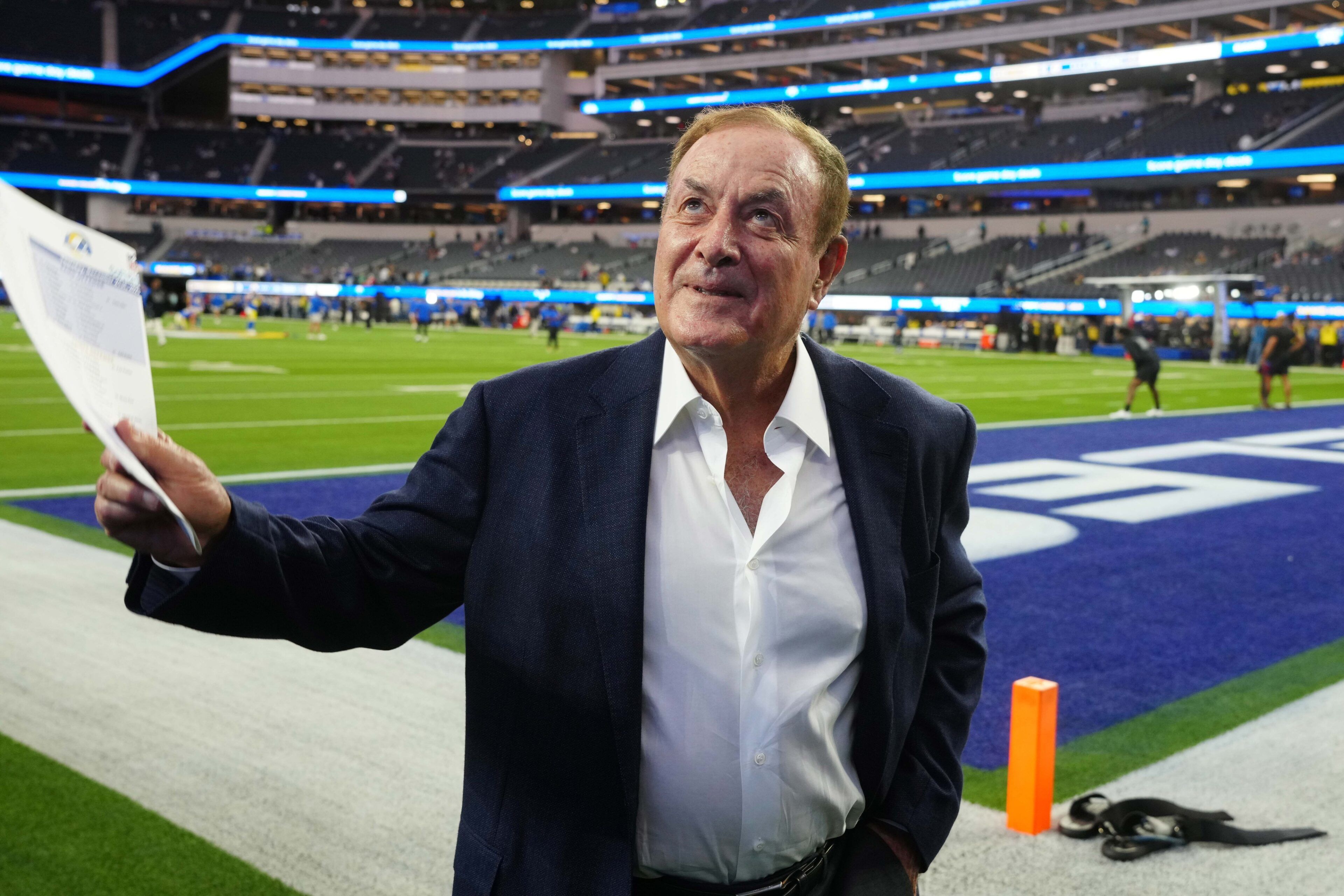
Alan Richard Michaels is an American television sports broadcaster recognized as one of the most distinguished play-by-play announcers in broadcast history. Best known for calling major events on ABC, NBC, and Amazon Prime Video, his defining moments include the 1980 "Miracle on Ice" and decades of prime-time National Football League coverage across Monday Night Football, Sunday Night Football, and Thursday Night Football.
Early Life and the Foundations of a Broadcasting Career
Born on November 27, 1944, in Brooklyn, New York, Al Michaels grew up immersed in the vibrant sports landscape of New York City. His family relocated to Los Angeles during his adolescence, where he attended Alexander Hamilton High School. Michaels pursued higher education at Arizona State University, earning a degree in radio and television while gaining practical experience covering college athletics for campus media.
Michaels began his professional career not in television, but in minor league baseball and regional radio. His initial break came in 1968 when he was hired to call games for the Hawaii Islanders of the Pacific Coast League, alongside work for the University of Hawaii's basketball and football programs. His sharp timing, articulate delivery, and ability to frame complex athletic sequences quickly drew attention from major league networks.
In 1971, Michaels made the jump to Major League Baseball, joining the Cincinnati Reds play-by-play team during the rise of the "Big Red Machine." Three years later, he accepted a broadcasting role with the San Francisco Giants, establishing a strong West Coast presence that solidified his reputation as a versatile play-by-play commentator capable of navigating both regional baseball broadcasts and national network assignments.
The ABC Sports Era: Defining Moments and Historic Calls
Michaels joined ABC Sports in 1976, marking the beginning of a three-decade tenure that elevated him to national prominence. At ABC, he demonstrated rare multi-sport versatility, providing play-by-play commentary for Major League Baseball, college football, the Olympic Games, professional boxing, and ice hockey.
The 1980 Winter Olympics: "Miracle on Ice"
On February 22, 1980, Michaels called the medal-round ice hockey match between the heavily favored Soviet Union and the underdog United States team at the Winter Olympics in Lake Placid, New York. As the final seconds ticked away in the U.S. team's unexpected 4–3 victory, Michaels delivered one of the most famous calls in sports broadcasting history:
"Do you believe in miracles? Yes!"
The phrase transcended sports media, becoming a cultural touchstone in American history. Michaels later called the gold medal match, in which the United States secured victory against Finland.
The 1989 World Series Earthquake Coverage
During Game 3 of the 1989 World Series between the San Francisco Giants and Oakland Athletics at Candlestick Park on October 17, 1989, a major earthquake—the 6.9-magnitude Loma Prieta quake—struck the San Francisco Bay Area. Michaels was on air when the tremor interrupted the live broadcast feed.
Exhibiting composure under pressure, Michaels seamlessly transitioned from play-by-play announcer to live news reporter. He used an emergency broadcast setup powered by an external generator to provide crucial updates to millions of viewers nationwide. His calm, objective reporting earned praise from both journalism peers and civic leaders.
Monday Night Football Prominence
In 1986, ABC assigned Michaels as the lead play-by-play announcer for Monday Night Football (MNF), a role he held for 20 consecutive seasons through 2005. Partnering over the years with color commentators such as Frank Gifford, Dan Dierdorf, and later John Madden, Michaels established the standard for modern NFL prime-time broadcasts. His deep understanding of tactical football, coupled with precise timing, ensured Monday Night Football remained a premier television franchise.
Transition to NBC and the Trade for Oswald the Lucky Rabbit
Prior to the 2006 NFL season, broadcasting rights underwent a major reallocation. NBC acquired the rights to air the new flagship Sunday Night Football (SNF) package, seeking to establish a dominant weekend prime-time broadcast. NBC sought Michaels to pair once again with analyst John Madden, who had already left ABC for NBC.
To facilitate Michaels' departure from his ABC/ESPN contract, a unique corporate transaction occurred between NBC Universal and The Walt Disney Company (ABC's parent company). Disney agreed to release Michaels from his contractual obligations in exchange for several assets, most notably the intellectual property rights to Oswald the Lucky Rabbit—an early cartoon character created by Walt Disney in 1927 that NBC Universal had retained for decades. The deal also included expanded Olympic highlights usage and expanded coverage rights for the Ryder Cup.
| NBC Universal Transferred | The Walt Disney Co. Released |
|---|---|
| • IP Rights to Oswald the Rabbit | • Al Michaels from ESPN/ABC contract |
| • Ryder Cup broadcast privileges | |
| • Olympic video highlight rights |
From 2006 through the 2021 season, Michaels anchored Sunday Night Football on NBC, first alongside John Madden and later with Cris Collinsworth. During his NBC tenure, Sunday Night Football became the highest-rated program on American television for eleven consecutive years, setting unprecedented ratings records for a sports broadcast franchise.
The Streaming Era: Amazon Prime Video and Thursday Night Football
In 2022, Michaels embarked on another pioneering broadcasting chapter by joining Amazon Prime Video as the lead play-by-play voice for Thursday Night Football (TNF). This marked the first time a major regular-season NFL package was distributed exclusively via a digital streaming platform rather than traditional linear television networks.
Partnering with Kirk Herbstreit, Michaels brought veteran authority and network credibility to Amazon’s sports venture. The transition demonstrated the shifting landscape of sports media distribution, proving that high-profile play-by-play talent remains essential for attracting audiences to non-traditional media channels.
Career Statistics and Broadcast Summary
Michaels has called 11 Super Bowls on network television, tying him for the most Super Bowl play-by-play broadcasts in history. He remains the only broadcaster to have called a Super Bowl, a World Series, an NBA Finals, and a Stanley Cup Final on national television.
| Network / Era | Primary Role | Key Broadcast Partners | Landmark Events & Achievements |
|---|---|---|---|
| ABC Sports (1976–2006) | Lead Play-by-Play (MNF, MLB, Olympics) | Frank Gifford, Dan Dierdorf, John Madden, Howard Cosell | 1980 "Miracle on Ice", 1989 Loma Prieta Earthquake, 6 Super Bowls |
| NBC Sports (2006–2021) | Lead Play-by-Play (Sunday Night Football) | John Madden, Cris Collinsworth | 5 Super Bowls, 11 consecutive years as TV's #1 show |
| Amazon Prime Video (2022–Present) | Lead Play-by-Play (Thursday Night Football) | Kirk Herbstreit | Inaugural exclusive NFL streaming package lead announcer |
Broadcast Style and Technical Preparation
Michaels' longevity in high-stakes broadcasting stems from a meticulous approach to preparation and a distinct broadcast philosophy. Sports media critics often highlight several key elements of his delivery:
- Economy of Words: Michaels relies on concise phrasing, allowing the visual action on screen to lead the narrative rather than overcrowding the audio channel.
- Tactical Awareness: His pre-game research includes extensive study of coaching schemes, offensive/defensive adjustments, and roster nuances, permitting real-time analysis of tactical decisions.
- Poise Under Pressure: Whether handling unexpected technical failures, venue disruptions, or high-octane game climaxes, his voice retains clarity and control.
- Historical Contextualization: Michaels routinely connects present play developments to historical precedents, offering viewers a comprehensive perspective on player performances and team records.
Before each broadcast, Michaels constructs hand-drawn spotting boards—visual grids containing player numbers, statistics, biographical notes, and contextual data. This tactile preparation technique enables rapid recognition during high-velocity plays without reliance on electronic monitors.
Frequently Asked Questions
How many Super Bowls has Al Michaels called?
Al Michaels has called 11 Super Bowl games on broadcast television. His first was Super Bowl XIX in 1985 for ABC, and his 11th was Super Bowl LVI in 2022 for NBC, placing him at the top of the all-time Super Bowl play-by-play announcer list alongside Pat Summerall.
What was the transaction involving Al Michaels and Oswald the Lucky Rabbit?
In 2006, to release Michaels from his ABC/ESPN contract so he could join NBC's Sunday Night Football, The Walt Disney Company traded his contractual rights to NBC Universal. In exchange, NBC Universal returned the intellectual property rights of Oswald the Lucky Rabbit—a character created by Walt Disney in 1927—back to Disney, along with secondary sports broadcast rights.
Is Al Michaels still active in sports broadcasting?
Yes. Michaels continues his broadcasting career into 2026, serving primarily as the play-by-play announcer for Amazon Prime Video's Thursday Night Football, while also making occasional guest or emeritus appearances on NBC Sports event coverage.
What honors and awards has Al Michaels received?
Michaels has received numerous industry accolades, including the Ford C. Frick Award from the National Baseball Hall of Fame (2013), the Pete Rozelle Radio-Television Award from the Pro Football Hall of Fame (2013), a Sports Emmy Lifetime Achievement Award (2011), and a star on the Hollywood Walk of Fame.
Key Takeaways for Sports Media Professionals and Enthusiasts
Studying Al Michaels’ career offers practical lessons for sports commentators, broadcast journalists, and media executives:
- Master the Basics Before Innovating: Michaels built his reputation on foundational skills—clear cadence, accurate identification, and thorough preparation—before developing his signature conversational tone.
- Maintain Neutrality and Credibility: A consistent commitment to objective reporting builds long-term audience trust, ensuring that dramatic moments are met with genuine authority.
- Adapt to Evolving Media Formats: From regional radio to broadcast television networks, and ultimately to digital streaming platforms like Amazon Prime Video, Michaels has successfully adapted to major technological shifts in sports distribution.
Broadcasting professionals seeking to refine their play-by-play technique should focus on preparation discipline, effective silence, and situational awareness as modeled by Michaels over his six-decade career.