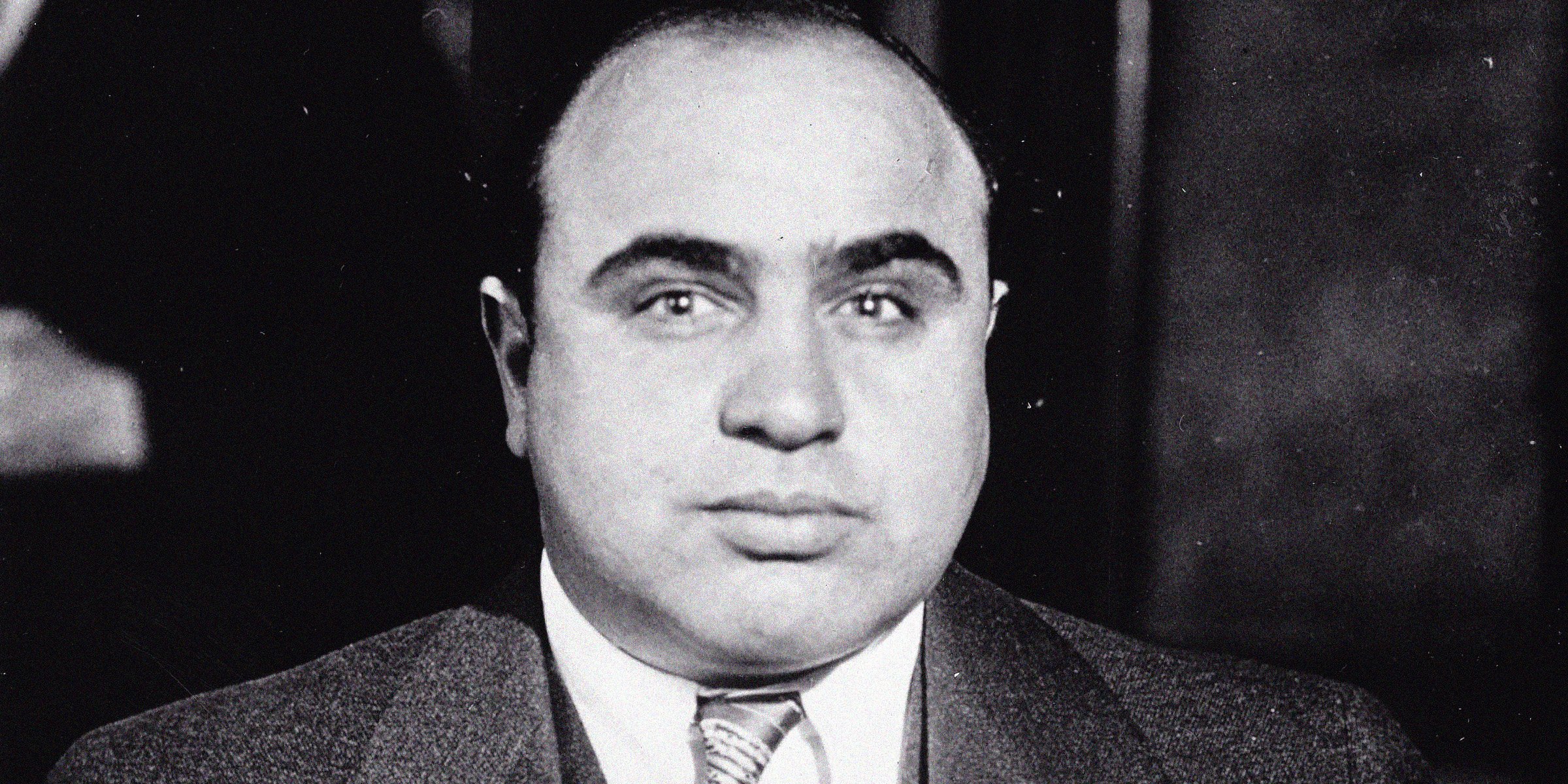
Albert Francis "Sonny" Capone was the only child of the notorious American gangster Al Capone. Unlike his father, who built a criminal empire on violence and bootlegging, Sonny lived a predominantly law-abiding life. He spent decades distancing himself from the "Scarface" legacy, eventually changing his name to Albert Francis Brown to protect his family’s privacy and pursue a quiet, legitimate existence.
The narrative of the Capone family is usually dominated by the blood-soaked streets of Prohibition-era Chicago. However, the story of Albert Francis "Sonny" Capone offers a starkly different perspective—one of a man who inherited a heavy burden of infamy and spent his life trying to shed it. Born into wealth generated by crime, Sonny faced significant physical and social obstacles from birth. His journey from the pampered son of a mob boss to a quiet retiree in Florida is a testament to the complex dynamics of the Capone household and Sonny’s own determination to define himself outside his father’s shadow.
The Early Years: A Legacy of Health and Wealth
Born on December 4, 1918, in Brooklyn, New York, Albert Francis Capone was the product of Al Capone’s marriage to Mae Josephine Coughlin. From his first breath, Sonny’s life was complicated by his father’s lifestyle. It is widely documented that Sonny was born with congenital syphilis, a condition he contracted from his father. This led to chronic health issues throughout his childhood, most notably severe mastoid infections that required risky brain surgery.
The surgery left Sonny partially deaf in his left ear, a physical reminder of the biological toll his father’s life had taken. Despite these health scares, Sonny’s early years were characterized by extreme privilege. While the Great Depression ravaged the nation, Sonny lived in a lavish mansion in Palm Island, Florida. Al Capone was, by all accounts, a doting and protective father. He shielded his son from the brutal realities of the "outfit," ensuring that Sonny received the best education and medical care available. Al’s goal was clear: he wanted his son to be a "legitimate" gentleman, a goal that stood in stark contrast to his own professional activities.
Education and the Notre Dame Years
Al Capone’s desire for his son’s legitimacy was most evident in Sonny’s education. Sonny attended prestigious private schools where he was often shielded by bodyguards, though his parents tried to keep his upbringing as "normal" as possible. He eventually enrolled at the University of Notre Dame in 1937, a move that Al viewed with immense pride.
However, the weight of the Capone name followed him to South Bend, Indiana. Although he was a decent student and stayed out of trouble, the notoriety of his father made it difficult to blend in. After a year at Notre Dame, he transferred to the University of Miami to be closer to his mother while his father was incarcerated. Sonny eventually earned his degree, but the transition into the professional world proved challenging. No matter his qualifications, employers were often hesitant to hire the son of the man who had orchestrated the St. Valentine's Day Massacre.
The Relationship with "Scarface"
The bond between Al and Sonny was remarkably strong, surviving Al’s conviction for tax evasion and his subsequent imprisonment in Atlanta and Alcatraz. While Al was at Alcatraz, he and Sonny exchanged frequent letters. These documents, many of which have been preserved in historical archives, reveal a side of the mobster rarely seen by the public. Al’s letters were filled with fatherly advice, inquiries about Sonny’s grades, and expressions of deep affection.
In one notable letter from 1938, Al wrote to Sonny, "Son of my heart, keep up the good work and don’t let anything get you down." This correspondence highlights a profound irony: the man responsible for countless deaths was obsessed with the moral and academic upbringing of his own child. Sonny visited his father frequently, even as Al’s mental state began to deteriorate due to neurosyphilis. When Al was released in 1939, Sonny was instrumental in caring for him during his final years of cognitive decline at the family’s Florida estate.
A Life of Legitimate Work and One Minor Infraction
Following his father’s death in 1947, Sonny was left with a modest inheritance and the daunting task of building a life. He worked a variety of jobs that were remarkably mundane for a man of his background. At various points, he was a used-car salesman, an apprentice printer, and a distributor for a tire company. He even ran a small restaurant for a time.
Sonny’s commitment to a law-abiding life was almost absolute, with one notable exception. In 1965, he was arrested for shoplifting from a grocery store in Miami. The items stolen included two bottles of aspirin and some small electronic components. When asked by the judge why the son of Al Capone would resort to shoplifting, Sonny simply replied that he wanted to see if he could get away with it. He was sentenced to two years of probation, a minor blemish compared to the life-sentences and gangland hits associated with his surname.
The 1966 Name Change: Becoming Albert Brown
By the mid-1960s, the constant media attention and the stigma of the Capone name became unbearable for Sonny and his family. He had married Diane Ruth Casey in 1941, and together they had four daughters. Sonny wanted to ensure that his children did not have to carry the baggage of their grandfather’s sins.
In 1966, he petitioned the court to legally change his name to Albert Francis Brown. He chose "Brown" because it was common and inconspicuous. For the remainder of his life, he lived as a private citizen. He moved to Auburn, California, where he lived quietly, avoided interviews, and refused to capitalize on his father’s infamy. While authors and filmmakers frequently reached out to him for "the untold story," Sonny remained steadfast in his silence, preferring the peace of anonymity over the wealth of a tell-all book.
Comparing the Two Al Capones
The differences between Al Capone and his son are best illustrated through their choices regarding power, family, and the law. While the elder Capone sought dominance through fear, the younger Capone sought peace through conformity.
| Feature | Al Capone (Father) | Albert Francis "Sonny" Capone (Son) |
|---|---|---|
| Primary Occupation | Organized Crime Boss | Salesman, Printer, Business Owner |
| Legal Record | Numerous arrests; Convicted of Tax Evasion | One minor shoplifting conviction (1965) |
| Attitude Toward Fame | Courted media attention; "Public Enemy No. 1" | Avoided media; Changed name to stay hidden |
| Health | Died of complications from Neurosyphilis | Suffered from congenital syphilis/hearing loss |
| Legacy | Symbol of American Gangsterism | Lived a quiet, law-abiding life |
| Family Role | Patriarch/Provider via illegal means | Family man/Provider via legitimate work |
The Later Years and Death
Albert Francis Brown lived until July 4, 2004, passing away at the age of 85. He outlived his father by 57 years, spending more than half of his life under his assumed name. His death was marked by very little fanfare, exactly as he would have wanted. He left behind a large family that, for the most part, has remained out of the public eye.
His story is often omitted from gangster lore because it lacks the violence and drama that sell movie tickets. However, for historians and those interested in the sociology of crime, Sonny Capone represents a rare "success story" in the world of organized crime families. He broke the cycle of violence and proved that a child is not predestined to follow the path of a notorious parent.
Frequently Asked Questions
Did Sonny Capone ever join the Mafia?
No. Despite numerous opportunities and his father’s connections, Albert Francis "Sonny" Capone never participated in organized crime. His father was adamant that Sonny remain "legit," and Sonny himself showed no inclination toward the criminal lifestyle.
How did Sonny Capone lose his hearing?
Sonny was born with congenital syphilis, which led to chronic and severe mastoid infections in his ears. He underwent a dangerous surgery as a young child to treat the infection, which saved his life but left him partially deaf in his left ear.
Why did Sonny Capone change his name?
He changed his name to Albert Francis Brown in 1966 to escape the constant scrutiny and stigma associated with the Capone name. He wanted to provide a normal, private life for his wife and four daughters, free from the shadow of his father’s reputation.
Was Al Capone a good father?
From a personal and emotional standpoint, Al Capone was described as a deeply loving and attentive father. He spent a great deal of money on Sonny’s education and health and wrote him affectionate letters from prison. However, his criminal activities and the syphilis he passed to his son physically and socially burdened Sonny’s life.
What happened to Al Capone's grandchildren?
Al Capone’s four granddaughters (Sonny's daughters) grew up largely out of the spotlight. Some have occasionally spoken to the media in their later years or participated in documentaries to clarify family history, but they have generally lived private, professional lives.
Pursuing Historical Accuracy on the Capone Family
For those looking to research the "untold story" of Albert Francis Capone further, it is recommended to consult primary sources rather than sensationalized films. The most accurate information regarding Sonny’s life can be found in the correspondence files of the Federal Bureau of Prisons (regarding Al’s time in Alcatraz) and the archives of the Miami-Dade County Court, where his name change was processed.
As of 2026, many historical societies in Chicago and Miami have digitized records from the Prohibition era that include family details previously unavailable to the public. To understand the man behind the shadow, focus on the 1966 legal filings and the personal letters archived in the National Archives, which provide the most authentic glimpse into the character of a man who chose a quiet life over a criminal empire.