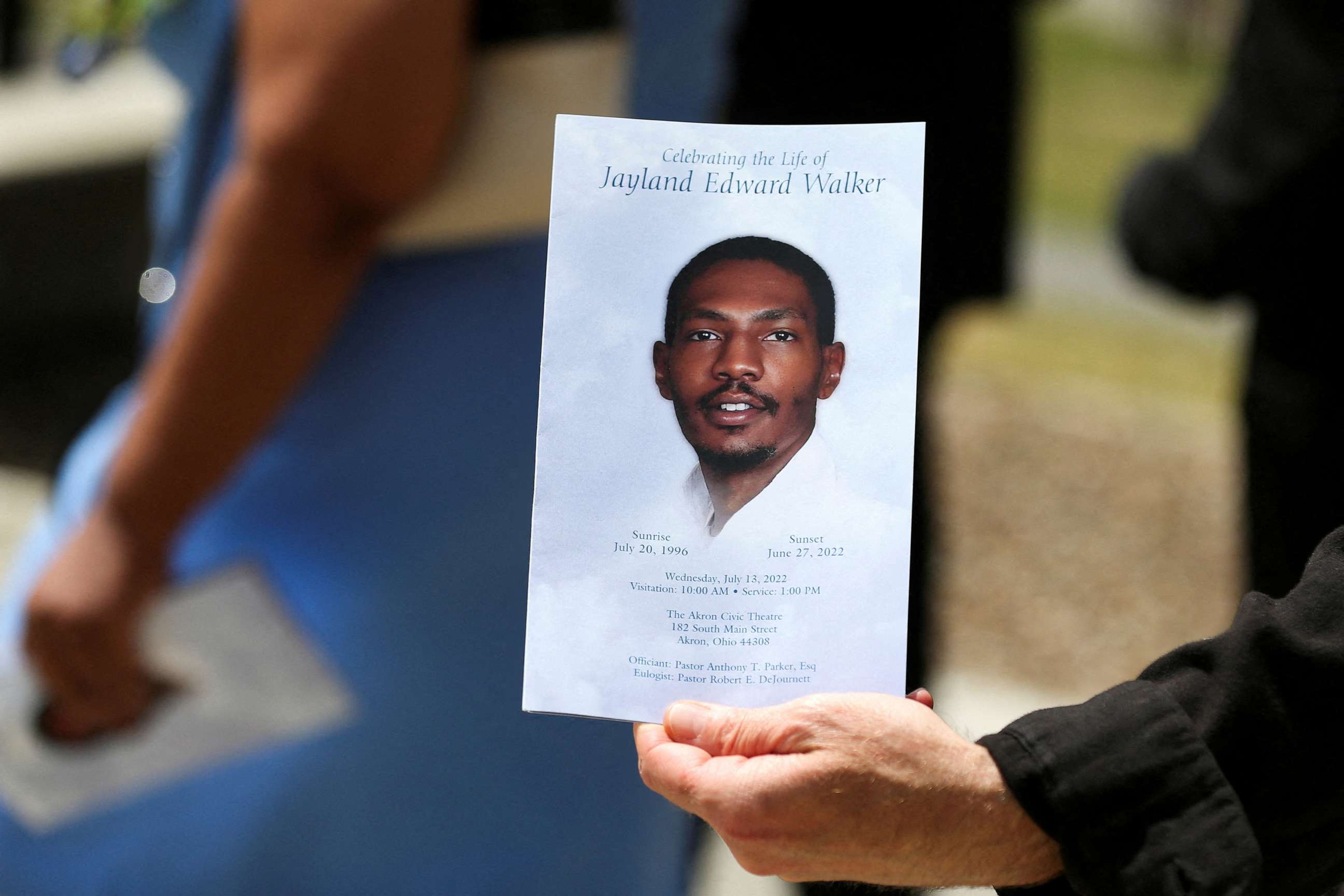
The shooting of Jayland Walker on June 27, 2022, in Akron, Ohio, remains a definitive case study in police use-of-force protocols and community-police relations. Walker, a 25-year-old Black man, was killed by eight police officers who fired more than 90 rounds following a vehicle and foot pursuit. As of 2026, the case continues to drive legislative reform and remains a central point of discussion regarding the legal standards for lethal force.
The Events of June 27, 2022: A Detailed Account
The incident began in the early morning hours when Akron police officers attempted to pull over Jayland Walker for a routine equipment violation and a traffic infraction. Walker did not stop, leading to a high-speed chase through the streets of Akron. During the pursuit, officers reported hearing a sound and seeing a muzzle flash coming from Walker’s vehicle, which was later supported by a shell casing found on the highway and a gunshot detection system notification.
After several minutes, Walker slowed his vehicle and fled on foot toward a parking lot. According to body camera footage and police testimony, Walker was wearing a ski mask and turned toward the pursuing officers. Believing Walker was still armed and posed an immediate threat, eight officers opened fire.
The sheer volume of gunfire—totaling 94 rounds—became the primary focal point of national outrage. Walker was struck 46 times. Upon further investigation, it was determined that Walker was unarmed at the exact moment he was shot; however, a handgun, a loaded magazine, and a wedding ring were found in the driver’s seat of his abandoned car. The medical examiner ruled the death a homicide, noting that Walker died from devastating internal injuries caused by the multiple gunshot wounds.
The Legal Investigation and Grand Jury Decision
Following the shooting, the Ohio Bureau of Criminal Investigation (BCI), under the direction of Ohio Attorney General Dave Yost, conducted an independent probe into the officers' actions. The goal was to determine if the use of lethal force met the legal standard of "objective reasonableness" established by the U.S. Supreme Court in Graham v. Connor (1989).
In April 2023, after reviewing the evidence, an Ohio grand jury declined to indict the eight officers involved. The decision was based on several factors:
- The Muzzle Flash: The evidence suggested Walker had fired a shot from his car during the pursuit, establishing a reasonable belief that he was armed and dangerous.
- The Foot Pursuit: Officers testified that Walker's movements—reaching toward his waistband and turning toward them—constituted an "imminent threat."
- The Threat Perception: Under Ohio law and existing federal precedents, officers are judged based on the information they had at the second force was applied, not with the benefit of hindsight.
While the officers were cleared of criminal charges, the grand jury's decision sparked widespread protests in Akron. Critics argued that the number of shots fired was excessive and that the initial traffic stop did not justify a high-speed chase that escalated into a lethal encounter.
The Federal Civil Rights Lawsuit and Settlement
In June 2023, the family of Jayland Walker filed a $45 million federal lawsuit against the City of Akron and the individual officers involved. The lawsuit alleged that the officers used excessive force, engaged in "procedural deficiencies," and violated Walker’s civil rights. The family’s legal team argued that the "hail of bullets" was a result of a lack of discipline and poor training within the Akron Police Department.
By 2026, the legal landscape of this case has shifted toward resolution and systemic change. Settlement discussions focused not only on financial compensation for the Walker family but also on mandated policy reforms. These included:
- Stricter Pursuit Policies: Restricting high-speed chases for non-violent traffic offenses.
- Mandatory De-escalation: Requiring officers to attempt non-lethal methods during foot pursuits when a suspect’s threat level is ambiguous.
- Enhanced Transparency: Speedier release of body camera footage to the public following officer-involved shootings.
The litigation served as a catalyst for the city to address long-standing grievances regarding the "culture" of the police department, ultimately leading to a settlement that aimed to balance the family's loss with the city's need for operational reform.
Comparative Evolution of Akron Police Policies
The Jayland Walker shooting forced a dramatic re-evaluation of how the Akron Police Department (APD) operates. The following table illustrates the changes in departmental policy from the period preceding the shooting to the current standards in 2026.
| Policy Area | Pre-2022 Standard | 2026 Standard (Post-Reform) |
|---|---|---|
| Vehicle Pursuits | Allowed for equipment violations and minor infractions. | Prohibited for minor traffic/equipment violations unless a violent felony is suspected. |
| Foot Pursuits | Discretionary; few formal restrictions on lone-officer pursuits. | Mandatory risk assessment; emphasis on "contain and wait" over active chasing. |
| Body Camera Use | Required, but delay in public release was standard. | Real-time upload required; public release mandated within 7 days of a critical incident. |
| Oversight | Internal Affairs-focused; limited civilian input. | Independent Police Oversight Board with subpoena power (Issue 10). |
| Use of Force Review | Reviewed by internal chain of command and BCI. | Multi-layered review including a dedicated civilian oversight panel. |
Why the Jayland Walker Case Matters in 2026
The case matters today because it highlights the ongoing tension between police "split-second" decision-making and the requirement for proportional response. The 46 hits on Walker’s body remain a symbol of what many experts call "contagious fire," where the sound of one officer shooting triggers a reflex in others to fire until their magazines are empty.
The "Contagious Fire" Phenomenon
In the Walker case, eight officers fired nearly simultaneously. In 2026, police training academies across Ohio have integrated the Walker incident into their curriculum to teach "fire discipline." This training focuses on ensuring that every shot fired is an individual decision based on a perceived threat, rather than a collective reaction to the noise of other officers’ firearms.
Legislation and "Jayland's Law"
The shooting led to the passage of local ordinances, often referred to as "Jayland's Law," which codified the requirement for independent oversight. It also influenced state-level discussions in the Ohio General Assembly regarding the standardization of body camera footage release. By 2026, these laws have created a blueprint for other mid-sized American cities facing similar crises of confidence.
Community Trust and the Oversight Board
The creation of the Akron Citizens' Police Oversight Board (approved by voters via Issue 10) was a direct result of the Jayland Walker shooting. This board provides a layer of accountability that did not exist in 2022. It allows residents to have a seat at the table during disciplinary hearings and policy drafting, which has been essential in the slow process of rebuilding trust between the police and the Black community in Akron.
Technical Analysis of the Forensic Evidence
To understand why the grand jury reached its decision, one must look at the technical forensics of the case. The Ohio BCI report included ballistic evidence showing a shell casing found in the area where Walker was pursued. Forensic analysis confirmed this casing was fired from the handgun found in Walker's car.
Furthermore, gunshot residue (GSR) tests and the recovery of a firearm with a spent round in the chamber supported the officers' claim that a shot had been fired from the vehicle. From a legal standpoint, this "initial act of aggression" fundamentally changed the risk profile of the stop. In the eyes of the law, the officers were not pursuing a traffic violator; they were pursuing an individual who had fired a weapon at police. This distinction is why the criminal charges were not brought, despite the controversial nature of the final foot pursuit.
FAQ: Key Questions Surrounding the Jayland Walker Case
How many shots were actually fired at Jayland Walker?
Evidence confirmed that eight officers fired a total of 94 rounds. Of those, 46 rounds struck Jayland Walker or grazed his body. The high volume of fire occurred within a window of less than seven seconds, illustrating the rapid escalation of the encounter.
Was Jayland Walker armed when he was shot?
No, Jayland Walker was unarmed when he was killed during the foot pursuit. However, a handgun was recovered from his vehicle, and forensic evidence indicated it had been fired earlier during the vehicle chase. This earlier discharge was a critical factor in the grand jury’s decision to decline charges against the officers.
What is "Issue 10" and how did it change Akron?
Issue 10 was a ballot initiative passed by Akron voters in November 2022. It established a permanent, independent police oversight board and a dedicated office of the independent police auditor. This move shifted the power of police review from being purely internal to including significant civilian involvement.
Did the officers involved face any disciplinary action?
While the officers were cleared of criminal wrongdoing by the grand jury, they were subject to internal administrative reviews. These reviews focused on whether they violated departmental policies regarding firearm use and vehicle pursuits. Most of the officers returned to duty, though the department implemented significant retraining protocols for all staff.
Has the Walker family received a settlement as of 2026?
The civil litigation reached a resolution following extensive negotiations. These settlements in high-profile civil rights cases typically involve multi-million dollar payments and, increasingly, agreements for the city to implement specific policing reforms to prevent future incidents.
Recommendations for Navigating Community-Police Relations
For residents, activists, and legal professionals looking to learn from the Jayland Walker case, the focus should remain on proactive policy engagement rather than reactive protest alone.
- Engage with Local Oversight: Residents should participate in the public meetings of the Citizens' Police Oversight Board. This is the most direct way to influence police conduct and departmental policy.
- Support Body Camera Transparency: Continued advocacy for the immediate release of unedited footage is essential for maintaining public trust. The "7-day rule" established in Akron serves as a model for this transparency.
- Review Use-of-Force Training: Legal advocates should continue to push for "proportionality" in police training, moving away from the "volume of fire" approach that led to 94 rounds being fired at a single individual.
The legacy of Jayland Walker is not found in the gunfire, but in the structural changes to Ohio law and Akron city policy that have emerged since 2022. By 2026, the "Akron Model" of oversight has become a vital case study in how a city can attempt to heal after a profound tragedy.