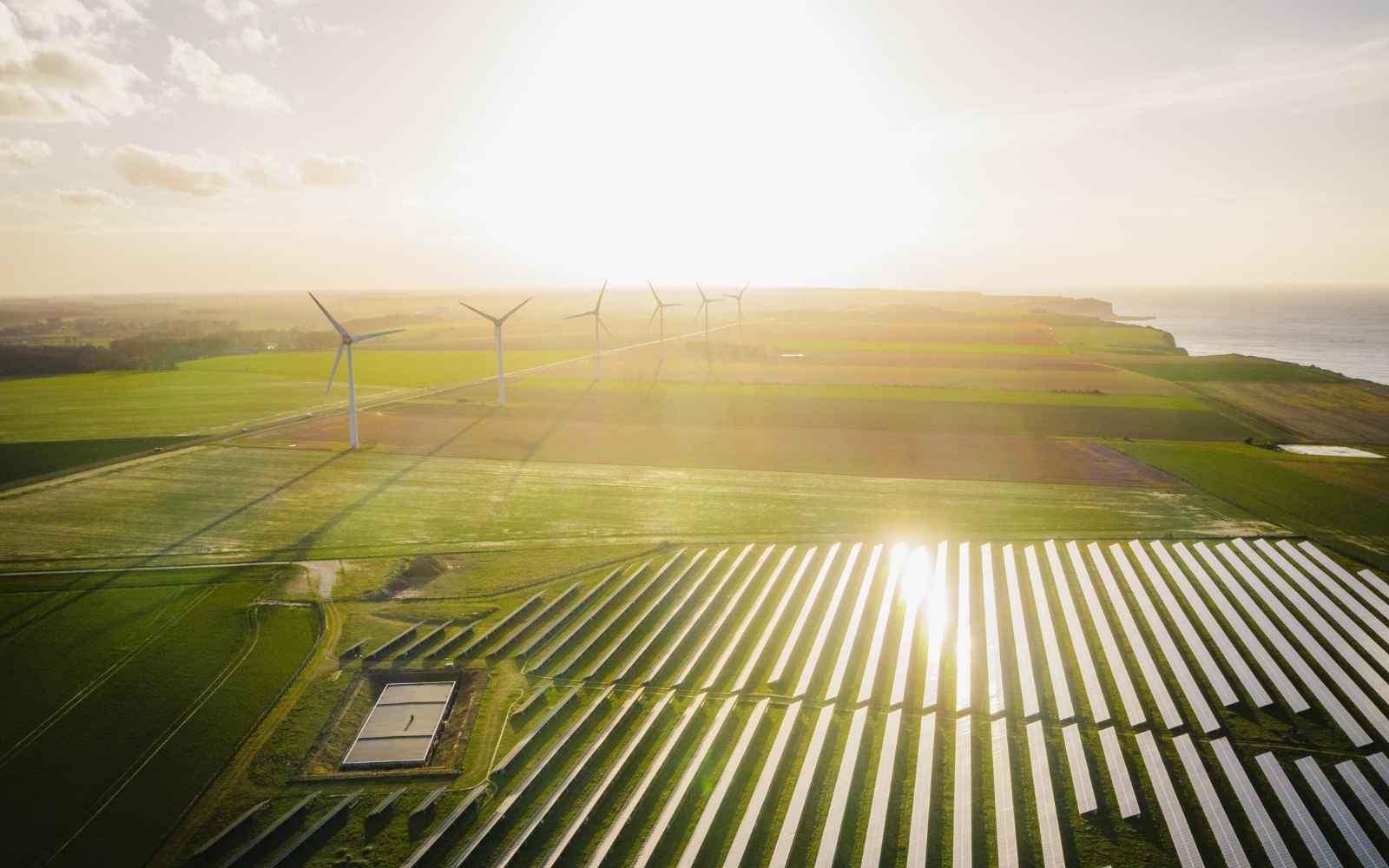
The Akon Lighting Africa (ALA) initiative, bolstered by a landmark $600 million credit line from Chinese international partners, represents a pivotal shift in how decentralized energy is deployed across the African continent. By 2026, this project has transitioned from a localized street-lighting program into a comprehensive renewable energy ecosystem, providing solar-powered solutions to millions of households and establishing a sustainable model for private-sector infrastructure investment in developing nations.
The Origin and Financial Engineering of the $600 Million Credit Line
The genesis of Akon Lighting Africa, founded in 2014 by Aliaune "Akon" Thiam, Thione Niang, and Samba Bathily, was rooted in a fundamental critique of traditional philanthropic models. The founders argued that charitable donations often lacked the scalability and long-term maintenance required for infrastructure. Instead, they sought a commercial approach to solve the energy crisis, where over 600 million people in Africa lived without electricity.
The $600 million credit line—often cited as part of a broader $1 billion financing framework—was secured through a partnership with China Manufacturers Bank and various international backers. This was not a grant but a structured credit facility. It allowed ALA to purchase solar hardware at massive scales, leveraging the manufacturing power of Chinese firms like Sumec and NARI. By 2026, the success of this model is viewed as a blueprint for "impact investing," where the primary goal is to create a self-sustaining market for electricity.
The financial mechanism worked by providing African governments with the hardware and installation services on credit. These governments then repay the credit line over time using the savings generated from replacing expensive, imported diesel and kerosene with domestic solar energy. This approach bypassed the immediate liquidity constraints of local municipalities while ensuring that the equipment provided was high-quality and commercially viable.
Strategic Impact: Beyond Street Lights to Household Power
Initially, Akon Lighting Africa focused on solar-powered street lamps. In rural villages, the introduction of light after dark had an immediate "leapfrog" effect on safety and commerce. However, the "Renewable Energy Revolution 2" phase—the secondary expansion that matured leading into 2026—shifted the focus toward individual household solar kits and community mini-grids.
The Role of Decentralized Mini-Grids
Unlike traditional centralized grids that require thousands of miles of expensive cabling, the ALA model utilizes decentralized mini-grids. These are localized power plants that serve a specific village or cluster of businesses. By 2026, these systems have become more sophisticated, incorporating:
- Lithium-Iron Phosphate (LiFePO4) Battery Storage: Offering longer life cycles and better thermal stability than older lead-acid variants.
- Smart Meters: Allowing users to pay for electricity via mobile money platforms on a "pay-as-you-go" basis.
- Modular Expansion: Systems that can grow as the energy demands of a village increase.
Impact on Rural Economies
The availability of reliable solar power has fundamentally altered the economic landscape of the 25+ countries where ALA operates. With electricity, small businesses such as tailors, barbers, and grain millers can operate for longer hours. Furthermore, the health benefits are significant; the reduction in indoor air pollution from kerosene lamps has led to a measurable decrease in respiratory illnesses in participating regions.
Solektra International and the Technical Infrastructure
The operational arm of this revolution is Solektra International. As the lead partner in Akon Lighting Africa, Solektra handles the technical procurement, logistics, and installation of the solar arrays. One of the most critical components of their strategy was the realization that importing technology without local expertise would lead to failure.
To address this, the Solektra Solar Academy was established in Bamako, Mali. This institution was designed to train African engineers and technicians to install and, more importantly, maintain solar equipment. By 2026, the academy has produced thousands of graduates who form a skilled workforce across the continent. This localized expertise ensures that when a panel or inverter fails, it can be repaired by a local professional rather than waiting for international support.
The technical specifications of the ALA deployments typically include high-efficiency polycrystalline or monocrystalline panels adapted for high-heat environments. The street lights are integrated units featuring motion sensors to conserve battery life during low-traffic periods, a feature that has become standard in the 2026 iteration of the hardware.
Comparative Analysis of Renewable Energy Initiatives
To understand the scale of the $600 million investment and the ALA initiative, it is helpful to compare it with other global and regional energy programs.
| Feature | Akon Lighting Africa (ALA) | USAID Power Africa | Sustainable Energy for All (SEforALL) |
|---|---|---|---|
| Primary Funding Source | Private Credit/Chinese Backing | U.S. Government/Public-Private | Multi-lateral (UN/World Bank) |
| Operational Model | Commercial/Hardware Credit | Policy Reform/Technical Assistance | Policy & Advocacy |
| Primary Focus | Rural Electrification & Mini-grids | Large-scale Grid & Policy | Global Energy Access Targets |
| Hardware Ownership | Government/Community Lease | Diverse (IPPs, Utilities) | Mostly Publicly Funded Projects |
| Training Component | Dedicated Solar Academy (Mali) | Intermittent Workshops | Educational Partnerships |
| Primary Reach (2026) | 25+ African Countries | Sub-Saharan Africa | Global |
Challenges, Criticisms, and Operational Limitations
Despite the significant achievements, the $600 million solar revolution has faced hurdles. Critics initially questioned the reliance on Chinese debt, fearing it could contribute to long-term sovereign debt issues for smaller African nations. Furthermore, the logistical challenge of maintaining equipment in extremely remote areas remains a persistent concern.
Operational limitations noted by 2026 include:
- Maintenance Gaps: In some regions, despite the Solar Academy's efforts, the "last-mile" maintenance remains difficult to coordinate, leading to some early-generation street lights falling into disrepair.
- Political Volatility: Projects in regions experiencing civil unrest or sudden government changes have faced delays in repayment and physical security risks for the infrastructure.
- Scalability of Heavy Industry: While solar is excellent for lighting and small appliances, it remains difficult to power heavy industrial manufacturing solely through the current generation of mini-grids without massive, more expensive storage solutions.
To mitigate these issues, ALA and Solektra have moved toward more robust, vandal-proof hardware designs and have integrated GPS-based remote monitoring systems that allow technicians in Bamako or Dakar to see real-time performance data for arrays thousands of miles away.
The Long-Term Legacy of the Solar Revolution
By 2026, the "Akon Solar Power" phenomenon is no longer seen as a celebrity vanity project but as a foundational case study in decentralized infrastructure. The initiative proved that the "missing middle" of energy—communities too small for a massive power plant but too large to ignore—could be served through innovative financing and scalable technology.
The project has also served as a catalyst for other entrepreneurs. Seeing the success of the $600 million credit line, other private equity firms and green energy funds have increased their allocations for African renewable projects. This has led to a more competitive market, driving down the cost of solar kits for the average African consumer and increasing the quality of the technology available.
Frequently Asked Questions
How exactly does the $600 million credit line work?
The $600 million is a structured credit facility provided by international banks and manufacturers. It allows Akon Lighting Africa to purchase solar equipment in bulk. African governments or local authorities then enter into contracts to have this equipment installed, agreeing to pay back the cost over a set period. This "pay-as-you-save" model uses the money that would have been spent on fossil fuels to service the debt.
What happened to the Solar Academy in Mali?
The Solektra Solar Academy in Bamako continues to be a central hub for renewable energy education in Africa. By 2026, it has expanded its curriculum to include advanced battery management systems and the integration of IoT (Internet of Things) for smart grid management. It serves as both a training center and a research facility for adapting solar technology to African climates.
Is Akon Lighting Africa still active in 2026?
Yes, as of 2026, the initiative remains active but has evolved. While the initial "revolution" focused on rapid deployment, the current phase focuses on upgrading older systems to more efficient 2026-standard components and integrating with other digital services like the Akoin cryptocurrency ecosystem for energy payments.
Which countries have benefited most from this initiative?
While over 25 countries have participated, nations like Senegal, Mali, Guinea, Sierra Leone, and Niger have seen some of the most significant rural deployments. These countries had high rates of energy poverty and favorable regulatory environments for decentralized solar providers.
How does this project impact climate change?
By providing a clean alternative to kerosene lamps and diesel generators, ALA prevents millions of tons of CO2 emissions annually. Furthermore, it prevents the "lock-in" effect where developing nations would otherwise build coal or gas plants to meet rising energy demands.
Practical Next Actions for Stakeholders
For local governments and NGOs looking to replicate or integrate with the Akon Lighting Africa model in 2026, the priority must be on local capacity building. The technical success of solar power is only as durable as the local technicians who maintain it.
Investors should look toward mini-grid interoperability, ensuring that different solar systems can eventually connect to form larger, more stable regional grids. For the end-user, the focus is on energy literacy—understanding how to manage household loads to maximize the lifespan of battery storage systems.
The "Renewable Energy Revolution 2" underscores a fundamental truth: energy access is the prerequisite for all other forms of development, from digital literacy to modern healthcare. As we move further into 2026, the lessons learned from this $600 million venture continue to light the path for global energy equity.