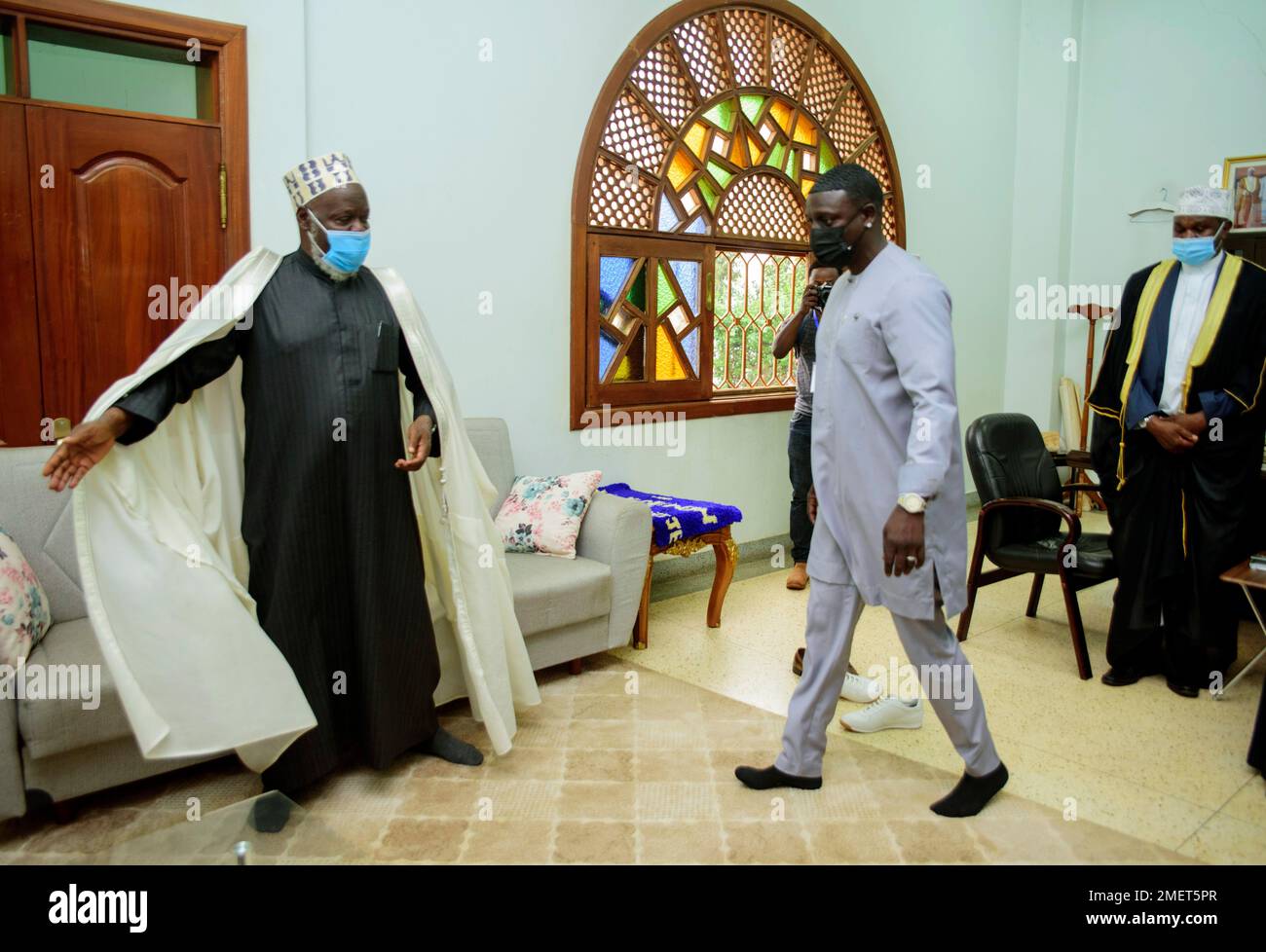
Akon, born Aliaune Damala Badara Akon Thiam, considers Senegal his home country and the primary source of his cultural identity. Although born in St. Louis, Missouri, he spent much of his childhood in Senegal before returning to the United States, maintaining a lifelong commitment to the nation’s development and global image.
The Duality of Identity: Born in the U.S., Bred in Senegal
Understanding Akon’s connection to his home country requires navigating the nuances of his early life. Born on April 16, 1973, in St. Louis, Akon’s entry into the world occurred in the United States, but his formative years were spent under the West African sun. This dual upbringing allowed him to bridge the gap between Western R&B and traditional African sounds, a fusion that eventually defined his multi-platinum career.
Akon’s family moved back to Senegal shortly after his birth, settling in the city of Kaolack and later the capital, Dakar. It was here that he learned the Wolof language and immersed himself in the social fabric of Senegalese life. For Akon, Senegal is not just a place on a map; it is the "motherland" that provided the moral and cultural compass for his later success. By the time he returned to the United States at age seven, settling in Jersey City, New Jersey, his identity was already firmly rooted in Senegalese values, including the concept of "Teranga"—the famous Senegalese hospitality.
The transition back to the U.S. was not without its challenges. Growing up in a rougher urban environment, Akon often found himself at odds with the law, but he credits his Senegalese upbringing for giving him the resilience to pivot toward music and business. In 2026, looking back at his three-decade career, it is clear that his "home country" has remained the focal point of his philanthropic and architectural ambitions, far outweighing his ties to his American birthplace.
Mor Thiam and the Cultural Foundation of Akon’s Music
The roots of Akon’s artistry are inextricably linked to his father, Mor Thiam, a world-renowned percussionist and a master of the djembe. Mor Thiam’s influence on Akon cannot be overstated; he was a cultural ambassador for Senegal long before his son achieved global fame. Through his father, Akon was exposed to the rhythmic complexities of West African music, which laid the groundwork for the melodic, high-pitched vocal style that made him a superstar in the mid-2000s.
Akon’s mother, Kine Gueye Thiam, also played a pivotal role in maintaining the family’s Senegalese heritage in the U.S. The Thiam household was an enclave of Senegalese culture, where traditional food, music, and religious practices (Islam) were central. This environment ensured that even while Akon was ascending the charts with hits like "Locked Up" and "Smack That," he remained deeply connected to the needs and rhythms of his people back home.
In his music, this manifests as a blend of R&B, hip-hop, and West African mbalax. He was one of the first major artists to consistently feature African collaborators and to sing in Wolof on mainstream platforms. This cultural pride served as a beacon for other African artists, effectively opening the door for the global "Afrobeats" explosion that dominated the charts into the 2020s.
Akon Lighting Africa: A Return to the Continent
While many celebrities engage in surface-level charity, Akon’s commitment to his home country and the wider continent took a massive leap in 2014 with the launch of "Akon Lighting Africa" (ALA). Recognizing that a lack of electricity was the single greatest barrier to development in rural Senegal and beyond, Akon partnered with Thione Niang and Samba Bathily to provide solar-powered energy solutions.
The initiative was born out of a realization that over 600 million Africans lived without access to a stable power grid. Instead of waiting for government infrastructure, ALA utilized a private-sector model to install street lamps and domestic solar kits. By 2026, the project has impacted millions of households across more than 15 African nations, with Senegal serving as the primary pilot for many of its technical innovations.
Key Achievements of Akon Lighting Africa
The project’s success was built on three pillars: accessibility, sustainability, and training.
- Direct Infrastructure: ALA installed over 100,000 solar street lamps and thousands of solar micro-grids, focusing on rural villages that had never seen electric light.
- The Solar Academy: Located in Bamako, Mali, this institution was designed to train African engineers and entrepreneurs to maintain the technology, ensuring that the project was not just a donation, but a self-sustaining industry.
- Socio-Economic Impact: The introduction of light extended the hours of commerce and education. Market stalls could stay open later, and children could study after sunset, leading to a measurable uptick in local literacy and economic activity.
Akon City: The Vision for a Future Senegal
Perhaps the most ambitious project ever undertaken by an entertainer in their home country is "Akon City." First announced in 2018 and gaining significant momentum through the early 2020s, this $6 billion "futuristic" metropolis is located in Mbodiène, about 100 kilometers south of Dakar. The project was granted 2,000 acres of land by the Senegalese government and was envisioned as a "real-life Wakanda."
As of 2026, Akon City represents a long-term development play. While initial construction faced delays due to global economic shifts and the complexities of building a smart city from scratch, the vision remains focused on providing a high-tech hub for the African diaspora. The city is designed to run entirely on renewable energy and utilize "Akoin," a cryptocurrency designed to empower African entrepreneurs by bypassing volatile national currencies.
| Feature of Akon City | Description | Intended Impact |
|---|---|---|
| Energy Source | 100% Solar-powered grid | Environmental sustainability and energy independence. |
| Economic Basis | Akoin Cryptocurrency | Financial inclusion and reduced reliance on fiat currency. |
| Health Hub | 5,000-bed hospital complex | Providing world-class medical care to West Africa. |
| Education Zone | Research & Technology University | Developing a local workforce for the digital economy. |
| Tourism Sector | Eco-resorts and cultural centers | Boosting Senegal’s GDP through international travel. |
The city is structured into various "districts," including a healthcare district, a technology district, and a film district. By investing so heavily in Mbodiène, Akon has helped shift the economic focus of Senegal away from the congested capital of Dakar, encouraging decentralization and rural development.
The Role of Akoin in Economic Sovereignty
Akon’s vision for his home country extends into the realm of financial technology. He has long argued that the multiplicity of currencies and high transaction fees in Africa hinder trade and economic growth. Akoin was developed as a "utility token" to provide a unified currency for the 54 countries of the African continent, starting with a heavy focus on the Akon City ecosystem in Senegal.
The goal of Akoin is to allow citizens to trade minutes of prepaid cellphone time—a common "shadow currency" in Africa—for digital tokens that can then be used to pay for utilities, goods, and services. In 2026, this experiment in digital sovereignty continues to be a point of study for economists. While the road to mass adoption has been steep, the initiative highlights Akon’s desire to see Senegal lead the way in technological leapfrogging, moving directly from cash-based societies to blockchain-integrated economies.
Cultural Diplomacy and the "Senegalese Dream"
Akon has become an unofficial ambassador for Senegal, using his global platform to change the narrative about Africa. For decades, Western media focused on poverty and conflict; Akon shifted the focus to opportunity, innovation, and luxury. By positioning Senegal as the site of a multi-billion dollar smart city, he has forced global investors to look at West Africa with fresh eyes.
His influence is also seen in the "Return to Africa" movement among the African diaspora. Following the lead of countries like Ghana, Akon has encouraged African Americans and those in the Caribbean to look to Senegal as a place for investment and resettlement. This "Senegalese Dream" is built on the idea that the continent’s future will be written by those who return to build it, rather than those who wait for external aid.
Frequently Asked Questions
Where exactly was Akon born?
Akon was born in St. Louis, Missouri, in the United States. However, he moved to Senegal shortly after his birth and lived there for a significant portion of his childhood before returning to New Jersey. This dual citizenship and upbringing allow him to navigate both American and West African cultures with ease.
Is Akon actually a citizen of Senegal?
Yes, Akon maintains his Senegalese citizenship and has been a prominent figure in the country’s civic life. He has worked closely with various Senegalese administrations, including that of President Macky Sall, to secure land and legal frameworks for his development projects.
What language does Akon speak at home?
Akon is fluent in Wolof, the most widely spoken language in Senegal. He often incorporates Wolof into his music and uses it during public appearances in Senegal to connect with the local population. He also speaks English and French, reflecting the colonial and international linguistic landscape of West Africa.
Is Akon City a real place you can visit in 2026?
As of 2026, the site in Mbodiène is an active development zone. While the full "city of the future" is a multi-phase project intended to span decades, specific sectors like the tourism infrastructure and some initial housing units have seen progress. It is currently more of an industrial and construction site than a fully functioning metropolis, but it remains a significant landmark for the region.
How did Akon get the land for Akon City?
The Senegalese government, via the state-owned tourism agency SAPCO (Société d'Aménagement et de Promotion des Côtes et Zones Touristiques du Sénégal), granted the land to Akon. This was done to encourage private investment in the country’s tourism and technology sectors.
Supporting the Vision: How to Explore Senegalese Culture
For those inspired by Akon’s journey and his commitment to his home country, the best next step is to explore the rich cultural and economic landscape of Senegal itself. Whether through supporting West African businesses, exploring the vibrant music scene in Dakar, or visiting the coastal regions like Mbodiène, there are numerous ways to engage with the roots that shaped the star.
If you are interested in the development aspect, following the progress of the Akon Lighting Africa initiative and the Akon City project via official Senegalese government portals provides a transparent look at how celebrity influence can be converted into tangible infrastructure. Senegal remains one of the most stable and welcoming countries in Africa, making it an ideal entry point for anyone looking to understand the "roots" of the global superstar.