As of 2026, Akili Smith Sr. remains one of the most significant figures in NFL Draft history, representing a unique intersection of high-stakes scouting, the "one-year wonder" phenomenon, and a lasting family legacy. While his professional playing career was brief, the longevity of his impact on how NFL front offices evaluate "senior" prospects and the subsequent rise of his son, Akili Smith Jr., has kept his name at the forefront of football discourse for nearly three decades.
The 1999 NFL Draft: A Turning Point in Scouting History
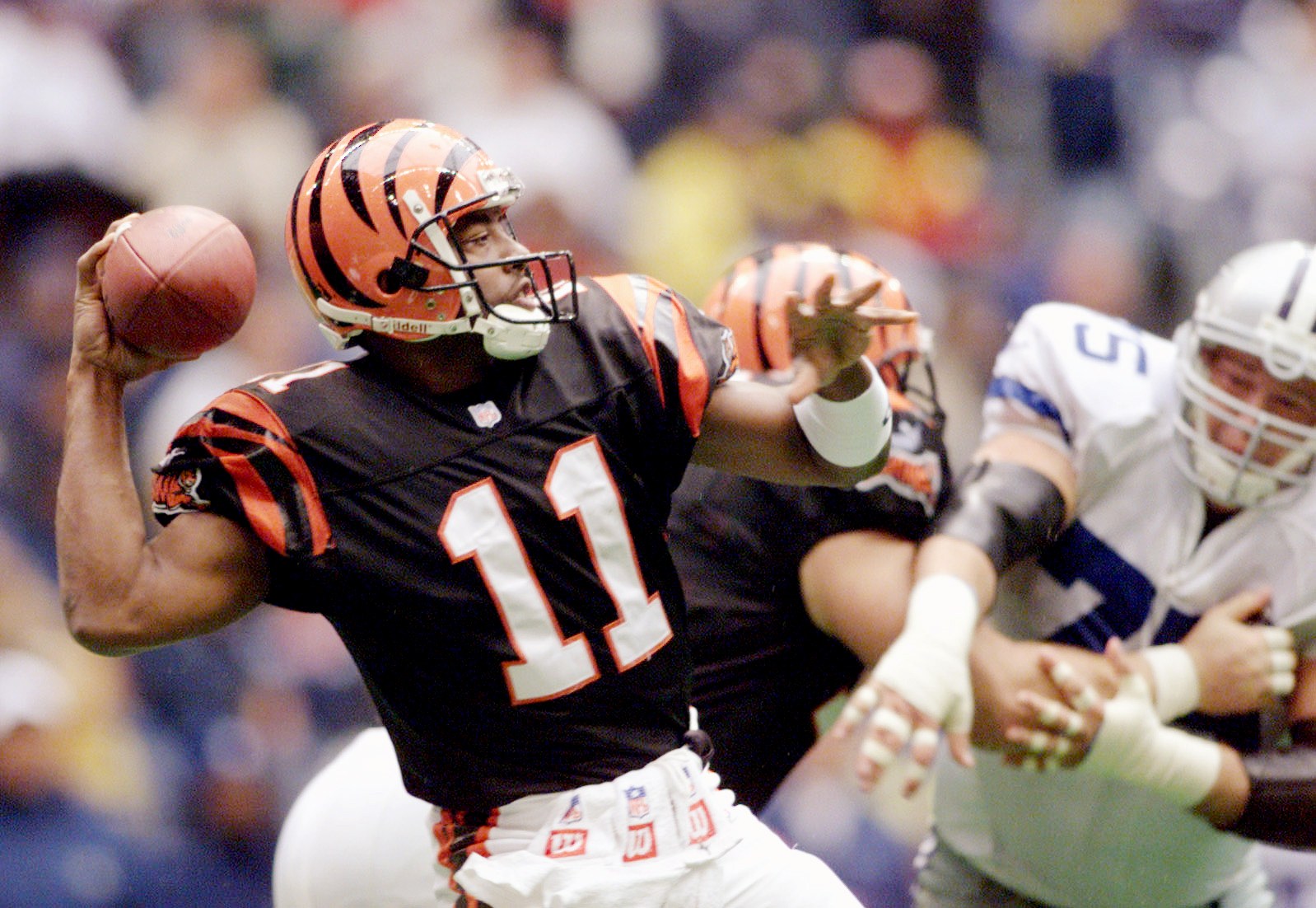
To understand the legacy of Akili Smith Sr., one must look back at the 1999 NFL Draft, a year defined by its historic quarterback class. Smith was the third overall pick, selected by the Cincinnati Bengals after a meteoric rise at the University of Oregon. However, Smith’s path to the NFL was unconventional, as he spent several years playing professional baseball in the Pittsburgh Pirates' organization before returning to football.
This baseball hiatus made Smith one of the older, more "mature" prospects in his class. By the time he was drafted, he was nearly 24 years old—a factor that contributed to the "longevity" of the debate surrounding his readiness. Teams were enamored with his physical tools but wary of his limited experience; he had only 11 starts at the major college level. This tension between elite physical traits and a lack of "reps" became a foundational case study for modern scouting.
The 1999 draft order for quarterbacks remains a point of historical fascination:
- Tim Couch (Cleveland Browns)
- Donovan McNabb (Philadelphia Eagles)
- Akili Smith (Cincinnati Bengals)
- Daunte Culpepper (Minnesota Vikings)
- Cade McNown (Chicago Bears)
The Trade That Wasn't: The New Orleans Saints' Massive Offer
The most enduring piece of Akili Smith Sr.'s legacy is the trade that didn't happen. In 1999, Mike Ditka and the New Orleans Saints were so desperate to move up to the third pick to select Ricky Williams that they offered the Cincinnati Bengals their entire slate of 1999 draft picks, plus first- and third-round picks in 2000.
The Bengals, led by Mike Brown, infamously turned down this unprecedented haul of nine draft picks to stay at number three and select Smith. This decision is frequently cited by sports historians as one of the most consequential in NFL history. Had the Bengals accepted, they could have rebuilt their entire roster with elite talent; instead, they tied their franchise's future to a quarterback with limited collegiate experience. The longevity of this story serves as a cautionary tale for modern general managers about the value of draft capital versus the "all-in" pursuit of a single prospect.
Analyzing the Career Longevity of Akili Smith Sr.
Though he is often labeled with the "bust" moniker due to his short NFL tenure, Akili Smith Sr.'s career provides deep insight into the developmental hurdles of the era. He appeared in 22 games for the Bengals over four seasons, finishing with five touchdown passes and 13 interceptions.
Several factors contributed to his lack of on-field longevity:
- The Contract Holdout: Smith missed most of his first training camp due to a contract dispute. For a player with only 11 college starts, this missed time proved catastrophic to his development.
- Systemic Instability: The Bengals of the late 1990s were marred by coaching changes and a lack of veteran support, providing a difficult environment for a raw quarterback to thrive.
- The Transition from Baseball: While his age (23-24) gave him physical maturity, he lacked the "football IQ" that comes from years of high-level snaps, a gap that was exposed at the professional level.
After his NFL exit, Smith demonstrated personal longevity by continuing his career in the NFL Europe league and the Canadian Football League (CFL) with the Calgary Stampeders. His willingness to keep playing in secondary leagues showcased a genuine passion for the game that would later define his second act as a coach and mentor.
The 2026 Perspective: From Draft Pick to Patriarch
By 2026, the narrative of Akili Smith Sr. has evolved from a story of professional disappointment to one of redemptive mentorship. He has successfully transitioned into a highly respected quarterback coach and a "Senior" figure in the sport. His role in the development of his son, Akili Smith Jr., a standout quarterback at the University of Oregon, has provided a new layer of longevity to the Smith name in the NFL ecosystem.
The elder Smith has been transparent about his own failures, using them as a roadmap to guide the next generation. In interviews, he often emphasizes the importance of the "mental game" and training camp attendance—lessons learned the hard way in 1999. This evolution from a "draft pick" to a "technical consultant" has allowed him to remain relevant in football circles long after his peers have moved on.
Comparative Context: Older QB Prospects and NFL Success
The term "oldest draft pick" often brings to mind players like Chris Weinke or Brandon Weeden, who entered the league in their late 20s. While Akili Smith Sr. was not the oldest ever, his status as a "Senior" prospect (at 23) who struggled with the transition set the stage for how these older rookies are scrutinized today.
| Player | Draft Year | Age at Draft | Primary Outcome |
|---|---|---|---|
| Akili Smith Sr. | 1999 | 23.8 | Short NFL career; long-term coaching impact. |
| Chris Weinke | 2001 | 28.7 | Heisman winner; 7-year NFL career. |
| Brandon Weeden | 2012 | 28.5 | 1st Round pick; journeyman backup longevity. |
| Stetson Bennett | 2023 | 25.5 | Developmental prospect with high college pedigree. |
| Joe Milton III | 2024 | 24.2 | Elite physical tools; evaluated similarly to Smith. |
This table illustrates that while age can provide physical maturity, it does not guarantee a shorter learning curve. Akili Smith Sr.'s legacy is the primary reason why 2026 scouting reports still heavily weigh "starts" against "age."
Mentorship and the Oregon Connection
In 2026, Akili Smith Sr.'s influence is most visible at his alma mater, the University of Oregon. As a prominent alumnus, he has been a bridge between the program's past and its modern status as a national powerhouse. His presence on the sidelines and in the training rooms has helped maintain the "Ducks" brand, specifically regarding quarterback recruitment.
His coaching philosophy focuses on:
- Early Enrollment: Encouraging prospects to avoid the holdout mistakes he made.
- Film Study Rigor: Overcoming a lack of starts with obsessive mental preparation.
- Media Literacy: Helping young players navigate the "hype" that once surrounded his #3 overall selection.
Lessons for Modern NFL Scouting and Development
The longevity of the Akili Smith Sr. story provides several actionable insights for NFL teams in 2026. First, it highlights that a player’s "Senior" status should be viewed through the lens of football experience, not just chronological age. A 24-year-old with 40 starts is a vastly different prospect than a 24-year-old with 11.
Second, the legacy of the Bengals' refusal of the Saints' trade offer has solidified the "Draft Value Chart" mentality. Teams now frequently trade down to accumulate assets, citing the Smith-Williams era as the primary reason why putting "all eggs in one basket" is a high-risk strategy.
Frequently Asked Questions
Why is Akili Smith Sr. considered a "Senior" prospect in draft history?
Akili Smith Sr. is categorized this way because he entered the NFL Draft after playing professional baseball, making him nearly 24 years old at the time of his selection. In an era where many quarterbacks were coming out at 21 or 22, his age was a major talking point regarding his physical readiness versus his limited collegiate starting experience.
How did the 1999 draft change the way the NFL evaluates quarterbacks?
The failure of high-drafted, "one-year wonder" quarterbacks like Smith and Cade McNown led to a greater emphasis on "starts" and "collegiate volume." Scouts now look for a larger body of work to ensure that a player’s success wasn't a fluke or the result of a single advantageous system.
What was the specific trade offer the Bengals turned down for Akili Smith?
The New Orleans Saints offered their entire 1999 draft (rounds 1-7) plus their 2000 first-round and third-round picks. This remains the most significant trade offer ever rejected for a single draft slot, contributing heavily to the "legacy" of the pick.
Is Akili Smith Sr. still involved in the NFL today?
While not in an official capacity with a team, Smith is a prominent quarterback coach and mentor. He frequently appears in media as a consultant on draft prospects and is a fixture in the development of elite high school and college quarterbacks, including his son, Akili Smith Jr.
What is the relationship between Akili Smith Sr. and the Oregon Ducks in 2026?
He is one of the most celebrated alumni at Oregon, frequently returning for events and supporting the program’s recruitment efforts. His son’s enrollment at Oregon has further cemented this relationship, making the "Smith" name synonymous with Ducks football longevity.
Strategic Guidance for Evaluating Veteran Prospects
For analysts and fans tracking the 2026 draft cycle, the story of Akili Smith Sr. serves as a vital benchmark. When evaluating "older" prospects who took non-traditional paths (such as multi-sport athletes or those who served missions), it is essential to prioritize their "rep-to-age" ratio. The Smith legacy teaches us that physical maturity cannot mask a lack of situational awareness on the field. The best course of action for teams considering such prospects is to ensure a stable veteran infrastructure is in place to allow for a "redshirt" professional year, avoiding the developmental stagnation that defined Smith's early years in Cincinnati.