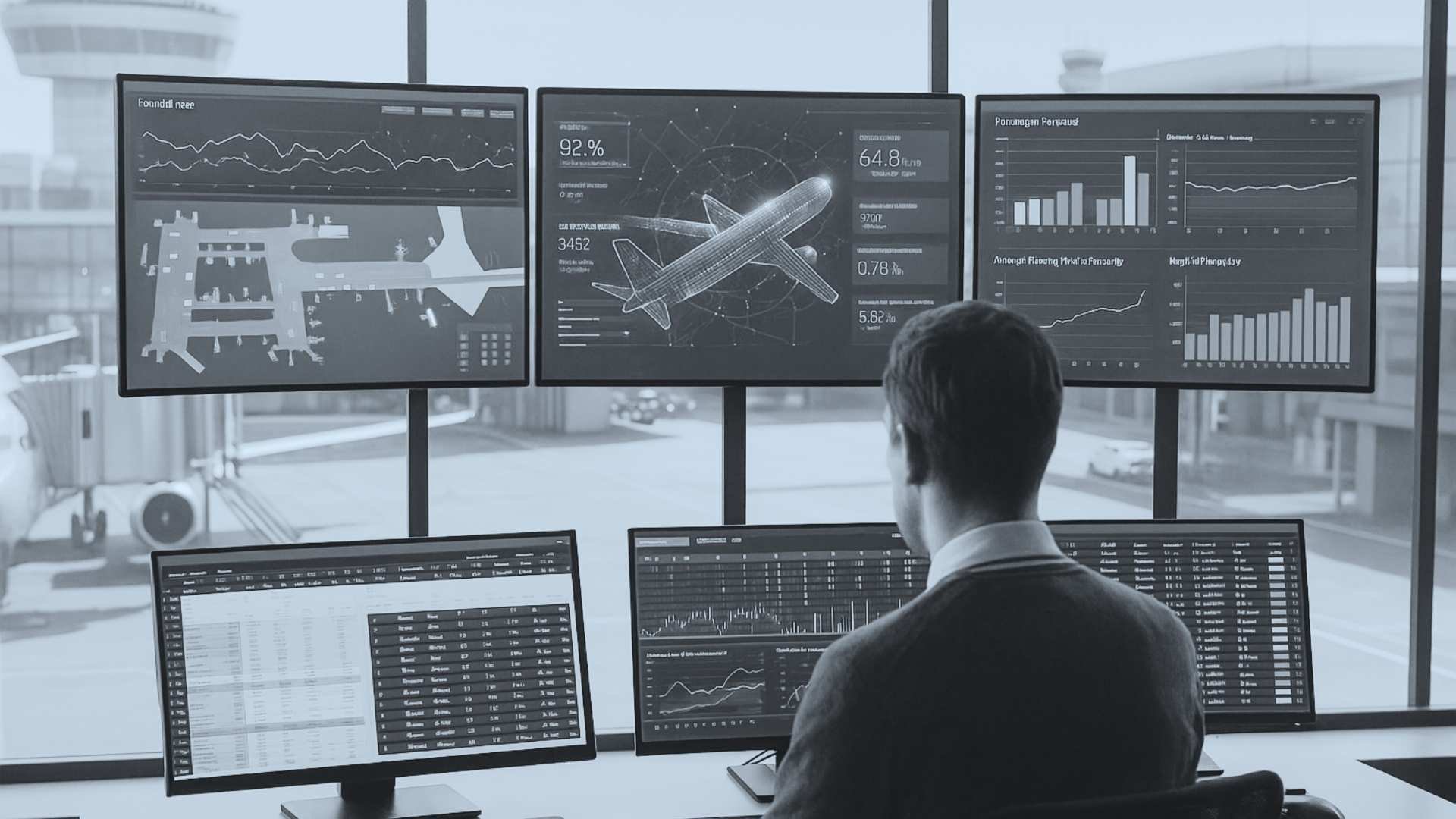
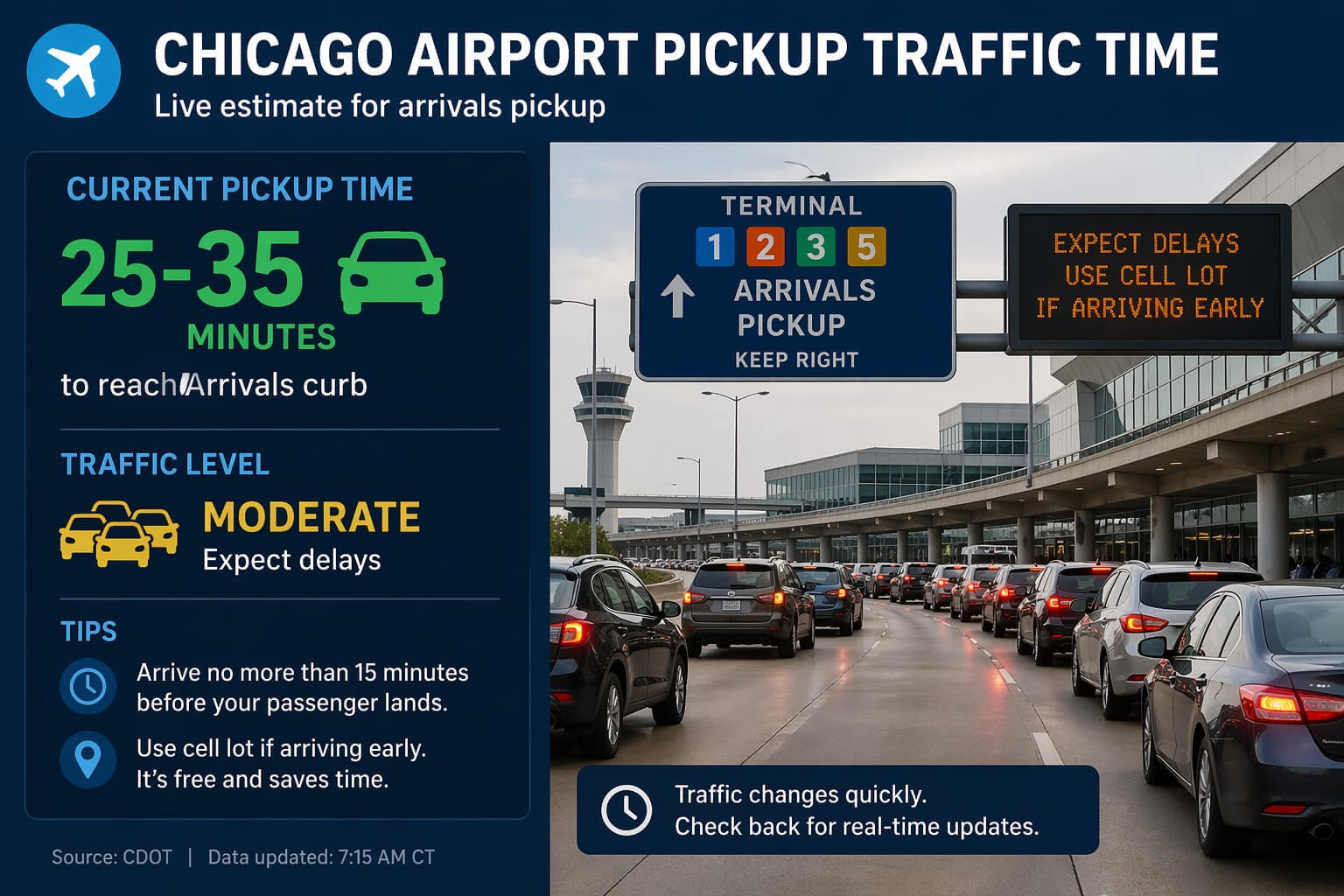
An airport traffic update is a real-time or periodic report detailing passenger volume, aircraft movements, and operational congestion levels at an aviation facility. It provides critical data on delays, security wait times, and terminal density, helping travelers, airlines, and logistics planners optimize schedules and navigate disruptions efficiently.
Navigating modern air travel requires far more than simply showing up at the terminal with a boarding pass. With global aviation networks operating under tight schedules, congestion can ripple across continents within minutes. Understanding an airport traffic update—what the underlying metrics actually mean, how authorities gather the data, and how you can leverage this information to your advantage—transforms a stressful transit experience into a predictable journey. Whether you are catching a domestic flight for a business meeting, coordinating an international connection, or tracking cargo shipments, mastering airport traffic data is an essential skill for modern mobility.
Deconstructing the Airport Traffic Update: Definitions and Core Components
An airport traffic update is a synthesized data broadcast or digital dashboard that communicates the current operational state of an aerodrome and its surrounding airspace. Far from being a single data point, a comprehensive traffic update combines multiple operational layers into a coherent picture. These layers typically include passenger throughput at security checkpoints, vehicular congestion on airport access roads, aircraft movement rates on runways and taxiways, and overall terminal density.
At its core, the update serves two distinct audiences. For the traveling public, it answers immediate logistical questions: How long will it take to park, clear security, and reach the gate? For industry professionals—including air traffic controllers, airline ground handlers, and airport operators—it represents a vital telemetry feed used to balance resource allocation, gate assignments, and ground staff deployment.
The primary components of a standard traffic update generally break down into three categories:
- Airside Metrics: These involve the movement of aircraft, tracking arrival and departure rates, runway configurations, ground delay programs, and airspace flow restrictions.
- Landside Metrics: These cover vehicular traffic on approach roads, parking garage occupancy rates, rideshare queue lengths, and public transit connectivity speeds.
- Terminal Metrics: These measure the internal friction of the airport, specifically focusing on security checkpoint queue wait times, custom and border protection processing speeds, and baggage claim hall congestion.
How Airport Traffic Is Measured: Methodology and Technology
The accuracy of an airport traffic update depends entirely on a sophisticated array of sensors, software algorithms, and administrative reporting systems. Modern airports have evolved into data-rich environments where almost every movement—from a car entering the terminal loop to an aircraft touching down on the asphalt—is tracked, logged, and analyzed in real time.
Measuring landside and terminal traffic relies heavily on passive sensing technologies. Wi-Fi and Bluetooth sniffing sensors deployed throughout terminals track the anonymous MAC addresses of mobile devices as they move from check-in counters to security lines and boarding gates. By calculating the time it takes for a device to travel between fixed sensor nodes, transit authorities can accurately estimate queue wait times without compromising individual privacy.
- DATA ACQUISITION LAYERS
- Landside: License plate readers, parking loop sensors
- Terminal: Wi-Fi/Bluetooth sniffers, optical queue counters
- Airside: Surface Management Systems (SMGCS), radar feeds
- CENTRAL AGGREGATION & API
- CONSUMER & OPERATIONAL OUTPUTS
On the airside, measurement is governed by advanced aviation surveillance frameworks. Systems like Airport Surface Detection Equipment, Model X (ASDE-X) and Advanced Surface Movement Guidance and Control Systems (A-SMGCS) combine multi-lateration, surface radar, and satellite feeds to monitor every aircraft and service vehicle on the tarmac down to the individual meter. Federal agencies, such as the Federal Aviation Administration (FAA) in the United States or equivalent international bodies like Eurocontrol, aggregate these feeds to monitor national and regional airspace loading.
Furthermore, ticketing data, automated baggage scans, and passenger manifest submissions provide forward-looking predictive metrics. When airlines transmit passenger numbers hours or days in advance, airport operators can cross-reference historical flow patterns to forecast peak processing hours long before the first traveler steps foot inside the terminal.
Key Metrics Found in Traffic Reports
Interpreting an airport traffic update requires familiarity with specific industry nomenclature. Misinterpreting a single metric can lead to missed flights or mismanaged logistical timelines. The table below outlines the most common metrics encountered in professional and consumer traffic reports, explaining what they measure and why they matter.
| Metric Name | What It Measures | Typical Unit of Measurement | Practical Significance for Travelers |
|---|---|---|---|
| Throughput Rate | Number of passengers or aircraft processed per unit of time | Passengers/hour or Operations/hour | Indicates how quickly bottlenecks are clearing. |
| Queue Wait Time | Estimated duration to traverse a specific checkpoint | Minutes | Helps determine exact arrival time at the airport. |
| Ground Delay Program (GDP) | Air traffic control initiative holding flights at origin airports | Minutes of delay | Signals systemic airspace or weather congestion ahead. |
| Terminal Capacity Index | Current occupancy relative to maximum building design limit | Percentage (%) | Measures comfort level, seating availability, and crowding. |
| Parking Utilization | Available spaces across short-term, long-term, and economy lots | Percentage (%) or Status (Full/Open) | Determines whether alternative parking or rideshares are required. |
Understanding these metrics allows travelers to look beyond simplistic status labels like "delayed" or "busy." For instance, knowing that an airport is experiencing a Ground Delay Program driven by low visibility rather than localized terminal crowding informs whether you should stay home or proceed to the terminal to check in bags before the window closes.
How to Use Airport Traffic Updates to Optimize Your Journey
Accessing traffic data is only half the battle; knowing how to operationalize that information separates experienced travelers from frustrated ones. To use an airport traffic update effectively, you must integrate it into a phased decision-making timeline that begins days before departure and concludes at the boarding gate.
Phase 1: Pre-Trip Planning (48 to 12 Hours Out)
Begin by reviewing long-range weather forecasts and historical traffic patterns for your departure and arrival hubs. Check for scheduled infrastructure maintenance, such as runway repaving or transit rail shutdowns, which frequently distort standard traffic flows. Many major airports provide live web portals or dedicated mobile applications that publish historical congestion heatmaps, allowing you to identify optimal departure windows.
Phase 2: Day-of-Travel Assessment (4 to 2 Hours Out)
Before leaving for the airport, consult real-time data aggregators. Check the airport’s official website alongside independent traffic monitoring applications to verify current security wait times and parking lot statuses. If the data indicates surging landside congestion or an extended security queue, adjust your departure time immediately. Factor in a buffer period that accounts for potential delays on access highways, which are often highlighted in live traffic feeds.
Phase 3: In-Transit Navigation and Real-Time Adjustments
Once en route, continue monitoring updates via mobile alerts or airline apps. If an airside delay or gate change is announced while you are in transit, notify your connecting parties immediately. Upon arrival at the terminal, cross-reference checkpoint wait time boards with your app data; if a primary security checkpoint is severely backed up, directional staff or digital signage will often point toward less congested alternate lanes.
Common Pitfalls and Misinterpretations of Traffic Data
Even with access to comprehensive real-time data, travelers and logistics coordinators frequently misinterpret traffic updates, leading to operational errors. Recognizing these common traps helps ensure your planning remains accurate and resilient.
One frequent mistake is treating airport-wide metrics as uniform across all terminals. At sprawling international hubs with multiple independent terminal complexes, a traffic update might show a manageable average wait time while a specific low-cost carrier terminal experiences severe, localized gridlock due to simultaneous bank departures. Always drill down to terminal-specific or gate-specific data feeds when available.
Another pitfall is failing to account for data latency. Real-time dashboards rely on data aggregation cycles that can lag behind physical conditions by five to fifteen minutes. A sudden influx of three wide-body aircraft deplaning simultaneously can overwhelm a customs hall faster than sensors can update the public dashboard. Always build a safety margin into your schedule rather than cutting it close based on an optimistic digital readout.
Finally, travelers often confuse airline-reported delays with airport infrastructure delays. An airline delay driven by late-arriving crew members is fundamentally different from an air traffic control ground stop caused by severe weather. Relying on the wrong diagnosis can result in poor decision-making regarding rebooking options or ground transportation alternatives.
Practical Recommendations for Navigating Congestion
To successfully manage high-traffic scenarios and minimize transit friction, adopt a disciplined, proactive approach centered on preparedness and technological leverage:
- Register for Official Alerts: Sign up for direct flight status and airport operational SMS or push notifications provided directly by your operating carrier and the airport authority.
- Leverage Trusted Ecosystems: Utilize recognized security expedited programs (such as TSA PreCheck, Global Entry, or international equivalents) to bypass standard bottleneck queues entirely.
- Monitor Alternate Access Routes: Keep alternative transit routes to the airport open in your GPS application, including commuter rail options that bypass highway congestion completely.
- Verify Parking in Advance: If driving, reserve parking spaces through official airport portals ahead of time to avoid being turned away by full-capacity signs.
By treating airport traffic updates not as passive announcements, but as actionable intelligence, you can maintain control over your travel schedule regardless of external disruptions.