Aircraft security encompasses the multifaceted physical, procedural, and technological measures designed to protect commercial, private, and military aircraft from unlawful interference, sabotage, hijacking, and insider threats. Maintaining robust safeguards across global aviation requires a synchronized combination of strict access controls, advanced screening technologies, cyber-resilient onboard systems, and comprehensive crew training mandated by international regulatory bodies.
Regulatory Frameworks and International Standards
Global aviation security operates under a complex hierarchy of international treaties, regional mandates, and national laws. The foundational baseline for civil aviation security worldwide is established by the International Civil Aviation Organization (ICAO), specifically through Annex 17 to the Convention on International Civil Aviation. Annex 17 outlines standards and recommended practices (SARPs) that member states must incorporate into their national civil aviation security programs. These standards govern everything from passenger and baggage screening protocols to airport perimeter integrity and aircraft security checks.
In the United States, the Transportation Security Administration (TSA), operating under the Department of Homeland Security, enforces strict security directives for domestic carriers and international flights entering US airspace. Similarly, the European Union Aviation Safety Agency (EASA) and the European Commission establish binding security regulations across member states, ensuring harmonized baseline protection levels. Compliance with these frameworks is not optional; airlines and airport operators face severe financial penalties, operational groundings, or revocation of operating certificates if they fail to meet mandated security baselines.
National authorities collaborate closely through intelligence-sharing networks coordinated by bodies like INTERPOL and Europol. This cooperation allows security agencies to track known or suspected threat actors, assess shifting geopolitical risks, and adjust threat levels dynamically. Consequently, aircraft security protocols are continuously updated to reflect emerging vulnerabilities, requiring operators to maintain agile compliance management systems that can adapt to sudden regulatory changes.
Physical Access Control and Ground Protection
Securing an aircraft while it rests on the ground is a critical vulnerability window that demands rigorous access control protocols. Unprotected aircraft parked on remote aprons or maintenance hangars represent prime targets for unauthorized boarding, tampering, or cargo contamination. To mitigate these risks, ground security operations rely on multi-layered perimeter defenses, identity verification systems, and constant surveillance of the aircraft exterior.
Ground handlers, catering crews, cleaners, and maintenance technicians must undergo rigorous background checks, including criminal history record checks and employment verification, before receiving airport identification media. When an aircraft is parked at a gate or a remote hardstand, access is restricted exclusively to verified personnel wearing authorized credentials. Security seals are frequently applied to service panels, catering carts, and cargo hold doors to detect any unauthorized tampering during turnaround times.
| Security Layer | Primary Purpose | Key Technologies & Methods |
|---|---|---|
| Airport Perimeter | Prevent unauthorized ground entry | Biometric fences, CCTV, patrol units |
| Airside Access | Verify personnel credentials | Smart cards, biometric readers, background checks |
| Aircraft Exterior | Prevent physical tampering & boarding | Security seals, motion sensors, anti-climb barriers |
| Cabin & Flight Deck | Protect interior and control zones | Reinforced cockpit doors, intrusion alarms, sweeps |
Furthermore, international guidelines require a thorough physical security search of the aircraft cabin and cargo compartments before departure, particularly for international or high-risk routes. These pre-flight checks ensure that no unauthorized items, weapons, or explosive devices were introduced during the aircraft's time on the ground. Operators must document these checks meticulously to satisfy both internal quality assurance audits and external regulatory inspections.
Flight Deck Hardening and Onboard Defense Systems
The events of September 11 fundamentally transformed interior aircraft security, shifting the paradigm from passive deterrence to absolute physical containment of the flight deck. Modern commercial transport category aircraft feature reinforced, bullet-resistant, and intrusion-resistant cockpit doors designed to withstand small-arms fire and forcible breach attempts. These doors are equipped with electronic locking mechanisms controlled entirely from inside the flight deck, alongside emergency access codes known only to authorized flight crew members.
In addition to physical barriers, onboard security relies on specialized surveillance and alert systems. Closed-circuit television (CCTV) cameras positioned outside the cockpit door allow pilots to visually monitor the cabin entryway before opening the reinforced door. Transponder systems and emergency alert mechanisms, such as covert pilot-to-ground discrete codes, enable flight crews to silently notify air traffic control and law enforcement of unlawful interference or hijacking in progress.
Cabin crew members receive specialized training in aviation security, covering threat recognition, verbal de-escalation techniques, conflict management, and physical restraint procedures for unruly or dangerous passengers. While procedures vary by airline and national jurisdiction, the integration of hardened flight deck architecture and trained crew intervention creates a formidable barrier against internal threats during flight operations.
Emerging Threats and Cybersecurity in Modern Aviation
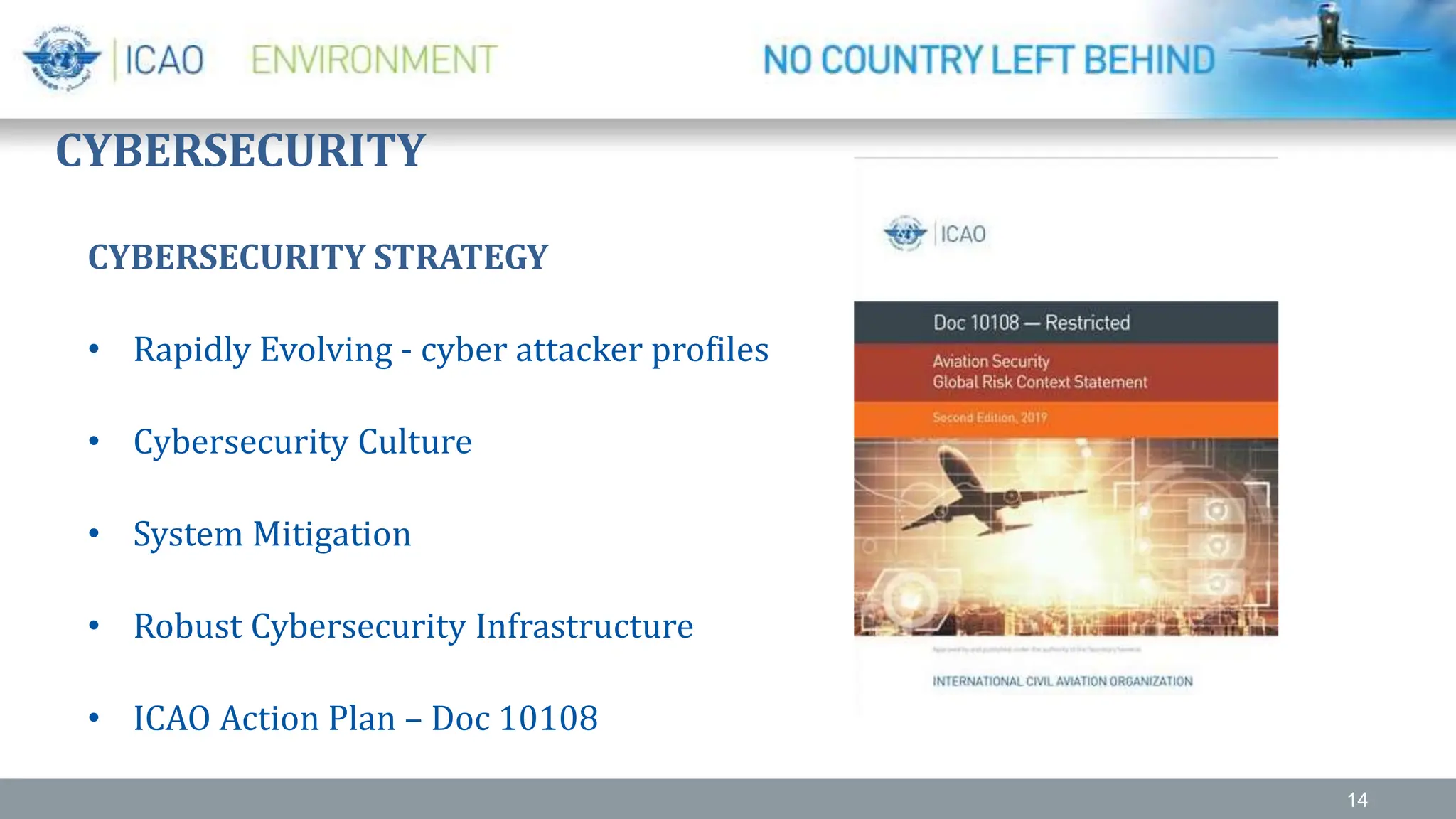
As aircraft evolve into highly digitized, network-connected machines, the scope of aircraft security has expanded beyond physical threats into the realm of cybersecurity. Modern fly-by-wire flight control systems, electronic flight bags (EFBs), cabin Wi-Fi networks, and air-traffic communication data links rely heavily on complex software and digital data exchanges. This digital transformation introduces potential vulnerabilities to electronic tampering, malware injection, and unauthorized remote access.
Cybersecurity vulnerabilities can be categorized into three primary domains:
- Onboard Networks: Avionics systems, passenger entertainment systems, and internal maintenance data buses that could theoretically be bridged if proper network segmentation fails.
- External Communications: Radio frequency (RF) links, satellite communications, and air-traffic management data links susceptible to spoofing, jamming, or eavesdropping.
- Ground Infrastructure: Airline reservation systems, maintenance databases, and flight planning servers targeted by ransomware or data breaches.
To counter these risks, aerospace manufacturers and regulatory agencies enforce rigorous software development standards, such as DO-332 (Object-Oriented Technology and Related Techniques Qualification in Airborne Systems) and DO-356 (Methods for Airworthiness Security Process). Aircraft networks are architected with strict logical firewalls and hardware segregation to ensure that non-essential systems, such as passenger internet portals, are completely isolated from critical flight-control avionics. Continuous vulnerability assessments and cryptographic authentication protocols further safeguard digital aviation infrastructure against sophisticated cyber attacks.
Cargo and Supply Chain Security Protocols
Air cargo represents a massive logistical network encompassing millions of shipments processed daily through complex, multi-tiered supply chains. Because cargo is often consolidated by third-party freight forwarders before reaching the airline, securing the air cargo supply chain requires rigorous validation of every entity involved in the transport process. Regulatory bodies enforce mandatory certification programs, such as the Known Consignor and Regulated Agent frameworks, to ensure end-to-end security accountability.
Shippers and forwarders must meet strict security standards, including facility physical security, personnel background screening, and secure chain-of-custody documentation. Cargo shipments that cannot be verified through trusted supply chain channels must undergo mandatory physical inspection or advanced screening technologies before being loaded onto passenger or all-cargo aircraft.
Screening methods for air cargo have advanced significantly beyond traditional visual inspections. Modern high-throughput facilities utilize sophisticated technology, including:
- Dual-generator X-ray systems capable of penetrating dense cargo pallets and identifying organic and inorganic materials.
- Computed Tomography (CT) scanners that provide 3D imaging representations of cargo contents for automated explosive detection.
- Explosive Trace Detection (ETD) systems that analyze particle samples swabbed from packaging surfaces for chemical residues of explosives.
- Active and passive tamper-evident seals and electronic tracking devices that monitor high-value or sensitive shipments throughout transit.
Frequently Asked Questions
What are the primary objectives of aircraft security protocols?
The primary objectives are to prevent unlawful interference, sabotage, hijacking, and terrorist attacks against civil aviation. These protocols protect passengers, crew members, ground personnel, and high-value physical assets by establishing multi-layered defenses across airports, aircraft exteriors, cabins, and supply chains.
How are cockpit doors secured on commercial aircraft?
Cockpit doors on commercial transport aircraft are built with reinforced, bullet-resistant materials designed to withstand forced entry and ballistic threats. They feature secure electronic locking mechanisms controlled exclusively from inside the flight deck, exterior CCTV monitoring systems, and specialized escape panels or emergency override codes.
What is the role of ICAO in global aviation security?
The International Civil Aviation Organization (ICAO) establishes baseline international standards and recommended practices (SARPs) for civil aviation security, primarily through Annex 17. While ICAO does not enforce laws directly, its member states incorporate these standards into their national legislation to ensure global regulatory harmonization.
How does air cargo screening differ from passenger screening?
Air cargo screening focuses on verifying the integrity of consolidated freight and industrial packages rather than individual belongings. It utilizes large-scale X-ray systems, 3D Computed Tomography scanners, and explosive trace detection, backed by supply chain validation programs like the Known Consignor framework, rather than metal detectors and body scanners used for people.
What measures protect parked aircraft from unauthorized access?
Parked aircraft are secured using perimeter access controls at airports, verified identity badges for ground personnel, security seals on service doors and cargo holds, motion-sensitive lighting, and mandatory pre-flight security sweeps conducted immediately prior to departure.
Implementing an Effective Aviation Security Program
Maintaining an effective aircraft security posture requires continuous vigilance, investment in advanced screening technologies, and strict adherence to international regulatory standards. Aviation operators, airport authorities, and supply chain partners must establish robust internal auditing mechanisms, conduct regular personnel training, and maintain active communication channels with national intelligence and law enforcement agencies. By prioritizing a proactive, multi-layered security culture across all operational phases, the global aviation industry can effectively anticipate, mitigate, and neutralize emerging physical and cyber threats.