An aircraft fire represents one of the most critical emergency scenarios in aviation, requiring rigorous multi-layered prevention engineering, strict regulatory compliance, and highly coordinated crew responses. Because aviation environments combine high-energy electrical systems, flammable hydraulic fluids, and compressed oxygen, modern airframes rely on integrated detection systems, advanced suppression agents, and specialized evacuation protocols to protect passengers and crew.
The Anatomy of an Aircraft Fire: Classification and Origins
Mitigating in-flight or ground emergencies begins with understanding how and where fires originate within an airframe. Aviation fires are generally classified by their fuel source, matching standard fire chemistry but complicated by the confined, pressurized, and high-altitude environment of an aircraft. The primary classes encountered in aviation include Class A (solid combustible materials such as cabin interiors, paper, and insulation), Class B (flammable liquids including aviation turbine fuel, engine oil, and hydraulic fluids), and Class C (energized electrical equipment within avionics bays, galley appliances, and wiring harnesses).
Engine fires and auxiliary power unit (APU) fires typically fall under Class B and Class C parameters, originating from fuel leaks coming into contact with hot turbine sections or electrical arcing within generator systems. Cargo compartment fires present unique detection and containment challenges due to inaccessible locations during flight and varying cargo contents, ranging from lithium-ion batteries to consumer aerosols. Avionics bay fires, conversely, involve dense bundles of wiring and circuit protection devices where smoke detection must be instantaneous to prevent catastrophic flight control degradation. Recognizing these distinct origins dictates the engineering of dedicated fire detection loops, continuous-loop sensor cables, and optical sensors designed to monitor hidden structural zones.
Regulatory Standards and Airworthiness Requirements
Airworthiness authorities such as the Federal Aviation Administration (FAA) and the European Union Aviation Safety Agency (EASA) enforce stringent design, testing, and operational mandates to minimize the risk of fire. Certification standards require manufacturers to demonstrate that materials used in cabin interiors meet rigorous flammability, smoke emission, and heat release criteria. These tests ensure that upholstery, panels, and insulation do not easily ignite and that they self-extinguish when a localized ignition source is removed.
Beyond interior materials, fuel tank safety regulations mandate the installation of flammability reduction systems, such as nitrogen generation systems, on commercial transport category airplanes. These systems reduce the oxygen concentration within the ullage (the vapor space above the liquid fuel) of center wing tanks, rendering the environment incapable of supporting combustion. Furthermore, structural firewalls must be constructed from fire-resistant or fireproof materials capable of withstanding specified flame temperatures for designated periods, effectively isolating engine compartments from the main cabin and wing structures during a power plant fire event.
Detection, Monitoring, and Automated Suppression Systems
Modern aircraft utilize sophisticated electronic monitoring systems to detect thermal events long before they escalate into visible flames or structural compromise. Continuous-loop sensor systems, pneumatic sensors, and optical detectors provide real-time feedback to the flight deck through centralized crew alerting systems. When an anomaly is detected, automated and crew-initiated suppression systems deploy to contain the hazard.
| System Type | Primary Location | Detection Mechanism | Suppression Agent |
|---|---|---|---|
| Engine / APU | Nacelles and Pylons | Pneumatic loop / Resistance sensors | Halon 1301 / Halon replacements |
| Cargo Compartment | Lower Deck Holds | Smoke detectors (ionization / optical) | Halon 1301 metered-discharge system |
| Lavatory | Waste Compartments | Thermal plug / Optical sensors | Halon / Water-based discharge |
| Avionics Bay | Electronic Equipment Racks | Continuous-loop / Smoke sensors | Manual intervention / Portable extinguishers |
Engine nacelles feature dual-shot fire extinguishing systems utilizing liquefied gas agents, historically Halon 1301, which chemically interrupts the combustion chain reaction without leaving damaging residue on delicate engine components. Cargo compartments utilize complex suppression networks that discharge a high initial concentration of agent to extinguish a fire, followed by a metered low-flow discharge to maintain a fire-suppressant atmosphere until the aircraft can safely land. Lavatory waste bins feature automated extinguishers triggered by thermal melting links directly aimed at paper and waste accumulations.
Flight Crew Procedures and Emergency Response Protocols
When an aircraft fire warning activates, flight crews follow standardized checklist procedures designed to isolate the affected system, shut off fuel and electrical sources, and discharge appropriate suppression agents. Time is of the essence, and checklists prioritize immediate containment and the wearing of oxygen masks and smoke goggles if cabin smoke impairs flight deck visibility.
| Phase | Immediate Crew Action | Objective |
|---|---|---|
| Recognition | Acknowledge master warning and visual cue | Identify specific zone (Engine, Cargo, Avionics) |
| Isolation | Execute memory items and non-normal checklists | Shut off bleed air, fuel valves, and electrical busses |
| Suppression | Discharge primary and secondary agent bottles | Starve the fire of fuel, oxygen, or chain reaction |
| Diversion | Declare emergency (MAYDAY) and initiate diversion | Land at the nearest suitable airport expeditiously |
In-flight cabin fires require immediate intervention by cabin crew members equipped with protective breathing equipment (PBE) and portable fire extinguishers containing water, Halon, or clean agents appropriate for the fuel class. Crew coordination ensures that electrical power to the affected galley or seat row is interrupted while suppression is applied. If the fire cannot be controlled or smoke accumulation threatens safe flight operations, diverting to the nearest diversion airfield becomes the primary operational priority, overriding schedule considerations.
Ground Emergency Operations and Airport Rescue
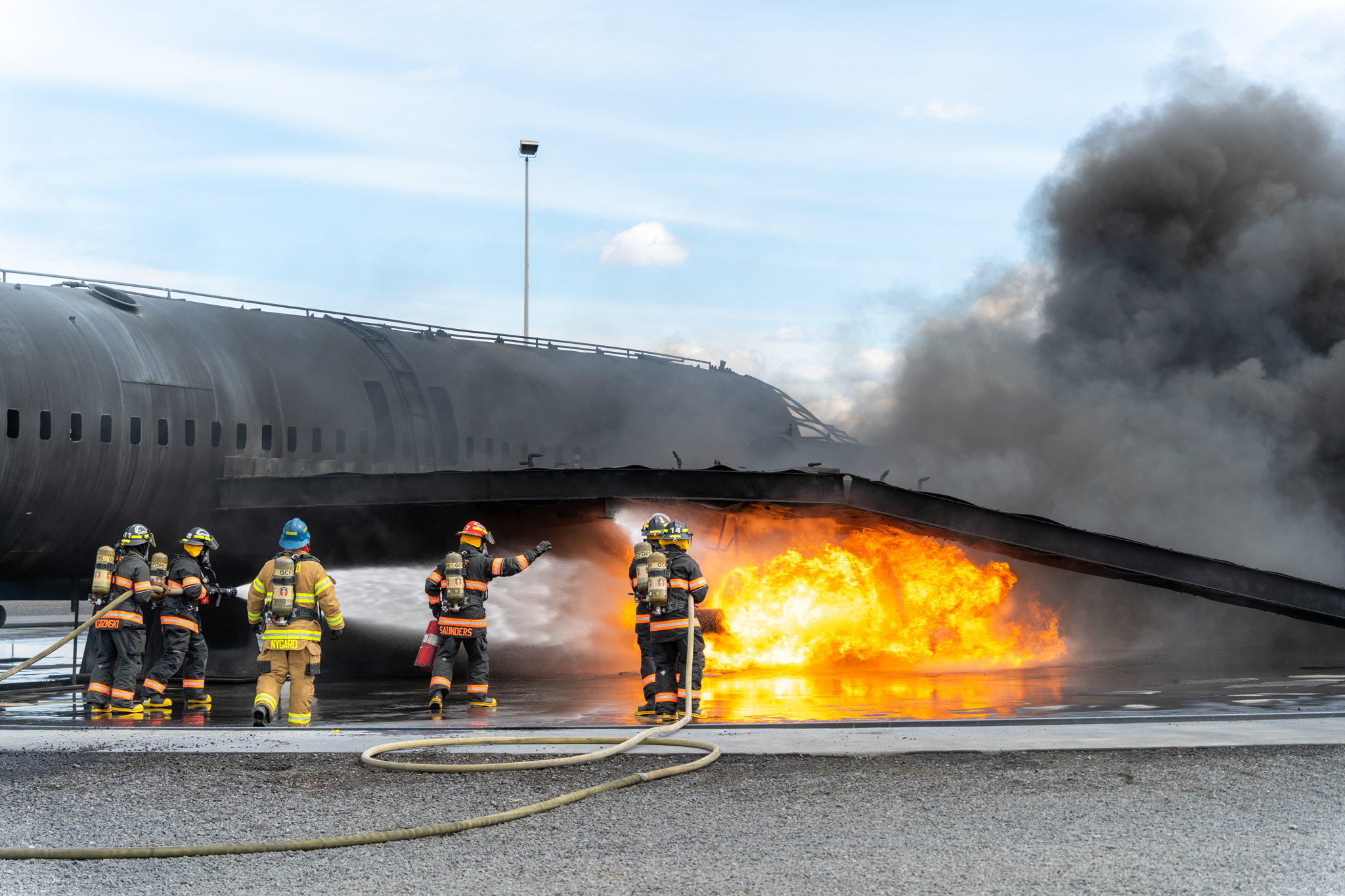
When an aircraft fire occurs on the ground—whether during taxi, takeoff, or landing—the response transitions from airborne containment to ground-based rescue and fire-fighting (RFF) operations. Certified commercial airports maintain dedicated RFF stations equipped with specialized rapid-intervention vehicles capable of discharging massive quantities of water, aqueous film-forming foam (AFFF), and dry chemical agents directly onto fuel spills and burning airframes.
Airport firefighters coordinate directly with the flight deck using standardized international aviation frequencies to assess passenger evacuation needs, engine shutdown status, and hazardous material inventories. Primary objectives during ground incidents include securing escape paths, cooling structural fuselage walls exposed to exterior pool fires, and establishing rapid evacuation chutes to facilitate passenger egress within mandated certification timeframes, typically 90 seconds under emergency exit demonstration rules.
Preventing Lithium-Ion Battery Incidents in Commercial Aviation
The proliferation of portable electronic devices, spare batteries, and electric mobility aids has introduced a major operational challenge: thermal runaway in lithium-ion batteries. Unlike traditional electrical fires, a lithium-ion battery cell undergoing thermal runaway generates its own oxygen, reaches extreme temperatures, and can trigger sequential cascading failures in adjacent cells, making standard suppression agents less effective for interior containment.
Airlines and regulatory bodies address this hazard through strict restrictions on carriage limits, prohibition of certain devices in checked baggage, and the deployment of specialized containment bags and thermal barriers on the flight deck and in cabin inventory. Cabin crews are trained to recognize early warning signs such as unusual heat, acrid odor, hissing, and discoloration, immediately applying water or specialized cooling agents to cool the cell core and interrupt the thermal runaway cycle.
Conclusion and Future Directions in Aviation Fire Safety
Mitigating aircraft fire hazards requires continuous technological evolution, rigorous regulatory oversight, and uncompromised adherence to safety protocols by design engineers, flight crews, and ground personnel. As material sciences advance, the aviation industry continues to research eco-friendly halogen replacements, enhanced lithium-ion containment methods, and AI-driven sensor analytics to detect micro-arcing and thermal anomalies before ignition occurs. Maintaining this multi-faceted defense posture remains essential to preserving the exceptional safety record of modern global air transport.