Understanding aircraft accidents requires a systematic examination of systemic failures, human factors, and environmental variables that lead to aviation disasters. Investigators rely on international standards, flight data recorders, and wreckage analysis to identify root causes and implement mandatory safety directives that prevent future occurrences.
An aircraft accident is defined under international civil aviation standards as an occurrence associated with the operation of an aircraft where a person is fatally or seriously injured, the aircraft sustains substantial structural damage, or the aircraft is missing and completely inaccessible. Unlike minor incidents or operational irregularities, accidents involve severe safety breakdowns that trigger formal, independent government-led investigations governed by international treaties.
The study and prevention of these events form the backbone of modern aviation safety culture. By treating every catastrophe as a symptom of deeper systemic vulnerabilities rather than a singular isolated error, aviation authorities have transformed flying into one of the safest modes of transportation globally.
The Regulatory Framework and International Standards
The global framework for investigating aircraft accidents is established by the International Civil Aviation Organization (ICAO), specifically through Annex 13 of the Chicago Convention. Annex 13 outlines the protocols that member states must follow when notifying authorities, securing accident sites, and conducting technical investigations.
National authorities—such as the National Transportation Safety Board (NTSB) in the United States, the Bureau d'Enquêtes et d'Analyses (BEA) in France, or the Air Accidents Investigation Branch (AAIB) in the United Kingdom—operate independently of civil aviation regulators to ensure unbiased findings. Independence from regulatory bodies and commercial operators is vital. Investigators must be able to scrutinize certification standards, air traffic control protocols, and airline operational practices without political or financial interference.
When an accident occurs in international waters or involves foreign-manufactured aircraft, the state of registry, the state of the operator, the state of design, and the state of manufacture all have legal rights to appoint accredited representatives and technical advisers to assist the lead investigative authority.
Core Phases of an Aircraft Accident Investigation
An investigation unfolds across distinct, methodical phases designed to capture perishable evidence, analyze complex technical systems, and reconstruct the final moments of the flight. The process demands patience, as deep forensic examinations can take months or years.
| Investigation Phase | Primary Objectives | Key Activities |
|---|---|---|
| Initial Response & Site Security | Preserve perishable evidence and ensure site safety. | Mapping wreckage, securing hazardous materials, and retrieving flight recorders. |
| Factual Information Gathering | Collect data on human, machine, and environmental factors. | Interviewing witnesses, reviewing maintenance logs, and downloading radar data. |
| Laboratory & Specialist Analysis | Test components and decode recorded data. | Reading Cockpit Voice and Flight Data Recorders, metallurgy testing, and flight simulation. |
| Analysis & Probable Cause | Determine how and why the sequence of events unfolded. | Human factors analysis, systems interaction studies, and safety management audits. |
| Report Publication & Recommendations | Inform the public and prevent recurrence. | Issuing safety recommendations, publishing the final report, and tracking implementation. |
Securing the Scene and Recovering Flight Recorders
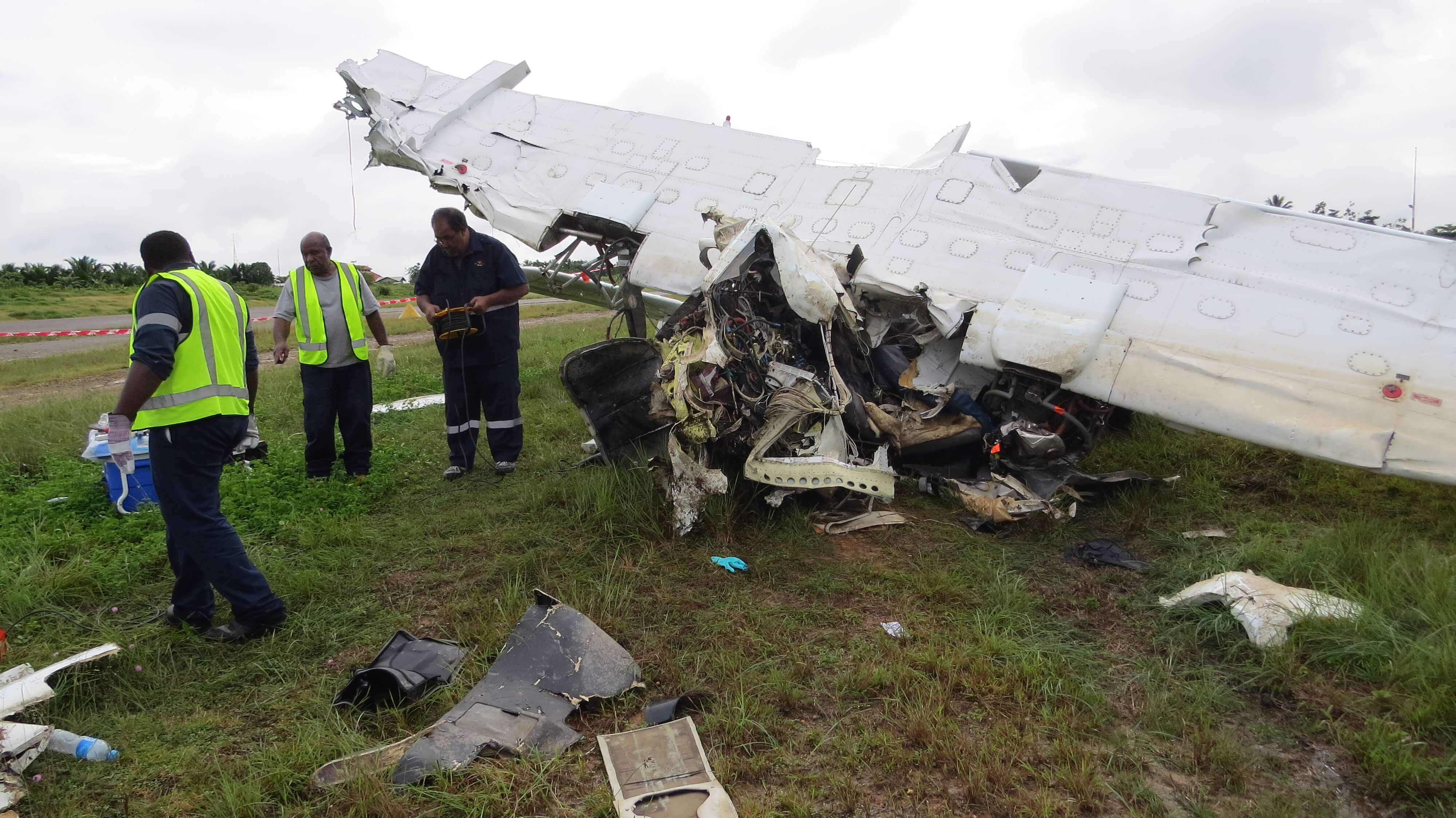
The immediate aftermath of an accident focuses on search and rescue, followed by the meticulous preservation of the crash site. Investigators document the position of every major wreckage piece using global positioning systems and aerial photogrammetry before moving any debris.
A top priority is locating the flight data recorder (FDR) and the cockpit voice recorder (CVR), commonly known as the black boxes. Modern digital flight recorders capture hundreds of parameters—including control inputs, engine performance, altitude, and airspeed—while cockpit voice recorders capture crew conversations, radio transmissions, and ambient cockpit noises. Both devices are engineered with high-impact armor, thermal insulation, and underwater locator beacons to survive extreme forces and deep-water immersion.
Human Factors and Cognitive Ergonomics
Modern safety analysis recognizes that pure mechanical failure is rarely the sole cause of an accident. Human factors engineering evaluates how pilots, air traffic controllers, and maintenance technicians interact with complex automated systems, cockpit displays, and high-stress environments.
Investigators examine crew resource management (CRM), fatigue management, situational awareness, and decision-making processes. They explore whether cockpit design contributed to mode confusion—where a pilot misunderstands the active state of an autopilot or flight management system—or whether inadequate training left flight crews unprepared for rare mechanical anomalies.
Environmental and Technical Contributing Factors
Beyond human actions and structural integrity, environmental phenomena and complex engineering challenges frequently contribute to accidents. Understanding these variables helps engineers design more resilient airframes and propulsion systems.
Severe Weather and Atmospheric Hazards
Unforgiving weather patterns remain a significant hazard in aviation. Microbursts, wind shear, severe turbulence, structural icing, and volcanic ash ingestion can overwhelm even modern aircraft.
- Wind Shear and Microbursts: Rapidly changing wind vectors near thunderstorms can cause severe airspeed loss during takeoff or landing phases when the aircraft operates near its performance margins.
- In-Flight Icing: Accumulation of supercooled water droplets on wings and control surfaces disrupts airflow, increasing aerodynamic stall risks and degrading control responsiveness.
- Volcanic Ash: Ingestion of microscopic silicate particles melts inside high-temperature turbine engines, solidifying on turbine blades, causing power loss and total engine flameouts.
Mechanical and Software Anomalies
As aircraft transition to advanced fly-by-wire architectures and complex software-driven flight control computers, technical investigations have grown increasingly interdisciplinary. Engineers now scrutinize source code, sensor redundancy, and control laws just as closely as hydraulic lines and turbine metallurgy.
Metal fatigue, corrosion, and improper maintenance procedures can compromise structural integrity over tens of thousands of flight cycles. Investigators use electron microscopes and spectral analysis to trace microscopic fracture origins in landing gear struts, turbine discs, and fuselage skins.
Safety Improvements Driven by Past Disasters
Every major aviation disaster leaves behind regulatory adjustments and engineering overhauls that improve global air safety. Studying past accidents has transformed reactive troubleshooting into proactive hazard identification.
Following historical mid-air collisions, airspace management evolved through the widespread adoption of radar monitoring, mandatory collision avoidance systems (TCAS), and strict vertical separation standards. Similarly, catastrophic cargo-hold fires prompted mandatory retrofitting of automated fire suppression systems and improved cargo lining flammability standards.
Safety Management Systems (SMS) are now mandatory for commercial airlines and maintenance organizations. SMS requires continuous hazard identification, risk assessment, and voluntary safety reporting cultures, allowing organizations to address safety deficiencies before they result in catastrophic failures.
How to Access Official Accident Reports and Safety Data
Navigating official documentation is essential for aviation professionals, researchers, and legal experts seeking verified findings rather than speculative media reporting.
- National Authority Databases: Access published investigation reports directly through government agency portals such as the NTSB aviation accident database or the European Union Aviation Safety Agency (EASA) repository.
- ICAO’s ADREP System: The International Civil Aviation Organization maintains global accident and incident data systems to share safety information among international civil aviation authorities.
- Preliminary vs. Final Reports: Understand that preliminary reports issued within days or weeks of an accident contain only factual observations, whereas final reports, which take months or years to complete, contain comprehensive analysis and formal safety recommendations.
- Legal and Professional Limitations: Official accident reports are technical safety documents. Jurisdictional laws, such as those governed by ICAO Annex 13, often restrict the admissibility of certain portions of accident reports in civil litigation to protect the integrity of voluntary safety reporting systems.
Frequently Asked Questions
What is the difference between an aircraft accident and an incident?
An accident involves fatal or serious injury, substantial structural damage, or a missing aircraft. An incident is a less severe occurrence associated with the operation of an aircraft that affects or could affect the safety of operation, but does not meet the strict threshold of an accident.
Who leads the investigation when a plane crashes in international waters?
Under ICAO Annex 13, the investigation is typically led by the state of registry of the aircraft or the state of the operator. However, if the aircraft was manufactured elsewhere, technical experts from the state of design and manufacture automatically participate.
How long does it take to complete an official aircraft accident report?
While a preliminary report is usually published within 30 days of the occurrence, a comprehensive final report often takes between 12 to 24 months. Complex investigations involving software analysis, deep-water salvage, or metallurgical testing can take even longer.
Are cockpit voice recordings made public during an investigation?
No. International standards and national laws strictly protect cockpit voice recordings and transcripts. They are generally withheld from public disclosure to protect privacy and maintain the integrity of the voluntary reporting process that underpins aviation safety.
What happens to safety recommendations after a final report is published?
Safety recommendations issued by investigative authorities are sent to regulatory bodies and manufacturers. While investigators cannot enforce implementation, regulators must formally respond, stating whether they accept, reject, or propose alternative actions to address the safety deficiency.
Next Steps for Aviation Safety Engagement
For aviation professionals, students, and safety advocates, maintaining engagement with global safety bulletins is critical. Reviewing periodic safety reviews published by regulatory bodies helps operational personnel stay informed of emerging technical trends, human factor insights, and mandatory compliance updates. Prioritize verified investigative data from official state sources over speculative commentary to ensure accurate understanding of aviation safety dynamics.